
It’s a moment most dog owners know well: you speak to your dog in a gentle or curious tone, and almost instantly, they cock their head to one side, ears perked, eyes locked on yours. This endearing gesture seems to say, “I’m listening.” But what’s really happening beneath that tilted skull? Is it just a cute reflex, or does it reveal something deeper about how dogs perceive us—and even empathize with us?
Scientific research and behavioral observation increasingly suggest that the head tilt is more than a trick to win hearts. It may be a window into a dog’s attempt to decode human speech, interpret emotional cues, and strengthen social bonds. Understanding this behavior offers insight not only into canine cognition but also into the emotional intelligence shared between humans and dogs.
The Mechanics Behind the Tilt
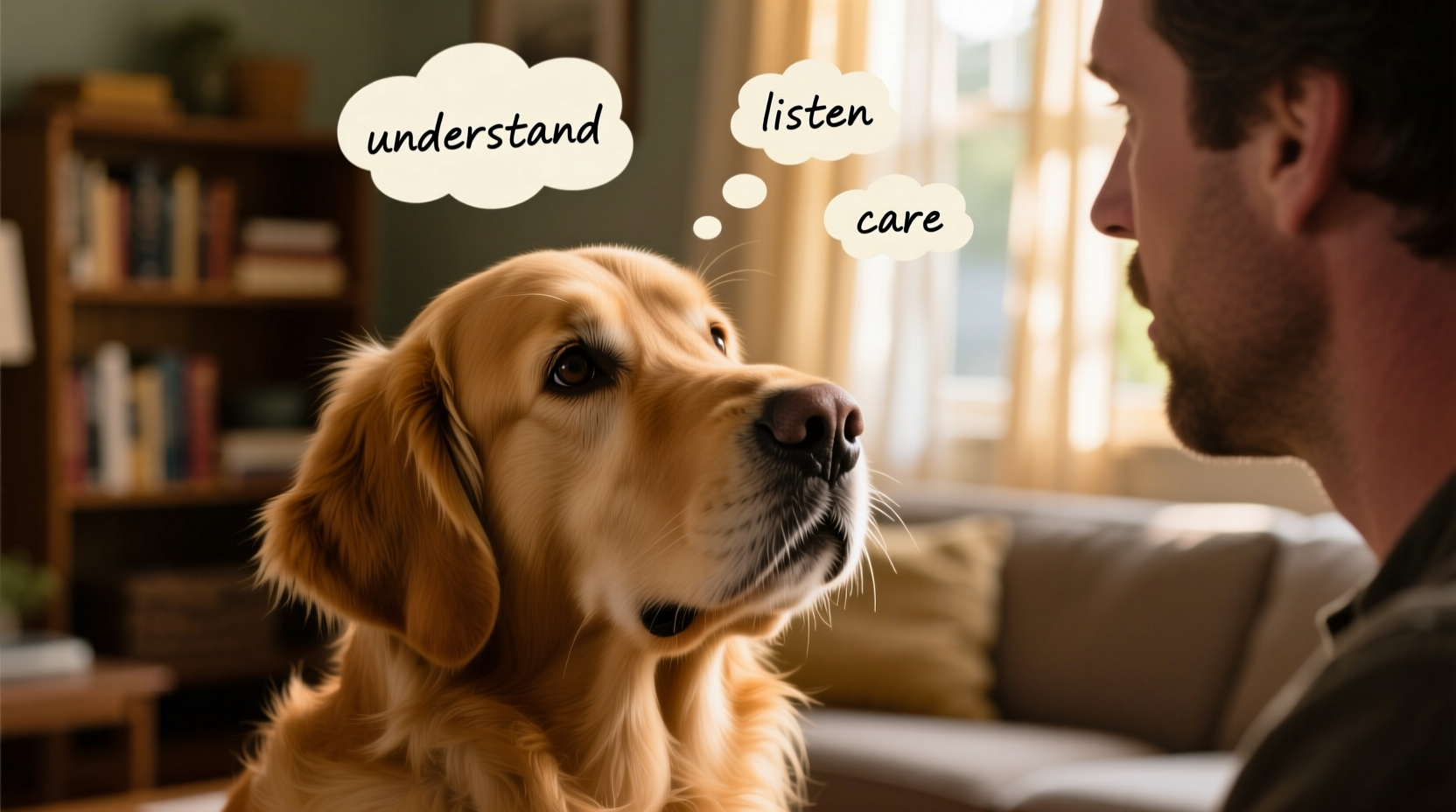
At its most basic level, the head tilt is a physical adjustment. Dogs have varied ear shapes and skull structures—some breeds, like Cocker Spaniels or Basset Hounds, have long, floppy ears that can partially obstruct sound. Tilting the head may help reposition the ears to better capture sound waves, effectively fine-tuning auditory input.
A 2022 study published in *Animal Cognition* observed 40 dogs of different breeds responding to unfamiliar words. The researchers found that dogs were significantly more likely to tilt their heads when hearing novel or emotionally inflected phrases, especially those delivered in high-pitched, affectionate tones (often called \"dog-directed speech\"). This suggests the tilt isn’t random—it’s context-dependent and tied to attention.
Moreover, the angle of the tilt often correlates with the direction of the sound source. If you call your dog from the left, they’re more likely to tilt right, aligning their best ear toward you. This indicates an active effort to gather information, much like a person leaning in during a quiet conversation.
Tip: If your dog frequently tilts their head in silence or shows balance issues, consult a vet—persistent tilting can signal ear infections or neurological concerns.Decoding Human Speech: Words, Tone, and Intent
Dogs don’t understand language the way humans do, but they are remarkably skilled at picking up patterns. A landmark study at Eötvös Loránd University in Hungary used MRI scans to show that dogs process words and intonation in brain regions similar to humans. Positive words spoken in a happy tone activated reward centers; neutral or negative combinations did not.
This dual-processing ability means dogs listen not just for familiar commands like “walk” or “treat,” but also for the emotional flavor behind them. When you say “Do you want to go for a walk?” in an excited voice, your dog doesn’t just hear keywords—they feel the anticipation in your tone.
The head tilt may occur precisely at the intersection of auditory processing and emotional interpretation. By adjusting their head position, dogs might be trying to synchronize visual and auditory signals—reading your lips, watching facial expressions, and isolating vocal nuances all at once.
“Dogs are not just responding to tone. They’re cross-referencing sound, sight, and scent to build a full picture of human intent. The head tilt is part of that investigative toolkit.” — Dr. Claudia Fugazza, Ethologist and Canine Cognition Researcher
Empathy in Action: Do Dogs Feel What We Feel?
Empathy—the ability to recognize and share the feelings of another—is no longer considered uniquely human. In dogs, evidence points to forms of emotional contagion and cognitive empathy, particularly toward their owners.
Studies have shown that dogs will approach a crying person more often than someone humming, even if it’s a stranger. They nuzzle, lick, or rest their head on the person’s lap—behaviors interpreted as comforting. These responses are less common when the person pretends to cry, suggesting dogs distinguish genuine distress from performance.
When a dog tilts its head while you’re speaking emotionally—especially if you’re sad or upset—it may be more than curiosity. It could be an act of emotional attunement. The tilt positions the dog to better read micro-expressions around the eyes and mouth, helping them assess your mood.
Consider this real-world example:
Mini Case Study: Max and the Stormy Evening
Sarah had a difficult day at work. When she returned home, she sat on the couch, head in hands, quietly crying. Her rescue dog, Max, usually energetic, immediately stopped playing. He approached slowly, sniffed her hand, then sat close, tilting his head as she spoke softly about her stress. Over the next ten minutes, he leaned against her, sighed deeply, and eventually rested his chin on her knee. Sarah later described the moment as “being seen.”
While Max couldn’t understand every word, his behaviors—attention, proximity, head tilt, physical contact—align with empathetic responsiveness. He didn’t fix her problems, but he acknowledged her emotional state and offered companionship.
Building the Bond: How to Encourage Emotional Connection
The head tilt is a passive indicator of engagement, but you can actively nurture the empathetic bond between you and your dog. Emotional intelligence in dogs grows through consistent, positive interactions that reinforce trust and communication.
Here’s a practical checklist to deepen your dog’s emotional awareness and responsiveness:
Checklist: Strengthening Canine Empathy
- Use clear, consistent verbal cues paired with facial expressions (e.g., smile when saying “good boy”).
- Respond to your dog’s emotions—if they seem anxious, comfort them calmly.
- Practice “name recognition” games where you say multiple names (including theirs) to reinforce listening skills.
- Expose them gently to emotional scenarios, like watching calm interactions between people, to broaden emotional literacy.
- Reinforce attentive behaviors like eye contact or head tilting with praise or treats.
Over time, dogs learn which human expressions predict outcomes—laughter often precedes play, stern voices may mean correction. This predictive ability fosters empathy because it requires mental modeling: “My human is raising their voice—do they need help, or are they angry at me?”
Do’s and Don’ts of Interpreting the Head Tilt
While the head tilt is generally a positive sign of engagement, misreading it can lead to confusion or missed health warnings. Use the table below to distinguish normal behavior from potential concerns.
| Scenario | Do’s | Don’ts |
|---|---|---|
| Dog tilts head when spoken to in a friendly tone | Encourage with praise; continue bonding conversations | Don’t overuse high-pitched voices excessively—it may encourage attention-seeking |
| Tilting occurs with whining or pawing | Assess if they need something (food, potty, play) | Don’t reinforce demanding behavior with immediate rewards |
| Frequent tilting without stimulus or with loss of balance | Visit a veterinarian promptly | Don’t assume it’s “just cute”—could indicate ear infection or vestibular disease |
| Dog tilts head while watching TV or sounds | Observe as natural curiosity; limit loud noises if stressful | Don’t force prolonged exposure to screens or sudden sounds |
Step-by-Step: Training Your Dog to Respond to Emotional Cues
You can’t teach empathy directly, but you can shape behaviors that reflect emotional awareness. Try this five-step training sequence to enhance your dog’s sensitivity to your moods:
- Establish a Calm Baseline: Practice daily routines in a quiet space. Sit together, breathe slowly, and let your dog learn your relaxed state.
- Introduce Emotional Contrasts: On different days, interact using exaggerated but genuine emotions—happy (laughing, clapping), sad (soft voice, slow movements), surprised (gasp, wide eyes). Observe how your dog reacts.
- Pair Emotion with Cue: Say “I’m sad” in a low tone while gently touching your cheek. Repeat consistently. Eventually, your dog may associate the phrase and tone with concern.
- Reward Attentive Behavior: When your dog approaches, makes eye contact, or tilts their head during emotional moments, mark it with a soft “yes” and treat.
- Test in Real Contexts: Once trained, notice if your dog responds similarly during unscripted emotional moments. Success isn’t perfection—it’s increased attentiveness.
This process doesn’t create a therapist-dog, but it strengthens the emotional dialogue between species. Dogs thrive on predictability and connection; when they learn that your emotional shifts matter, they become more attuned partners.
FAQ: Common Questions About Head Tilting and Canine Empathy
Why do some dogs tilt their heads more than others?
Breed, hearing ability, and individual personality all play roles. Dogs with longer muzzles or droopy ears may tilt more to improve sound collection. Some dogs are naturally more curious or socially engaged, leading to frequent tilting. However, lack of tilting doesn’t mean disinterest—many attentive dogs never tilt at all.
Can dogs really feel empathy, or are they just reacting?
Current science supports a form of empathy known as “emotional contagion,” where dogs mirror human feelings (e.g., becoming anxious when you’re stressed). More complex empathy—understanding another’s perspective—remains debated, but dogs clearly respond to emotional contexts in ways that go beyond simple conditioning.
Should I encourage my dog to tilt their head?
Occasional encouragement is harmless, but avoid reinforcing it excessively. Prioritize meaningful communication over performative behaviors. If your dog tilts naturally during interaction, that’s healthy engagement. Training tricks solely for cuteness can dilute authentic bonding.
Conclusion: Listening Beyond Words
The head tilt is more than a charming quirk—it’s a gesture woven from curiosity, adaptation, and emotional intelligence. When your dog turns their head slightly, eyes wide, they’re not just hearing you. They’re trying to understand you: your words, your tone, your feelings. In that quiet moment of focus, a bridge forms between species, built on attention and care.
Recognizing this behavior as part of a broader empathetic capacity changes how we interact with our dogs. Instead of merely commanding or entertaining them, we can engage in a two-way emotional exchange. We can speak with intention, observe with patience, and respond with mutual respect.
💬 Have a story about your dog’s head tilt or empathetic moment? Share it in the comments—your experience might help others see their own dogs in a new light.








