
Dogs are remarkably expressive animals, and one of their most endearing behaviors is tilting their head when spoken to. Whether it's a sudden shift in tone or simply calling their name, many dog owners have witnessed this curious gesture. While it may seem like a simple quirk, the head tilt is rooted in a combination of biology, psychology, and social learning. Understanding why dogs do this offers insight into their intelligence, sensory perception, and emotional connection with humans.
The head tilt isn't just cute—it’s functional. It reflects how dogs process sound, interpret facial expressions, and respond to social cues. Researchers and animal behaviorists have studied this behavior extensively, revealing that it serves multiple purposes depending on context, breed, and individual temperament. This article explores the science behind the head tilt, separates myth from fact, and explains what your dog might be communicating every time they cock their head to the side.
Hearing and Sound Localization
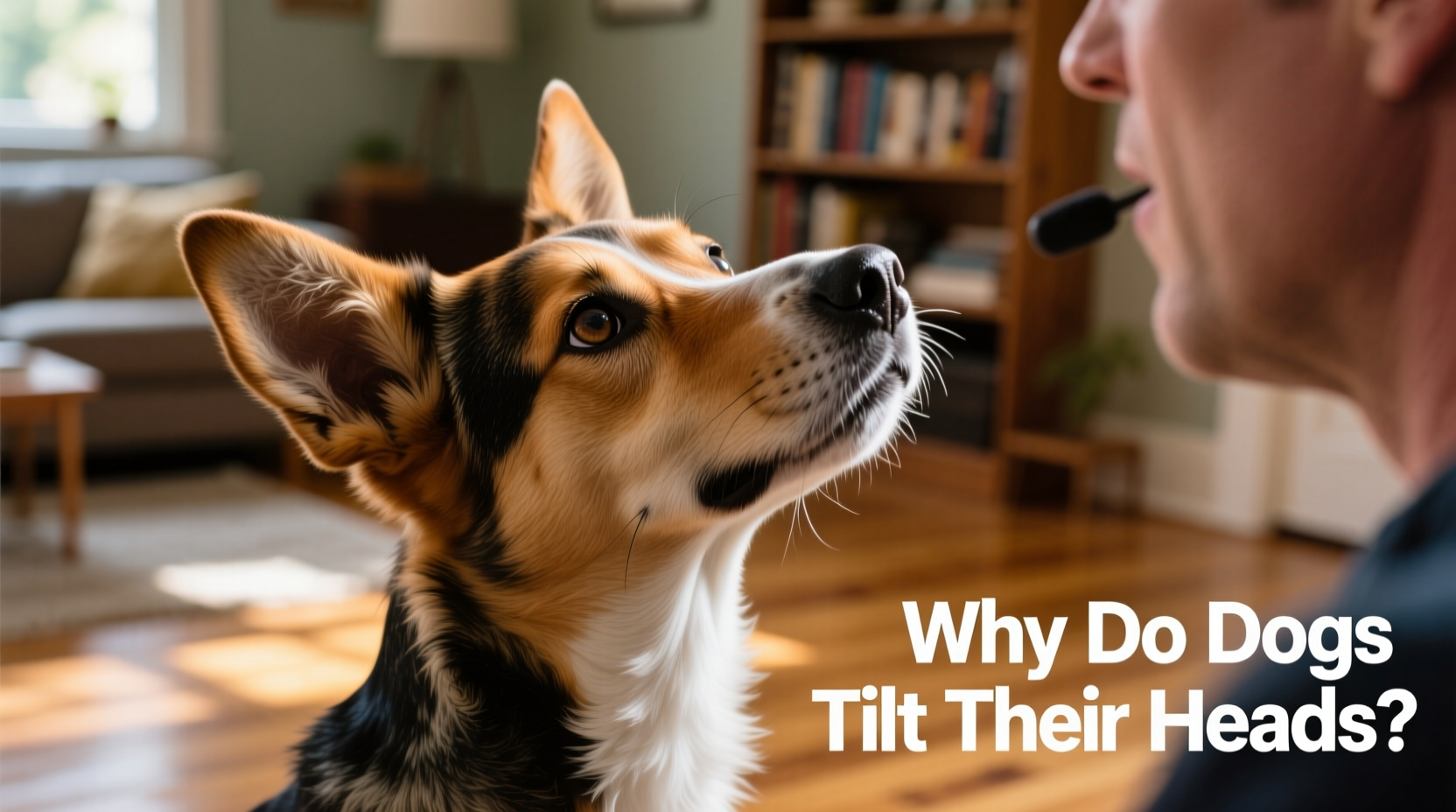
Dogs rely heavily on their sense of hearing—often far more than humans. Their ears are designed to capture a wide range of frequencies, including sounds too high-pitched for human ears to detect. However, even with superior hearing, dogs sometimes struggle to pinpoint exactly where a sound is coming from, especially if it’s muffled or unfamiliar.
When a dog tilts its head, it adjusts the position of its ears relative to the sound source. This subtle movement can help improve sound localization by changing how sound waves enter the ear canal. For dogs with floppy ears—like Cocker Spaniels or Basset Hounds—the tilt may also momentarily lift the ear flap, allowing better access to incoming auditory signals.
“Dogs use head movements to fine-tune auditory input, much like we might cup our ears to hear better.” — Dr. Stanley Coren, Canine Psychologist and Author of *How Dogs Think*
This adjustment is particularly useful when trying to distinguish between familiar words (such as commands) and background noise. A study published in the journal *Animal Cognition* found that dogs who tilted their heads during verbal interactions were more likely to respond correctly to known commands, suggesting a link between head tilting and active listening.
Tip: If your dog frequently tilts their head in quiet environments, it may indicate they're focusing hard on subtle sounds—this could be a sign of attentiveness rather than confusion.Visual Field Adjustment and Facial Recognition
While hearing plays a major role, vision is equally important in understanding the head tilt. Many dog breeds, especially those with long muzzles such as Collies or German Shepherds, have a limited field of view directly in front of them. Their snout obstructs part of their lower visual field, making it difficult to see an owner’s face clearly—especially when the person is close by.
By tilting their head, dogs can shift their muzzle out of the way and gain a clearer view of your eyes, mouth, and facial expressions. Since dogs are highly attuned to human emotions and rely on visual cues during communication, seeing your face clearly helps them interpret whether you’re happy, upset, or giving a command.
Research conducted at Eötvös Loránd University in Hungary demonstrated that dogs pay close attention to human faces and use lip movements to understand speech. The study showed that dogs spent more time looking at mouths when people spoke, indicating they use both auditory and visual information together—a process known as audiovisual integration.
| Breed Type | Muzzle Length | Frequency of Head Tilting (Observed) | Possible Reason |
|---|---|---|---|
| Border Collie | Long | High | Improved facial visibility + high trainability |
| Pug | Short (Brachycephalic) | Low | Less obstruction; wider forward view |
| Golden Retriever | Moderate | Moderate-High | Social engagement and sound processing |
| Shih Tzu | Short | Low-Moderate | Less need for visual adjustment |
This suggests that dogs with longer muzzles may tilt their heads more often—not because they’re more intelligent, but because they physically need to adjust their line of sight to read human expressions accurately.
Emotional Engagement and Social Bonding
Beyond sensory mechanics, the head tilt is also a powerful tool for social interaction. Dogs are deeply social creatures who thrive on connection with their human companions. The head tilt often occurs during moments of direct conversation, eye contact, or affectionate speech, signaling that the dog is engaged and emotionally invested in the interaction.
Some experts believe the head tilt functions as a nonverbal response—a way for dogs to say “I’m listening” without using words. It can also serve as a submissive or appeasing gesture, reducing tension and reinforcing trust. In multi-dog households or around strangers, dogs may avoid head tilting if they feel uncertain, but they’ll often adopt it freely with trusted family members.
Interestingly, dogs may learn over time that head tilting elicits positive reactions from humans. Because people tend to respond with praise, petting, or laughter when their dog tilts its head, the behavior becomes reinforced through operant conditioning. What begins as a natural adjustment can evolve into a deliberate act performed to gain attention or rewards.
“The head tilt has likely been shaped not only by evolution but also by domestication. We’ve unconsciously encouraged it because we find it charming.” — Dr. Brian Hare, Cognitive Scientist and Founder of Dognition
A Mini Case Study: Max, the Curious Labrador
Max, a three-year-old yellow Labrador, lives with a retired couple in Vermont. His owners noticed he rarely tilted his head while watching TV or hearing outdoor noises—but whenever one of them said “Do you want a treat?” or “Let’s go for a walk,” Max would immediately cock his head to the left.
Curious about this pattern, they recorded several interactions and shared them with a local animal behaviorist. The analysis revealed that Max associated specific phrases with outcomes and used the head tilt selectively—only when the speaker faced him directly and used a higher-pitched, emotionally expressive tone.
Further observation showed that Max received enthusiastic responses each time he tilted his head. Over months, the frequency of the behavior increased, especially during morning greetings. The case illustrates how both cognitive processing and social reinforcement contribute to the head tilt in everyday settings.
Is Head Tilting Always Normal?
In most cases, occasional head tilting is perfectly normal and indicates curiosity, focus, or affection. However, persistent or involuntary head tilting—especially when accompanied by other symptoms—can signal underlying health issues.
If your dog consistently holds their head tilted to one side even when not interacting with people, shows signs of dizziness, walks unsteadily, or scratches excessively at their ears, it may point to a medical condition such as:
- Ear infections (otitis externa)
- Inner ear inflammation (vestibular disease)
- Polyps or tumors in the ear canal
- Neurological disorders
Vestibular disease, sometimes called “old dog vestibular syndrome,” mimics the appearance of intoxication: dogs may lean to one side, fall over, or exhibit rapid eye movements. While often temporary and treatable, these conditions require prompt veterinary evaluation.
Tip: Monitor your dog’s head posture outside of social interactions. If the tilt becomes constant or asymmetric, consult your vet immediately.Checklist: When to Be Concerned About Head Tilting
- Head remains tilted even at rest or during sleep
- Loss of balance or coordination
- Frequent circling or falling to one side
- Nystagmus (involuntary eye flickering)
- Ear discharge, odor, or swelling
- Sudden change in behavior or responsiveness
- No improvement after a few days
If any of these signs are present, seek professional care. Early diagnosis improves outcomes significantly, especially for inner ear or neurological problems.
Step-by-Step Guide to Encouraging Healthy Communication (Without Overusing the Tilt)
You can strengthen your bond with your dog—and reduce potential over-reliance on performative gestures—by fostering clear, consistent communication. Follow these steps to promote healthy interaction:
- Use a calm, clear voice: Speak in a moderate tone with distinct words. Avoid shouting or exaggerated baby talk, which can confuse some dogs.
- Maintain eye level: Kneel or sit so your dog doesn’t have to strain to see your face. This reduces the need for excessive head tilting.
- Pair verbal cues with hand signals: Combine words like “sit” or “stay” with visual gestures to enhance understanding.
- Reinforce attention without rewarding repetition: Praise your dog for listening, but don’t encourage repeated head tilting just for entertainment.
- Schedule regular hearing checks: Especially for senior dogs or breeds prone to ear issues, annual vet exams should include auditory assessments.
- Minimize background noise: Train and communicate in quiet spaces to help your dog focus without needing to compensate through physical adjustments.
This approach supports your dog’s natural abilities while preventing unnecessary strain or behavioral dependency on attention-seeking gestures.
Frequently Asked Questions
Do all dogs tilt their heads?
No, not all dogs tilt their heads regularly. Some breeds, particularly brachycephalic ones like Pugs or Bulldogs, have shorter muzzles and wider fields of vision, reducing the need for adjustment. Additionally, individual personality, hearing ability, and past experiences influence how often a dog uses this behavior.
Can head tilting be trained or stopped?
Yes, head tilting can be encouraged or discouraged through training. If taught as a trick (“tilt”), it becomes a voluntary behavior. Conversely, ignoring the gesture when done excessively can reduce its frequency. However, never punish your dog for tilting their head—it’s usually a sign of engagement, not misbehavior.
Does head tilting mean my dog understands me?
It often means they’re trying to understand. The tilt reflects active processing—listening closely, reading your lips, and interpreting tone. But understanding depends on prior training and word recognition. A head tilt alone doesn’t confirm comprehension, though it does suggest your dog is paying attention.
Conclusion: A Gesture Worth Understanding
The head tilt is more than a photogenic moment—it’s a window into your dog’s mind. It blends biological adaptation with emotional intelligence, showing how deeply dogs are tuned into human communication. Whether adjusting their hearing, improving their view, or seeking connection, every tilt tells a story of attention, curiosity, and trust.
As dog owners, recognizing the difference between instinctive behavior and potential health concerns allows us to respond appropriately—celebrating the joyful quirks while staying vigilant about well-being. By fostering clear communication and providing proper care, we honor the unique bond we share with our canine companions.
💬 Have a story about your dog’s head tilt? Share your experience in the comments below—what triggers it, how often it happens, and what you think it means. Let’s build a deeper understanding of this beloved behavior together!








