Dogs are among the most expressive animals on Earth, and their behaviors often leave us charmed—and curious. One of the most endearing gestures they make is tilting their head when we speak. Whether you're calling their name, using a high-pitched tone, or simply changing your inflection, that signature lean to one side seems almost automatic in many dogs. But what’s really going on behind those soulful eyes? Is it just cuteness overload, or does this behavior serve a deeper communicative or cognitive purpose?
Far from being a mere trick to win affection, head tilting is a complex response rooted in a dog’s sensory perception, social learning, and emotional attunement. Scientists and animal behaviorists have studied this phenomenon for years, uncovering clues about how dogs interpret human language, read facial expressions, and adapt to our vocal patterns. This article dives into the science and psychology behind the head tilt, explores related canine communication cues, and offers practical insights for pet owners seeking to better understand their four-legged companions.
The Science Behind the Head Tilt
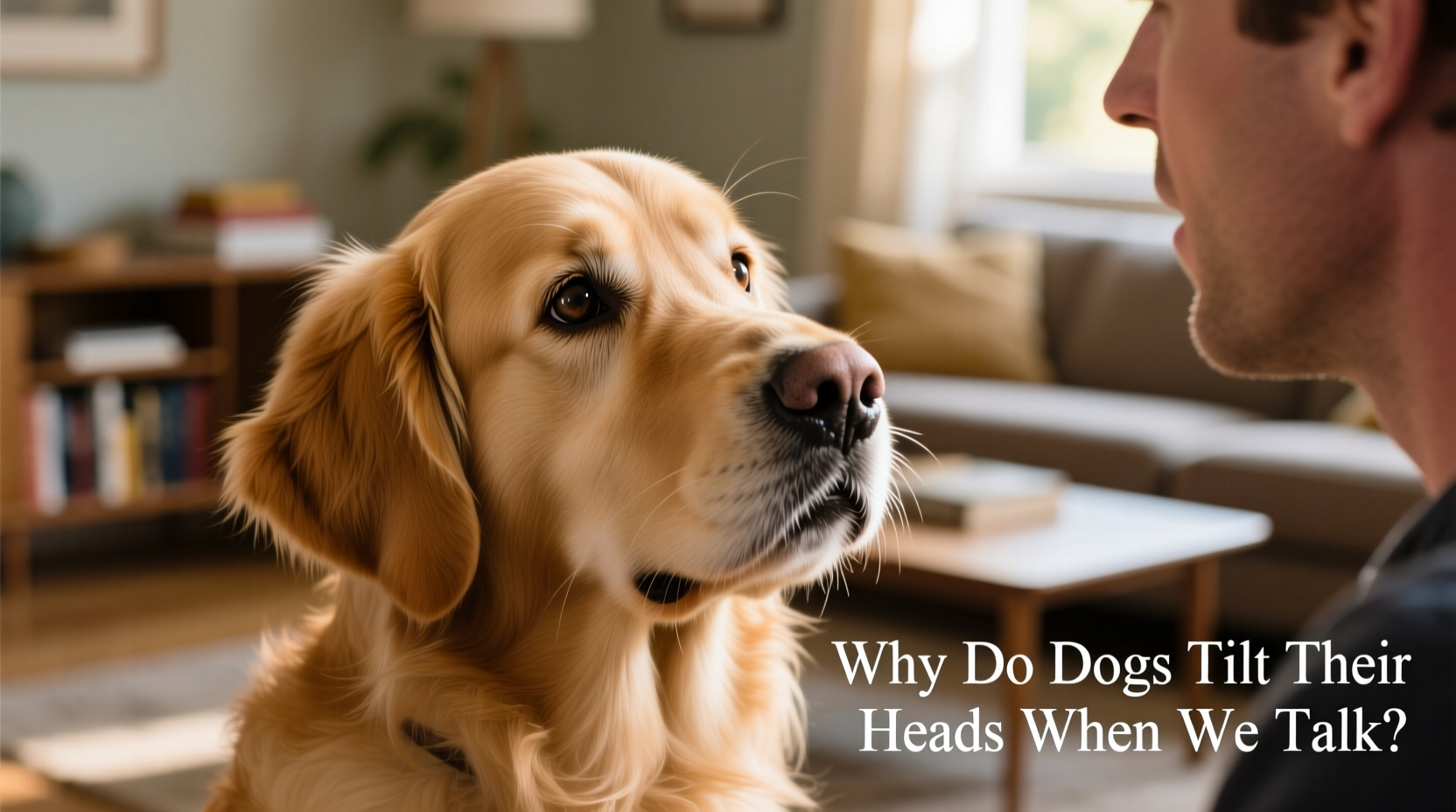
At first glance, the head tilt appears to be a reaction to sound—specifically, unfamiliar or interesting auditory stimuli. When a dog hears a new word, an unusual tone, or a sudden noise, it may tilt its head as part of an effort to pinpoint the source and meaning of the sound. Unlike humans, dogs rely heavily on nonverbal cues and tonal variation to interpret communication.
One key factor is their ear structure. Dogs with long, floppy ears—like Basset Hounds or Cocker Spaniels—may tilt their heads to adjust the position of their ear canals, improving sound reception. A 2019 study published in *Animal Cognition* found that dogs who tilted their heads more frequently were also more likely to recognize familiar words, suggesting a link between auditory processing and physical response.
Additionally, the tilt might help dogs see our faces more clearly. Our mouths move when we speak, and dogs are highly skilled at reading lips and facial expressions. By adjusting their angle, they may gain a better view of our mouth movements, especially if their muzzle or breed-specific features obstruct their line of sight. This visual compensation enhances their ability to decode both verbal and emotional signals.
“Dogs don’t just hear words—they listen with their entire body. The head tilt is a sign of active engagement, not confusion.” — Dr. Brian Hare, Canine Cognition Researcher, Duke University
Emotional Intelligence and Social Bonding
Beyond the mechanics of hearing and vision, the head tilt reflects a deeper layer of canine social intelligence. Dogs have evolved alongside humans for over 30,000 years, developing an exceptional ability to read our emotions and intentions. This co-evolution has fine-tuned their responsiveness to human gestures, vocal tones, and even eye contact.
When a dog tilts its head during conversation, it’s often trying to “read the room.” A higher-pitched, friendly voice may trigger curiosity and positive anticipation (like the promise of treats or play), while a stern tone might prompt cautious assessment. The tilt serves as both a signal of attention and a bid for connection. In behavioral terms, it functions as a calming signal—a way for dogs to show they are listening and not threatening.
Interestingly, some dogs learn that head tilting elicits positive reactions from humans. If a dog receives praise, laughter, or affection after tilting its head, it may repeat the behavior more often, reinforcing it through operant conditioning. This doesn’t diminish its authenticity; rather, it shows how dogs adapt their natural instincts to thrive in human households.
Tip: Don’t encourage excessive head tilting by reacting every time—reserve positive reinforcement for desired behaviors like sitting or staying.Canine Communication Cues Beyond the Head Tilt
The head tilt is just one piece of a rich communication system dogs use daily. Understanding these signals fosters stronger bonds and reduces misunderstandings. Here are other common cues and what they typically mean:
- Eye contact: Soft, blinking gazes indicate trust; prolonged staring can be confrontational.
- Tail position: A wagging tail isn’t always friendly—height and speed matter. High and stiff may signal arousal or aggression; low and slow suggests uncertainty.
- Ears: Forward ears show interest; flattened ears may indicate fear or submission.
- Lip licking: Often a sign of stress or appeasement, not hunger.
- Paw lifting: Can signal hesitation, anxiety, or a request for attention.
These cues work together to form a nuanced language. For example, a dog that tilts its head while softly wagging its tail and keeping relaxed ears is likely engaged and curious. But if the same dog has tense muscles, dilated pupils, and a closed mouth, the tilt might reflect confusion or mild stress.
Do’s and Don’ts of Interpreting Dog Body Language
| Behavior | Do | Don’t |
|---|---|---|
| Head tilt + soft eyes | Engage gently, speak calmly | Overexcite with loud tones |
| Yawning or lip licking | Assess environment for stressors | Ignore as “tiredness” |
| Tail tucked + crouched posture | Give space, avoid direct approach | Force interaction or hug |
| Play bow (front down, rear up) | Encourage appropriate play | Reprimand as “bad behavior” |
Mini Case Study: Max, the Curious Border Collie
Max, a six-year-old Border Collie, lives with a retired couple in Vermont. His owners noticed he tilted his head more frequently when his wife spoke than when her husband did. Intrigued, they recorded several interactions and shared them with a local animal behaviorist.
Analysis revealed that Max’s wife used a wider range of pitch and emotional intonation—especially when asking questions like “Where’s your ball?” or “Ready for dinner?” Her speech patterns included rising inflections at the end of sentences, which Max associated with positive outcomes. In contrast, her husband spoke in a flatter, lower register, often giving commands without emotional variation.
Over four weeks, the husband began incorporating more animated speech during training sessions. Gradually, Max started tilting his head in response to him as well. This case illustrates how vocal prosody—the melody of speech—influences canine attention and reinforces learned behaviors. It also highlights the importance of tone in building mutual understanding.
Step-by-Step Guide to Responding to Your Dog’s Communication
Improving your ability to “speak dog” strengthens your relationship and reduces behavioral issues. Follow this timeline to become more attuned to your pet’s cues:
- Week 1: Observe Without Reacting
Set aside 10 minutes daily to watch your dog in different situations—eating, playing, resting. Note when they tilt their head, shift weight, or change facial expression. - Week 2: Map Triggers
Identify what prompts specific behaviors. Does the doorbell cause lip licking? Does a certain phrase trigger a head tilt? Keep a simple log. - Week 3: Adjust Your Behavior
Modify your tone, posture, or movement based on your dog’s signals. If they seem stressed, soften your voice and give space. - Week 4: Reinforce Positive Interaction
Reward calm, attentive behavior with treats or affection. Avoid reinforcing anxious gestures like constant pawing or whining. - Ongoing: Practice Empathetic Engagement
Treat each interaction as a two-way conversation. Ask yourself: What is my dog trying to tell me right now?
Frequently Asked Questions
Is head tilting a sign of hearing loss?
Occasional head tilting is normal, but frequent or persistent tilting—especially if accompanied by balance issues, ear scratching, or disorientation—could indicate an ear infection or neurological problem. Consult your veterinarian if you notice sudden changes in this behavior.
Do all dogs tilt their heads?
No. While many dogs do, the frequency varies by breed, individual personality, and experience. Brachycephalic breeds (like Pugs) may tilt less due to facial structure, while highly social breeds (like Golden Retrievers or Shetland Sheepdogs) may do so more often.
Can I train my dog to tilt its head on command?
Yes, using positive reinforcement. Hold a treat slightly above and to the side of their head, encouraging a natural tilt. Mark the behavior with a clicker or verbal cue like “tilt,” then reward. However, avoid overuse, as repetitive neck movements could strain muscles over time.
Checklist: Enhancing Canine-Human Communication
Use this checklist to build a deeper, more responsive relationship with your dog:
- ✅ Learn the difference between attention-seeking and stress-related head tilts
- ✅ Use varied vocal tones during training and play
- ✅ Respect your dog’s need for space when they appear overwhelmed
- ✅ Monitor changes in communication patterns—sudden silence or hyperactivity can signal health issues
- ✅ Schedule regular vet checkups to rule out medical causes of behavioral shifts
- ✅ Spend quality time observing—not just interacting—with your dog daily
Conclusion: Listening Beyond Words
The head tilt is more than a charming quirk—it’s a window into a dog’s mind. It reveals their attentiveness, emotional sensitivity, and desire to connect. By paying closer attention to this and other subtle cues, we honor the depth of the bond we share with our canine companions.
Dogs communicate constantly, not through words, but through posture, expression, and motion. When we learn to interpret these signals accurately, we stop seeing them as pets and start recognizing them as partners in a shared emotional world. The next time your dog cocks its head at your voice, pause and ask: What are they really trying to understand? And more importantly, what can you learn from them?
💬 Have a story about your dog’s head tilt or another unique behavior? Share it in the comments—we’d love to hear how your dog communicates with you.








