Dogs greet one another in ways that often puzzle humans—especially when they immediately go straight for the rear end upon meeting. While this behavior might seem odd or even rude to us, it’s actually one of the most natural and informative forms of communication in the canine world. Sniffing another dog’s behind isn’t just a quirky habit; it’s a sophisticated method of gathering vital information. From health status to emotional state, dogs use their powerful sense of smell to decode complex messages that we can barely perceive.
Understanding this behavior sheds light on how dogs interpret their environment, form social bonds, and establish hierarchies. Far from being random or inappropriate, butt-sniffing is an essential component of polite dog etiquette. In fact, preventing dogs from engaging in this ritual can lead to confusion, anxiety, or even conflict during social interactions.
The Science Behind Canine Scent Detection
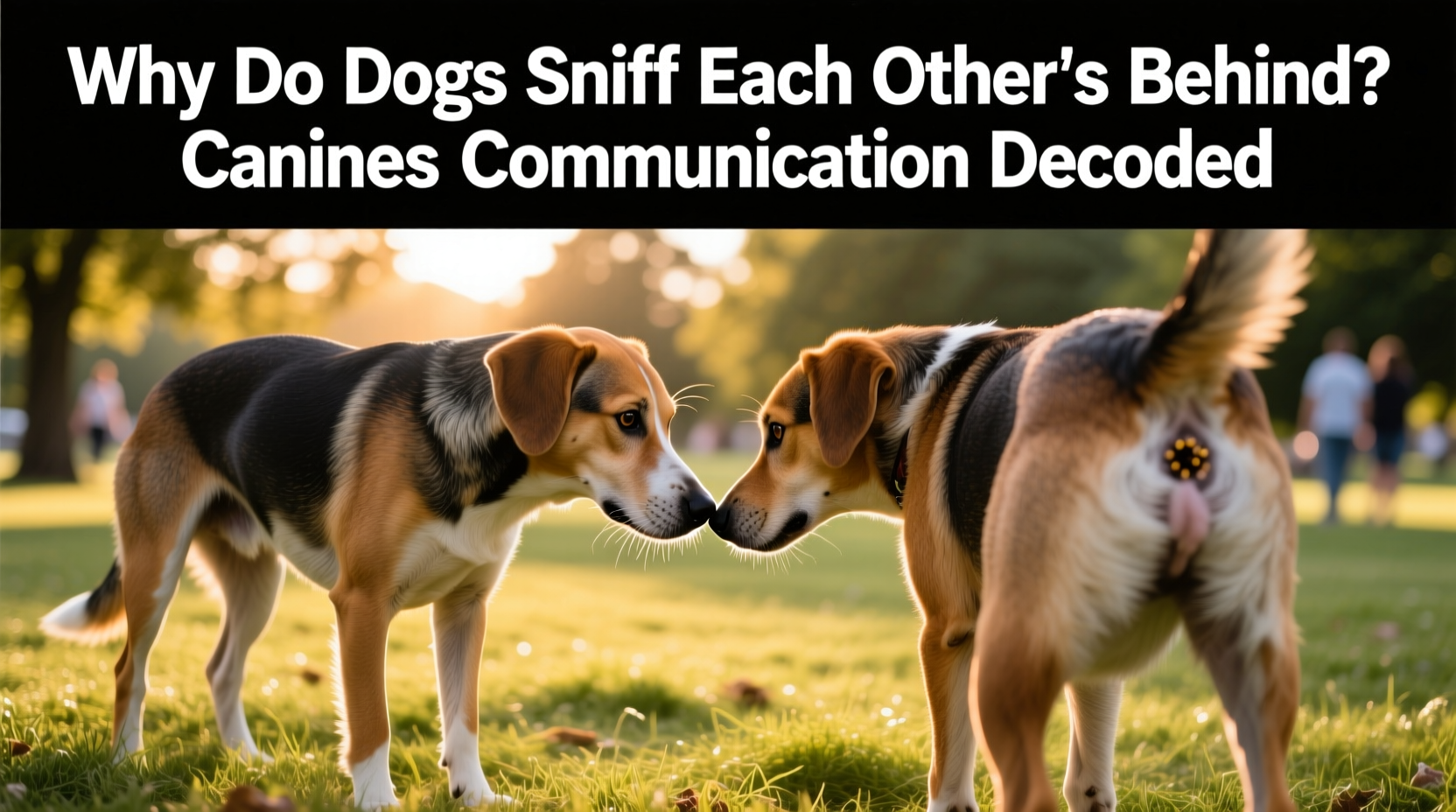
A dog’s sense of smell is nothing short of extraordinary. With up to 300 million olfactory receptors—compared to about 6 million in humans—and a brain region dedicated to analyzing smells that is proportionally 40 times larger than ours, dogs experience the world primarily through scent.
When two dogs meet, they rely on chemical signals called pheromones to gather information. These are released through various glands in the body, but none are more concentrated or informative than those located near the anus: the anal sacs. These small pouches secrete a unique chemical cocktail every time a dog defecates—or even when they’re nervous or excited.
The scent from these glands contains a wealth of data: age, sex, diet, reproductive status, mood, and even individual identity. It’s akin to a biological ID card, readable only by animals with the right equipment—namely, a dog’s nose.
“Dogs don’t have driver’s licenses or social media profiles. They use scent instead. The anal sac secretions are like a canine résumé.” — Dr. Alexandra Horowitz, Cognitive Scientist & Author of *Inside of a Dog*
This biological system allows dogs to assess whether another dog is friend or foe, familiar or stranger, healthy or unwell—all within seconds of meeting.
What Information Is Exchanged During a Sniff?
Behind every sniff is a purpose. When a dog investigates another dog’s rear, they’re not merely being curious—they’re conducting a rapid bio-assessment. Here’s what they learn:
- Identity: Each dog has a unique scent signature, much like a human fingerprint.
- Gender and Reproductive Status: Intact males and females release different hormonal markers, especially during breeding seasons.
- Health Condition: Illnesses, infections, or digestive issues often alter the odor of anal sac secretions.
- Mood and Stress Levels: Fear, excitement, or aggression can be detected through changes in glandular output.
- Social Hierarchy Cues: Dominant or confident dogs may emit stronger or more distinct scents.
This exchange helps dogs determine how to behave next—whether to play, retreat, assert dominance, or simply ignore each other. Skipping this step can leave dogs socially disoriented, which may result in miscommunication or tension.
Tip: Allow your dog a brief moment to sniff another dog’s rear during greetings—it’s part of their natural language. Interrupting this process can increase anxiety or misunderstanding.Anatomy of the Anal Sacs: Nature’s Communication Hub
To fully appreciate why dogs target this specific area, it helps to understand the anatomy involved. Located at approximately the 4 o’clock and 8 o’clock positions around the anus are two small sacs filled with a foul-smelling fluid. These are the anal glands (or anal sacs), and they serve both physiological and communicative functions.
In wild canines, these glands would naturally express a small amount of fluid during defecation, leaving behind territorial markers. Domestic dogs still retain this trait, though modern lifestyles—particularly soft diets and reduced activity—can lead to impacted glands that require veterinary attention.
But beyond excretion, these glands are active during social encounters. When a dog tenses or feels alert, the muscles around the anus contract slightly, releasing trace amounts of scent. Other dogs pick up on these micro-signals instantly.
The vomeronasal organ (also known as Jacobson’s organ), located in the roof of a dog’s mouth, plays a key role in processing these chemical cues. After sniffing, dogs often exhibit the “flehmen response”—curling back their lips and holding their mouth open—to draw scents into this specialized sensory structure.
Canine Etiquette: Why Sniffing Is Polite Behavior
In human terms, walking up to someone and smelling their private areas would be considered highly inappropriate. But in dog society, avoiding a rear-end sniff is far ruder. Just as we use handshakes, eye contact, or verbal greetings, dogs rely on olfactory introductions to establish trust and context.
Imagine meeting someone blindfolded and mute—you’d want to use whatever senses you had available to size them up. For dogs, smell is their primary sense, and the anal region is the richest source of personal data.
When owners pull their dogs away before they can complete this ritual, they inadvertently disrupt a critical phase of canine diplomacy. This can lead to defensive posturing, over-arousal, or fear-based reactions because the dog hasn’t had a chance to gather necessary information.
“When you prevent dogs from sniffing, you’re asking them to interact in a foreign language without any translation tools.” — Sarah Wilson, Certified Professional Dog Trainer
Of course, boundaries still apply. Prolonged or obsessive sniffing, especially if accompanied by mounting or aggression, should be redirected. But a quick, mutual investigation is not only normal—it’s healthy.
Real-World Example: A Park Encounter Gone Right
Consider this common scenario: Two dogs, Max (a 3-year-old Labrador) and Bella (a 5-year-old Border Collie), meet at the local off-leash park. As they approach, Max sniffs Bella’s face briefly, then moves directly to her hind end. Bella stands still, tail relaxed, allowing the inspection. After a few seconds, she reciprocates by sniffing Max’s rear.
Within moments, both dogs begin playful bowing, wagging tails, and chasing each other in circles. Their interaction flows smoothly because each received the information they needed: no threats, compatible energy levels, and mutual willingness to engage.
Contrast this with a similar encounter where an owner yanks their dog away mid-sniff. The denied dog may become frustrated or anxious. Without completing the greeting protocol, they lack confidence in the other dog’s intentions, increasing the likelihood of misreading body language later in the interaction.
This example illustrates how seemingly strange behaviors serve functional purposes in dog-to-dog communication. Respecting these rituals fosters safer, more enjoyable social experiences for our pets.
Common Misconceptions About Butt-Sniffing
Despite its importance, many myths persist about this behavior. Let’s clarify a few:
| Myth | Reality |
|---|---|
| Dogs do it because they like the smell. | No—dogs aren’t “enjoying” the odor in a pleasurable sense. They’re analyzing chemical data. |
| It’s unhygienic and should be stopped. | While hygiene matters, brief sniffing poses minimal risk. Prevention harms social fluency more than any germs. |
| Only dominant dogs sniff others. | All dogs, regardless of temperament, engage in mutual sniffing as part of standard greeting. |
| If my dog humps after sniffing, it’s sexual. | Humping post-sniff is often excitement or stress-related, not necessarily sexual, especially in neutered dogs. |
How to Support Healthy Canine Socialization
As pet owners, we can promote positive interactions by understanding and respecting natural dog behavior. Here’s a practical checklist to follow during dog-to-dog meetings:
📋 **Canine Greeting Checklist**- Allow a brief period for mutual sniffing—typically 10–20 seconds per dog.
- Keep leashes loose to avoid creating tension.
- Watch for balanced body language: relaxed posture, wagging tail, play bows.
- Intervene only if signs of aggression appear (growling, stiffening, raised hackles).
- Respect your dog’s pace—some need longer to assess new dogs.
- Avoid forcing interactions between reluctant dogs.
- Ensure both dogs are vaccinated and parasite-free before off-leash play.
Remember, sniffing isn’t the end goal—it’s the foundation. Once dogs have exchanged scents, they can proceed to play, ignore each other, or move on peacefully, depending on what the information tells them.
Frequently Asked Questions
Is it safe for my dog to sniff other dogs’ behinds?
Generally, yes. Brief sniffing carries very low health risks, especially if both dogs are healthy and up-to-date on vaccinations. However, avoid prolonged contact in areas with visible discharge, infection, or diarrhea, as these could indicate illness.
My dog doesn’t like being sniffed. Should I be concerned?
Some dogs are more sensitive than others. If your dog tenses up, walks away, or growls when approached, they may feel vulnerable. Respect their boundaries and allow them to initiate contact on their own terms. Consult a trainer if avoidance turns into aggression.
Do dogs sniff people the same way?
Not exactly. While dogs do gather information about humans through scent—especially from hands, breath, and sweat glands—they don’t target human rear ends the way they do with other dogs. That said, some dogs may nudge or investigate crotches due to high concentrations of apocrine glands there, which emit strong odors.
Conclusion: Embracing the Nose-Led World of Dogs
Dogs live in a world dominated by invisible chemical messages. What seems bizarre to us—a quick butt sniff—is, in reality, a respectful, efficient, and deeply informative act. By allowing dogs to communicate in their native language, we support their mental well-being, reduce social stress, and foster healthier relationships between animals.
Next time your dog greets a new furry friend with a rear-end investigation, resist the urge to pull them away. Instead, recognize it for what it truly is: a handshake, a name tag, and a wellness check—all rolled into one powerful sniff.
💬 Have you ever misunderstood your dog’s sniffing habits? Share your story or questions below—we’d love to hear how you’ve learned to see the world through your dog’s nose!








