
When a cat slowly closes its eyes while looking at you, holds them shut for a moment, then reopens them with a calm gaze, it’s not just a quirky blink—it’s one of the most meaningful gestures in feline body language. Known as the \"slow blink,\" this subtle behavior is often described as a cat's version of a smile or even a kiss. But what does it truly mean? And how can understanding this quiet signal transform your relationship with your cat?
Cats are frequently misunderstood as aloof or indifferent, but their communication is nuanced and deeply intentional. Unlike dogs, who express emotion through tail wags and vocalizations, cats rely on micro-expressions—tiny shifts in ear position, tail flicks, and yes, deliberate eye movements—to convey feelings. The slow blink stands out as one of the clearest signs of trust and affection a cat can offer.
The Science Behind the Slow Blink
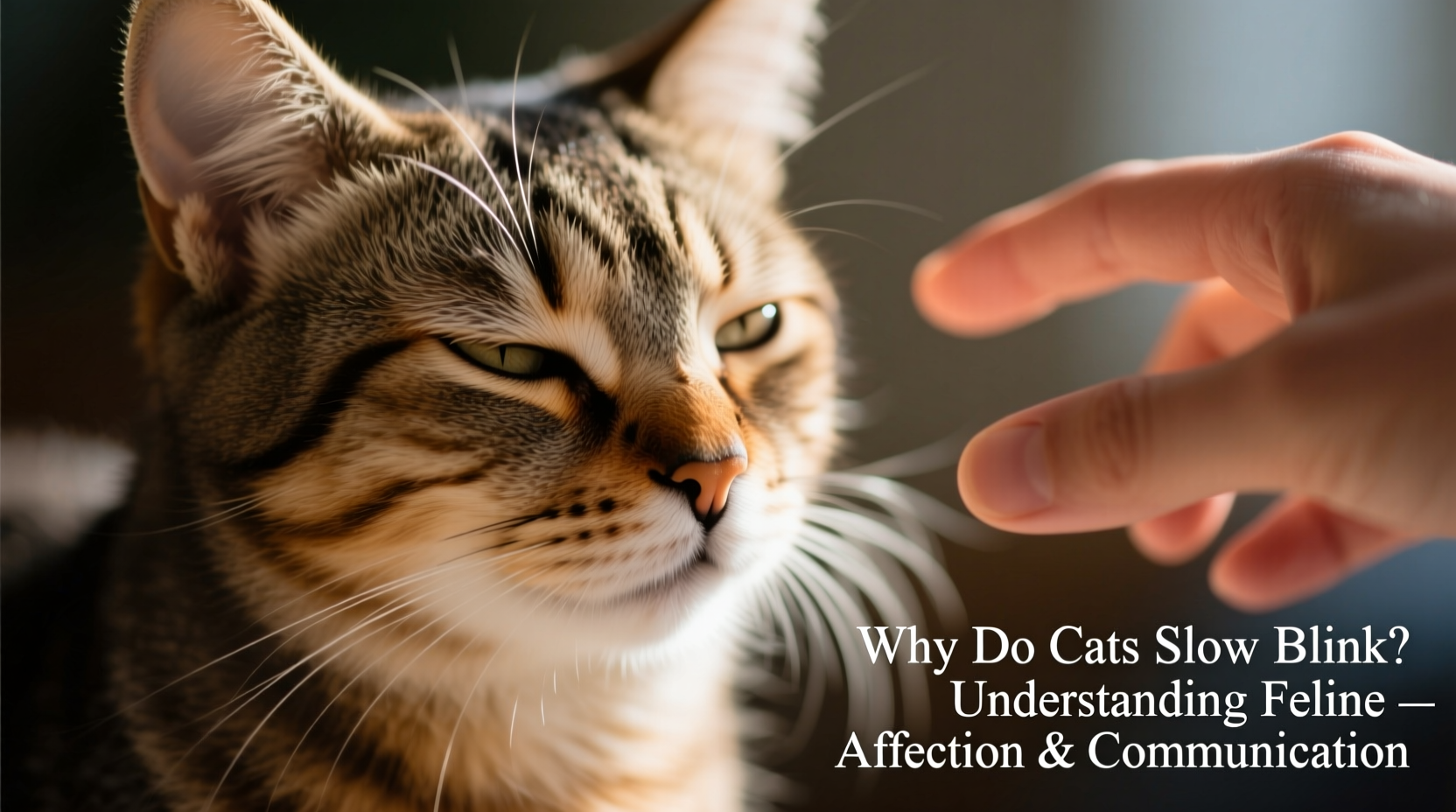
Research has confirmed what many cat owners have long suspected: slow blinking is a sign of positive emotional engagement. A 2020 study published in *Nature Scientific Reports* found that cats were more likely to return slow blinks from their owners and even strangers when those individuals initiated the gesture first. Importantly, cats also showed increased approach behaviors—moving closer, sitting nearby—after receiving a slow blink, suggesting they interpret it as friendly and non-threatening.
The act of slowly closing the eyes in the presence of another being is inherently vulnerable. In the animal kingdom, exposing oneself to potential danger by shutting the eyes—even briefly—is a strong indicator of safety and comfort. For cats, who evolved as both predators and prey, this level of relaxation doesn’t come easily. When a cat chooses to slow blink at you, it’s signaling that it feels secure enough to let its guard down.
“Cats use the slow blink as a form of social bonding. It’s a visual peace offering—a way of saying, ‘I’m not a threat, and I trust you.’” — Dr. Karen Becker, Feline Behavior Specialist
Decoding Feline Body Language Around the Slow Blink
The slow blink rarely occurs in isolation. To fully understand its meaning, it must be interpreted alongside other physical cues. Context is everything. A slow blink accompanied by relaxed ears, a gently twitching tail tip, and a low, loose posture reinforces the message of contentment. Conversely, if the blink happens during a tense interaction—such as when introducing a new pet—it may serve as a de-escalation tactic rather than pure affection.
Here’s how to read the full picture:
- Eyes: Half-closed or softly focused, not wide with dilated pupils (which can indicate fear or arousal).
- Ears: Forward or slightly to the side, not flattened back against the head.
- Mouth: Closed and relaxed; no hissing or growling.
- Body: Sitting or lying down calmly, possibly with paws tucked under the chest.
- Tail: Tip gently curling or still, not thrashing or puffed up.
How to Respond to a Cat’s Slow Blink
Responding appropriately to a slow blink strengthens the bond between you and your cat. It tells them their message was received and reciprocated. Here’s how to return the gesture effectively:
- Make soft eye contact from a comfortable distance—don’t stare intensely, which can feel threatening.
- Slowly close your eyes for 1–2 seconds, as if drifting off momentarily.
- Open your eyes gently, maintaining a relaxed facial expression.
- Repeat 2–3 times if the cat continues to watch you.
- Add a whisper or soft word like “hello” or “sweetheart” if your cat responds positively.
This simple exchange can become a ritual of trust. Some cats will even lie down or approach after a successful slow-blink conversation. Others may simply return the blink and continue lounging—a quiet acknowledgment of mutual respect.
Mini Case Study: Rebuilding Trust with a Shy Rescue Cat
Sophia adopted Luna, a two-year-old domestic shorthair rescued from a hoarding situation. At first, Luna hid under the bed for days, only emerging at night. Sophia resisted the urge to coax her out, instead sitting quietly nearby each evening and practicing slow blinks while reading a book.
After two weeks, Luna began watching her from the edge of the bed. One night, she returned a slow blink. Encouraged, Sophia repeated the gesture. Within days, Luna started approaching during blink sessions, eventually allowing gentle pets. Six months later, Luna greets Sophia with slow blinks every morning from her favorite windowsill perch.
This case illustrates how slow blinking can bridge the gap with traumatized or anxious cats. It provides a non-invasive way to communicate safety without demanding interaction.
Common Misinterpretations of Cat Eye Behavior
Not all eye movements are created equal. While the slow blink is a positive sign, other ocular behaviors can send very different messages. Confusing them can lead to miscommunication and stress for both cat and owner.
| Eye Behavior | Meaning | Do’s & Don’ts |
|---|---|---|
| Slow Blink | Trust, affection, relaxation | Do: Return the blink gently. Don’t: Stare afterward or move too quickly. |
| Hard Stare (unblinking) | Alertness, potential threat assessment | Do: Break eye contact slowly. Don’t: Challenge with prolonged gaze. |
| Dilated Pupils + Wide Eyes | Fear, overstimulation, or excitement | Do: Create space, reduce stimuli. Don’t: Approach or touch immediately. |
| Squinting in Bright Light | Physical response, not emotional | Do: Adjust lighting if needed. Don’t: Assume it’s a slow blink. |
| Third Eyelid Showing (Haw) | Potential illness or fatigue | Do: Monitor for other symptoms. Don’t: Ignore if persistent. |
Using Slow Blinks to Improve Daily Interactions
Incorporating slow blinks into everyday routines can enhance communication and reduce tension in multi-cat households or during vet visits. The technique works not only with familiar cats but also with unfamiliar ones, making it a valuable tool for caregivers, shelter workers, and veterinarians.
For example, when introducing two cats, standing sideways and offering slow blinks can help diffuse aggression. Similarly, before picking up a cat, initiating a blink sequence can signal peaceful intent and prevent defensive swatting.
“In clinical settings, we teach staff to use slow blinks as part of low-stress handling protocols. It calms cats faster than treats alone.” — Dr. Mikel Delgado, Certified Cat Behavior Consultant
Checklist: Building a Blink-Based Bond with Your Cat
- ✅ Observe your cat’s natural blinking patterns during calm moments.
- ✅ Practice returning slow blinks daily, especially during quiet interactions.
- ✅ Avoid staring directly without breaks—use glances instead.
- ✅ Combine blinks with soft speech or gentle hand extensions (palm up).
- ✅ Be patient—some cats take weeks or months to reciprocate.
- ✅ Respect boundaries—if your cat looks away, don’t persist.
- ✅ Use slow blinks before handling to ease transitions.
FAQ: Common Questions About Cat Slow Blinks
Do all cats slow blink?
No, not all cats exhibit slow blinks regularly. Personality, early socialization, and past experiences influence whether a cat uses this behavior. Shy or under-socialized cats may never initiate a slow blink, though they might respond to one over time with consistent positive reinforcement.
Can slow blinking help calm an aggressive cat?
Not directly. While slow blinks signal non-threat, they should not be used during active aggression or fear responses. In such cases, give the cat space first. Once the cat is calm, slow blinks can help rebuild trust gradually, but should be paired with professional behavioral guidance if aggression persists.
Is there a difference between a slow blink and a cat falling asleep?
Yes. A slow blink is deliberate and symmetrical, often followed by sustained soft eye contact. A sleepy blink is slower, asymmetrical, and usually leads to the cat curling up or fully dozing off. Intent matters—the slow blink is communicative, not transitional.
Conclusion: Seeing the World Through Your Cat’s Eyes
The slow blink is more than a charming quirk—it’s a window into the emotional world of cats. By learning to recognize and respond to this quiet gesture, you’re speaking your cat’s language. You’re acknowledging their need for safety, respect, and subtle connection. In a world where humans often demand loud expressions of love, the cat offers something deeper: a silent, steady affirmation of trust.
Start today. The next time your cat gazes at you, pause. Soften your eyes. Blink slowly. Wait. You might just receive the quietest “I love you” you’ve ever known.
💬 Have you shared a slow blink moment with your cat? We’d love to hear your story—leave a comment and join the conversation about feline connection.








