
Cats are full of quirks—purring, tail flicks, sudden sprints across the living room—but few behaviors are as endearing or as widely observed as kneading. Whether it's a soft blanket, your lap, or even a wool sweater, many cats rhythmically push their paws in and out, claws extended or retracted, often accompanied by purring and half-closed eyes. This act, affectionately known as \"making biscuits,\" is more than just a cute habit. It’s deeply rooted in both emotional comfort and evolutionary biology. Understanding why cats knead helps deepen the bond between pet and owner while offering insight into feline psychology.
The Origins of Kneading: A Behavior from Kittenhood
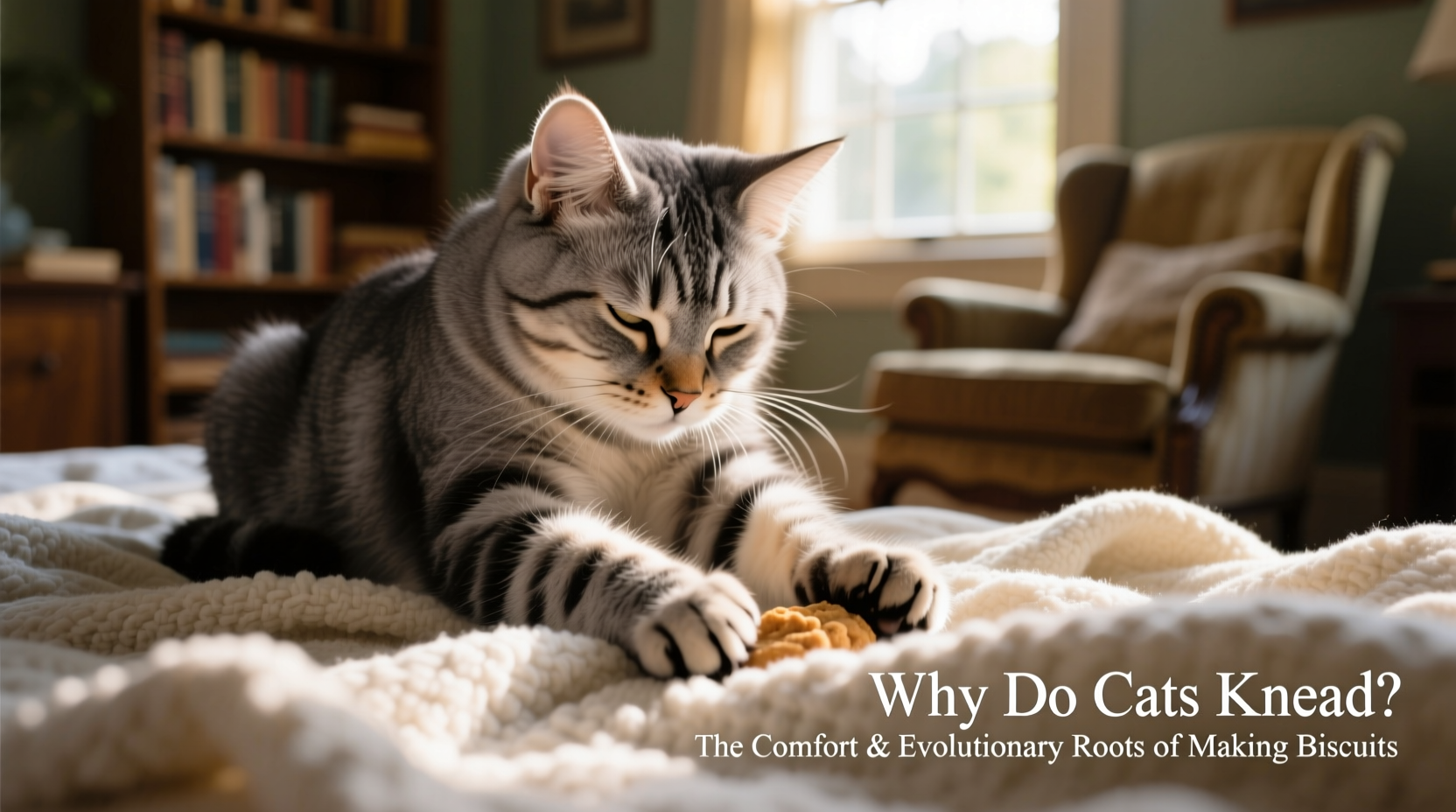
Kneading begins in the earliest days of a cat’s life. As newborn kittens nurse, they instinctively use their front paws to massage their mother’s mammary glands. This motion stimulates milk flow, ensuring better nourishment. The rhythmic pushing is not only functional but also tied to warmth, safety, and bonding. Because this experience is so strongly associated with comfort and survival, the behavior often persists into adulthood—even in cats who were bottle-fed and never nursed from their mothers.
This early-life imprinting explains why adult cats may knead when they feel secure, content, or sleepy. The act triggers memories of maternal care, evoking feelings of safety and relaxation. In essence, when your cat climbs onto your lap and starts “baking,” they’re mentally returning to one of the most peaceful periods of their lives.
Tip: If your cat kneads during cuddle sessions, respond with gentle strokes or soft speech—it reinforces trust and strengthens your emotional connection.Evolutionary Functions of Kneading
Beyond kittenhood associations, kneading serves several practical purposes shaped by evolution. Wild ancestors of domestic cats lived in diverse environments where comfort and safety had to be actively created. One theory suggests that kneading helped flatten grass, leaves, or underbrush to form a soft sleeping area. By pressing down vegetation, cats could create a cozy, insulated nest safe from dampness and hidden predators.
Another evolutionary explanation ties kneading to territorial marking. Cats have scent glands in the pads of their paws that release pheromones when pressure is applied. Each time a cat kneads a surface, they’re subtly marking it as their own. This olfactory signaling communicates safety and familiarity to the cat—and sometimes to other animals in the household. In multi-cat homes, observing which surfaces are frequently kneaded can reveal preferred zones of comfort and dominance.
“Kneading is a multimodal behavior—it’s tactile, emotional, and territorial. It’s one of the clearest examples of how domestication preserved ancestral instincts.” — Dr. Lena Patel, Feline Ethologist, University of Edinburgh
Emotional and Psychological Benefits for Adult Cats
In modern indoor environments, cats no longer need to build nests or mark territory for survival, yet kneading remains a vital emotional outlet. The behavior is closely linked to states of deep relaxation and contentment. Many cats begin kneading just before falling asleep or after receiving affection. It’s a self-soothing mechanism, similar to how humans might rock gently or wrap themselves in a blanket when stressed.
For some cats, especially those rescued from neglectful conditions, kneading can emerge later in life as part of emotional healing. As trust develops with caregivers, suppressed kitten-like behaviors resurface. This resurgence is a positive sign, indicating that the cat feels safe enough to express vulnerable, infantile actions without fear.
Moreover, the physical sensation of kneading may provide mild muscle relief or improved circulation in the paws, though this remains speculative. What’s certain is that the behavior correlates strongly with emotional well-being. Suppressing it—by discouraging or interrupting the action—can cause confusion or anxiety in sensitive cats.
When Kneading Signals Stress or Anxiety
While most kneading occurs in relaxed contexts, it can occasionally indicate stress. For example, a cat in a new environment might knead excessively on a single spot as a way to self-regulate. Similarly, cats undergoing medical treatment or experiencing changes in routine may revert to increased kneading as a coping strategy.
Distinguishing between comfort-driven and stress-driven kneading lies in context and accompanying body language. A relaxed cat will have slow blinking, a loose posture, and possibly purr. A stressed cat may have tense muscles, flattened ears, dilated pupils, or rapid breathing—even while kneading.
Why Do Some Cats Knead More Than Others?
Not all cats knead, and frequency varies widely among individuals. Genetics, early socialization, and personality play key roles. Cats who stayed with their mothers longer during kittenhood may retain the behavior more strongly. Bottle-fed kittens, while missing the physical nursing experience, can still develop kneading if provided with soft surrogate surfaces and consistent nurturing care.
Temperament also influences the tendency to knead. Affectionate, people-oriented breeds like Ragdolls, Persians, and Maine Coons are more likely to display the behavior regularly. In contrast, independent or aloof cats may rarely or never knead. This doesn’t reflect lower intelligence or emotional capacity—only different coping and expression styles.
| Breed | Typical Kneading Frequency | Common Triggers |
|---|---|---|
| Ragdoll | High | Lap sitting, post-petting, bedtime |
| Maine Coon | Moderate to High | Soft surfaces, greeting owners |
| Siamese | Moderate | Vocal interaction, nesting spots |
| Scottish Fold | Low to Moderate | Quiet moments, favorite blankets |
| Domestic Shorthair | Variable | Depends on individual history and temperament |
Managing Kneading: Comfort vs. Practicality
While kneading is natural and beneficial, it can become problematic when sharp claws damage furniture or skin. Owners often face a dilemma: how to allow emotional expression without sacrificing comfort or property. The solution lies not in stopping the behavior, but in redirecting and managing it effectively.
Step-by-Step Guide to Managing Kneading Safely
- Observe patterns: Note when and where your cat kneads most often—this helps anticipate and prepare.
- Provide alternatives: Place soft, washable blankets or padded mats in common resting areas.
- Trim claws regularly: Keep nails blunt enough to minimize scratches without impairing mobility.
- Use nail caps: Soft vinyl caps (like Soft Paws) can be applied temporarily to prevent damage.
- Encourage off-lap kneading: Gently place a cushion on your lap first, then guide your cat to knead the fabric instead of bare skin.
- Reinforce positive behavior: Reward calm kneading on appropriate surfaces with treats or verbal praise.
Real-Life Example: Rebuilding Trust Through Kneading
Sophie, a three-year-old domestic shorthair, was adopted from a shelter after being found stray at eight weeks old. Initially withdrawn and hesitant to interact, she avoided contact and showed no signs of typical kitten behaviors. Over six months of patient care, her owner introduced soft bedding, daily grooming, and quiet companionship. At nine months, Sophie began kneading a fleece throw on the couch—her first visible sign of emotional security. Within a year, she regularly made biscuits on her owner’s lap, often purring deeply. Her journey illustrates how kneading can serve as a behavioral milestone in recovery from early trauma.
Frequently Asked Questions
Is kneading a sign of dominance or mating behavior?
No. While kneading involves scent marking, it is not aggressive or sexually motivated in spayed/neutered pets. It’s primarily an affiliative behavior linked to comfort and familiarity. Intact cats may exhibit more frequent kneading during heat cycles, but the core motivation remains emotional regulation.
Should I stop my cat from kneading?
No—unless it causes injury or extreme destruction. Kneading is psychologically beneficial. Instead of stopping it, manage it through environmental adjustments and claw maintenance. Punishment can damage trust and increase anxiety.
Do all cats knead, and do they grow out of it?
No, not all cats knead, and there’s no developmental timeline for the behavior. Some start late, others never do. It’s not a learned skill but an instinctive one influenced by genetics and early experience. Cats don’t “grow out” of it; rather, they continue as long as they feel emotionally secure.
Practical Checklist for Cat Owners
- ✅ Observe when and where your cat kneads most often
- ✅ Provide soft, washable surfaces for safe kneading
- ✅ Trim claws every 2–3 weeks or apply nail caps
- ✅ Avoid startling or scolding your cat during kneading
- ✅ Use positive reinforcement when they choose appropriate spots
- ✅ Monitor for changes in frequency—sudden increases may signal stress
- ✅ Respect the behavior as a sign of trust and emotional health
Conclusion: Embracing the Quirks of Feline Love
Kneading is more than a funny habit—it’s a window into a cat’s inner world. Rooted in survival, shaped by evolution, and sustained by emotion, the act of “making biscuits” reflects deep-seated needs for comfort, security, and belonging. When your cat presses their paws into your thigh or a favorite blanket, they’re not just stretching muscles—they’re expressing love, nostalgia, and trust in the purest form they know.
Instead of viewing kneading as a nuisance, consider it a privilege. Few animals carry such intimate behaviors into adulthood, and even fewer share them so openly with humans. By understanding and supporting this instinct, you honor your cat’s nature and strengthen the invisible threads of companionship.
💬 Does your cat make biscuits? Share your story or tips in the comments—your experience could help another cat owner understand their furry companion better.








