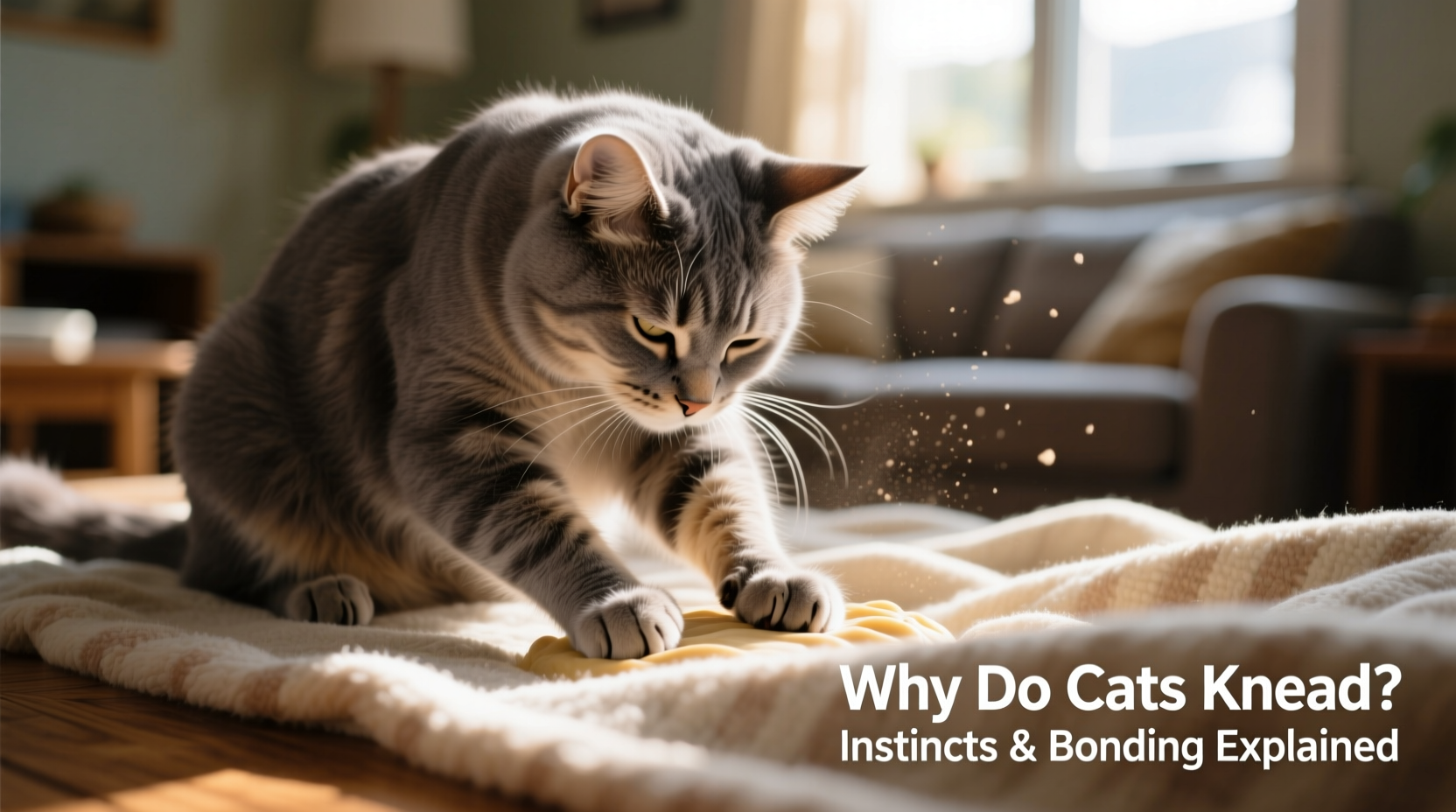
Cats exhibit a range of behaviors that can seem mysterious to their human companions. One of the most endearing—and sometimes puzzling—is kneading. You’ve likely seen your cat rhythmically pushing its paws into a soft surface: a blanket, your lap, or even a pillow. This motion, often accompanied by purring and half-closed eyes, resembles a baker working dough. While it may look odd, kneading is deeply rooted in feline biology, instinct, and emotional connection. Understanding why cats knead goes beyond mere curiosity—it offers insight into their emotional needs, developmental history, and bond with humans.
The Origins of Kneading: A Survival Instinct from Kittenhood
Kneading begins in the earliest days of a cat’s life. Newborn kittens are blind and deaf for the first week or two, relying entirely on touch and smell to locate their mother and nurse. To stimulate milk flow from the mammary glands, kittens press their tiny paws against their mother’s belly in a rhythmic motion. This action triggers the release of oxytocin, a hormone that promotes milk letdown. Over time, this behavior becomes hardwired—not just as a feeding mechanism, but as a source of comfort and security.
As cats grow, they retain this behavior well into adulthood. Even when no milk is available, the act of kneading evokes the warmth, safety, and nourishment of early life. It’s not merely a leftover reflex; it’s a psychological anchor to one of the most secure periods in a cat’s existence. When an adult cat kneads a blanket or curls up beside you while pressing its paws, it’s reliving a primal sense of contentment.
“Kneading is one of the clearest examples of neonatal behavior persisting into adulthood in cats. It reflects both physiological need and deep emotional association.” — Dr. Sarah Thompson, Feline Behavioral ScientistTip: If your cat kneads during petting or before settling down, it’s a strong sign of trust and emotional comfort.
Emotional Significance: Kneading as a Bonding Behavior
Beyond instinct, kneading plays a crucial role in social bonding. Cats use scent glands located in their paw pads to mark territory. When they knead a surface, they deposit pheromones—chemical signals that communicate familiarity and ownership. In doing so, they’re not just expressing comfort; they’re claiming the space (or person) as part of their safe zone.
This behavior is especially common when cats knead their owners. By combining physical contact with scent marking, the cat reinforces its emotional connection to you. It’s a subtle but powerful way of saying, “You are mine, and I feel safe with you.” This dual function—comfort-seeking and territorial marking—makes kneading a multifaceted behavior that bridges biology and emotion.
Moreover, the context in which kneading occurs matters. Cats are more likely to knead when they’re relaxed, sleepy, or being affectionately handled. The presence of purring during kneading further underscores its role in emotional regulation. Together, these signs indicate a state of deep contentment—a rare and valuable window into a cat’s inner world.
Why Blankets? The Role of Texture and Warmth
Not all surfaces invite kneading. Cats consistently prefer soft, pliable materials like wool blankets, fleece throws, or plush cushions. These textures mimic the feel of a mother’s fur and provide sensory feedback similar to what they experienced as nursing kittens. The resistance of a thick fabric allows for effective paw pressure, enhancing the soothing rhythm of the motion.
Additionally, many cats seek out warm spots before beginning to knead. Heated surfaces—such as a sunlit patch on a rug or a lap warmed by body heat—trigger the behavior more readily. Heat is associated with the warmth of the mother’s body, making it a powerful environmental cue. Some experts believe that the combination of soft texture and elevated temperature creates an almost hypnotic effect, lulling the cat into a meditative state of relaxation.
| Surface Type | Likelihood of Kneading | Reason |
|---|---|---|
| Fleece or wool blanket | Very High | Soft, warm, retains scent; mimics maternal fur |
| Cotton towel | Moderate | Adequate texture but less insulating |
| Leather sofa | Low | Too firm, lacks warmth and absorbency |
| Human lap | Very High | Warm, soft with movement; strong emotional bond |
When Kneading Becomes Problematic: Managing Claws and Comfort
While kneading is natural and healthy, it can occasionally lead to discomfort—especially when claws are involved. Some cats extend their claws while kneading, which can damage fabrics or scratch skin. This isn’t aggression; it’s simply an extension of the original nursing motion, where claw engagement helped stabilize the kitten against the mother’s body.
To manage this without discouraging the behavior, consider the following strategies:
- Trim your cat’s claws regularly to minimize snagging and scratching.
- Place a thick towel or pet-safe mat over your lap when expecting kneading.
- Encourage kneading on designated items like a soft cat bed or blanket.
- Avoid scolding or pulling away abruptly, as this may damage trust.
Step-by-Step Guide: Encouraging Healthy Kneading Habits
- Observe Triggers: Note when and where your cat tends to knead—after meals, during petting, or before sleep.
- Provide Alternatives: Offer a plush blanket or cat bed in those areas to channel the behavior appropriately.
- Use Positive Reinforcement: When your cat uses the designated item, reward with affection or a small treat.
- Protect Yourself: Keep a light throw on hand when sitting with your cat to protect clothing and skin.
- Maintain Routine: Consistent environments and schedules help reduce anxiety-related kneading.
Medical and Psychological Considerations
In most cases, kneading is a normal, healthy behavior. However, excessive or sudden changes in kneading patterns may signal underlying issues. For example:
- Increased frequency could indicate stress or anxiety, especially after environmental changes like moving or introducing a new pet.
- Pain-related kneading—such as focusing on one area of the body—might suggest musculoskeletal discomfort.
- Loss of interest in kneading could reflect depression, illness, or aging-related decline in activity.
If you notice any abrupt shifts in behavior, consult a veterinarian. A full health assessment can rule out medical causes and ensure your cat remains physically and emotionally well.
Mini Case Study: Luna and the Heirloom Quilt
Luna, a 4-year-old domestic shorthair, lived with her owner, Maria, in a quiet suburban home. Every evening, Luna would climb onto the couch, circle three times, then begin kneading Maria’s grandmother’s handmade quilt. At first, Maria worried about damaging the delicate fabric. She tried placing a synthetic blanket underneath, but Luna ignored it completely.
After consulting a feline behaviorist, Maria learned that the quilt’s wool fibers and faint residual scent were key triggers. Instead of discouraging the behavior, she began placing a washable liner beneath the quilt and trimmed Luna’s claws weekly. Over time, Luna continued kneading the quilt—but without causing damage. More importantly, Maria realized the ritual was a sign of deep attachment. “It’s not just about the blanket,” she said. “She’s telling me she feels safe here.”
FAQ: Common Questions About Cat Kneading
Do all cats knead?
No, not all cats knead. While it’s common, some never develop the habit. Factors include early weaning, lack of littermates, or individual temperament. Absence of kneading doesn’t indicate unhappiness.
Can neutered or spayed cats still knead?
Yes. Kneading is not hormonally driven in the way mating behaviors are. It persists across genders and reproductive statuses because it’s rooted in early development, not sexual maturity.
Is kneading a sign of sexual behavior?
No. Despite occasional misconceptions, kneading is not related to mating. It emerges long before sexual maturity and occurs in both males and females regardless of reproductive status.
Expert Insight: The Science Behind the Motion
Recent studies using motion analysis have shown that the kneading pattern in adult cats closely matches that of nursing kittens—down to the timing and pressure distribution. Researchers at the University of Edinburgh found that cats who knead regularly show lower cortisol levels, suggesting reduced stress.
“The consistency of the kneading motion across age and environment points to its role in self-soothing. It’s not just nostalgia—it’s a functional coping mechanism.” — Dr. Alan Reyes, Animal Cognition Researcher
This research reinforces the idea that kneading serves both psychological and physiological purposes. It helps regulate mood, reinforces bonds, and provides a tactile link to early security.
Conclusion: Embracing the Purr-fect Ritual
Kneading is far more than a quirky feline habit. It’s a living echo of kittenhood, a tool for emotional expression, and a bridge between species. When your cat presses its paws into a blanket—or into you—it’s sharing a moment of vulnerability and trust. Recognizing this behavior for what it is allows us to deepen our connection with our pets, responding not with annoyance, but with appreciation.
Instead of viewing kneading as a nuisance, consider it a compliment. Your cat feels safe enough to regress to infancy in your presence. That’s a rare gift. With simple adjustments—like providing soft surfaces and maintaining claw care—you can support this instinctive behavior while protecting your belongings.
💬 What does your cat knead on? Share your story or tips in the comments—let’s celebrate the cozy quirks that make cats so uniquely loving.








