
You may have noticed a stray or outdoor cat with a small, neat notch in one of its ears—cleanly clipped at the tip. This isn’t an injury from a fight or an accident. It’s a deliberate mark known as “ear tipping,” a widely used practice in humane animal population control. Ear tipping is a visual signal that communicates vital information about a cat’s medical history, particularly whether it has been spayed or neutered. Understanding this practice sheds light on broader efforts to manage feral cat colonies humanely and sustainably.
What Is Ear Tipping?
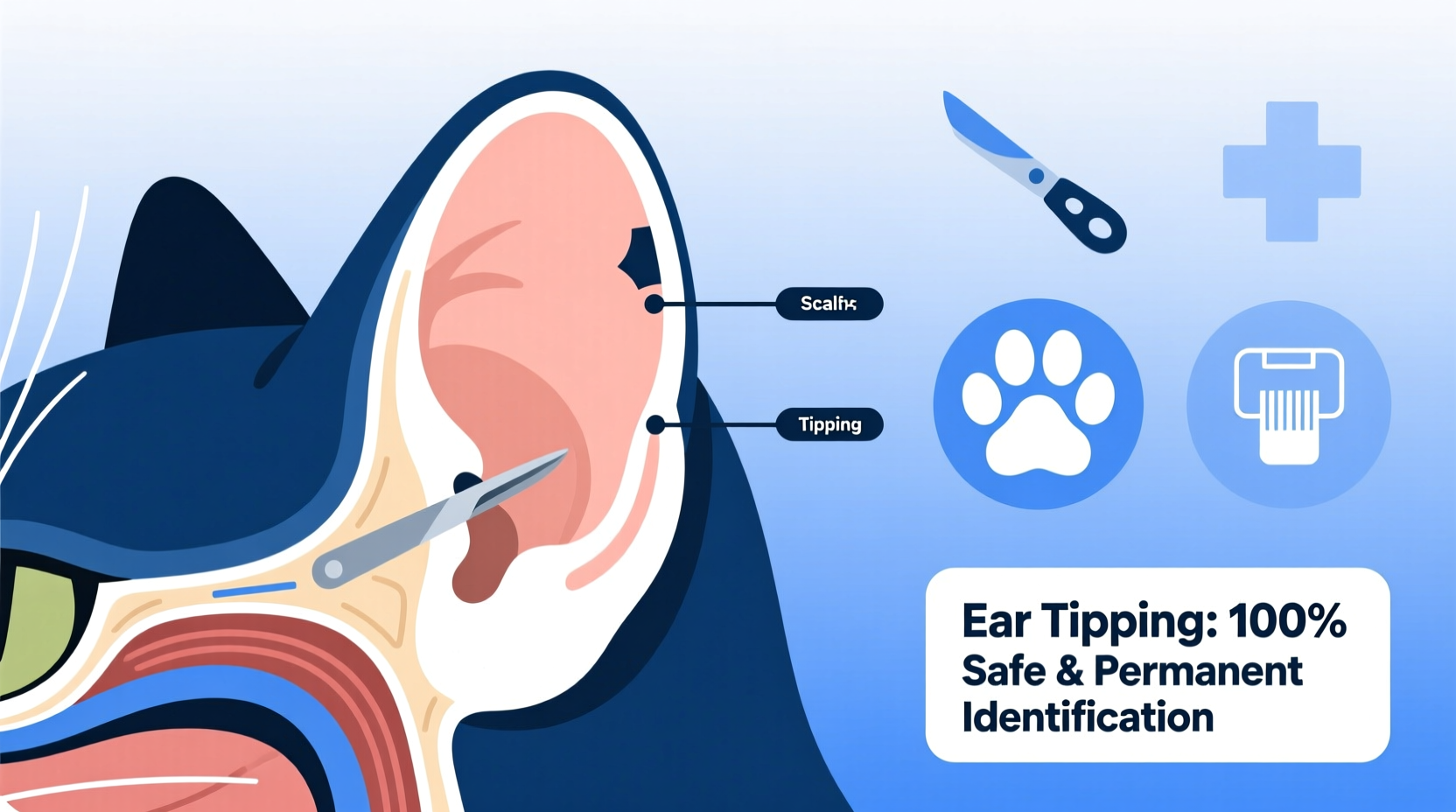
Ear tipping is the surgical removal of approximately 3/8th of an inch (about 1 cm) from the tip of a cat’s left ear while the animal is under anesthesia during spay or neuter surgery. The procedure is quick, causes minimal discomfort, and leaves a permanent, easily identifiable mark visible from a distance. It is performed by licensed veterinarians or trained professionals as part of Trap-Neuter-Return (TNR) programs.
The primary goal of ear tipping is identification. In free-roaming or feral cat communities, where individual tracking is difficult, ear tipping allows caregivers, rescuers, and animal control officers to recognize which cats have already undergone sterilization and vaccination—eliminating the need for re-trapping and unnecessary surgeries.
Tip: If you see a tipped-eared cat, avoid trapping or disturbing it unless it appears sick or injured—chances are, it’s already been cared for through a TNR program.The Role of Ear Tipping in Feral Cat Management
Feral cats—domestic cats that live outdoors with little or no human contact—can reproduce rapidly. Without intervention, a single unspayed female and her offspring can generate hundreds of kittens over several years. Traditional methods like euthanasia or relocation have proven ineffective and ethically controversial. In contrast, TNR combined with ear tipping offers a compassionate, long-term solution.
TNR involves three key steps:
- Trap: Humanely capture feral cats using secure traps.
- Neuter: Transport them to a clinic for spaying or neutering, vaccinations (especially rabies and distemper), and ear tipping.
- Return: Release the cats back into their original territory once they’ve recovered.
This approach stabilizes colony populations, reduces nuisance behaviors like yowling and spraying, and improves overall feline health—all without removing cats from their established environments.
Why the Left Ear?
The left ear is universally chosen for tipping in North America and many other regions. This standardization ensures consistency across communities and organizations. When a caregiver or volunteer sees a tipped left ear, they immediately know the cat has been sterilized. Some international programs may use different conventions, but the principle remains the same: a clear, unmistakable identifier.
“Ear tipping is not cosmetic—it’s a critical tool in effective, ethical feral cat management. It prevents redundant surgeries and builds trust within community caretaker networks.” — Dr. Linda Lord, DVM, PhD, American Veterinary Medical Association
Debunking Common Misconceptions
Despite its widespread use, ear tipping is often misunderstood. Here are some common myths and the facts behind them:
| Myth | Fact |
|---|---|
| Ear tipping is painful or cruel. | The procedure is performed under full anesthesia during spay/neuter surgery. Cats feel no pain during or after healing. |
| It’s a sign the cat was abused. | Ear tipping is a professional, standardized practice conducted by trained individuals in clinical settings. |
| All stray cats should be taken to shelters. | Feral cats are not socialized to humans and suffer in shelters. TNR with ear tipping is a more humane alternative. |
| The mark will heal poorly or get infected. | With proper veterinary care, complications are extremely rare. The wound heals cleanly within days. |
How to Support Ear Tipping and TNR Programs
Ear tipping doesn’t happen in isolation—it’s part of a larger network of community-based animal welfare efforts. Supporting these initiatives benefits both cats and neighborhoods. Here’s how you can help:
- Volunteer with local TNR groups to assist in trapping, transporting, or monitoring colonies.
- Donate to low-cost spay/neuter clinics or nonprofit rescue organizations.
- Advocate for municipal funding or policies that support humane cat management.
- Educate neighbors about the purpose of ear tipping to prevent misunderstandings.
- Report unaltered or injured cats to local rescues instead of attempting DIY interventions.
Mini Case Study: The Oakwood Neighborhood Transformation
In a suburban neighborhood in Columbus, Ohio, residents complained for years about increasing numbers of stray cats, noise, and odor. After repeated calls to animal control yielded limited results, a group of volunteers partnered with a local TNR nonprofit. Over 18 months, they trapped, neutered, vaccinated, and ear-tipped 47 cats across six colonies.
The results were dramatic: no new litters were born, mating behaviors decreased by over 80%, and public complaints ceased. Residents began recognizing the tipped ears as a sign of care rather than neglect. One homeowner noted, “I used to think those cats were abandoned. Now I see they’re managed and healthy. The difference is night and day.”
Step-by-Step: What Happens During an Ear Tipping Procedure
To understand why ear tipping is safe and efficient, here’s a timeline of what occurs during a typical TNR clinic visit:
- Intake & Assessment: The cat is examined by a veterinarian to ensure it’s fit for surgery.
- Anesthesia: The cat is safely anesthetized using protocols designed for feral animals.
- Surgery: Spay or neuter is performed first, followed by ear tipping.
- Ear Tipping Process: A straight-line cut removes the distal 3/8 inch of the left ear tip. The wound is cauterized to stop bleeding.
- Vaccinations: Rabies and FVRCP vaccines are administered.
- Recovery: The cat is monitored until alert, then held for 24–48 hours before release.
- Return: The cat is returned to its home territory, now visibly marked and healthier.
This entire process prioritizes animal welfare, efficiency, and long-term impact.
Frequently Asked Questions
Is ear tipping required for all feral cats?
While not legally mandated everywhere, it is considered best practice by animal welfare organizations like the ASPCA and Alley Cat Allies. It’s essential for effective colony management.
Can ear tipping be done on domestic or indoor cats?
Rarely. Indoor pet cats don’t need identification via ear tipping since their status is known to owners. However, some working cats (e.g., barn cats) in managed programs may be tipped for clarity.
Do all countries use ear tipping?
No universal standard exists, but many countries—including the U.S., Canada, UK, Australia, and parts of Europe—use ear tipping in TNR. Others may use tattoos inside the ear or microchips, though these are harder to detect from a distance.
Final Thoughts: Recognizing Compassion in Action
The next time you spot a cat with a clipped ear, recognize it not as a sign of hardship, but of care. That small mark represents a life spared from endless breeding cycles, disease, and suffering. It reflects a commitment to non-lethal, science-backed solutions that balance compassion with practicality.
Ear tipping is more than a procedure—it’s a symbol of progress in how we coexist with urban wildlife. By supporting TNR programs, spreading awareness, and respecting the work already being done, each of us can contribute to a kinder, more humane environment for cats and communities alike.
💬 Have you seen a tipped-eared cat in your area? Share your experience or photo in the comments to help educate others about this important practice.








