Cats are creatures of habit, often displaying behaviors that seem puzzling to their human companions. One such behavior—pushing or pawing at their food bowl as if trying to bury it—can leave pet owners wondering: is this a natural instinct, a sign of stress, or something else entirely? While it may appear odd, this action is rooted in both evolutionary biology and individual temperament. Understanding the reasons behind this behavior can help cat owners support their pets more effectively and ensure their feeding environment promotes comfort and well-being.
The Evolutionary Roots of Food-Burying Behavior
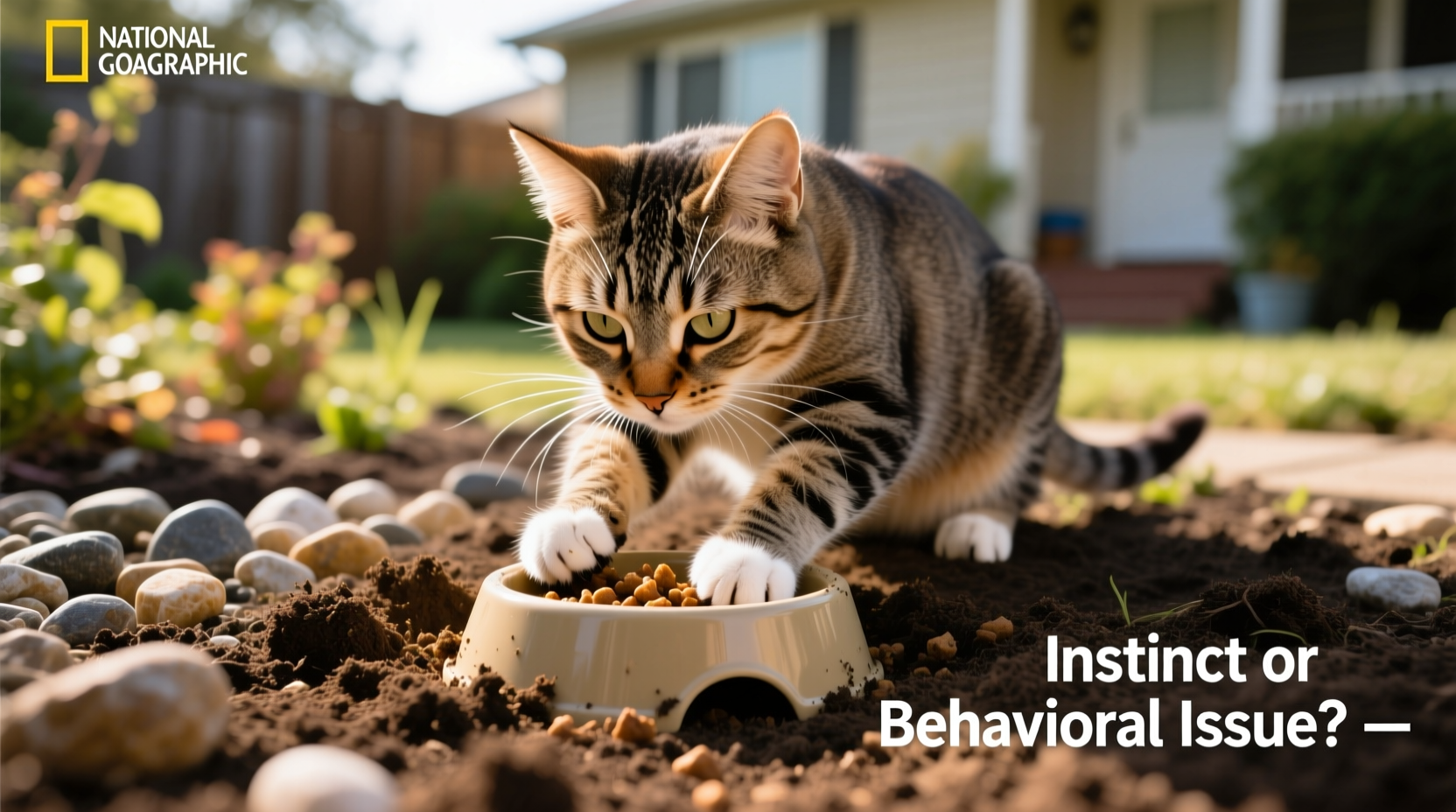
In the wild, felines are both predators and potential prey. Their survival depends on stealth, resource management, and minimizing exposure. One key survival strategy involves concealing uneaten food. In nature, leftover prey emits odors that can attract scavengers or larger predators. To reduce risk, wild cats often bury excess food using dirt, leaves, or snow. This act serves two purposes: it hides the scent and marks the location for later retrieval.
Domestic cats retain many of these ancestral instincts despite generations of living alongside humans. When a house cat paws at its food bowl, kicks litter nearby, or scrapes the floor around the dish, it’s not actually attempting to dig—it’s performing a displacement behavior. That is, it’s going through the motions of burying food because the instinct is hardwired, even when the context (a kitchen floor) makes the action ineffective.
“Even in safe, indoor environments, cats continue to express instinctual behaviors shaped by thousands of years of evolution. What looks like fussiness is often deeply ingrained survival programming.” — Dr. Lena Peterson, Feline Ethologist, University of Edinburgh
Behavioral Triggers Beyond Instinct
While instinct plays a major role, not all instances of food-burying behavior are purely reflexive. Environmental and psychological factors can amplify or modify this action. For example:
- Sensory sensitivity: Cats have extremely sensitive whiskers. If a food bowl is too narrow or deep, repeated contact with the sides can cause discomfort—a condition known as whisker fatigue. Pawing at the bowl may be an attempt to move food out into open space where eating is more comfortable.
- Food preference: A cat may reject certain foods by pushing the bowl away or pawing at it. This mimics the act of covering unwanted items and signals dissatisfaction.
- Stress or anxiety: Changes in routine, new pets, loud noises, or competition from other animals can make a cat feel vulnerable during mealtime. Burying food—or refusing to eat altogether—can be a coping mechanism.
- Territorial marking: Cats have scent glands in their paws. Scratching near the bowl may not be about burial but rather marking the area as their own, especially in multi-cat households.
Distinguishing Between Normal and Problematic Behavior
Occasional pawing at a food bowl is typically harmless and falls within the range of normal feline behavior. However, persistent or aggressive actions—such as knocking over bowls, refusing to eat, or vocalizing during meals—may point to underlying issues. The key is consistency and context.
Consider the following distinctions:
| Normal Behavior | Potentially Problematic Behavior |
|---|---|
| Light pawing or scratching near the bowl after eating | Violently swiping or flipping the bowl repeatedly |
| Occurs occasionally, without distress | Happens every mealtime, accompanied by growling or hiding |
| Continues to eat normally | Leaves food uneaten despite hunger cues |
| No signs of physical discomfort | Shakes head, drools, or avoids touching the bowl |
| Single-cat household or peaceful multi-cat dynamics | Lives in a high-competition environment with food guarding |
If your cat consistently exhibits problematic behaviors, further investigation is warranted. These actions may reflect medical concerns such as dental pain, gastrointestinal discomfort, or neurological issues.
Step-by-Step Guide to Addressing Food-Burying Behavior
When your cat starts treating their dinner like a buried treasure, take a systematic approach to identify and resolve the cause. Follow this five-step process:
- Assess the feeding setup. Use wide, shallow bowls made of stainless steel or ceramic to prevent whisker stress. Ensure the bowl is clean and free of strong detergent smells.
- Relocate the feeding area. Place food bowls in quiet, low-traffic zones away from litter boxes and noisy appliances. Cats prefer privacy while eating.
- Monitor interactions in multi-cat homes. Feed cats separately to eliminate competition. Stagger feeding times if needed, and provide elevated or hidden spots for shy eaters.
- Evaluate diet and freshness. Offer high-quality, palatable food. Rotate proteins gradually and avoid sudden changes. Warm wet food slightly to enhance aroma—cats rely heavily on smell.
- Consult a veterinarian. Rule out medical causes such as tooth decay, oral ulcers, nausea, or hyperthyroidism. A full check-up may include blood work and oral examination.
Real Example: Luna, the Anxious Siamese
Luna, a four-year-old Siamese cat, lived with two other cats in a busy urban apartment. Her owner noticed she would eat only a few bites before pawing vigorously at her bowl, sometimes flipping it over entirely. Initially dismissed as quirky behavior, it persisted for months. After consulting a veterinary behaviorist, the owner learned that Luna was being intimidated by the dominant male cat, who would sit nearby during meals.
By implementing separate feeding stations—one on a high shelf accessible only to Luna—the behavior decreased significantly within two weeks. Additionally, switching to a wider, rimless bowl reduced her tendency to paw at the food. Within a month, Luna was eating calmly and leaving her bowl untouched after meals. This case highlights how environmental stressors can amplify instinctual actions into disruptive behaviors.
Prevention and Long-Term Management Checklist
To minimize food-burying tendencies and promote healthy eating habits, use the following checklist:
- ✅ Use wide, shallow feeding dishes to prevent whisker fatigue
- ✅ Clean bowls daily with mild, unscented soap
- ✅ Position food bowls in quiet, secure locations
- ✅ Feed multiple cats in separate areas to reduce competition
- ✅ Introduce new foods gradually over 7–10 days
- ✅ Monitor weight and appetite weekly
- ✅ Schedule annual vet exams, including dental checks
- ✅ Avoid scolding or punishing food-related behaviors—they increase anxiety
Frequently Asked Questions
Is it normal for cats to scratch the floor after eating?
Yes, it’s common. This mimics the instinct to bury leftovers and mask scent from predators. As long as the behavior is mild and doesn’t interfere with eating, it’s generally not a concern.
Why does my cat push her food out of the bowl?
This could be due to whisker fatigue, dislike of the food texture, or a preference for eating off the ground. Some cats also mimic hunting behavior by “moving” their prey. Try serving food on a flat surface to see if the behavior stops.
Should I be worried if my cat suddenly starts burying her food bowl?
A sudden change in behavior warrants attention. It could signal discomfort, illness, or environmental stress. Evaluate recent changes—new food, new pets, home renovations—and consult your veterinarian if the behavior persists.
Expert Insight: The Role of Enrichment
Beyond basic nutrition, feeding time presents an opportunity for mental stimulation. In the wild, cats spend significant energy hunting, capturing, and processing food. Domestication has removed much of this challenge, which can lead to boredom and displaced behaviors like obsessive pawing.
“Feeding should engage the cat’s mind, not just fill its stomach. Puzzle feeders and timed dispensers tap into natural foraging instincts and reduce compulsive actions.” — Dr. Marcus Reed, Veterinary Behavior Specialist, Cornell Feline Health Center
Introducing food puzzles or scatter-feeding small portions around the room encourages natural behaviors and redirects energy away from repetitive actions like digging at bowls. Over time, this enrichment can reduce stress-related habits and improve overall satisfaction.
Conclusion: Responding with Empathy and Knowledge
The act of a cat “burying” its food bowl is rarely about defiance or stubbornness. Instead, it’s a window into the complex interplay between instinct, environment, and emotional state. Whether driven by ancient survival mechanisms or modern-day stressors, this behavior offers valuable insight into your cat’s needs.
By observing closely, adjusting the feeding environment, and seeking professional guidance when necessary, you can transform confusing moments into opportunities for deeper understanding. Remember, every paw swipe, every scratched floorboard, tells a story. Listen to it—not with frustration, but with curiosity and care.
💬 Have a cat that buries their bowl? Share your experience or solution in the comments below—your insight could help another pet owner find peace at mealtimes!








