
Cats are enigmatic creatures whose behaviors often leave their human companions puzzled. One such behavior—bringing toys to the food bowl—is both common and curious. At first glance, it may seem random or even illogical. However, this action is deeply rooted in a cat’s evolutionary instincts, social dynamics, and emotional needs. Understanding why your cat deposits a crumpled mouse or feather toy next to their dinner dish offers valuable insight into their psychology and strengthens the bond between pet and owner.
This behavior isn’t a sign of confusion or mischief. Instead, it reflects a complex interplay of survival strategies inherited from wild ancestors, territorial marking, and relational signaling. By decoding this seemingly odd habit, we gain a deeper appreciation for how domestic cats interpret their environment and communicate with those they trust.
The Hunting Instinct: A Legacy of Survival
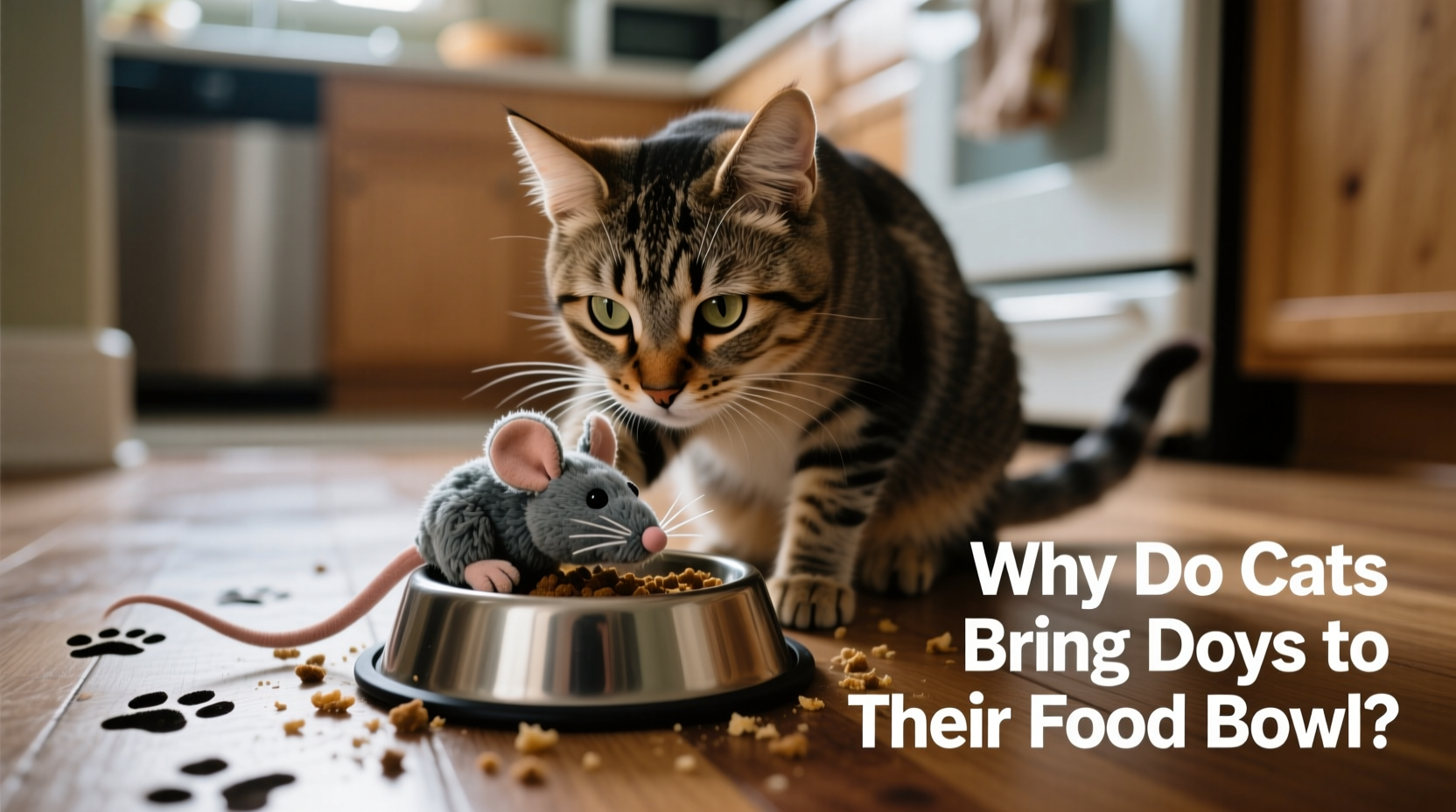
Domestic cats may live in homes with regular meals, but their brains remain wired for the wild. The act of \"hunting\" with toys and then bringing them to the food bowl mirrors the natural sequence of predation seen in feral cats. In the wild, after capturing prey, a cat will often carry it to a safe location before consuming it. This ensures protection from scavengers and provides a secure space to eat without disturbance.
When a domestic cat plays with a toy, they engage in simulated hunting—stalking, pouncing, biting, and \"killing.\" Once the \"kill\" is made, the next logical step, according to instinct, is to transport the prey to a safe feeding zone. For indoor cats, the food bowl represents that secure zone—the place where they consistently receive nourishment and feel protected. Thus, placing the toy near the bowl is not random; it’s a fulfillment of an ingrained behavioral chain.
“Cats don’t distinguish sharply between play and real hunting. The neural pathways are identical. Bringing toys to the food area is a hardwired continuation of the predatory sequence.” — Dr. Sarah Thompson, Feline Behavior Specialist, Cornell Feline Health Center
This instinctual loop includes five key stages: search, stalk, chase, capture, and consume. Even though consumption doesn’t happen with a plush toy, the cat’s brain treats the object as prey up until the final stage. Depositing it at the food bowl symbolically completes the cycle, satisfying the mental need to “eat” where it’s safe.
Territorial Marking and Scent Communication
Cats are highly territorial animals that rely heavily on scent to define and control their environment. They possess scent glands on their cheeks, paws, and flanks, which they use to mark objects as “theirs.” When a cat carries a toy to its food bowl, it’s not only acting on hunting instinct but also reinforcing ownership over both the toy and the feeding area.
The food bowl is one of the most scent-saturated zones in a cat’s home territory. It carries the smell of meals, frequent human interaction, and the cat’s own lingering odor from repeated visits. By placing a toy there, the cat effectively integrates the object into its core territory. This can be especially important in multi-cat households, where resource guarding and spatial hierarchy are critical.
Tip: If your cat frequently moves toys to the food bowl, avoid relocating them abruptly. Doing so may cause stress, as it disrupts their established scent map.In some cases, this behavior intensifies when new pets, people, or furniture enter the home. The cat may increase toy-bowl rituals as a way to reaffirm control and comfort in a changing environment. It’s a subtle but powerful form of non-verbal communication: This space is mine. I am safe here.
Bonding and Gift-Giving: A Sign of Trust
One of the most heartwarming interpretations of this behavior is that it’s a form of gift-giving. Many cat owners report their pets bringing toys—or even real prey—to their feet, beds, or dining areas. When this occurs near the food bowl, it may reflect the cat’s view of the human as part of their social group, possibly even a dependent member.
In feral colonies, mother cats bring injured or dead prey to kittens to teach them how to eat. Adult cats may also share kills with trusted colony members. Domestic cats often perceive their humans as inept hunters—after all, you don’t stalk your food—you just open a can. Your cat might believe you need help acquiring meals and is “offering” the toy (or real prey) as a contribution to the household.
Placing the toy at the food bowl reinforces the idea that this is a communal feeding site. It’s akin to saying, “I hunted today. Here is my catch. Let’s eat together.” While the gesture may not be practical, it’s emotionally significant. It demonstrates inclusion, care, and social bonding.
Mini Case Study: Bella and the Red Mouse
Bella, a 4-year-old tabby living in a suburban Chicago apartment, had a consistent routine: every evening after playing with her red stuffed mouse, she would carry it across the living room, drop it beside her food bowl, and sit nearby, watching her owner. Her human initially thought Bella was trying to “hide” the toy or was confused about where it belonged.
After consulting a veterinary behaviorist, the owner learned that Bella viewed the food area as her den and was symbolically “bringing prey home.” The owner began acknowledging the behavior positively—praising Bella and occasionally placing a treat near the toy. Over time, Bella’s anxiety around mealtime decreased, and she became more affectionate. The ritual remained, but it transformed from a puzzling act into a meaningful bond-strengthening behavior.
Environmental and Psychological Influences
While instinct plays the primary role, environmental factors can amplify or modify this behavior. Cats that lack stimulation may redirect their energy into repetitive actions, including obsessive toy transport. Conversely, enriched environments with climbing structures, puzzle feeders, and scheduled play sessions often see more balanced expressions of instinctual behavior.
Stress, changes in routine, or competition with other pets can also influence where and how a cat places its toys. A cat feeling insecure may cluster all valued items—including toys—around essential resources like food, water, and litter boxes. This clustering creates a psychological safety zone.
| Factor | Effect on Toy-to-Bowl Behavior | Recommended Response |
|---|---|---|
| Lack of playtime | Increases obsessive toy carrying | Introduce daily interactive play sessions |
| Multi-cat household | May trigger resource guarding | Provide separate feeding and play zones |
| New environment | Heightens territorial marking | Allow time for adjustment; maintain routines |
| Feeding schedule changes | Disrupts sense of security | Return to consistent feeding times |
It’s also worth noting that some cats develop preferences for certain toys or specific placement patterns. These idiosyncrasies are normal and should be respected unless they interfere with eating, hygiene, or well-being.
How to Respond: Supporting Natural Behavior
Understanding the why behind the behavior is only half the solution. The next step is learning how to respond in ways that support your cat’s mental health while maintaining a functional home environment.
First, never punish or scold your cat for bringing toys to the food bowl. Doing so can damage trust and increase anxiety. Instead, acknowledge the behavior neutrally or positively. A soft “good job” or gentle petting can reinforce the social connection without encouraging excessive repetition.
If toy clutter becomes problematic, consider implementing a structured play-and-store routine. After a play session, gently guide your cat to place the toy in a designated basket near their bed or favorite perch. Use treats or praise to reward cooperation. Over time, many cats learn to associate the basket with the end of the hunting sequence.
Step-by-Step Guide: Redirecting Toy Placement
- Observe the pattern: Note when and which toys are taken to the bowl.
- Engage in active play: Use wand toys to simulate a full hunt, ending with the “kill” away from the food area.
- Introduce a toy basket: Place it in a quiet, safe corner with familiar scents.
- Reinforce with rewards: After play, guide the toy toward the basket and offer a treat upon placement.
- Be consistent: Repeat daily for several weeks to build a new habit.
Frequently Asked Questions
Is it normal for cats to bring toys to their food bowl?
Yes, it is entirely normal. This behavior stems from instinctual hunting sequences, territorial marking, and social bonding. As long as the cat is healthy and not showing signs of stress, it’s a harmless expression of natural feline psychology.
Should I remove the toys from the food bowl area?
If hygiene is a concern—especially if the toys are dirty or shared among multiple cats—it’s fine to gently remove them after your cat has finished eating. Do so calmly and replace them in a designated toy area. Avoid doing it while the cat is present, as this may trigger possessiveness or anxiety.
Could this behavior indicate a medical issue?
In rare cases, obsessive toy-carrying or food-related rituals can signal underlying anxiety or cognitive dysfunction, especially in older cats. If the behavior is sudden, compulsive, or accompanied by vocalization, loss of appetite, or litter box avoidance, consult a veterinarian.
Checklist: Supporting Healthy Feline Behavior
- ✅ Provide daily interactive play sessions lasting 10–15 minutes
- ✅ Maintain a consistent feeding schedule
- ✅ Offer multiple enrichment options (scratching posts, climbing trees, puzzle feeders)
- ✅ Respect your cat’s chosen spaces, including toy placement zones
- ✅ Monitor for signs of stress or compulsive behavior
- ✅ Use positive reinforcement, never punishment
- ✅ Schedule annual vet check-ups to rule out medical causes
Conclusion: Embracing the Quirks of Cat Nature
Cats don’t operate on human logic—they navigate the world through instinct, scent, and subtle social cues. When your cat brings a toy to the food bowl, they’re not making a mistake. They’re expressing a deep-rooted narrative of survival, territory, and trust. What may seem odd to us is, in fact, a coherent and meaningful act within their worldview.
By recognizing these behaviors as expressions of natural feline identity, we become better caregivers. We stop correcting and start understanding. We see not a quirky pet, but a sophisticated predator who feels safe enough to perform ancient rituals in our living rooms.
💬 Have a cat that brings toys to the food bowl? Share your story in the comments! Your experience could help other cat owners appreciate this fascinating behavior.








