
If you’ve ever been woken at dawn by a chorus of chirping birds, you’re not alone. Across suburbs, cities, and rural areas, the early morning bird song is a near-universal experience—often beginning as early as 4:30 or 5am. While some find it peaceful, others see it as an unwelcome interruption to sleep. The question isn’t just about annoyance—it’s about understanding the natural rhythms behind this behavior and learning how to coexist with them more comfortably.
Birdsong at dawn isn't random. It's a sophisticated biological and social phenomenon rooted in survival, mating, and territory defense. But for light sleepers, shift workers, or those living in densely populated areas with abundant birdlife, the noise can be disruptive. The good news? You don’t have to choose between respecting nature and getting a good night’s rest. With informed strategies, it’s possible to reduce the impact of early morning bird noise while still supporting local ecosystems.
The Science Behind Dawn Chorus: Why Birds Sing at 5am
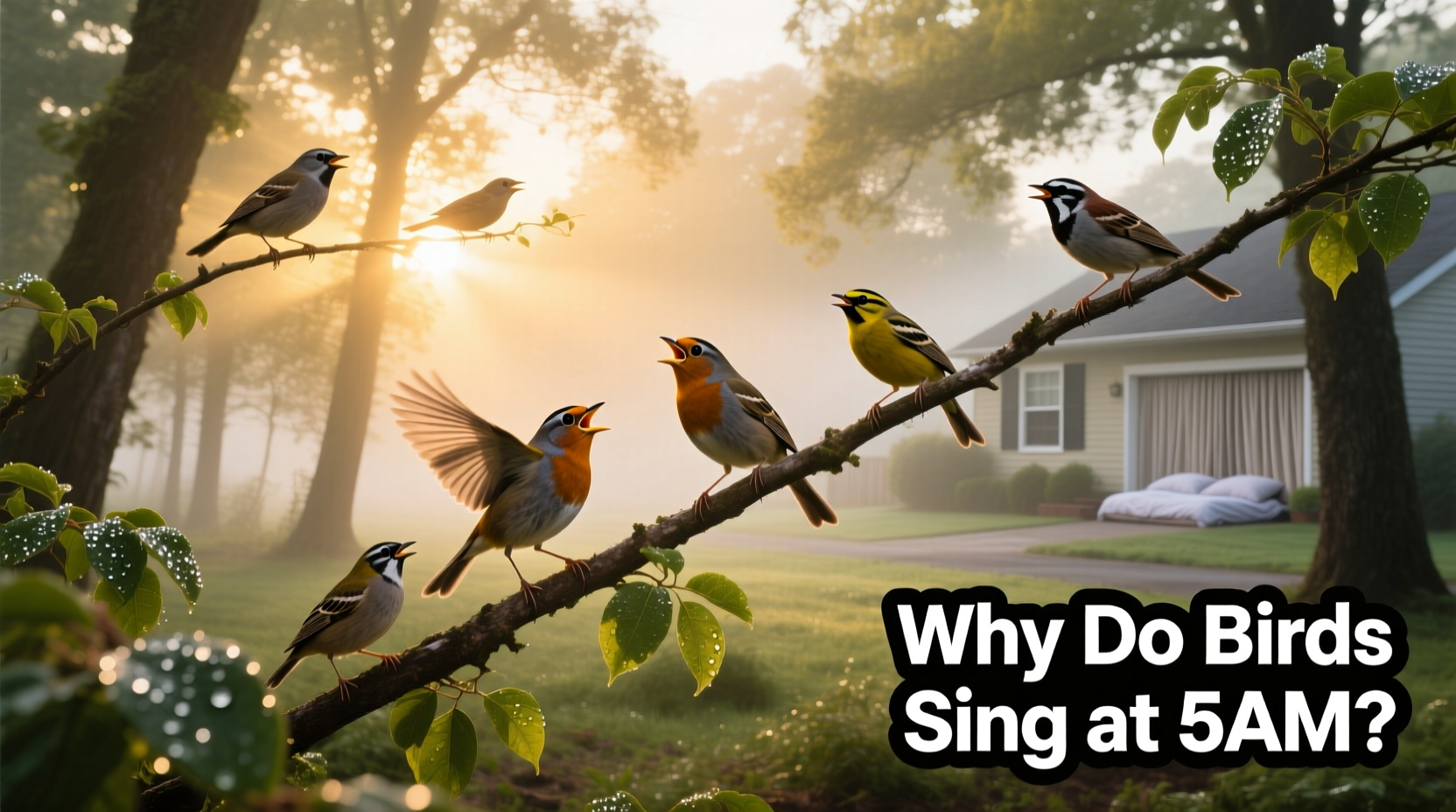
The peak period of bird vocalization known as the “dawn chorus” typically begins before sunrise and reaches its height around first light—often between 4:30 and 6:00 am, depending on location and season. This behavior is most pronounced in spring and early summer when breeding activity is high.
Several interrelated factors explain why birds are so active vocally during these early hours:
- Optimal Sound Transmission: Air is generally cooler and less turbulent at dawn, allowing sound to travel farther with less distortion. This gives birds the best chance to broadcast their songs across large distances.
- Mating Signals: Male birds use song to attract females. A strong, consistent performance at dawn signals fitness and vitality—key traits in mate selection.
- Territory Defense: Singing loudly and frequently deters rival males from encroaching on established territories. The earlier a bird starts singing, the stronger its claim appears.
- Fewer Competing Noises: Human-made sounds like traffic, lawnmowers, and construction are minimal at dawn, making it easier for birds to be heard.
- Energy Availability: After resting all night, birds have high energy reserves. Singing requires effort, and dawn provides a window when they're alert but not yet focused on foraging.
“Birdsong at dawn is one of nature’s most finely tuned communication systems. It’s not just about volume—it’s about timing, clarity, and competition.” — Dr. Lena Torres, Ornithologist, Cornell Lab of Ornithology
Common Species Responsible for Early Morning Noise
Not all birds contribute equally to the dawn chorus. A few species dominate the soundscape due to their loudness, persistence, and preference for urban or suburban environments.
| Species | Singing Time | Sound Characteristics | Habitat Preference |
|---|---|---|---|
| Robin (American Robin) | 4:30–6:00 am | Clear, melodic phrases; often repetitive | Lawns, gardens, open woodlands |
| House Sparrow | 5:00–7:00 am | Chirpy, rapid calls; less musical | Urban areas, rooftops, eaves |
| Northern Cardinal | 5:00–6:30 am | Loud whistles; rich and flute-like | Backyards, shrubs, forest edges |
| Mockingbird | 4:00 am onward | Complex mimicry; repeats phrases | Suburban yards, hedges |
| Blue Jay | 5:30–7:00 am | Loud, harsh calls; alarm-like | Wooded backyards, parks |
The mockingbird, in particular, is notorious for starting well before sunrise and continuing intermittently through the night in some regions, especially under artificial lighting. Their ability to mimic other birds—and even mechanical sounds—can make their presence seem louder or more varied than it actually is.
Can You Minimize Early Morning Bird Noise? Practical Solutions
You can’t stop birds from singing altogether—that would disrupt ecological balance and is often illegal under wildlife protection laws. However, there are humane, effective ways to reduce the impact of their songs on your sleep and daily routine.
Tip: Don’t try to scare birds permanently away—temporary deterrents used strategically are more ethical and sustainable.Step-by-Step Guide to Reducing Bird Noise Impact
- Assess the Source: Identify which species are causing the noise and where they’re perching (trees, rooflines, shrubs). Use a bird identification app if needed.
- Modify Attractants: Remove bird feeders, birdbaths, or fruit-bearing plants near bedroom windows. These draw birds closer to your home.
- Use Visual Deterrents: Hang reflective tape, old CDs, or wind chimes in trees where birds gather. Movement and glare discourage prolonged perching.
- Install Physical Barriers: Use netting or spikes on ledges, eaves, or balconies where birds commonly land. Ensure these don’t trap or harm animals.
- Adjust Lighting: Turn off outdoor lights at night. Artificial light extends perceived daylight, encouraging earlier singing.
- Seal Entry Points: Prevent birds from nesting in soffits, vents, or chimneys by sealing openings after confirming no young are present.
- Reposition Seating Areas: Move outdoor patios or breakfast nooks away from noisy zones to reduce daytime exposure.
Improving Indoor Sound Control
Since eliminating bird noise completely isn’t feasible—or desirable from an ecological standpoint—focusing on indoor acoustics offers a more realistic path to peace.
- Upgrade Windows: Double or triple-glazed windows significantly reduce outside noise. Look for units with a high Sound Transmission Class (STC) rating (35+).
- Add Weatherstripping: Seal gaps around window frames to prevent sound leakage.
- Use Heavy Curtains: Thick, lined blackout curtains absorb sound and block light—ideal for deep sleep.
- White Noise Machines: Devices that emit steady background noise (rain, ocean waves, static) can mask intermittent bird calls.
- Earplugs: High-fidelity earplugs reduce volume without creating a vacuum effect, preserving comfort.
“I used to dread waking up to the robin outside my bedroom window. After installing acoustic-grade window inserts, the difference was dramatic—same view, half the noise.” — Sarah K., homeowner in Portland, OR
Case Study: Reducing Dawn Noise in a Suburban Neighborhood
In Ann Arbor, Michigan, a group of residents in a leafy neighborhood began reporting sleep disturbances linked to persistent mockingbird and cardinal singing starting at 4:45 am. The community formed a small task force to explore non-lethal solutions.
They discovered several contributing factors: multiple bird feeders, outdoor lighting on timers, and dense shrubbery along property lines. Over six weeks, they implemented coordinated changes:
- Residents agreed to remove bird feeders during peak breeding months (April–July).
- Outdoor lights were replaced with motion-sensor fixtures.
- Shared landscaping was trimmed to reduce cover for perching birds.
- One household installed laminated glass windows facing the backyard.
Follow-up surveys showed a 60% reduction in perceived noise disturbance. Importantly, bird populations remained stable—only their proximity to homes decreased. The initiative demonstrated that collective, thoughtful action could improve quality of life without harming wildlife.
Do’s and Don’ts of Managing Early Bird Noise
| Do | Don’t |
|---|---|
| Use temporary visual deterrents like reflective tape | Use loud noises or ultrasonic devices regularly—they stress birds and may be ineffective |
| Plant native trees away from bedrooms | Destroy active nests—this is illegal under the Migratory Bird Treaty Act in the U.S. |
| Invest in soundproofing for long-term relief | Apply chemical repellents—these can harm birds, pets, and plants |
| Support biodiversity by providing habitat in less sensitive areas | Encourage neighbors to trap or relocate birds—this often fails and causes ecological ripple effects |
Frequently Asked Questions
Why do birds sing so early when it’s still dark?
Birds rely on light levels rather than clock time. As ambient light increases—even before sunrise—their internal circadian rhythms trigger hormonal changes that stimulate singing. In urban areas with streetlights, this process can start even earlier.
Is it normal for birds to sing at night?
Some species, like mockingbirds and nightingales, do sing at night, especially during breeding season. Unusual nighttime activity is often linked to artificial lighting, which disrupts natural day-night cycles. If nocturnal singing becomes frequent, consider reducing outdoor lighting.
Can I legally stop birds from singing near my home?
No—you cannot legally prevent birds from singing, as this is natural behavior protected under wildlife conservation laws. However, you can modify your environment to reduce their presence near sleeping areas using humane methods such as removing food sources or adjusting landscaping.
Action Plan Checklist
- ✅ Identify the primary bird species causing noise
- ✅ Remove bird feeders, baths, or fruiting plants near bedroom windows
- ✅ Install reflective deterrents in key perching areas
- ✅ Switch outdoor lights to motion-activated settings
- ✅ Upgrade windows or add heavy curtains for sound insulation
- ✅ Use white noise machines or earplugs as personal countermeasures
- ✅ Coordinate with neighbors for broader environmental adjustments
Conclusion: Harmony Between Humans and Nature Is Possible
The dawn chorus is a reminder of the vibrant life that surrounds us—even in urban settings. While the beauty of birdsong is celebrated in poetry and music, its timing doesn’t always align with human sleep schedules. Rather than viewing early morning birds as pests, we can approach the issue with empathy and practicality.
By understanding the reasons behind dawn singing and applying thoughtful, science-based strategies, you can reclaim restful mornings without disrupting local ecology. Small changes—like repositioning a feeder or upgrading a window—can yield significant improvements. And in doing so, you contribute to a more balanced coexistence between people and wildlife.
💬 Have a tip that helped you manage early bird noise? Share your experience in the comments and help others find peaceful solutions that respect both sleep and nature.








