Thanksgiving is more than just turkey and pumpkin pie—it’s a time for laughter, togetherness, and lighthearted fun. One of the most beloved traditions at the dinner table isn’t carving the bird, but cracking corny jokes that make everyone groan and giggle in equal measure. Among the classics, one riddle stands out: “Why did the gravy get a ticket?” This silly question has become a staple of holiday humor, often met with eye rolls and chuckles. But what makes it work? And how can you build on it to keep your Thanksgiving table buzzing with joy?
This article dives into the world of Thanksgiving riddles, unpacks the humor behind the gravy joke, shares dozens of additional puns and brain teasers, and provides practical tips for using humor to strengthen family connections during the holidays.
The Gravy Riddle: Why It Works
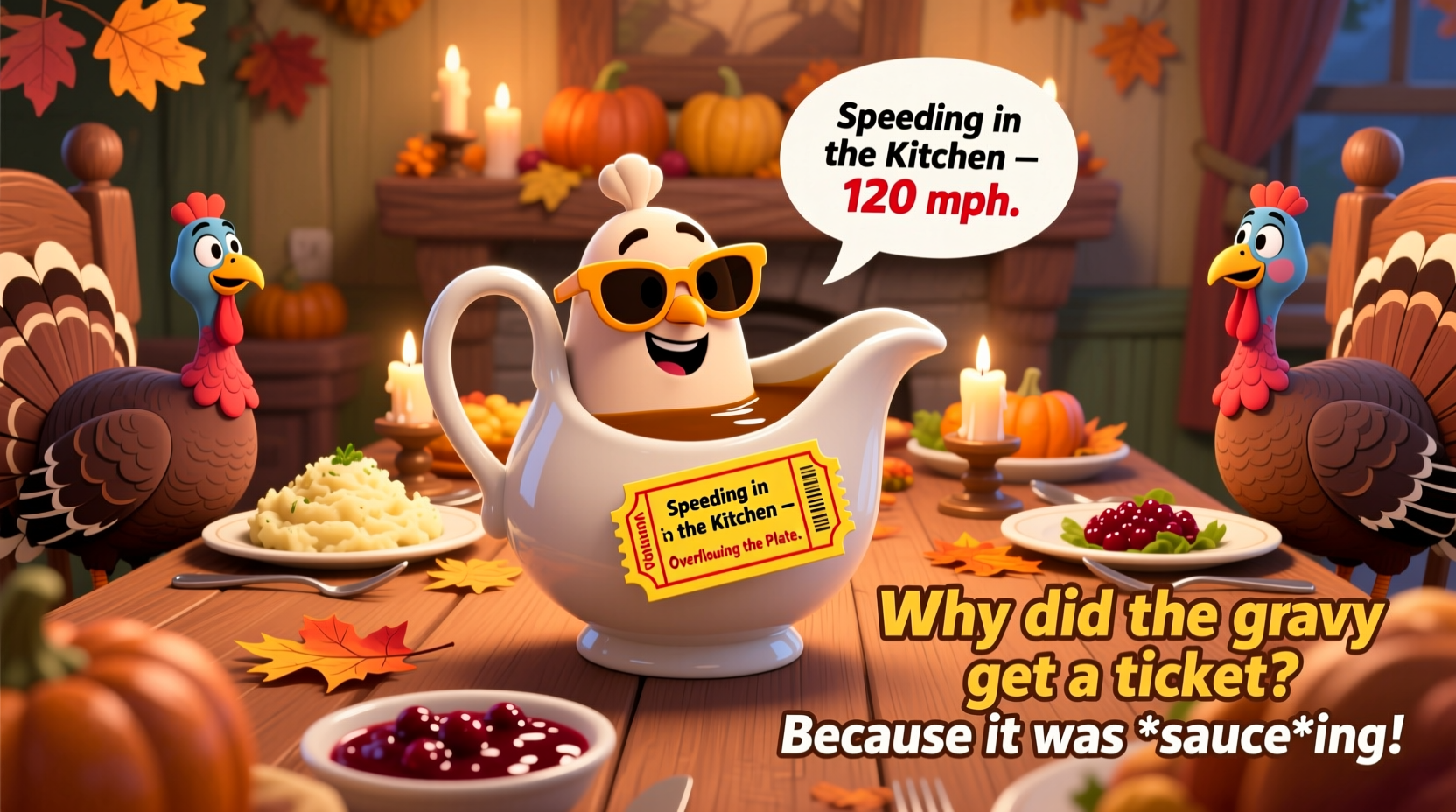
The full joke goes like this:
“What do you call a stolen cranberry?”
“A jam!”
Wait—no, that’s another one. Let’s start over.
“Why did the gravy get a ticket?”
“Because it was caught pouring in a no-pour zone.”
The humor lies in the clever wordplay. “Pouring” mimics “speeding” or “parking” in typical traffic violations, turning a kitchen staple into a misbehaving motorist. It’s absurd, unexpected, and delightfully dumb—all the hallmarks of great dad humor.
Linguists refer to this as a pun-based narrative incongruity: the setup suggests a serious context (getting a ticket), but the punchline reveals a trivial, food-related twist. Our brains briefly struggle to reconcile the mismatch before rewarding us with a laugh.
Tip: The best Thanksgiving jokes are short, visual, and rooted in familiar holiday elements—turkey, stuffing, desserts, and family dynamics.Why Thanksgiving Needs Silly Jokes
Humor isn’t just entertainment; it’s a social lubricant. During high-stress gatherings involving travel, dietary debates, and political landmines, a well-timed joke can defuse tension and create shared moments of connection.
Psychologists have long observed that laughter increases oxytocin levels—the “bonding hormone”—and reduces cortisol, the stress marker. At Thanksgiving, when families reunite after months apart, these micro-moments of levity help rebuild rapport.
“Laughter is the shortest distance between two people.” — Victor Borge, pianist and comedian
Moreover, riddles engage multiple generations. Kids love the silliness, teens tolerate the groans, and grandparents appreciate the nostalgia. A single joke like the gravy ticket riddle becomes a shared ritual—a tiny tradition passed down with mashed potatoes and cornbread dressing.
Top 25 Thanksgiving Riddles & Jokes
Ready to stock up on crowd-pleasers? Here’s a mix of classics and fresh takes, perfect for dinner-table icebreakers or kids’ table entertainment.
- Why did the turkey sit on the sideline?
Because it was stuffed. - What do you call a turkey on Thanksgiving morning?
Closer to dead. - Why did the cranberry sauce go to therapy?
It had deep jam-ming issues. - How does the clock celebrate Thanksgiving?
It goes back four seconds! - What’s the best dance to do on Thanksgiving?
The turkey trot. - Why didn’t the pumpkin pie go to college?
It was already packed with knowledge. - What do you call a nervous cranberry?
A blueberry. - Why did the scarecrow win an award at Thanksgiving?
He was outstanding in his field. - What do turkeys say on Thanksgiving?
“Gobble bless us, every one!” - Why did the man take a ladder to dinner?
He heard the food was on another level. - What kind of key doesn’t open locks and is made from fruit?
A peach-key pie. - Which side of the turkey has the most feathers?
The outside. - Why did the cookie cry at dinner?
Because its mother was a waf-fer. - What do you call a fake noodle?
An impasta. - Why did the man put his money in the freezer?
He wanted cold hard cash. - What do you call a turkey that’s good at karate?
A gobblet-do master. - Why don’t secrets last long at Thanksgiving?
Too many spies—I mean, pies. - What’s a turkey’s favorite dessert?
Yum-yums. - Why did the bread go to school?
To become a smart cookie. - What do you call cheese that isn’t yours?
Nacho cheese. - Why did the apple pie break up with the pumpkin pie?
It found him too basic. - What’s brown and sticky?
A stick. (Bonus points if someone says “turkey.”) - Why did the chef get promoted?
Because he knew how to rise to the occasion. - What do you call a sad cranberry?
A blueberry. - Why did the turkey cross the road?
To prove he wasn’t chicken.
When to Use These Jokes
Timing matters. Drop a joke too early, and it falls flat. Too late, and it feels forced. Here’s a simple timeline for maximum impact:
- Before Dinner (Appetizers): Light riddles (“What’s orange and sounds like a parrot?” Answer: A carrot.) ease guests into the mood.
- Dinner Announcement: Hit them with the gravy ticket riddle as the turkey hits the table.
- Kids’ Table: Rotate joke cards or play “Riddle Roulette” with younger guests.
- Dessert: End with sweet puns (“You’re one in a melon!”).
Family Humor Checklist
Want to ensure your Thanksgiving is filled with laughter? Follow this actionable checklist:
- ✅ Write down 5–10 jokes ahead of time
- ✅ Assign a “joke starter” (often the host or grandparent)
- ✅ Include kid-friendly and adult-appropriate options
- ✅ Avoid offensive or controversial topics
- ✅ Encourage participation—let others share their favorites
- ✅ Keep a joke jar for spontaneous draws
- ✅ Time delivery around natural pauses (e.g., passing dishes)
Mini Case Study: The Johnson Family Turkey Trot Dinner
The Johnsons of Columbus, Ohio, host an annual Thanksgiving for 18 relatives, ranging from age 3 to 92. In past years, conversations often stalled or turned tense, especially after wine poured freely.
In 2022, daughter Maya, a middle-school teacher, introduced a “Joke Plate” tradition: each guest wrote a clean joke on a paper plate before dinner. The host would read them aloud during the meal.
The result? Laughter replaced awkward silences. Grandpa told the gravy ticket riddle with dramatic flair. The kids competed to deliver the corniest line. Even Aunt Linda, known for her political rants, chuckled at the “impostor” pasta joke.
“It changed the energy,” Maya said. “Instead of waiting for someone to argue about the election, we were all leaning forward, wondering what joke came next.”
The following year, they expanded it into a “Laugh Log”—a notebook where families add new jokes each year. It’s now one of their most cherished heirlooms.
Do’s and Don’ts of Holiday Humor
| Do | Don’t |
|---|---|
| Use inclusive, family-safe language | Tell jokes that target weight, appearance, or relationships |
| Keep jokes short and easy to understand | Launch into long, rambling stories |
| Encourage participation from all ages | Let one person dominate the conversation |
| Use props like joke cards or a spinner | Rely solely on off-the-cuff remarks |
| Embrace the groans—they’re part of the fun | Get defensive if a joke bombs |
Frequently Asked Questions
Where did the “gravy got a ticket” joke come from?
There’s no definitive origin, but it emerged in the early 2000s as part of the “dad joke” revival online. It gained traction through email forwards, Pinterest boards, and classroom Thanksgiving activities. Its structure mirrors other food-based puns like “Why did the cookie go to the doctor?” making it easy to remember and repeat.
Are riddles appropriate for all ages?
Absolutely. Simple wordplay transcends age. Young children enjoy the sound of puns, even if they don’t fully grasp the meaning. Older adults often appreciate nostalgia and linguistic cleverness. Just avoid sarcasm or irony, which younger kids may misinterpret.
How can I make my own Thanksgiving riddles?
Start with a holiday object—turkey, pie, napkin, fork—and think of homophones or double meanings. For example:
- “Pour” sounds like “pore” or fits “no parking” signs → “no-pour zone.”
- “Stuffing” can mean both food and being full.
- “Baste” sounds like “bass” (fish) or “taste.”
Combine the object with a familiar phrase: “Why did the [food] [action]?” Then twist it with a pun.
Conclusion: Serve Laughter with Your Meal
Thanksgiving is about gratitude, yes—but also joy, presence, and human connection. A joke like “Why did the gravy get a ticket?” might seem trivial, but in the right moment, it can spark a memory, unite generations, and turn a routine meal into a meaningful celebration.
So this year, don’t just prepare the food. Prepare the fun. Write a few jokes. Teach your kids the classics. Laugh at the groans. And when someone delivers the gravy riddle for the tenth time, smile—because inside that silly punchline is something deeply human: the desire to connect, one pun at a time.
💬 Share your favorite Thanksgiving riddle in the comments—or challenge us with a new one! Let’s build the ultimate holiday joke list together.








