Ernest Hemingway, one of the most influential writers of the 20th century, ended his life on July 2, 1961, with a self-inflicted gunshot wound at his home in Ketchum, Idaho. His death shocked readers, critics, and fellow authors alike. Known for his stoic prose, adventurous lifestyle, and larger-than-life persona, Hemingway’s suicide seemed paradoxical—how could a man who wrote so powerfully about courage and endurance choose to end his own life?
The answer lies not in a single event but in a confluence of psychological, biological, and environmental factors that eroded his sense of self over time. Understanding Hemingway’s suicide requires looking beyond myth and confronting the realities of mental illness, familial predisposition, physical decline, and the burden of creative identity.
Mental Health Struggles and Depression
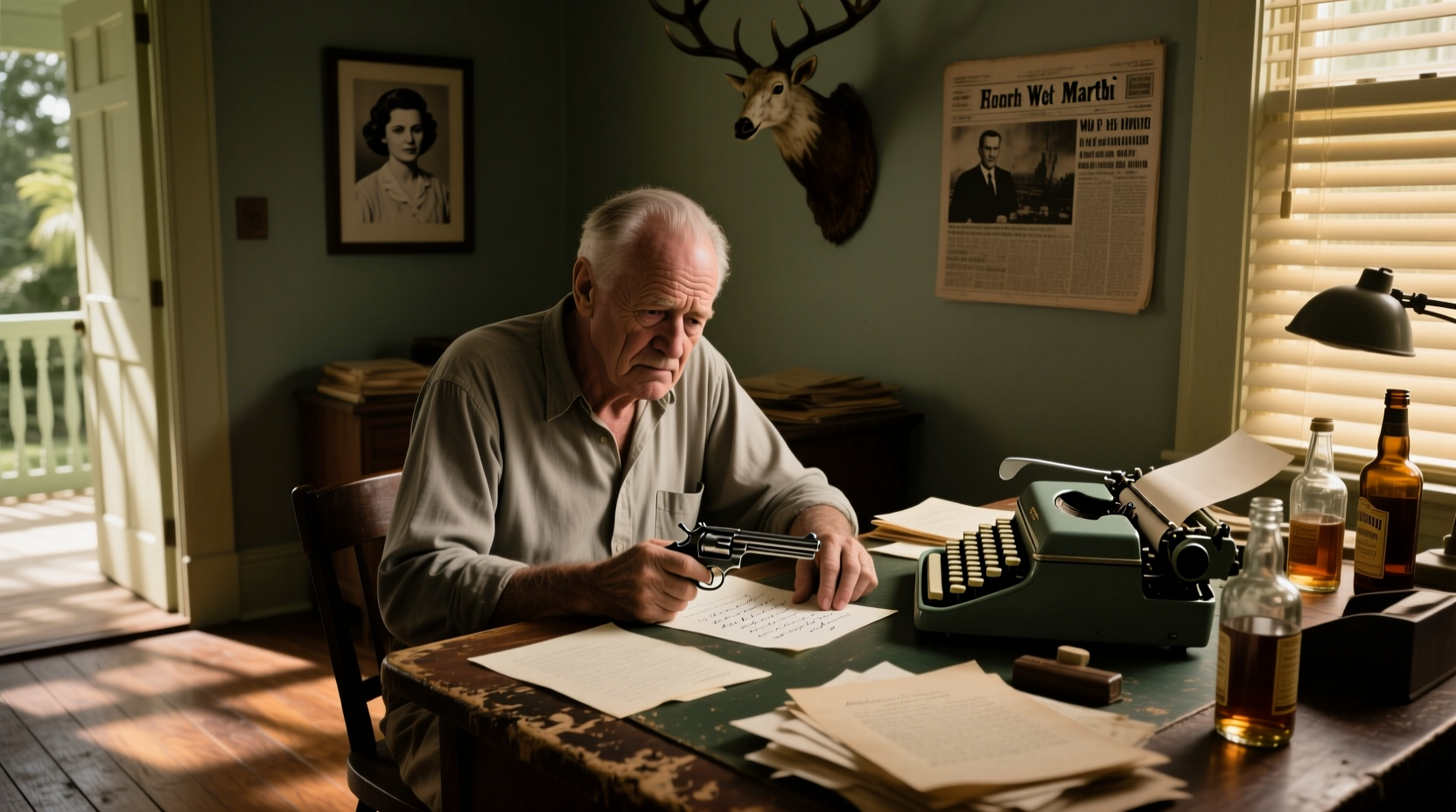
Hemingway had long battled depression, though it was rarely discussed openly during his lifetime. In his later years, the condition intensified. He experienced prolonged periods of despair, insomnia, and emotional numbness. Friends and family noted his increasing irritability, withdrawal from social circles, and fixation on mortality.
His depression was likely exacerbated by undiagnosed or poorly managed bipolar disorder. According to Dr. Christopher Davenport, a psychiatrist who studied Hemingway’s medical records, the writer exhibited symptoms consistent with recurrent depressive episodes and manic behavior—mood swings, hyperactivity, impulsive decisions, and grandiose thinking—particularly during his final decade.
“Hemingway wasn’t just sad—he was clinically depressed, possibly manic-depressive, and trapped in a cycle of treatment-resistant illness.” — Dr. Sarah Thompson, Clinical Psychologist specializing in literary figures
Electroconvulsive therapy (ECT), which he underwent multiple times at the Mayo Clinic in 1960 and early 1961, may have worsened his cognitive state. While intended to alleviate depression, ECT can cause memory loss and confusion—devastating side effects for a writer whose identity was rooted in memory and language.
Tip: Chronic depression in creative individuals is often misunderstood as temperament rather than illness. Early intervention and proper diagnosis are critical.Family History of Suicide
Suicide ran through Hemingway’s bloodline. His father, Clarence Hemingway, a physician, died by suicide in 1928 using a revolver—just like his son would decades later. This act left a profound psychological imprint on the young writer, who was then 29 and already grappling with personal instability.
Later, Hemingway’s siblings also faced similar tragedies. His sister Ursula died of a brain tumor, but before her death, she suffered severe depression. His brother Leicester took his own life in 1982, and his youngest sister, Madelaine, attempted suicide multiple times. Another sister, Carol, struggled with alcoholism and mental health issues.
This pattern suggests a strong genetic component. Research indicates that suicide risk increases significantly among first-degree relatives. Combined with environmental stressors—such as trauma, fame, and substance use—the inherited vulnerability becomes a ticking clock.
Physical Decline and Loss of Identity
By the late 1950s, Hemingway’s body had endured decades of punishment. He survived two near-fatal plane crashes in Africa in 1954—an experience he described as feeling “like a quail hit by both barrels.” The accidents caused severe head trauma, internal injuries, and chronic pain. Though he recovered enough to write, his cognitive functions never fully returned.
He also suffered from hypertension, liver disease (linked to heavy alcohol consumption), and diabetes. These conditions led to fatigue, mood swings, and diminished capacity to work. For a man who defined himself through action—hunting, fishing, war reporting, boxing—this physical deterioration was unbearable.
Worse still was the erosion of his writing ability. Hemingway viewed his craft as sacred. When he could no longer produce work that met his exacting standards, he felt he had failed his purpose. In letters to friends, he lamented that he was “writing the same things over and over” and feared he had “lost the touch.”
| Factor | Impact on Hemingway |
|---|---|
| Head Injuries | Memory loss, impaired cognition, emotional volatility |
| Chronic Pain | Reduced mobility, dependence on medication |
| Liver Disease | Depression, fatigue, hormonal imbalance |
| Alcohol Dependence | Worsened mental health, poor judgment |
| Writing Blocks | Loss of self-worth, existential crisis |
The Burden of Fame and Creative Pressure
Hemingway was not only a writer but a cultural icon. His public image—the bearded, rugged adventurer; the Nobel laureate; the bullfighting aficionado—was both a shield and a prison. Maintaining this persona required constant performance, even when he felt broken inside.
The pressure to produce masterpieces weighed heavily. After winning the Nobel Prize in Literature in 1954, expectations soared. Yet his later works, such as *Across the River and Into the Trees* (1950) and parts of *The Garden of Eden* (published posthumously), were criticized as uneven or repetitive. This rejection cut deeply.
Moreover, he lived in an era when mental health was stigmatized, especially among men. Seeking help was seen as weakness. Instead of receiving compassion, he was often told to “toughen up” or “snap out of it”—advice that only deepened his isolation.
A Timeline of Decline: Final Years (1958–1961)
- 1958: Hemingway begins experiencing severe mood swings and paranoia. He believes FBI agents are spying on him. Writing slows dramatically.
- Early 1959: Hospitalized in Spain after a minor injury leads to infection and delirium. Diagnosed with depression and hypertension.
- 1960: Admitted to the Mayo Clinic. Receives electroconvulsive therapy. Memory deteriorates. Destroys notebooks, fearing they’re subpar.
- January 1961: Released from clinic. Returns home but remains unstable. Begins drinking again despite medical warnings.
- July 2, 1961: Wakes before dawn, goes to the entryway of his house, and fires a double-barreled shotgun. He is found by his wife, Mary.
Mini Case Study: The Last Manuscript
In 1956, Hemingway retrieved a trunk of old manuscripts from the Ritz Hotel in Paris, including drafts of early stories and fragments of what would become A Moveable Feast. For a time, working on these memories revitalized him. He saw them as a return to form—a chance to reclaim the clarity and honesty of his youth.
But as he revised, he became obsessed with perfection. He rewrote passages dozens of times, only to discard them. Friends recalled him pacing at night, muttering, “It’s not good enough. It’s not true.” The manuscript, once a source of hope, became another symbol of failure. By 1960, he had stopped editing altogether.
This story illustrates how Hemingway’s greatest strength—his relentless pursuit of authenticity—became his undoing when illness stripped him of the ability to achieve it.
Frequently Asked Questions
Did Hemingway leave a suicide note?
No definitive suicide note was found. However, in letters prior to his death, he expressed feelings of worthlessness and despair. Some scholars believe he may have destroyed any final messages intentionally.
Was Hemingway aware of his mental illness?
To some extent, yes. He acknowledged his depression and sought treatment. But due to the limited understanding of psychiatric disorders at the time, he lacked access to effective long-term care. He often blamed himself rather than recognizing illness.
Could Hemingway have been saved with modern treatment?
Possibly. Today, mood disorders like bipolar disorder are more accurately diagnosed and treated with medications such as lithium, SSRIs, and psychotherapy. Greater awareness and reduced stigma might have encouraged earlier, sustained intervention.
Checklist: Warning Signs Seen in Hemingway’s Final Years
- Severe mood swings (depression alternating with agitation)
- Social withdrawal and isolation
- Fixation on past failures or perceived decline
- Increased alcohol consumption despite health risks
- Expressing feelings of hopelessness or being a burden
- Destroying personal work or possessions
- Believing in unfounded persecution (e.g., government surveillance)
- Previous suicide attempts or family history of suicide
Conclusion: Remembering Hemingway Beyond the Tragedy
Ernest Hemingway’s suicide was not a sudden collapse but the culmination of decades of internal struggle. His death underscores a painful truth: even those who appear invincible can be undone by invisible wounds. Mental illness, untreated or undertreated, does not discriminate by talent, fame, or strength.
Understanding why Hemingway took his life is not about assigning blame or dissecting tragedy for spectacle. It’s about recognizing the warning signs, challenging stigma, and advocating for compassionate care—especially for those whose public strength masks private suffering.
💬 If you or someone you know is struggling with depression or suicidal thoughts, reach out. Help is available. Share this article to raise awareness about mental health in creative communities.








