
Brown discoloration in fingernails or toenails can be unsettling and often raises concerns about underlying health issues. While some cases stem from harmless causes like nail polish staining, others may signal fungal infections, trauma, or even systemic conditions. Understanding the root cause is essential to determine whether home care suffices or medical intervention is needed. This guide breaks down the most common reasons behind brown nails, associated symptoms, and science-backed treatment approaches.
Common Causes of Brown Nails
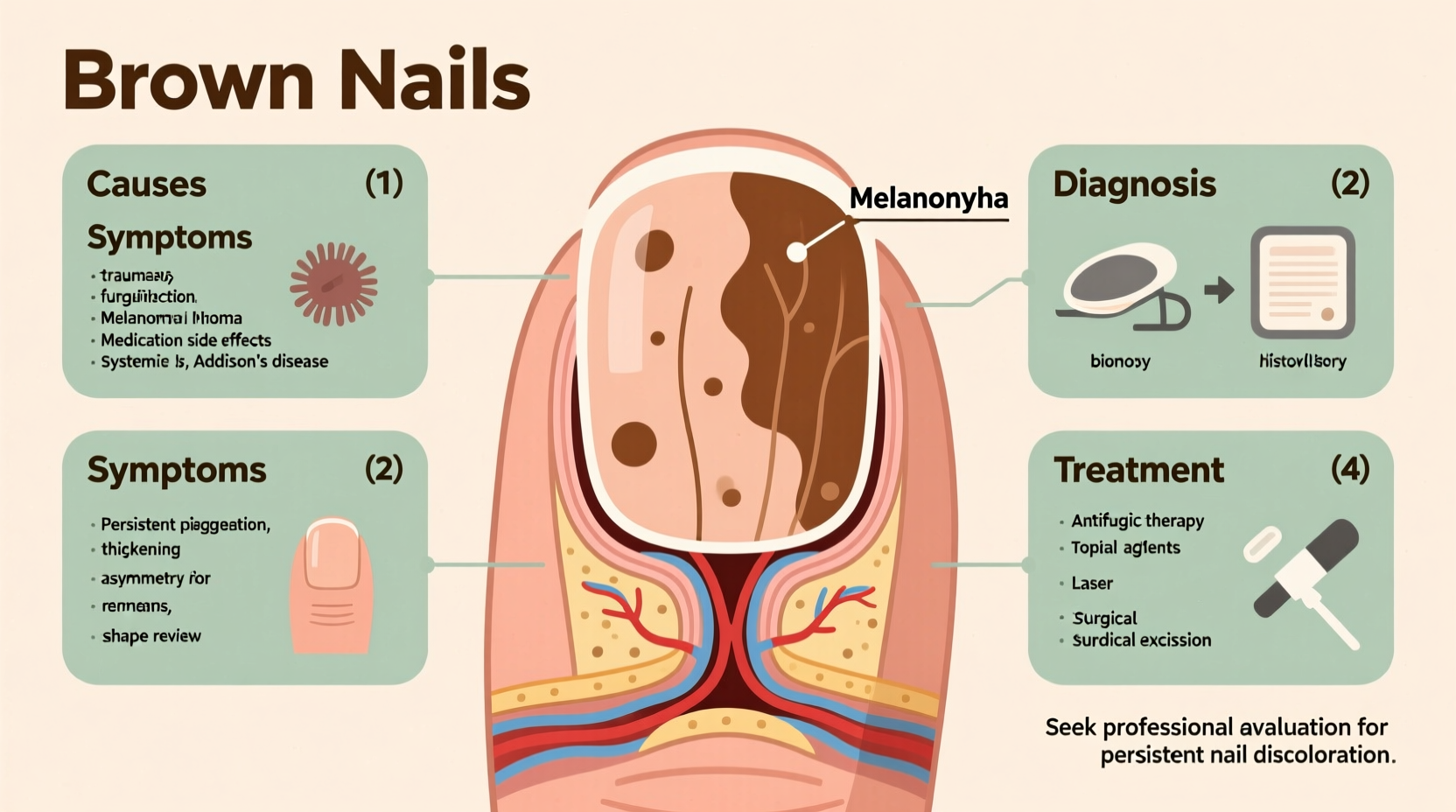
Brown nail discoloration—also known as melanonychia—occurs when pigment builds up in the nail bed. The causes range from benign to serious, and identifying them early improves outcomes.
- Fungal Infections (Onychomycosis): One of the leading causes of brown or yellow-brown nails. Fungi thrive in warm, moist environments and gradually invade the nail plate.
- Trauma or Injury: Repeated pressure (e.g., from tight shoes) or a single impact can cause blood pooling under the nail (subungual hematoma), appearing brown or black.
- Nail Polish Staining: Frequent use of dark-colored polishes, especially reds and browns, can lead to keratin staining.
- Melanonychia: Increased melanin production in the nail matrix. Can be longitudinal (vertical streaks) and is more common in people with darker skin tones.
- Medications: Certain drugs—including chemotherapy agents, antimalarials, and antibiotics like tetracycline—can induce pigmentation changes.
- Nutritional Deficiencies: Deficiencies in vitamin B12, iron, or protein may contribute to nail abnormalities, including discoloration.
- Serious Conditions: In rare cases, brown streaks may indicate subungual melanoma, a type of skin cancer beneath the nail.
Symptoms That Accompany Brown Nails
The presence of additional symptoms helps differentiate between minor and serious causes. Not all brown nails require urgent attention, but certain signs warrant immediate evaluation.
| Cause | Associated Symptoms | Onset Pattern |
|---|---|---|
| Fungal Infection | Thickened, crumbly nail; odor; separation from nail bed | Gradual, starts at tip or side |
| Subungual Hematoma | Pain, swelling, bruising; color shifts from red-black to brown | Sudden, after trauma |
| Nail Staining | No pain or structural change; surface-level discoloration | Progressive with polish use |
| Longitudinal Melanonychia | Vertical brown/black band; no pain unless changing rapidly | Slow progression |
| Subungual Melanoma | Dark band wider than 3mm, spreading to cuticle (Hutchinson’s sign), irregular borders | Rapid change over weeks/months |
“Any pigmented nail streak that involves the cuticle or grows wider over time should be biopsied. Early detection of melanoma dramatically improves survival.” — Dr. Lena Torres, Board-Certified Dermatologist
Treatment Options Based on Cause
Treatment depends entirely on the underlying condition. Self-diagnosis can be misleading, so professional evaluation is crucial for persistent or worsening discoloration.
Fungal Infections
Oral antifungals like terbinafine or itraconazole are most effective for widespread infections. Topical solutions (ciclopirox, efinaconazole) work best for mild cases. Treatment lasts 6–12 months due to slow nail growth.
Trauma-Induced Discoloration
Most subungual hematomas resolve as the nail grows out. If painful, a doctor may drill a small hole to release blood. Severe injuries might require nail removal.
Nail Polish Staining
Prevent future staining by using a base coat. Existing stains can fade with gentle scrubbing using a mixture of baking soda and hydrogen peroxide. Avoid acetone-based removers excessively.
Longitudinal Melanonychia
In individuals with darker skin, this is often physiological and requires no treatment. However, any new, changing, or asymmetric band needs dermatoscopic evaluation and possibly biopsy.
Deficiency-Related Changes
Correcting nutritional imbalances through diet or supplements—such as B12, iron, or biotin—can restore normal nail appearance over several months.
Tip: Take monthly photos of discolored nails to track changes in width, color, or shape—this visual record aids diagnosis.Step-by-Step Guide to Evaluating Brown Nails
If you notice brown discoloration, follow this logical sequence to assess urgency and next steps:
- Recall recent trauma – Did you drop something on your toe or jam a finger? Trauma-related discoloration usually resolves on its own.
- Assess symmetry and pattern – Is the brown area horizontal, vertical, or patchy? Vertical bands need closer scrutiny.
- Check for other symptoms – Look for pain, thickening, lifting, or cuticle involvement (Hutchinson’s sign).
- Stop dark nail polish use for 2–3 weeks to see if the color fades—this helps rule out staining.
- Monitor growth – As the nail grows, does the spot move outward? Stationary or expanding pigmentation is concerning.
- See a dermatologist if the discoloration persists, worsens, or shows warning signs like widening or cuticle spread.
Mini Case Study: When a Nail Line Turned Serious
Sophia, a 52-year-old teacher, noticed a thin brown line on her right thumbnail that had been present for years. Recently, it widened and began extending into the cuticle. She initially dismissed it as aging but visited a dermatologist after her daughter insisted. A biopsy confirmed early-stage subungual melanoma. Thanks to prompt surgical intervention, she avoided amputation and made a full recovery. Her case highlights how seemingly stable pigmentation can become dangerous and why monitoring changes matters.
Do’s and Don’ts: Nail Care Checklist
| Do’s | Don’ts |
|---|---|
| Wear protective gloves during cleaning or manual work | Ignore a growing or changing brown nail streak |
| Use a base coat before applying dark nail polish | Share nail clippers or files with others (risk of fungal spread) |
| Keep nails trimmed and dry | Soak hands or feet excessively in water |
| See a dermatologist for unexplained pigmentation | Apply aggressive whitening treatments without diagnosis |
| Eat a balanced diet rich in vitamins and protein | Use sharp tools to clean under nails aggressively |
FAQ
Can vitamin deficiency cause brown nails?
Yes. Deficiencies in vitamin B12, iron (leading to koilonychia), or protein can alter nail structure and pigmentation. Blood tests can confirm deficiencies, and supplementation often improves nail health over time.
Is brown nail fungus contagious?
Yes. Onychomycosis can spread through direct contact or shared surfaces like showers, towels, or footwear. Wearing flip-flops in public pools and disinfecting nail tools help reduce transmission risk.
Should I worry about a single brown line in my nail?
Not always. Longitudinal melanonychia is common and benign in many ethnic groups. However, if the line is new, wide (>3mm), uneven, or involves the cuticle, it requires medical evaluation to rule out melanoma.
Conclusion: Take Action for Healthier Nails
Brown nails aren’t always a cause for alarm, but they shouldn’t be ignored either. From simple staining to serious pathology, the spectrum of causes demands awareness and timely response. Pay attention to patterns, document changes, and don’t hesitate to seek expert advice when in doubt. Healthy nails reflect overall well-being—and proactive care today can prevent complications tomorrow.
💬 Have you experienced brown nails? Share your story or questions below—your experience could help someone else recognize a warning sign early.








