
Red eyes are a common concern that most people experience at some point. Whether it's a faint pink tint or a deep bloodshot appearance, redness in the eyes can be unsettling. While often harmless, it may also signal an underlying condition requiring medical attention. Understanding what triggers red eyes—ranging from dry air to serious infections—is essential for proper care. This guide breaks down the most frequent causes, outlines evidence-based treatments, and provides actionable steps to prevent recurrence.
Understanding Eye Redness: What Causes It?
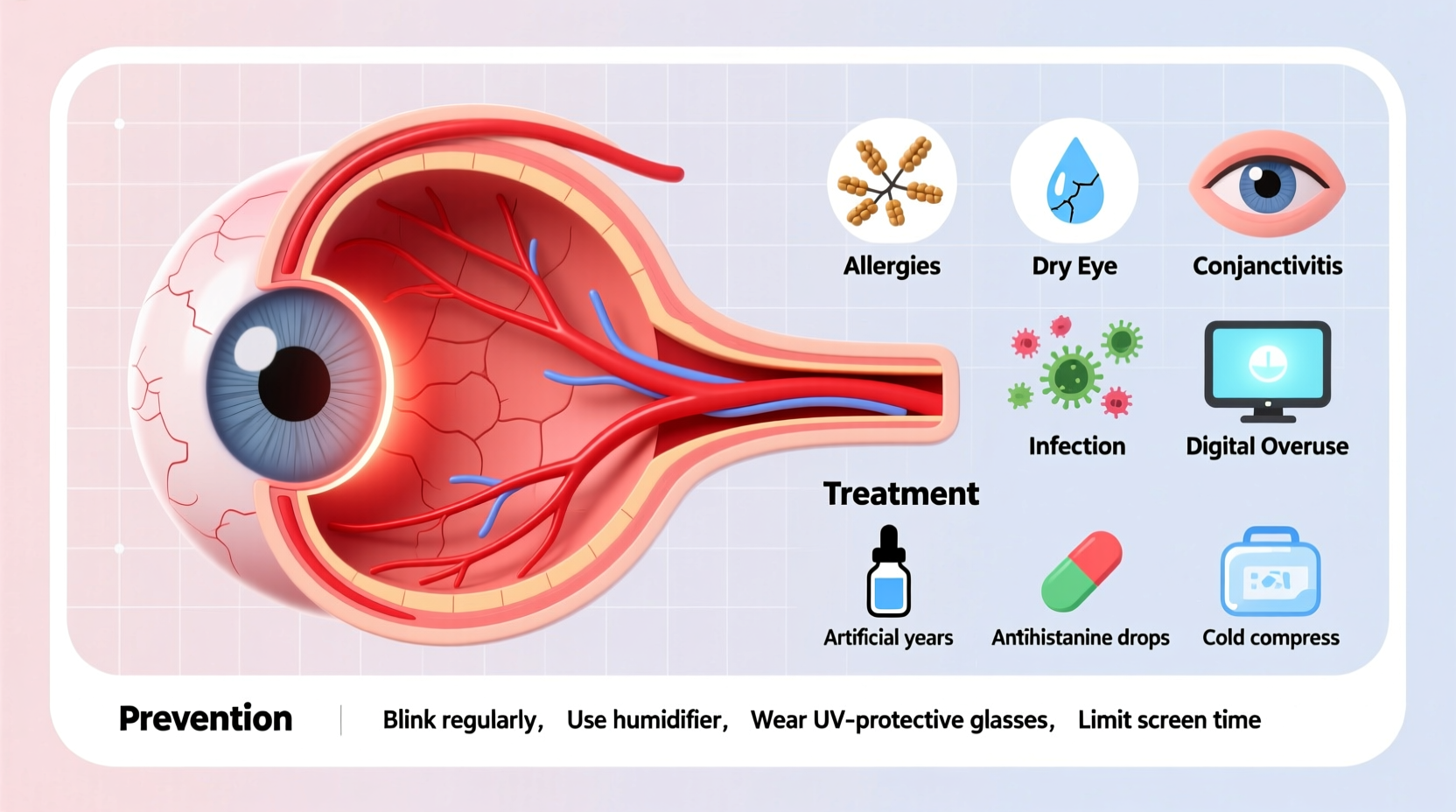
Eye redness occurs when blood vessels on the surface of the sclera (the white part of the eye) become dilated or inflamed. This can result from irritation, infection, allergies, or environmental stressors. The conjunctiva—the thin, transparent layer covering the sclera—contains many tiny blood vessels that expand in response to stimuli, making them more visible.
The severity and accompanying symptoms help determine the root cause. For instance, mild redness with itching is often allergy-related, while sharp pain and blurred vision could indicate a more serious issue like uveitis or acute glaucoma.
Common Causes of Red Eyes
- Dry eye syndrome: Insufficient tear production or poor tear quality leads to irritation and redness, especially in dry or windy environments.
- Allergies: Pollen, dust, pet dander, or mold trigger histamine release, causing itchy, watery, and red eyes.
- Conjunctivitis (pink eye): Viral or bacterial infections inflame the conjunctiva. Highly contagious, it often comes with discharge.
- Eye strain: Prolonged screen use, reading in low light, or extended focus tasks fatigue the eyes.
- Foreign body or injury: A speck of dust, eyelash, or minor scratch can cause localized redness and discomfort.
- Blepharitis: Inflammation of the eyelid margins, often linked to skin conditions like rosacea or seborrheic dermatitis.
- Subconjunctival hemorrhage: A burst blood vessel appears as a bright red patch but is usually painless and resolves on its own.
- Environmental irritants: Smoke, chlorine, smog, or chemical fumes can trigger redness.
- Contact lens overuse: Wearing lenses too long or sleeping in them reduces oxygen flow and increases irritation risk.
Treatment Options Based on Cause
Effective treatment depends on accurately identifying the underlying cause. Self-diagnosis can be misleading, so professional evaluation is recommended when symptoms persist or worsen.
Managing Allergic Conjunctivitis
Avoidance of allergens is key. Over-the-counter antihistamine eye drops like ketotifen (Zaditor) can relieve itching and redness within minutes. Oral antihistamines may help if nasal symptoms are also present. Cool compresses provide soothing relief.
Treating Bacterial and Viral Infections
Bacterial conjunctivitis typically requires antibiotic eye drops prescribed by a doctor. Viral forms are self-limiting but highly contagious; warm compresses and artificial tears ease discomfort. Strict hygiene—like not sharing towels—is critical to prevent spread.
Relieving Dry Eye Symptoms
Preservative-free artificial tears used 3–4 times daily can restore moisture. For chronic cases, prescription medications like cyclosporine (Restasis) or lifitegrast (Xiidra) may be necessary. Omega-3 supplements have shown benefits in improving tear quality.
Addressing Eye Strain and Digital Fatigue
Follow the 20-20-20 rule: every 20 minutes, look at something 20 feet away for 20 seconds. Adjust screen brightness, use blue light filters, and ensure proper room lighting to reduce visual stress.
“Persistent redness shouldn’t be ignored—especially when accompanied by pain or vision changes. It could indicate conditions like iritis or angle-closure glaucoma, which require urgent care.” — Dr. Lena Patel, Ophthalmologist, Massachusetts Eye Institute
Prevention: Daily Habits to Keep Eyes Healthy
Many causes of red eyes are preventable with consistent lifestyle choices and protective measures. Proactive eye care reduces both frequency and severity of episodes.
Dos and Don’ts for Eye Health
| Do | Don't |
|---|---|
| Wash hands before touching eyes | Rub eyes aggressively |
| Replace contact lenses as directed | Sleep in contact lenses unless approved |
| Use humidifiers in dry climates | Expose eyes to smoke or strong chemicals |
| Take regular breaks from screens | Share eye makeup or applicators |
| Wear UV-protective sunglasses outdoors | Ignore worsening symptoms beyond 48 hours |
Real-Life Example: Office Worker with Chronic Redness
Mark, a 34-year-old software developer, experienced recurring red eyes after long coding sessions. He initially assumed it was due to lack of sleep. After visiting an optometrist, he was diagnosed with digital eye strain compounded by dry air from office HVAC systems. His doctor recommended ergonomic adjustments, increased hydration, and preservative-free lubricating drops. Within two weeks of implementing these changes—including using a desk humidifier and setting screen-time reminders—his symptoms improved significantly. This case highlights how environmental and behavioral factors often interact to cause persistent issues.
Step-by-Step Guide to Responding to Red Eyes
- Assess symptoms: Note whether redness is in one or both eyes, presence of pain, discharge, light sensitivity, or blurred vision.
- Review recent activities: Consider exposure to allergens, extended screen time, contact lens wear, or potential irritants.
- Apply first aid: Use artificial tears for dryness, cool compresses for allergies, or warm compresses for blepharitis.
- Practice hygiene: Avoid touching eyes, change pillowcases, discard old eye makeup.
- Monitor progression: If redness persists beyond 48 hours or worsens, consult an eye care professional.
- Seek immediate care if: You experience severe pain, sudden vision loss, intense light sensitivity, or a history of eye trauma.
Frequently Asked Questions
Can lack of sleep cause red eyes?
Yes. Sleep deprivation reduces tear production and slows corneal recovery, leading to dryness and bloodshot eyes. Prioritizing 7–8 hours of quality sleep helps maintain ocular health.
Are red eyes contagious?
Only if caused by infectious conjunctivitis. Viral and bacterial forms spread through direct contact with infected secretions. Allergic or irritant-related redness is not contagious.
When should I see a doctor for red eyes?
See a doctor if redness lasts more than two days without improvement, is accompanied by pain or vision changes, or follows an injury. Immediate care is crucial for symptoms suggesting uveitis, glaucoma, or corneal ulcers.
Conclusion: Take Control of Your Eye Health
Red eyes are more than just a cosmetic concern—they’re a signal from your body that something needs attention. While many causes are benign and resolve with simple care, others demand prompt medical evaluation. By understanding triggers, applying targeted treatments, and adopting preventive habits, you can maintain clear, comfortable vision. Small daily actions—from blinking more often to wearing protective eyewear—add up to significant long-term benefits. Don’t wait for discomfort to escalate. Start protecting your eyes today.
💬 Have you experienced persistent red eyes? Share your story or tips in the comments—your insight could help someone find relief.








