Cat whiskers—also known as vibrissae—are more than just facial hair. They're highly sensitive sensory tools that help cats navigate their environment, judge spatial dimensions, and even express emotions. When you notice your cat's whiskers curling, it's natural to wonder whether this is normal or a sign of an underlying issue. While occasional curling can be harmless, persistent or sudden changes may warrant closer attention. Understanding the reasons behind curled whiskers and knowing when to act can make a meaningful difference in your cat’s comfort and health.
Anatomy and Function of Cat Whiskers
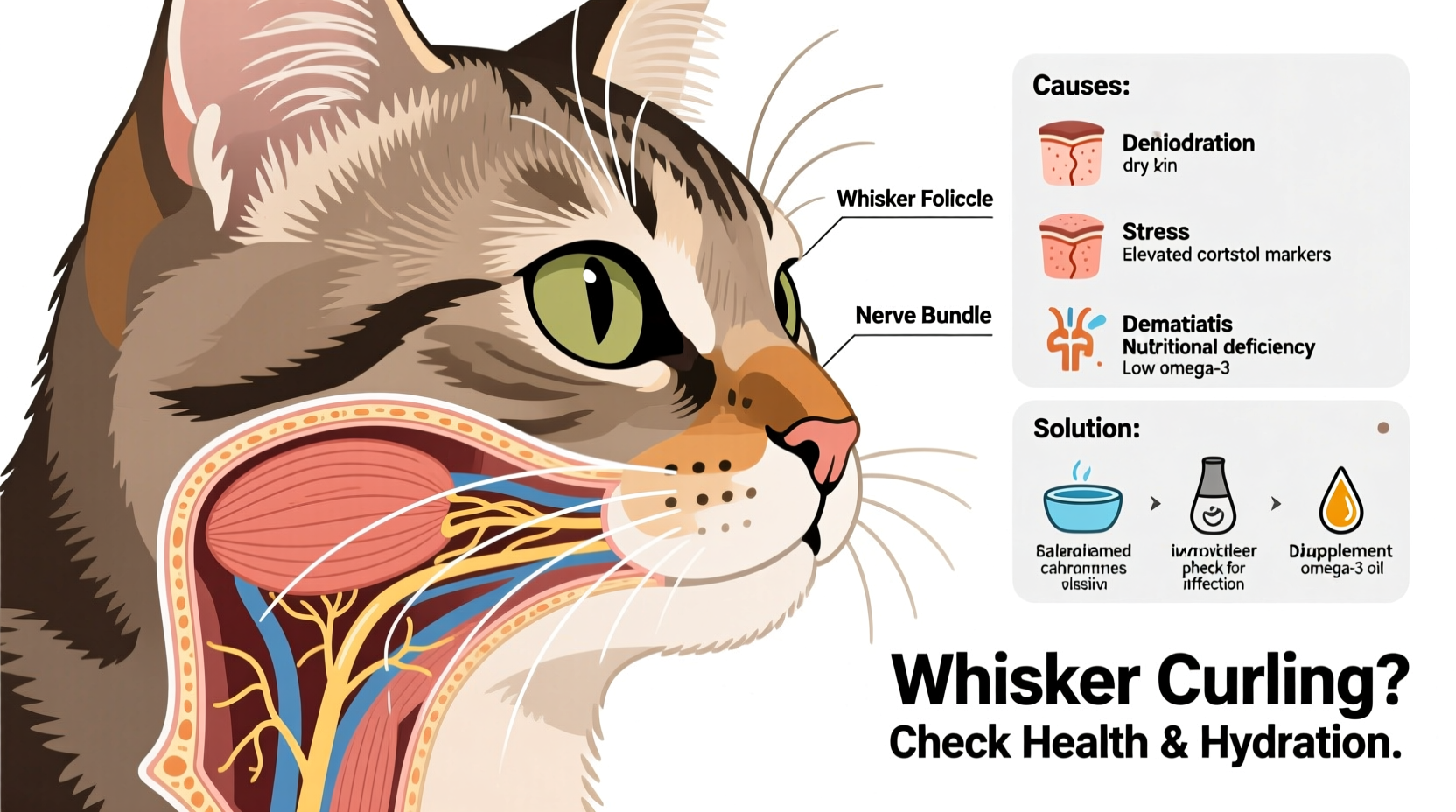
Cat whiskers are thick, deeply rooted hairs embedded in follicles rich with blood vessels and nerves. Unlike regular fur, they are connected to the muscular and nervous systems, making them extremely responsive to touch and air currents. Whiskers are typically found on the muzzle (upper lip), above the eyes, on the chin, and even on the back of the front legs.
Their primary functions include:
- Sensing nearby objects in low light or tight spaces
- Detecting changes in air movement, such as approaching people or animals
- Helping cats gauge whether they can fit through narrow openings
- Communicating emotional states—flattened whiskers may indicate fear, while forward-facing ones suggest curiosity
Given their sensitivity, any physical alteration—like curling—can affect how a cat perceives its surroundings.
Common Causes of Curling Whiskers
Curling whiskers aren’t always a red flag, but understanding the root cause helps determine if intervention is needed. Here are the most frequent explanations:
1. Natural Wear and Tear
Whiskers grow, fall out, and regrow naturally—much like human hair. As whiskers age, they may become brittle or slightly bent due to daily use. A gently curled tip from minor trauma (e.g., brushing against furniture) is usually nothing to worry about.
2. Whisker Fatigue or Breakage
Frequent contact with tight food bowls or cluttered surfaces can stress whiskers over time. This repeated pressure may lead to micro-damage, causing the shaft to bend or curl. Known as \"whisker fatigue,\" this condition doesn’t harm the cat directly but may contribute to discomfort during eating or exploration.
Tip: Use wide, shallow bowls for food and water to reduce whisker pressure during meals.3. Genetic or Breed-Specific Traits
Some cats naturally have slightly curved or wavy whiskers due to genetics. Breeds like the Devon Rex or Selkirk Rex, known for curly coats, may also exhibit softer, wavier whiskers. If your cat has always had gently curled whiskers and shows no behavioral changes, it’s likely a hereditary trait.
4. Trauma or Injury
A whisker that has been pulled, chewed, or snagged might grow back misshapen or curled. Cats who groom excessively or suffer from skin irritation may inadvertently damage their whiskers. Similarly, playful kittens or aggressive interactions with other pets can result in trauma.
5. Underlying Health Conditions
In rare cases, persistent curling—especially when accompanied by shedding, thinning, or discoloration—can signal systemic issues such as:
- Nutritional deficiencies (e.g., lack of protein or essential fatty acids)
- Hormonal imbalances like hyperthyroidism
- Skin infections or fungal conditions (e.g., ringworm)
- Autoimmune disorders affecting hair follicles
“While a single curled whisker is rarely concerning, widespread changes in whisker texture or pattern should prompt a veterinary evaluation.” — Dr. Lena Torres, DVM, Feline Health Specialist
When to Be Concerned: Warning Signs
Not all whisker curling requires action, but certain symptoms suggest it’s time to consult a veterinarian:
| Symptom | May Indicate | Action |
|---|---|---|
| Multiple whiskers curling or breaking | Environmental stress or nutritional issue | Evaluate diet and feeding setup |
| Whiskers falling out in clusters | Skin infection or systemic illness | Schedule vet visit |
| Redness, swelling, or scabbing around whisker pads | Bacterial/fungal infection or injury | Seek immediate veterinary care |
| Changes in grooming behavior or appetite | Pain or sensory discomfort | Monitor closely and consult vet |
Step-by-Step Guide: What to Do If Your Cat’s Whiskers Are Curling
- Inspect the whiskers closely. Note how many are affected, whether the curling is new, and if there’s visible damage or breakage.
- Check the feeding environment. Replace narrow bowls with wide, flat dishes to prevent whisker stress during meals.
- Review your cat’s diet. Ensure it includes high-quality animal protein and essential nutrients like omega-3 and omega-6 fatty acids.
- Observe behavior. Look for signs of discomfort, such as reluctance to eat, pawing at the face, or avoiding tight spaces.
- Schedule a vet appointment if: You notice multiple broken whiskers, skin issues, or behavioral changes. Blood tests or dermatological exams may be needed.
Mini Case Study: Bella the Indoor Tabby
Bella, a 4-year-old domestic shorthair, began showing reluctance to eat from her deep ceramic bowl. Her owner noticed several of her upper whiskers were tightly curled and one had snapped off. After switching to a shallow bamboo plate, Bella resumed normal eating habits within two days. A vet confirmed no underlying illness—just mild whisker stress from repeated bending against the bowl’s sides. This simple change resolved the issue entirely.
This case highlights how environmental factors can directly impact whisker health—and how small adjustments yield significant improvements.
Prevention and Care Tips
Maintaining healthy whiskers involves both physical and dietary support. Consider the following proactive measures:
Tip: Never trim or pluck your cat’s whiskers. Doing so impairs their spatial awareness and can cause anxiety.- Provide ample space for movement to reduce accidental whisker trauma
- Use wide feeding stations and avoid overcrowding food areas
- Ensure balanced nutrition with vet-approved cat food rich in biotin and zinc
- Minimize stressors that trigger over-grooming, such as loud noises or household changes
- Regularly clean bedding and toys to prevent bacterial buildup near the face
FAQ
Can curled whiskers grow back straight?
Yes, in most cases. Once the cause (like trauma or poor bowl design) is removed, new whiskers typically grow in straight and strong. Regrowth takes several weeks.
Is it normal for kittens to have curly whiskers?
Sometimes. Young cats may have flexible or slightly wavy whiskers that straighten with age. However, persistent curling should still be monitored, especially if paired with poor growth or lethargy.
Do whiskers indicate overall health?
Indirectly. While not diagnostic on their own, the condition of whiskers—alongside coat quality, energy levels, and appetite—can reflect nutritional status and general wellness.
Final Thoughts and Call to Action
Your cat’s whiskers are delicate instruments of perception. A slight curl may seem trivial, but paying attention to such details reflects deeper care for your pet’s sensory comfort and long-term health. Most cases resolve with simple environmental tweaks, but never underestimate the value of professional insight when patterns persist.
If you’ve noticed changes in your cat’s whiskers, take a moment to assess their surroundings, diet, and behavior. Small changes today can prevent bigger issues tomorrow. Share your experience in the comments—your story might help another cat parent spot a silent problem early.
🚀 Have you made changes to support your cat’s whisker health? Tell us what worked—your tip could make someone else’s day (and their cat’s life) better!








