There’s a universal scene familiar to nearly every dog owner: the front door opens, and in an instant, a whirlwind of wagging tails, bouncing paws, and unrestrained barking erupts. Your dog leaps, spins, whines, and showers you with licks as if you’ve returned from a years-long journey—even if you were only gone for ten minutes. This overwhelming display of emotion isn’t just cute; it’s deeply rooted in biology, social structure, and emotional intelligence. Understanding why dogs react this way offers insight into their inner world and strengthens the human-canine bond.
The Evolutionary Roots of Canine Excitement
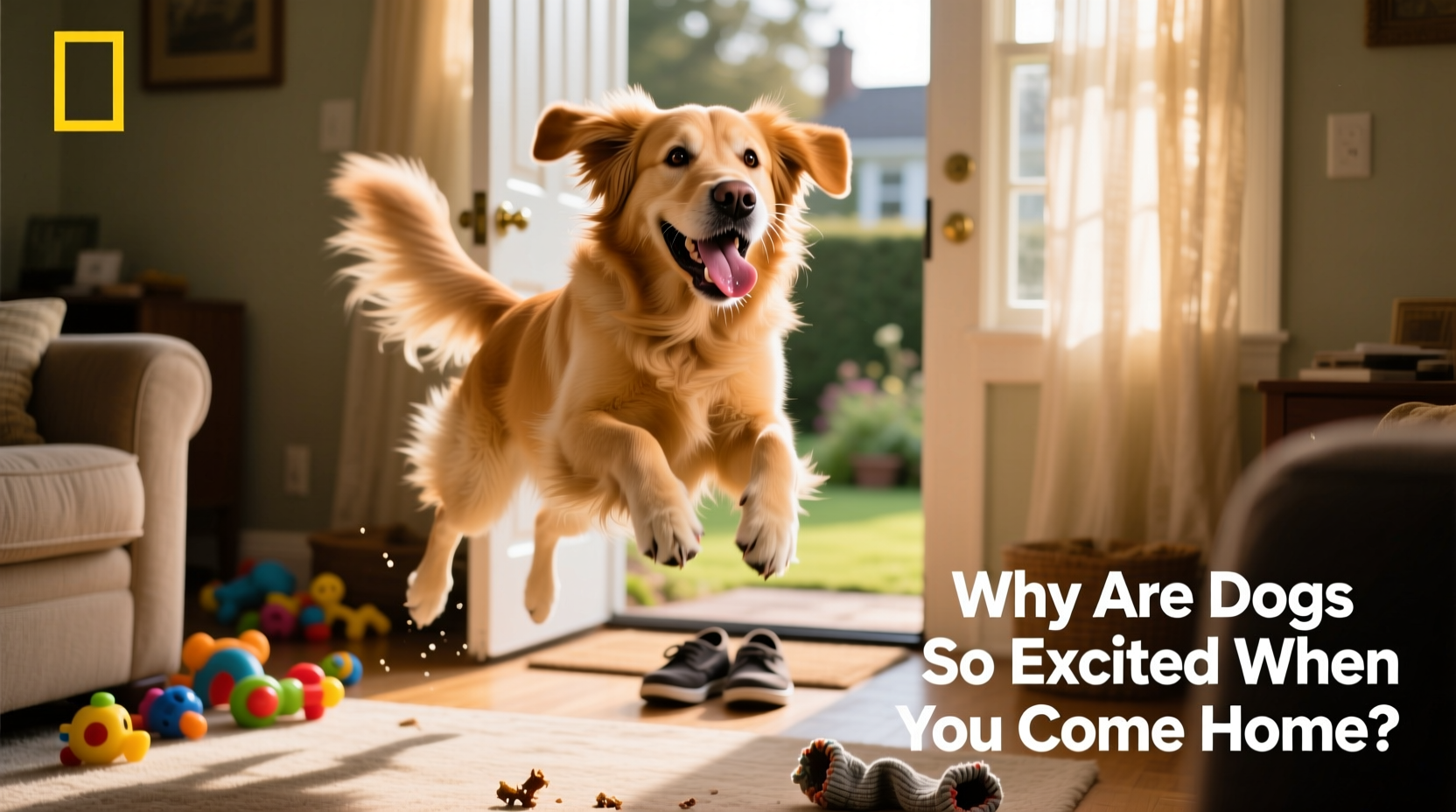
Dogs evolved from wolves, pack animals that rely on strong social bonds for survival. In the wild, pack members returning after separation trigger high levels of anticipation and greeting behaviors. These interactions reinforce group cohesion, reduce tension, and reaffirm social hierarchies. Domestication refined these instincts, shifting the focus from the pack to the human family.
Modern dogs perceive their owners as central figures in their social hierarchy—essentially, their “alpha” or primary attachment figure. When you leave, your dog experiences a disruption in their social environment. Your return restores stability, prompting an instinctive celebration. This behavior is not merely learned; it’s hardwired through thousands of years of co-evolution.
“Dogs don’t just see us as food providers—they form deep emotional attachments similar to those between parents and children.” — Dr. Brian Hare, Cognitive Neuroscientist and Founder of Duke Canine Cognition Center
The Science Behind the Wag: What Happens in a Dog’s Brain?
Neurological studies using fMRI scans reveal that dogs have dedicated brain regions responding to human scents and voices. One landmark study at Emory University found that the caudate nucleus—a region associated with positive emotions and rewards—lights up more intensely when a dog smells its owner than any other stimulus, including food.
This neurological response explains the intensity of homecoming excitement. To your dog, your return isn’t just a routine event—it’s a dopamine-triggering, emotionally charged reunion. The tail wagging, jumping, and vocalizations are physical manifestations of internal joy, akin to a human hugging a long-lost friend.
Interestingly, research also shows that dogs can distinguish time intervals. While they don’t track hours like humans, they exhibit different greeting behaviors based on duration of absence. A 30-minute absence elicits moderate excitement; two hours triggers significantly more intense reactions. This suggests dogs possess a rudimentary sense of time tied to emotional expectation.
Communication Through Behavior: Decoding the Greeting Ritual
A dog’s homecoming ritual is rich with communicative intent. Each action carries meaning:
- Tail wagging: A broad, sweeping wag indicates happiness; a stiff, rapid wag may signal arousal or anxiety.
- Licking: An appeasement gesture rooted in puppyhood, where pups lick adults to encourage regurgitation of food. Now, it signifies affection and submission.
- Jumping: An attempt to make face-to-face contact, mimicking how puppies greet taller pack members.
- Barking or whining: Vocal expressions of heightened emotion, often excitement mixed with residual stress from separation.
When Excitement Crosses the Line: Managing Overstimulation
While enthusiastic greetings are normal, some dogs become so overstimulated they risk injury—either to themselves, their owners, or nearby objects. Chronic over-excitement can also indicate underlying anxiety, especially if accompanied by destructive behavior during absences.
Managing excessive excitement involves both training and environmental adjustments. The goal isn’t to suppress joy but to channel it into calmer expressions of affection.
Step-by-Step Guide to Calming Greeting Behavior
- Practice controlled departures and returns. Ignore your dog for the first 30–60 seconds after entering. This reduces the emotional spike associated with your arrival.
- Use a leash indoors during greetings. This prevents jumping and allows gentle correction if needed.
- Teach a “settle” command. Reward calm sitting with treats and praise. Consistency over several weeks reshapes automatic responses.
- Introduce a pre-greeting ritual. Ask your dog to perform a known command (e.g., “sit” or “down”) before receiving affection.
- Exercise before leaving. A tired dog is less likely to build up nervous energy during your absence.
Real-Life Example: Max, the Overexcited Labrador
Max, a three-year-old yellow Lab, would sprint across the living room, knock over lamps, and jump uncontrollably whenever his owner returned. His excitement was endearing but dangerous. His owner began implementing the five-step process above. For the first week, she walked in, immediately attached his leash, asked for a sit, and only offered pets after he remained seated for 10 seconds. Within three weeks, Max began sitting automatically upon her entry. The transformation didn’t dampen his joy—he still wags furiously—but now expresses it safely.
This case illustrates that behavioral change doesn’t require suppressing emotion. With patience and consistency, dogs can learn to express love without chaos.
Do’s and Don’ts of Responding to Homecoming Excitement
| Do’s | Don’ts |
|---|---|
| Maintain a calm demeanor upon entry | Engage immediately with loud voices or petting |
| Wait for four paws on the floor before interacting | Push or yell at your dog to “calm down” |
| Use positive reinforcement for calm behavior | Reward jumping or barking with attention |
| Establish a predictable routine | Ignore the behavior entirely without guidance |
| Provide mental stimulation during absence (e.g., puzzle toys) | Leave the TV or radio on as a substitute for companionship |
Frequently Asked Questions
Is my dog really happy, or is this behavior a sign of separation anxiety?
True joy is characterized by relaxed body language—soft eyes, loose posture, and wagging tail. Separation anxiety includes destructive chewing, house soiling, or prolonged vocalization when alone. If your dog only acts out during arrivals but is calm otherwise, it’s likely excitement, not anxiety. Consult a veterinarian or behaviorist if you're unsure.
Should I ignore my dog completely when I come home?
No—complete ignoring can damage trust. Instead, delay interaction by 30–60 seconds. Use that time to remove your coat or wash your hands while speaking in a calm tone. Once your dog is settled, offer affection. This teaches patience without emotional neglect.
Will neutering or spaying reduce my dog’s excitement?
While spaying or neutering can reduce certain hormonally driven behaviors (like roaming or aggression), it has minimal impact on greeting excitement, which is primarily social and emotional. Training remains the most effective tool for managing over-the-top greetings.
Cultivating Connection Without Chaos
The sheer exuberance dogs show when we walk through the door is one of the purest forms of unconditional love in the animal kingdom. It reflects their deep need for connection, their acute awareness of our presence, and their remarkable capacity for emotional expression. Rather than viewing this behavior as inconvenient, we can appreciate it as a testament to the unique bond we share.
By understanding the roots of this joy—and applying consistent, compassionate training—we don’t diminish the magic of the reunion. We refine it. We create space for love to flourish in a way that’s safe, respectful, and sustainable for both species.
💬 Your dog’s homecoming ritual is a daily reminder of being loved unconditionally. How do you manage the excitement while honoring the joy? Share your story and tips with fellow dog lovers in the comments below!








