In the past, scoring concert tickets meant setting an alarm, refreshing a browser, or calling a ticket line. Today, even with digital convenience, fans often find themselves locked out within seconds of sale launch—redirected to waiting rooms, error messages, or resale sites with prices ten times higher than face value. The frustration is real, widespread, and increasingly common across genres and venues. So why are concert tickets so hard to get these days? The answer lies in a perfect storm of skyrocketing demand, limited supply, and a hidden war being waged behind the scenes: the bot wars.
Bots—automated software scripts—are now central players in the ticket-buying ecosystem. Designed to bypass human limitations like reaction time and manual input, they can purchase hundreds or even thousands of tickets in milliseconds. While fans wait in virtual queues, bots flood ticketing platforms, siphoning off inventory before most people even see a \"Buy\" button. This phenomenon isn't isolated; it's systemic, reshaping how live entertainment is accessed and who gets to participate.
The Rise of Ticket Bots and How They Work
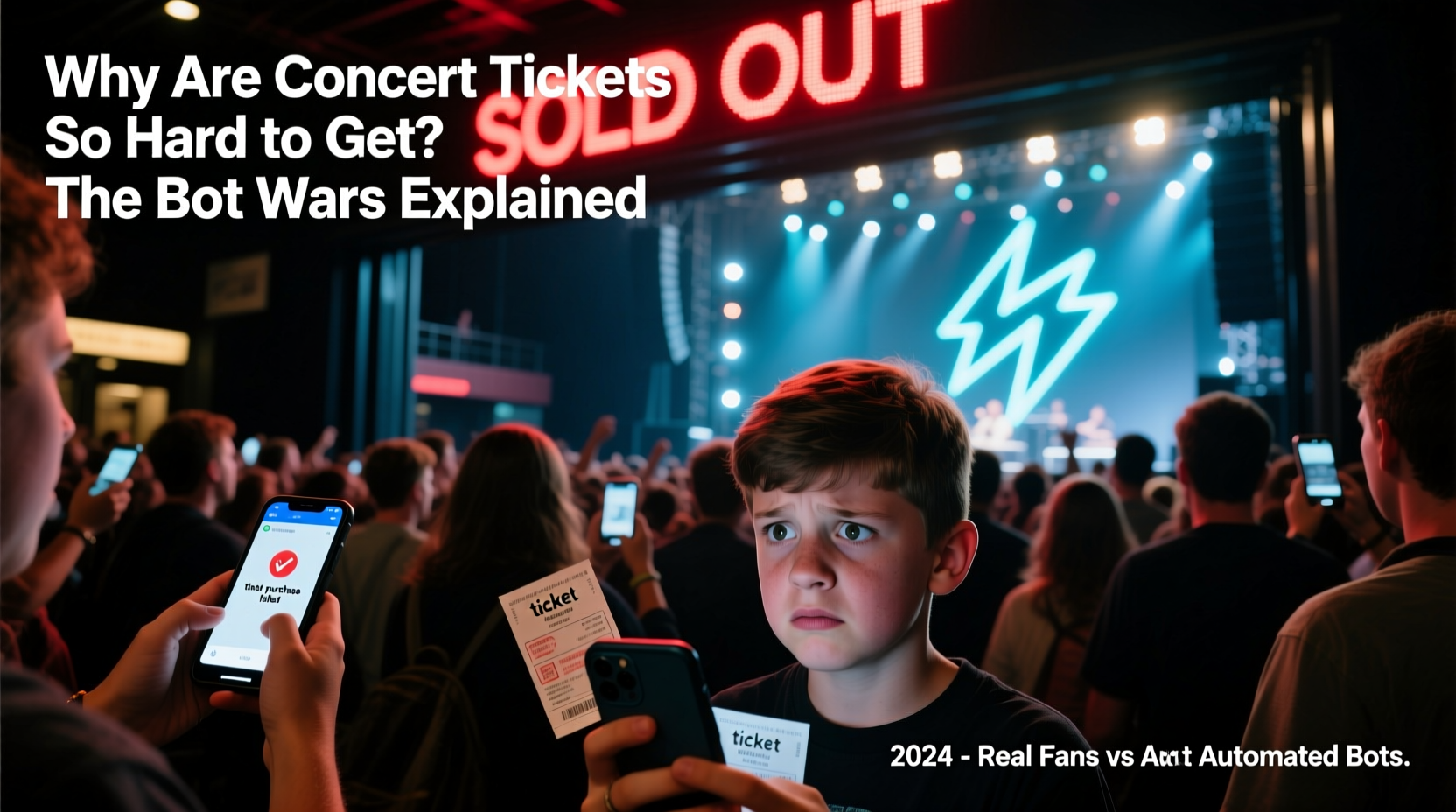
Ticket bots are not new, but their sophistication has evolved dramatically. Early versions were simple scripts that auto-filled checkout forms. Modern bots integrate artificial intelligence, proxy servers, and CAPTCHA-solving tools to mimic human behavior so convincingly that many evade detection.
Here’s how they typically operate:
- Pre-Sale Intelligence Gathering: Bot operators monitor artist announcements, tour schedules, and pre-sale codes. Some infiltrate fan clubs or mailing lists to gain early access.
- Automated Login & Navigation: At the moment tickets go on sale, bots simultaneously log into multiple accounts across different IP addresses, navigating directly to event pages using stored URLs.
- Checkout Speed: Using pre-filled payment and shipping details, bots complete purchases in under a second—far faster than any human could.
- Inventory Aggregation: Tickets are funneled into centralized inventories controlled by resellers or scalping syndicates.
These operations are often run by organized networks. A single bot farm may deploy tens of thousands of virtual users across global server clusters, making them appear as legitimate traffic while overwhelming ticketing systems.
Tip: Use official artist presales and verified fan programs—they’re among the few tools designed to reduce bot advantage.The Scalping Economy: From Sidewalks to Algorithms
Historically, scalpers operated outside arenas, hawking extra tickets for inflated prices. Today, the same practice thrives online—but at scale and with precision. Secondary marketplaces like StubHub, Vivid Seats, and SeatGeek host billions in annual transactions, much of which originates from bot-purchased inventory.
What makes modern scalping particularly insidious is its automation. Instead of individuals buying one or two extras, large-scale operators use bots to corner the market on high-demand shows. Once acquired, these tickets are relisted almost instantly, often marked up by 300% or more.
A 2023 report by the U.S. Government Accountability Office found that for top-tier concerts, over 60% of available tickets disappeared within the first 10 minutes of sale—many reappearing on resale sites within minutes. In some cases, bots secured entire sections of premium seating before general sales even opened.
“Bots have turned ticketing into an arms race. Fans aren’t just competing against each other—they’re up against machines optimized for speed and stealth.” — Daniel Reyes, Digital Policy Analyst at Fair Access Now
Why Demand Outpaces Supply (And Always Will)
Even without bots, concert tickets would be difficult to obtain. Several structural factors contribute to scarcity:
- Limited Venue Capacity: Most arenas hold between 15,000–20,000 people. For artists like Taylor Swift, Beyoncé, or Harry Styles, millions want seats.
- Tour Scheduling Gaps: Major acts may only visit certain cities once every few years, concentrating demand into narrow windows.
- VIP & Bundled Packages: Many tickets are sold as part of expensive bundles (merch, early entry), reducing availability in standard price tiers.
- Artist & Promoter Control: Some tours deliberately limit supply to create hype, drive media attention, and boost resale visibility.
Consider this: Taylor Swift’s “Eras Tour” reportedly had over 22 million unique users register for Ticketmaster’s Verified Fan program for North American dates. With roughly 2.1 million total tickets available, that’s a 10% chance—even if no bots were involved.
| Factor | Impact on Ticket Availability | Example |
|---|---|---|
| Bot Activity | High – Removes bulk inventory instantly | Bots bought ~40% of initial Rolling Stones 2023 sale stock |
| Venue Size | Moderate – Physical space limits | Madison Square Garden holds ~20k max |
| Fan Demand | Very High – Global audiences, limited stops | Bad Bunny sold out 7 nights at Coliseo de Puerto Rico |
| Pricing Strategy | Medium – Dynamic pricing inflates costs | Some NFL playoff tickets hit $10k+ on resale |
Who’s Fighting Back? Anti-Bot Measures & Their Limits
Several solutions have emerged to combat bot dominance, though none are foolproof.
Verified Fan Programs
Used by Ticketmaster and others, these require users to register in advance. The system attempts to verify real humans and prioritize them during sales. However, determined scalpers create fake identities or hijack compromised accounts to game the system.
CAPTCHAs and Bot Detection
Tools like reCAPTCHA v3 aim to distinguish bots from humans based on behavior analysis. But advanced bots simulate mouse movements, randomized delays, and keystroke patterns to pass these tests routinely.
Blockchain & NFT Tickets
Some startups propose blockchain-based tickets that are non-transferable or traceable. While promising, adoption remains low due to complexity and consumer skepticism.
Legislation: The BOTS Act
The U.S. passed the Better Online Ticket Sales (BOTS) Act in 2016, making it illegal to circumvent security measures on ticket sites. Yet enforcement is weak, penalties minimal, and jurisdictional challenges abound—especially when bot operators are overseas.
Tip: Clear your browser cache and disable extensions before ticket sales—some ad blockers interfere with queue systems.Real Example: The Taylor Swift Eras Tour Fiasco
No recent case illustrates the breakdown better than the 2022 Ticketmaster crash during Taylor Swift’s Eras Tour presale. Over 14 million fans entered the Verified Fan queue for U.S. dates. When the sale began, the site buckled under unprecedented traffic, displaying errors and dropping users mid-process.
Within hours, tens of thousands of tickets surfaced on resale platforms—with some priced over $5,000. Congressional hearings followed. Lawmakers grilled Ticketmaster executives, citing monopolistic practices and inadequate anti-bot infrastructure. Despite claiming to have blocked over 10 million bot attempts, the company failed to deliver a functional experience for genuine fans.
The incident revealed a deeper truth: even with safeguards, current systems are ill-equipped to handle demand at this scale. As one fan told Rolling Stone: “I spent three hours in a queue just to get a message saying tickets were gone. Meanwhile, someone flipped my dream seat for $3,000.”
Step-by-Step Guide: How to Improve Your Chances
While the system is stacked, there are still strategies that increase your odds of securing tickets fairly:
- Register Early for Presales: Sign up for artist newsletters, fan clubs, credit card presales, and Verified Fan programs weeks in advance.
- Prepare Multiple Devices: Use a phone, tablet, and computer simultaneously during the sale to maximize attempts.
- Use Reliable Internet: Avoid public Wi-Fi. Connect via Ethernet if possible to reduce lag.
- Have Accounts Ready: Log into Ticketmaster, Live Nation, and other platforms ahead of time. Save payment methods securely.
- Monitor Official Resale Channels: Artists like Pearl Jam and Radiohead occasionally release last-minute tickets through ethical resale portals where prices are capped.
- Set Price Alerts: Use tools like Gametime or SeatGeek to track drops in resale prices as the event nears.
- Attend Off-Peak Shows: Weekday performances or later tour dates often have better availability.
Checklist: Before the Ticket Sale Begins
- ✅ Join the artist’s official fan club
- ✅ Register for Verified Fan or similar programs
- ✅ Ensure your email is confirmed and whitelisted
- ✅ Update passwords and enable two-factor authentication
- ✅ Test login on ticketing platforms
- ✅ Save billing and shipping information
- ✅ Close unnecessary browser tabs and apps
- ✅ Charge all devices and connect to stable internet
Frequently Asked Questions
Can I legally use a bot to buy concert tickets?
No. Under the U.S. BOTS Act, using bots to purchase tickets in violation of a website’s terms of service is illegal. Similar laws exist in the UK and Australia. Violators can face fines and civil liability, though prosecution is rare.
Are resale tickets ever a good deal?
Sometimes. As the event date approaches, resale prices often drop—especially for weekday shows or less popular seating. Use filtered searches on reputable platforms and set alerts to catch price dips.
Why don’t artists just sell tickets directly?
Some do—artists like Garth Brooks and Bruce Springsteen have experimented with direct sales. But scaling requires massive infrastructure, customer support, fraud prevention, and integration with venue logistics. Most rely on third-party vendors despite the flaws.
Conclusion: Reclaiming Fair Access to Live Music
The difficulty of getting concert tickets today isn’t just about popularity—it’s about a broken marketplace where automation undermines fairness. Bots, unchecked resale ecosystems, and outdated enforcement allow profit-driven actors to exploit passion. Fans are left feeling powerless, priced out, or deceived.
Change will require coordinated effort: stronger regulation, transparent ticketing models, investment in anti-fraud tech, and pressure from consumers demanding accountability. Until then, knowledge is power. Understanding the mechanics behind the scarcity gives you a strategic edge. Prepare early, stay informed, and support artists who prioritize equitable access.
🚀 Share your concert ticket horror story or best success tip below—your experience could help someone else beat the bots next time.








