
Chihuahuas are among the most recognizable dog breeds, known for their tiny frames, large eyes, and outsized personalities. Yet many owners and bystanders alike have experienced or heard stories of Chihuahuas growling, snapping, or barking aggressively at seemingly minor triggers. While not all Chihuahuas display aggressive behaviors, the stereotype persists—and for good reason. Understanding why these small dogs often act so boldly requires a closer look at their biology, upbringing, environment, and human interaction patterns.
Aggression in Chihuahuas isn't simply a matter of temperament; it's often a complex response to fear, poor socialization, or learned behavior. Addressing it effectively means going beyond labeling them as “yappy” or “mean” and instead exploring the underlying causes and solutions.
The Psychology Behind Chihuahua Aggression
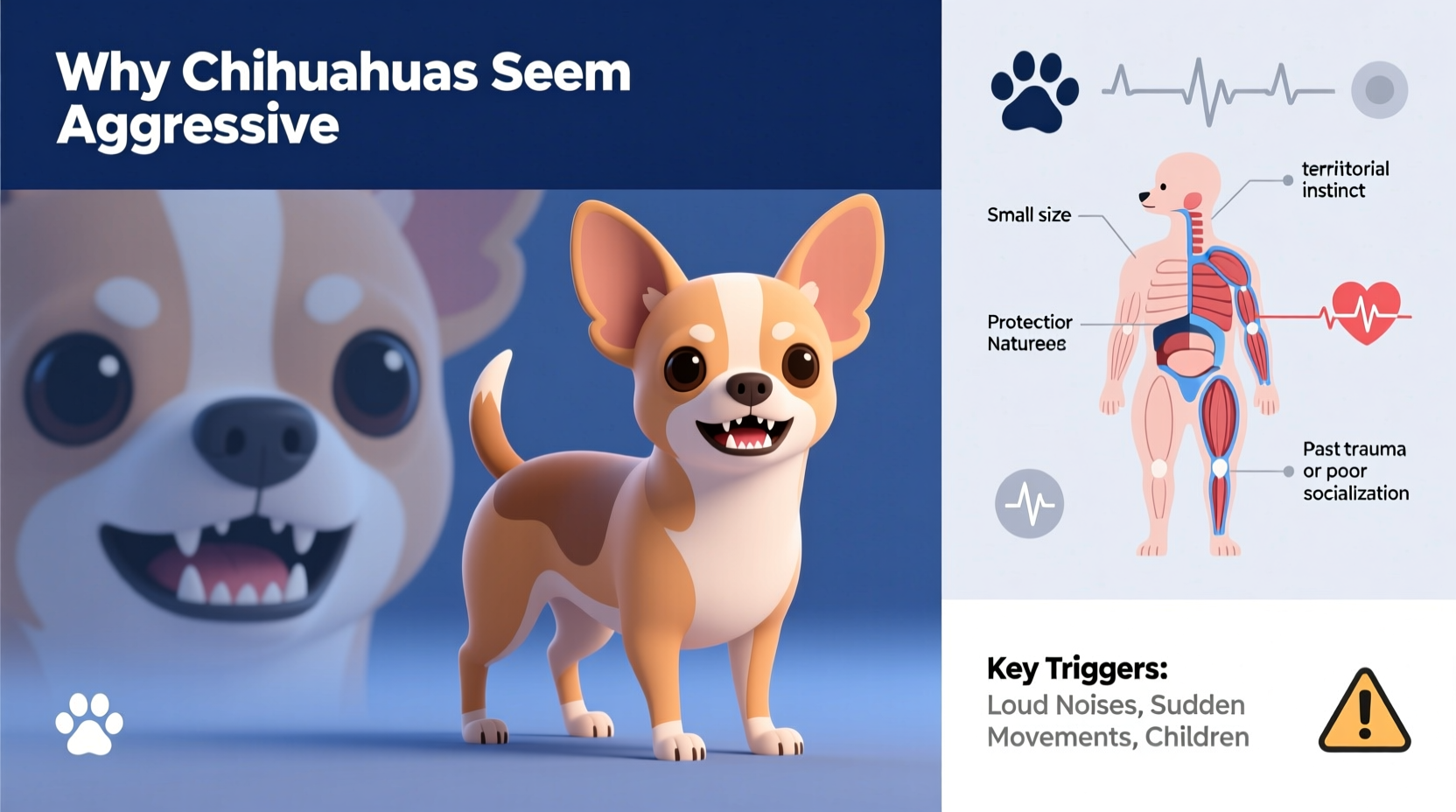
Despite their size, Chihuahuas possess the same emotional range as larger breeds. However, their small stature influences how they interpret threats. A dog that weighs only 3–6 pounds may perceive everyday situations—like a child running nearby or a larger dog approaching—as life-threatening. This constant state of perceived vulnerability can trigger defensive aggression.
Fear-based aggression is one of the most common types seen in Chihuahuas. When cornered or startled, they may bark, lunge, or snap not out of dominance, but as a survival instinct. Unlike larger dogs whose warning signs (like stiff posture or low growls) are more easily recognized, a Chihuahua’s signals are often dismissed until they escalate.
“Small dogs are often excused for aggressive behaviors because they’re ‘cute’ or ‘not dangerous,’ but this tolerance reinforces the behavior.” — Dr. Karen Overall, Veterinary Behaviorist
This lack of correction leads to a cycle: the dog acts out, gets attention (even if negative), and repeats the behavior. Over time, aggression becomes a reliable tool for controlling their environment.
Common Causes of Aggressive Behavior
Several interrelated factors contribute to aggression in Chihuahuas:
- Lack of early socialization: Puppies not exposed to various people, animals, sounds, and environments before 16 weeks of age are more likely to develop fear-based reactivity.
- Overprotective ownership: Owners who carry their Chihuahuas everywhere or shield them from interactions prevent them from learning confidence through experience.
- Poor training consistency: Inconsistent rules or allowing growling to stop unwanted advances teach the dog that aggression works.
- Health issues: Pain, dental problems, hypoglycemia, or neurological conditions can increase irritability and defensive reactions.
- Breed tendencies: Chihuahuas were historically bred as companion animals with strong loyalty, which can manifest as territorial or possessive aggression if not properly guided.
Do’s and Don’ts of Managing Chihuahua Aggression
| Do’s | Don’ts |
|---|---|
| Expose your Chihuahua gradually to new people, pets, and environments | Force interactions that scare your dog |
| Use positive reinforcement for calm behavior | Yell at or physically punish aggression |
| Establish consistent rules and boundaries | Allow growling to deter petting or handling |
| Train basic commands like “sit,” “stay,” and “leave it” | Carry your dog constantly, preventing ground-level experiences |
| Consult a veterinarian to rule out medical causes | Ignore persistent aggression hoping it will fade with age |
Step-by-Step Guide to Reducing Aggression
Changing aggressive behavior takes time, patience, and consistency. Follow this timeline to help reshape your Chihuahua’s responses:
- Week 1–2: Assessment & Medical Check
Visit a veterinarian to rule out pain, hormonal imbalances, or neurological issues contributing to aggression. - Week 3–4: Establish Routine & Boundaries
Create a predictable daily schedule for feeding, walks, and rest. Begin enforcing simple rules—no jumping on furniture, waiting calmly before meals. - Week 5–8: Basic Obedience Training
Teach sit, stay, come, and leave-it using treats and praise. Practice in low-distraction environments first. - Week 9–12: Controlled Socialization
Introduce your Chihuahua to calm dogs and friendly people in neutral spaces. Keep sessions short and end on a positive note. - Month 4+: Behavior Shaping
Gradually expose your dog to previously feared stimuli (e.g., strollers, hats) while rewarding calmness. Use distance and barriers to prevent overwhelm.
Progress may be slow, but even small improvements—like reduced barking at visitors—are meaningful milestones.
Real-Life Example: Bella the Reactive Chihuahua
Maria adopted Bella, a two-year-old Chihuahua, from a shelter. Though affectionate at home, Bella would lunge and bark at anyone who approached Maria. Walks were stressful, and guests avoided her apartment.
After consulting a certified dog trainer, Maria discovered Bella had never been socialized. The plan included daily short training sessions, teaching Bella to “look” at Maria when someone approached, and rewarding eye contact with treats. Over three months, Bella began to associate strangers with positive outcomes. She still prefers personal space, but now remains calm instead of aggressive.
“It wasn’t about breaking her spirit,” Maria said. “It was about giving her the tools to feel safe without needing to fight.”
Prevention Checklist for New Chihuahua Owners
To minimize the risk of aggression from the start, follow this checklist:
- ✅ Enroll in puppy socialization classes before 16 weeks of age
- ✅ Handle paws, ears, and mouth regularly to build tolerance for grooming and vet exams
- ✅ Introduce household noises (vacuum, doorbell) at low volume, increasing gradually
- ✅ Set clear boundaries—don’t allow biting, jumping, or growling to get attention
- ✅ Use positive reinforcement exclusively; avoid punishment-based methods
- ✅ Schedule annual vet checkups to catch health issues early
- ✅ Avoid reinforcing fear by carrying your dog away from every challenge
Frequently Asked Questions
Are Chihuahuas naturally aggressive?
No breed is inherently aggressive. Chihuahuas have a genetic predisposition toward alertness and loyalty, which can become problematic without proper training. Aggression usually stems from fear, poor socialization, or learned behavior—not innate malice.
Can an older Chihuahua unlearn aggressive habits?
Yes. While early intervention is ideal, adult dogs can improve significantly with consistent, positive training. Professional help from a certified animal behaviorist increases success rates, especially for deep-seated reactivity.
Is it safe to have a Chihuahua around children?
With supervision and proper training, yes. However, due to their fragility and potential for nipping when mishandled, Chihuahuas are not ideal for homes with very young children. Teaching kids how to interact gently is crucial.
Conclusion: Building Trust Over Time
Understanding why Chihuahuas act aggressively transforms frustration into empathy. These dogs aren’t trying to dominate—they’re trying to survive in a world that often feels too big and too loud. With patient guidance, structured training, and a commitment to positive reinforcement, most Chihuahuas can learn to respond calmly instead of defensively.
Their loyalty and intelligence make them deeply rewarding companions when their needs are met with consistency and care. Rather than asking, “Why is my Chihuahua so aggressive?” ask, “What is my dog trying to tell me?” The answer opens the path to a safer, happier relationship.
💬 Have a Chihuahua with behavioral challenges? Share your story or tips in the comments—your experience could help another owner find hope and solutions.








