
Maya Angelou’s I Know Why the Caged Bird Sings is more than a memoir—it is a resonant narrative of survival, resilience, and self-discovery. First published in 1969, the book chronicles Angelou’s early life, from childhood trauma and racial discrimination to her journey toward finding voice and dignity. Its poetic prose, emotional depth, and unflinching honesty have cemented its place as a cornerstone of American literature. To truly understand this work is to engage with its layered themes, historical significance, and the powerful symbolism embedded within its title.
The Story Behind the Title
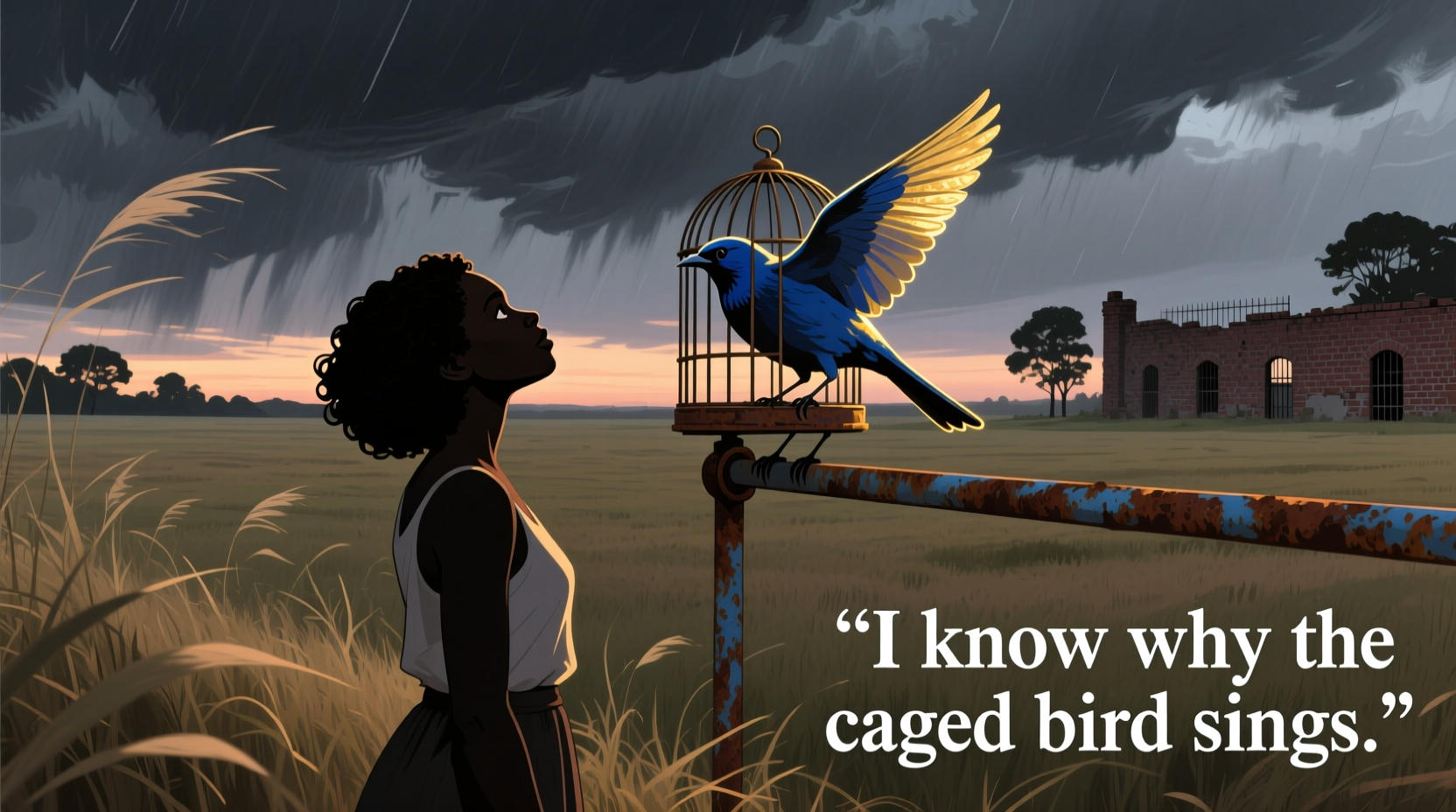
The phrase “I know why the caged bird sings” originates from Paul Laurence Dunbar’s poem “Sympathy,” where the caged bird beats its wings against the bars of confinement, singing not out of joy but as an act of resistance and longing for freedom. Angelou reclaims this image, transforming the song into one of hope, defiance, and inner strength. In her memoir, the caged bird becomes a metaphor for Black Americans—particularly Black women—struggling under systemic oppression, yet persisting through creativity, voice, and memory.
“Words mean more than what is set down on paper. It takes the human voice to infuse them with deeper meaning.” — Maya Angelou
This quote encapsulates Angelou’s belief in storytelling as liberation. Her narrative does not merely recount events; it gives voice to silenced experiences, particularly those of young Black girls navigating a world structured by racism, sexism, and trauma.
Key Themes in the Memoir
Angelou’s memoir explores several interwoven themes that remain relevant decades after its publication:
- Racial Identity and Oppression: Set in the segregated South, the book illustrates how racism permeates everyday life—from segregated movie theaters to degrading treatment by white employers. Marguerite (Maya) internalizes these messages early, struggling with feelings of inferiority due to her skin color.
- Trauma and Resilience: At age eight, Maya is sexually assaulted by her mother’s boyfriend. After testifying against him, she retreats into silence for nearly five years, believing her voice caused his death. This period of muteness becomes central to the theme of voicelessness—and later, vocal empowerment.
- The Power of Literature and Language: Books become Maya’s refuge. Authors like Shakespeare, Dickens, and Langston Hughes offer solace and intellectual escape. Mrs. Bertha Flowers, a mentor figure, reintroduces Maya to speech through poetry, emphasizing the dignity and rhythm of language.
- Family and Belonging: The memoir portrays complex family dynamics—absent parents, a strong grandmother (Momma), and a charismatic but unreliable mother (Vivian). These relationships shape Maya’s sense of identity and stability.
- Coming of Age: As a bildungsroman, the book traces Maya’s evolution from insecurity to self-assurance. Her decision to become the first Black female streetcar conductor in San Francisco symbolizes autonomy and personal triumph.
Historical and Cultural Context
To fully grasp the weight of Angelou’s story, one must situate it within mid-20th century America. Born in 1928, Maya grew up during the Great Depression and Jim Crow era, times when Black communities faced legal segregation, economic hardship, and pervasive violence. Lynchings, voter suppression, and daily humiliations were realities for many African Americans.
Yet, despite these conditions, Angelou highlights the strength and dignity of her community. Her grandmother, Annie Henderson, runs a successful store in Stamps, Arkansas—a rare feat for a Black woman at the time. Church gatherings, storytelling, and music serve as forms of cultural preservation and resistance.
The memoir also intersects with broader literary movements. Published during the Civil Rights and Black Arts Movements, Caged Bird contributed to a growing body of autobiographical works by Black women—such as Toni Morrison and Alice Walker—who centered female subjectivity and challenged dominant narratives.
A Closer Look: Symbolism and Structure
Angelou employs rich symbolism throughout the text. Beyond the central metaphor of the caged bird, other recurring images include:
- Silence: Represents trauma, but also introspection and eventual rebirth.
- Books and Libraries: Symbols of freedom, education, and self-worth.
- Dresses and Clothing: Reflect societal expectations and personal transformation—especially Maya’s graduation dress, made from a repurposed curtain, which underscores both poverty and ingenuity.
The structure of the memoir itself mirrors a lyrical composition. Though chronological, it moves episodically, focusing on pivotal moments rather than linear progression. Each chapter functions almost like a prose poem, blending narrative with reflection.
| Symbol | Meaning | Example in Text |
|---|---|---|
| The Caged Bird | Oppression and the yearning for freedom | Title and recurring motif referencing Dunbar’s poem |
| Silence | Trauma, healing, and reclaimed voice | Mutism after assault; speech restored by Mrs. Flowers |
| Stamps, Arkansas | Roots, safety, and racial segregation | Childhood home with Momma; site of racial humiliation |
| San Francisco | Freedom, opportunity, and self-determination | Teenage independence; first job as conductor |
Mini Case Study: The Graduation Scene
One of the most powerful passages occurs during Maya’s eighth-grade graduation. She recites a patriotic poem with pride, only to be interrupted by a white speaker who dismisses Black students’ futures, suggesting they are best suited for farming or domestic work. The moment shatters the celebratory mood.
This scene exemplifies the psychological toll of racism. Maya feels stripped of dignity, yet she clings to internal resistance—clenching her fists, refusing to cry publicly. It is not a victory, but a lesson in endurance. Years later, she reflects on how such experiences forged her determination to prove her worth on her own terms.
Why This Memoir Still Matters
I Know Why the Caged Bird Sings continues to resonate because it speaks to universal struggles—of identity, abuse, belonging, and the search for voice. It has been both celebrated and challenged: frequently taught in schools, it has also been among the most banned books in the U.S. due to its depictions of sexual assault and racial slurs.
However, scholars argue that removing the book from curricula erases vital conversations about trauma and race. As Dr. Henry Louis Gates Jr. noted,
“To censor Maya Angelou is to silence the very voices she fought so hard to recover.” — Dr. Henry Louis Gates Jr., Literary Scholar
The memoir’s legacy extends beyond literature. It inspired generations of writers, activists, and educators to tell their own stories. Its influence can be seen in modern works like Tara Westover’s Educated and Jesmyn Ward’s Men We Reaped, which similarly blend personal history with social critique.
Checklist: How to Engage Deeply with the Memoir
- Read the book with awareness of its historical setting—research Jim Crow laws and the Great Migration.
- Annotate passages that deal with voice, silence, and identity.
- Compare Maya’s experiences with those of other coming-of-age narratives.
- Explore Paul Laurence Dunbar’s original poem “Sympathy” to understand the title’s roots.
- Reflect on how the themes relate to contemporary issues like racial justice and gender equity.
- Discuss the book in a group setting to uncover diverse interpretations.
Frequently Asked Questions
Is I Know Why the Caged Bird Sings appropriate for high school students?
Yes, though it contains mature themes including sexual assault and racism. Many educators use it in grades 10–12 with proper context, discussion guides, and sensitivity training. The book offers critical opportunities to discuss consent, resilience, and systemic inequality.
How many books are in Maya Angelou’s autobiography series?
There are seven volumes in total. Caged Bird is the first, followed by Gather Together in My Name, Singin’ and Swingin’ and Gettin’ Merry Like Christmas, and others, concluding with Mom & Me & Mom.
What makes this memoir different from other autobiographies?
Angelou blends poetic language with raw honesty, creating a lyrical yet unflinching account. Unlike traditional autobiographies focused on public achievements, hers centers on inner life—trauma, doubt, and emotional growth—making it groundbreaking in its focus on the Black female psyche.
Conclusion: Find Your Voice, Share Your Story
Understanding I Know Why the Caged Bird Sings means recognizing it not just as a personal story, but as a collective testament to survival. Maya Angelou’s journey from silence to speech reminds us that voice is not merely sound—it is agency, truth, and rebellion. In a world where marginalized voices are still too often suppressed, her memoir stands as a beacon.
Whether you’re encountering the book for the first time or revisiting it with fresh eyes, let it challenge you. Let it move you to reflect on your own story, your silences, and your songs. And if you’ve ever felt caged—by fear, by injustice, by doubt—remember that singing, even in captivity, is an act of freedom.
🚀 Take action today: Read a chapter aloud, write your own story, or start a conversation about whose voices are heard—and whose are not. The caged bird still sings. Will you listen?








