A retractable dog leash is a convenient tool that gives pets controlled freedom during walks while remaining safely tethered. At the heart of its functionality is a coiled metal spring mechanism that automatically retracts the cord into the housing unit. Over time, this spring can become jammed due to dirt buildup, mechanical stress, or wear and tear. A stuck spring not only limits usability but can also pose safety risks if the leash fails unexpectedly. Understanding how to diagnose and address this issue can save money, extend the life of your leash, and ensure your dog’s safety.
Understanding the Retractable Leash Mechanism
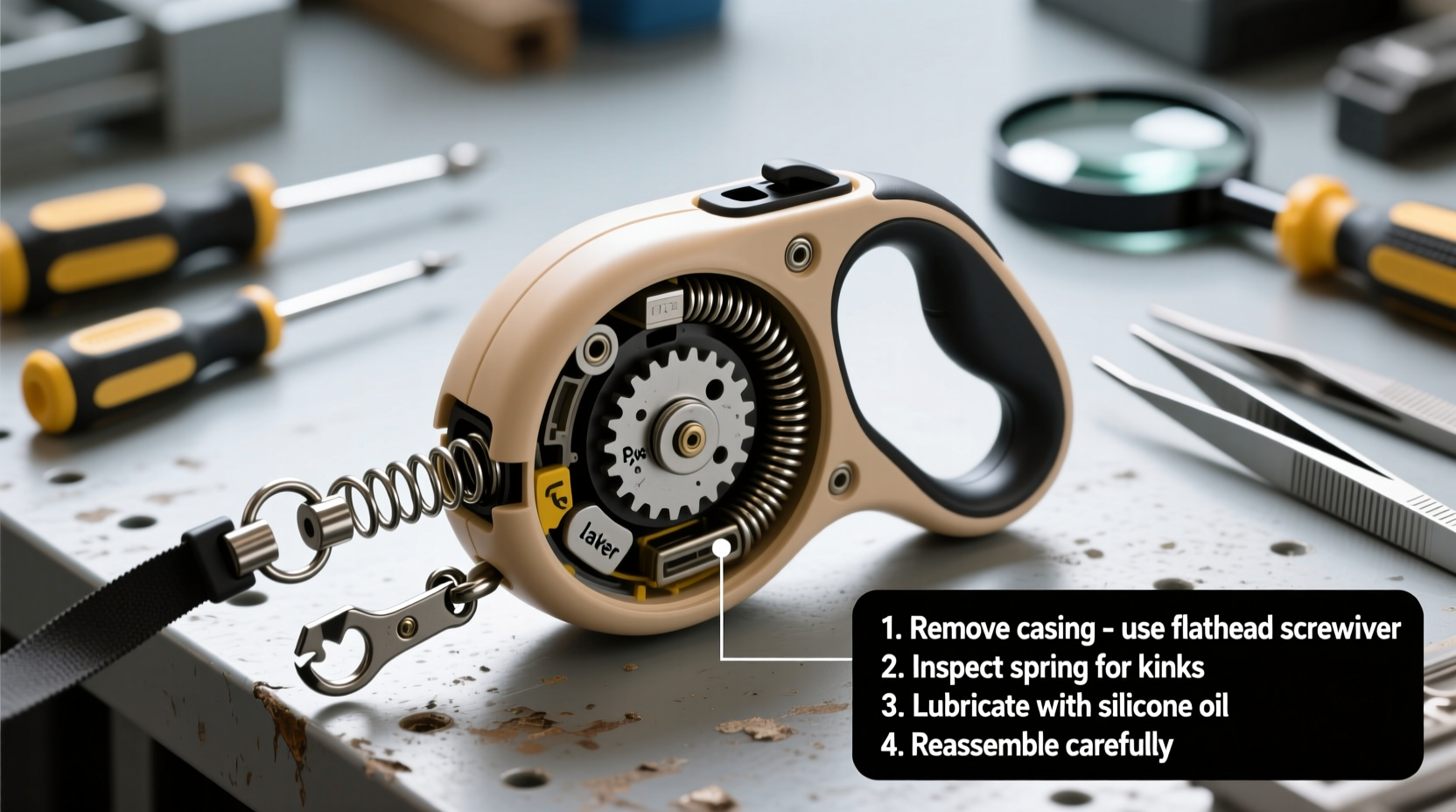
The retractable leash operates on a simple yet precise internal system. Inside the plastic housing is a strong metal coil spring attached to a spool around which the cord winds. When you pull the cord out, the spring stretches and stores energy. Releasing tension allows the spring to contract, pulling the cord back in. A locking button temporarily halts retraction, letting you fix the cord at a desired length.
When the spring becomes stuck, the cord either won’t retract or jams mid-retraction. This malfunction usually stems from one of several causes: debris inside the housing, misalignment of internal components, corrosion, or physical damage to the spring itself.
“Many leash failures are preventable with regular inspection and cleaning. The spring mechanism is durable but sensitive to environmental contaminants.” — Dr. Alan Torres, Veterinary Equipment Specialist
Step-by-Step Guide to Diagnosing and Repairing a Stuck Spring
Before attempting any repairs, unhook the leash from your dog’s collar and place it on a clean, flat surface. Follow this sequence to assess and potentially resolve the issue:
- Inspect the exterior: Look for cracks, dents, or signs of impact damage. If the casing is compromised, internal parts may be misaligned.
- Test the lock button: Press and release the lock multiple times. If it feels stiff or doesn’t click smoothly, debris may be obstructing the mechanism.
- Extend and retract manually: Pull the cord fully and slowly let it go. Listen for grinding, clicking, or resistance. Smooth retraction indicates partial function; jerking or stopping suggests internal blockage.
- Open the housing (if possible): Some models have removable screws or snap-on panels. Use a small Phillips screwdriver to open the casing carefully. Avoid forcing it, as brittle plastic can crack.
- Examine the spring and spool: Once open, visually inspect the spring for kinks, rust, or disconnection from the spool or anchor point.
- Clean internal components: Use compressed air or a soft brush to remove lint, hair, and dust. For light grime, wipe with a dry cloth. Avoid liquids unless specified by the manufacturer.
- Lubricate sparingly (optional): If the spring moves but binds, apply a tiny amount of silicone-based lubricant to the spring coils. Do not use oil-based products—they attract more dirt.
- Reassemble and test: Carefully put the housing back together, ensuring gears and springs are properly seated. Test retraction repeatedly before using with your dog.
Common Causes and Prevention Strategies
Knowing what leads to spring failure helps prevent future issues. The most frequent culprits include:
- Dirt and debris accumulation: Walking in muddy or sandy areas introduces particles that work their way into the housing.
- Moisture exposure: Rain, snow, or washing the leash with water can cause internal rust, especially on lower-quality metal springs.
- Over-extension: Yanking the cord to its maximum limit repeatedly stresses the spring beyond design tolerance.
- Pet chewing or rough handling: Dogs that tug aggressively or chew the handle can damage both exterior and internal parts.
- Manufacturing defects: Some budget leashes use thin-gauge springs prone to early fatigue.
| Do’s | Don’ts |
|---|---|
| Wipe down the leash after each use in wet or dirty conditions | Submerge the housing in water or run under a tap |
| Store in a dry place away from extreme temperatures | Leave the leash extended overnight or for long periods |
| Use gentle pressure when extending or retracting | Allow children to play with the lock mechanism unsupervised |
| Replace worn cords or cracked housings promptly | Apply household oils like WD-40 to the spring |
Real-World Example: Fixing a Jammed Leash After a Beach Walk
Sarah, a dog owner from San Diego, noticed her retractable leash wouldn’t retract after a walk along the coast. Her 35-pound Australian Shepherd had pulled hard near the surf, dragging the leash through damp sand. Initially, she assumed the cord was tangled. After trying to yank it back without success, she stopped use and inspected the device.
At home, she opened the housing using a precision screwdriver and discovered fine sand embedded around the spring and spool. She used a can of compressed air and a toothbrush to gently remove the particles. After reassembly, the leash worked smoothly again. Sarah now keeps a microfiber cloth in her walking bag to wipe the leash after outdoor excursions and avoids beach use with retractable models.
Troubleshooting Checklist
Use this checklist to methodically identify and resolve spring issues:
- �� Check for visible damage to the casing or cord
- ☐ Test the lock button for responsiveness
- ☐ Manually retract the cord to feel for resistance
- ☐ Open the housing (if designed for user access)
- ☐ Inspect the spring for bends, rust, or detachment
- ☐ Clean debris with dry tools (brush, air)
- ☐ Apply a minimal amount of silicone lubricant if needed
- ☐ Reassemble securely and test functionality
- ☐ Replace the leash if structural integrity is compromised
Frequently Asked Questions
Can I replace the spring inside a retractable leash?
In most cases, no. Replacement springs are rarely sold separately, and the internal design varies significantly between brands. Attempting to install a non-OEM spring can lead to unsafe operation. If the spring is broken, replacing the entire leash is safer and often more cost-effective.
Why does my leash retract unevenly after cleaning?
Uneven retraction usually means the cord isn’t winding uniformly onto the spool. Ensure the cord is fully extended before testing, and guide it slightly with your hand during the first few retracts to help it seat properly. If the problem persists, internal alignment may be off, indicating a need for replacement.
Is it safe to use a partially working retractable leash?
No. A leash with inconsistent retraction or a weakened spring can fail suddenly during a walk, risking injury to your dog or others. Erratic behavior in the mechanism is a warning sign. Discontinue use and switch to a standard fixed-length leash until the issue is resolved or replaced.
Conclusion: Prioritize Safety and Maintenance
A stuck retractable dog leash spring is a common but manageable issue—if addressed promptly and correctly. While some malfunctions can be remedied with careful cleaning and inspection, others signal the end of the leash’s usable life. Regular maintenance, mindful usage, and immediate attention to warning signs like stiffness or noise can prevent sudden failures.
Ultimately, your dog’s safety depends on reliable equipment. Don’t compromise on a faulty mechanism. Whether you restore function or decide to replace the unit, taking action today ensures safer, more enjoyable walks tomorrow.
💬 Have experience fixing or replacing a retractable leash? Share your story in the comments to help fellow pet owners make informed decisions.








