
For many aspiring aquarium hobbyists, the decision between starting with a tropical freshwater tank or jumping straight into a saltwater setup can feel like choosing between comfort and adventure. Freshwater tanks are often recommended as beginner-friendly, while saltwater systems carry a reputation for being complex, expensive, and unforgiving. But is this reputation still accurate in today’s aquarium world? With advances in equipment, water testing, and online support, the line between freshwater and saltwater difficulty has blurred. The real question isn’t just about complexity—it’s about expectations, budget, time commitment, and what kind of underwater experience you’re seeking.
The Reality of Beginner-Friendliness
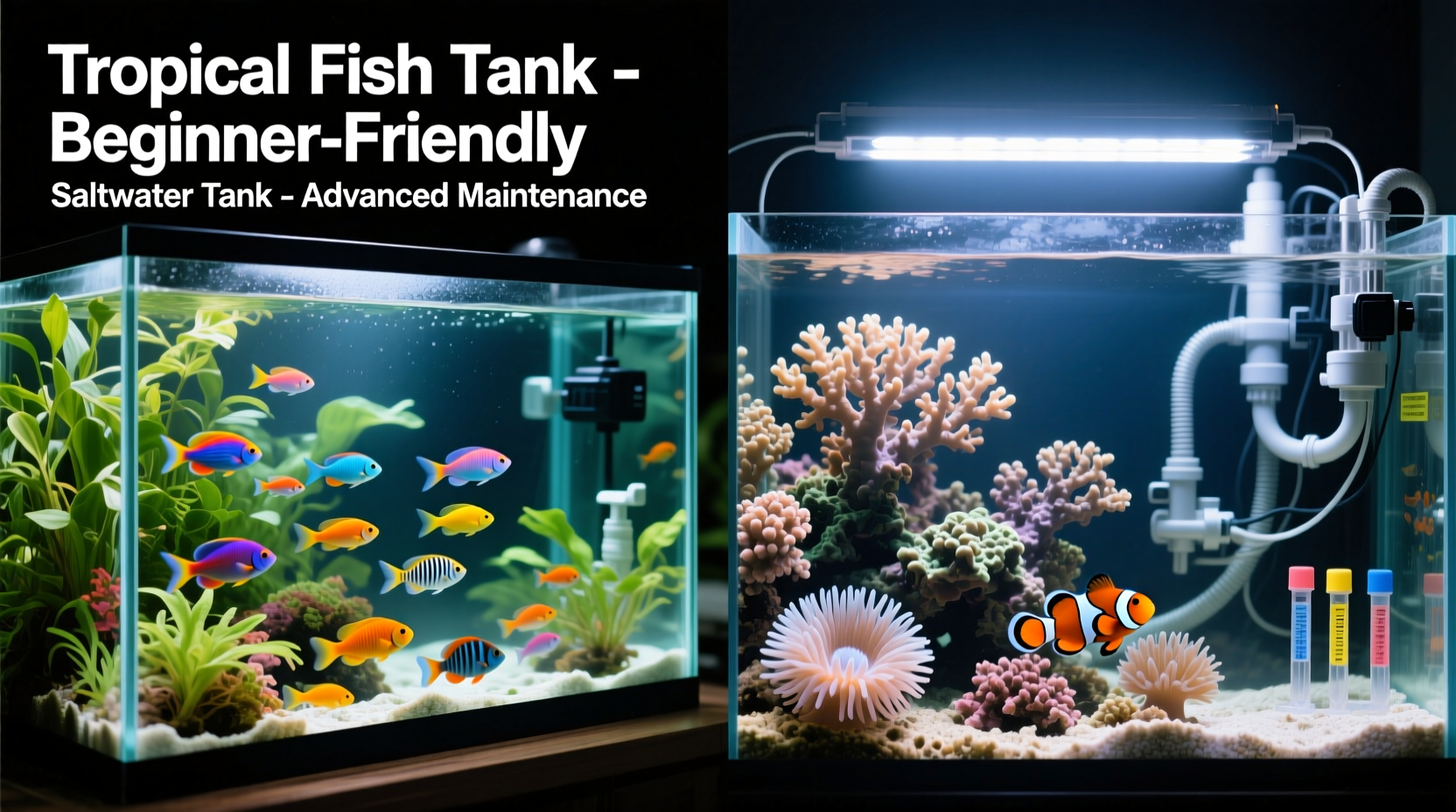
Freshwater aquariums have long been considered the standard entry point. They require less precise water chemistry, use more forgiving fish species, and typically cost less to set up. Tropical freshwater tanks—home to popular species like tetras, guppies, angelfish, and cichlids—thrive in stable environments that are relatively easy to maintain with routine care.
Saltwater tanks, on the other hand, demand tighter control over parameters such as salinity, calcium, alkalinity, and magnesium. Even small fluctuations can stress marine life. However, modern test kits, automated dosing systems, and reef-safe filtration have made managing these variables far more accessible than in the past.
That said, the margin for error is narrower. A missed water change or a failing heater can trigger a chain reaction more quickly in a saltwater environment. This doesn’t mean saltwater tanks are impossible for beginners—but they do require a higher level of diligence from day one.
Tip: If you're new to aquariums, start by mastering water testing and cycling in any system before adding livestock.Cost Comparison: Upfront and Ongoing Expenses
One of the most significant differences between tropical freshwater and saltwater tanks lies in cost. While both can be tailored to fit various budgets, saltwater setups generally come with a steeper price tag—not just initially, but over time.
| Expense Category | Freshwater Tropical Tank (29-gallon) | Saltwater Tank (30-gallon Reef Ready) |
|---|---|---|
| Tank & Stand | $150–$250 | $300–$500 |
| Filtration | $50–$100 (HOB or canister) | |
| Lighting | $40–$80 (LED standard) | $150–$300 (reef-grade LED) |
| Heater & Thermometer | $30–$50 | $50–$70 |
| Live Rock (optional) | N/A | $150–$300 |
| Substrate (sand vs. gravel) | $20–$40 | $40–$80 (specialized sand) |
| Initial Water Prep | $10 (dechlorinator) | $50–$100 (salt mix, hydrometer, RO/DI water) |
| Fish & Invertebrates | $80–$150 | $200–$500+ |
| Total Estimated Start-Up | $400–$600 | $1,100–$2,000+ |
The table above illustrates how saltwater tanks can easily double or triple initial investment. Ongoing costs also differ: salt mix, specialized foods, supplements (like iodine or strontium), and replacement bulbs add up. Freshwater keepers typically spend less than $20 monthly on maintenance; saltwater hobbyists may spend $50–$100 depending on livestock and supplementation needs.
Maintenance Demands: Time and Consistency
Maintenance frequency and precision separate the two systems most clearly. Freshwater tanks benefit from biological stability. Once cycled, weekly water changes of 25% and filter cleaning are often sufficient to maintain balance. Testing for ammonia, nitrite, and nitrate is essential during cycling but becomes less critical once established.
Saltwater tanks, especially reef setups with corals, require consistent monitoring. Key practices include:
- Weekly testing of salinity, pH, alkalinity, calcium, and magnesium
- Frequent top-offs with RO/DI water due to evaporation
- Dosing additives to maintain coral health
- More frequent water changes (10–20% every 1–2 weeks)
- Cleaning protein skimmer cup weekly
While automation can assist—such as auto-top-off systems or dosing pumps—these tools add to cost and complexity. For someone with limited time, even 30 minutes per week of dedicated aquarium work might be a stretch. Saltwater demands consistency, not just effort.
“Saltwater aquariums aren’t inherently harder—they’re just less forgiving. A beginner who researches thoroughly and commits to routine can succeed.” — Dr. Marcus Lin, Marine Aquaculture Specialist, OceanLife Institute
Biological Stability and Livestock Selection
Fish selection plays a major role in determining ease of care. Tropical freshwater species like zebra danios, Corydoras catfish, and platies are resilient, adaptable, and rarely require special diets. Many breed readily in captivity and tolerate minor parameter shifts.
In contrast, saltwater fish such as clownfish, gobies, and blennies are hardy for marine standards—but still more sensitive than their freshwater counterparts. Invertebrates like snails and hermit crabs are useful for algae control but introduce new risks: some die quickly if water quality dips, releasing toxins that can crash a tank.
Reef tanks amplify this challenge. Corals rely on specific light spectrums, flow patterns, and chemical stability. A sudden drop in alkalinity can cause coral tissue recession overnight. Beginners often underestimate how interdependent every element is in a saltwater ecosystem.
Tip: Start with a \"fish-only\" saltwater tank (FOWLR) before adding corals. It's a middle ground that reduces complexity while offering vibrant marine life.Real-World Example: Two Beginners, Two Paths
Consider two hobbyists, both setting up their first 30-gallon tanks at the same time.
Alex chooses a tropical freshwater community tank. After researching the nitrogen cycle, Alex sets up the tank with gravel, a hang-on-back filter, LED lighting, and a heater. Over four weeks, the tank cycles successfully. Alex adds six neon tetras, four Corydoras, and an angelfish. Weekly 25% water changes, occasional algae scraping, and monthly filter maintenance keep the system thriving. After six months, the tank is lush with plants and active fish.
Jamie opts for a saltwater FOWLR (Fish Only With Live Rock) tank. The setup includes a sump, protein skimmer, LED lighting, and live rock seeded with beneficial bacteria. Jamie spends three weeks cycling the tank, testing salinity daily and adjusting with marine salt mix. After introducing a clownfish, blue-green chromis, and a fire shrimp, Jamie notices fluctuating pH levels. Through careful adjustment and learning to use a buffer, stability is achieved. Jamie spends about 45 minutes each week on maintenance—more than Alex, but manageable with routine.
Both succeed, but Jamie’s path required deeper research, faster response to issues, and greater financial investment. Neither approach is wrong—but Jamie’s journey demanded more resilience.
Step-by-Step Guide: Starting Right, Regardless of Choice
Whether you choose freshwater or saltwater, following a structured process increases your odds of success. Here’s a proven timeline:
- Week 1: Set up the empty tank. Install heater, filter, substrate, and decorations. Fill with dechlorinated water (or mixed saltwater). Turn on equipment and confirm proper function.
- Week 2–4: Cycle the tank. Add an ammonia source (pure ammonia or fish food) to establish beneficial bacteria. Test water daily for ammonia, nitrite, and nitrate. Wait until ammonia and nitrite read zero, and nitrate appears.
- Week 5: Perform a 25% water change. Re-test all parameters. For saltwater, ensure salinity is 1.023–1.025, pH 8.1–8.4.
- Week 6: Introduce first fish. Choose hardy, peaceful species. Quarantine if possible. Acclimate slowly over 30–60 minutes.
- Week 7–8: Monitor closely. Feed sparingly. Conduct weekly water tests and partial changes. Watch for signs of stress or disease.
- Ongoing: Maintain schedule. Gradually add more livestock only after stability is confirmed. Keep a log of water parameters and observations.
This method applies to both systems. The difference lies in the number of variables to track and the speed at which problems escalate.
Checklist: Are You Ready for Saltwater?
Before committing to saltwater, ask yourself the following. Check off each item if it applies:
- ✅ I’ve successfully maintained a freshwater aquarium for at least 6 months
- ✅ I can invest $1,000+ in startup costs without strain
- ✅ I have 45–60 minutes per week for aquarium maintenance
- ✅ I’m comfortable testing multiple water parameters weekly
- ✅ I have access to a reliable source of RO/DI water
- ✅ I’m prepared to learn about marine biology and chemistry basics
- ✅ I can join a local aquarium club or online forum for support
If you checked fewer than four items, consider starting with freshwater. Mastery of fundamentals builds confidence and skill for future saltwater ventures.
Frequently Asked Questions
Can I convert a freshwater tank to saltwater later?
Yes, but it requires complete teardown and cleaning. All substrate, decor, and filters must be sanitized or replaced. Some equipment (like certain heaters) may not be saltwater-safe. It’s often more practical to start fresh.
Are there truly “easy” saltwater fish for beginners?
Yes. Ocellaris clownfish, common damselfish (in moderation), and certain gobies are known for hardiness. Avoid tangs, angels, and eels as starters—they need larger tanks and pristine conditions.
Do I need a protein skimmer?
Highly recommended for saltwater tanks. It removes organic waste before it breaks down, improving water quality and reducing nutrient buildup that leads to algae. Not needed in freshwater.
Conclusion: Matching Your Goals with the Right System
The idea that saltwater tanks are “that much harder” isn’t entirely myth—but it’s not the full story. Yes, they require more precision, investment, and attention. But for a motivated beginner with realistic expectations, a saltwater aquarium is within reach. The key is preparation, patience, and a willingness to learn from mistakes.
Freshwater remains the ideal starting point for most people. It teaches core principles—cycling, feeding, water testing, disease prevention—in a forgiving environment. Once those skills are solid, transitioning to saltwater feels like a natural progression, not a leap into the unknown.
Ultimately, the best tank is the one you’ll care for consistently. Whether it’s a vibrant school of cardinal tetras darting through driftwood or a pair of clownfish weaving through bubble tip anemones, both offer beauty and tranquility. Choose based not on prestige, but on your lifestyle, resources, and readiness to grow.
💬 Have you started with freshwater or jumped into saltwater? Share your experience and advice with others considering their first tank!








