Cats have been companions to humans for thousands of years, evolving from wild hunters into beloved household members. With over 70 recognized breeds, choosing the right feline friend can feel overwhelming. Understanding the most common cat breeds helps prospective owners make informed decisions based on temperament, grooming needs, and lifestyle compatibility. These ten breeds stand out not only for their popularity but also for their distinct characteristics that appeal to a wide range of cat lovers.
American Shorthair: The All-American Companion
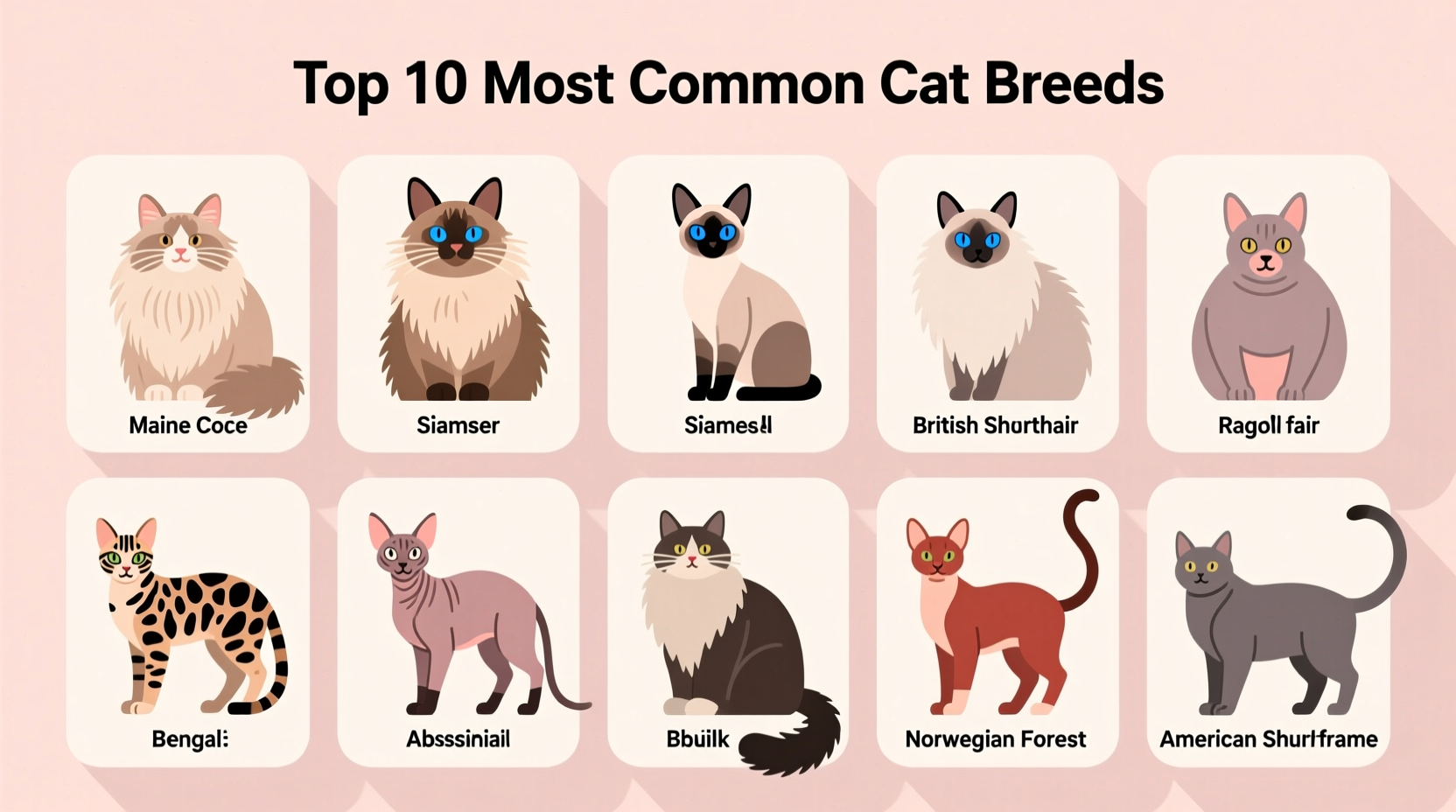
Bred from working cats brought to North America by early settlers, the American Shorthair is a symbol of resilience and adaptability. Known for its sturdy build and easygoing nature, this breed thrives in both active households and quieter homes. Their short, dense coat comes in over 80 color patterns, though silver tabby remains the most iconic.
Low maintenance and highly affectionate without being clingy, American Shorthairs are ideal for first-time cat owners. They enjoy interactive play but are equally content lounging nearby while you work or read.
Tip: Brush your American Shorthair once a week to minimize shedding and strengthen your bond.Domestic Longhair: The Classic Mouser with Flair
Often mistaken for a specific breed, Domestic Longhairs are actually mixed-breed cats with long fur. Descended from cats that arrived in the U.S. centuries ago, they vary widely in appearance but commonly feature plush coats, expressive eyes, and robust physiques.
These cats are known for their intelligence and independence. While they may not demand constant attention, they form deep attachments to their families. Grooming is essential—daily brushing prevents matting and reduces hairballs.
“Domestic Longhairs embody the true spirit of cats: resourceful, affectionate, and full of personality.” — Dr. Lena Patel, Feline Behavior Specialist
Siamese: The Vocal and Velvety Socialite
Sleek, elegant, and impossible to ignore, Siamese cats are one of the oldest and most recognizable breeds. Originating in Thailand (formerly Siam), they boast striking blue almond-shaped eyes, short coats, and color-point markings on their ears, face, paws, and tail.
What truly defines the Siamese is their outgoing personality. They are highly intelligent, crave interaction, and aren’t shy about using their loud, distinctive voices to express needs or opinions. These cats often follow their owners from room to room, eager to participate in daily life.
Because of their social nature, Siamese cats do poorly when left alone for long periods. They thrive in homes where someone is usually present or where they have another pet for company.
Maine Coon: Gentle Giants of the Cat World
Hailing from New England, the Maine Coon is one of the largest domesticated cat breeds, with males often weighing between 13–18 pounds. Despite their imposing size, they are famously gentle, earning nicknames like “gentle giants” and “dogs of the cat world.”
They feature tufted ears, bushy tails, and water-resistant shaggy coats designed for cold climates. Maine Coons are playful well into adulthood, enjoy puzzle toys, and can even be leash-trained for outdoor walks.
Their semi-long fur requires regular grooming—about two to three times a week—to prevent tangles. But their friendly demeanor and impressive intellect make the effort worthwhile.
| Breed | Size | Grooming Needs | Temperament |
|---|---|---|---|
| American Shorthair | Medium | Low | Calm, Independent |
| Domestic Longhair | Medium-Large | High | Loyal, Observant |
| Siamese | Medium | Low | Vocal, Social |
| Maine Coon | Large | Medium-High | Friendly, Playful |
| Persian | Medium | Very High | Quiet, Sweet-Natured |
Persian: The Posh Lap Connoisseur
Persians are the epitome of feline elegance, with round faces, short noses, luxurious long coats, and serene expressions. Their dignified presence has made them favorites in cat shows and celebrity homes alike.
However, their beauty demands dedication. Daily brushing is non-negotiable to prevent severe matting. Many owners opt for professional grooming every few months. Additionally, their flat faces require routine facial wiping to avoid tear staining and skin irritation.
Persians prefer calm environments. They’re not overly active and enjoy quiet spaces where they can observe from a cozy perch. Ideal for retirees or quieter households, they offer steady affection without high energy demands.
Tip: Use a stainless steel comb and detangling spray when grooming Persians to reduce discomfort and breakage.Ragdoll: The Floppy-Eared Hugger
The name says it all—Ragdolls go limp when picked up, a trait stemming from their extremely relaxed muscles and trusting nature. Bred in California in the 1960s, they are large, soft cats with striking blue eyes and silky semi-longhair coats.
Ragdolls form intense bonds with their humans and often greet them at the door. They’re known to follow family members around like dogs and enjoy being carried. Due to their trusting nature, they should be kept indoors for safety.
While their coat resists matting more than other long-haired breeds, weekly brushing keeps it in top condition. Ragdolls are excellent choices for families with children or other pets due to their patient, gentle disposition.
Scottish Fold: The Owl-Faced Curious One
Distinguished by their folded ears and wide, owl-like eyes, Scottish Folds have a look that instantly captures hearts. The fold is caused by a natural genetic mutation affecting cartilage, giving them an eternally surprised expression.
These cats are sweet-tempered and enjoy perching upright like meerkats to observe their surroundings. They’re moderately active and love interactive games. However, responsible breeding is critical—cats with two folded-ear parents can inherit severe joint and bone issues.
Only Scottish Folds with one straight-eared parent should be bred, and ethical breeders perform health screenings regularly. If adopting, always request proof of genetic testing.
Devon Rex: The Wavy-Haired Acrobat
With oversized ears, curly whiskers, and a body covered in soft, wavy fur, the Devon Rex looks like a pixie from a fantasy tale. Originating in England, this breed has a fine, downy coat that feels like crushed velvet.
They are incredibly agile and love climbing, jumping, and exploring elevated spaces. Devon Rex cats are intensely social and bond closely with one or two people in the household. They’ll often sleep under the covers or curl up in shirt pockets if allowed.
Their minimal shedding makes them popular among allergy sufferers, though they still produce allergens. Because they lack a thick coat, they’re sensitive to cold and benefit from warm sleeping spots or even cat sweaters in winter.
Domestic Shorthair: The Everyday Favorite
By far the most common type of cat in homes across the world, Domestic Shorthairs are not a formal breed but a category encompassing mixed-breed cats with short coats. They come in every color, pattern, and eye shade imaginable.
Adaptable and resilient, these cats often exhibit hybrid vigor—better overall health due to diverse genetics. Temperaments vary, but many are balanced, affectionate, and low-maintenance. Most shelters house countless Domestic Shorthairs waiting for adoption, making them a compassionate choice for new pet owners.
- Highly adaptable to apartment or house living
- Generally healthy with fewer inherited conditions
- Easier to adopt and more affordable than purebreds
Exotic Shorthair: The Low-Maintenance Persian
Bred by crossing Persians with American Shorthairs, Exotic Shorthairs were developed to offer the same sweet face and calm personality—but with a manageable coat. They share the Persian’s stocky build, round eyes, and pushed-in nose, but their short, plush fur requires far less upkeep.
Like Persians, they’re laid-back and enjoy predictable routines. They’re ideal for those who love the Persian look but don’t have time for daily grooming. Weekly brushing and occasional facial wipes are usually sufficient.
Due to their brachycephalic (flat-faced) features, monitor breathing and eye health. Keep their environment dust-free and avoid overheating, as they’re prone to respiratory stress.
FAQ
Are purebred cats healthier than mixed breeds?
Not necessarily. While some purebreds are prone to inherited conditions due to limited gene pools, mixed breeds like Domestic Shorthairs often benefit from greater genetic diversity, leading to stronger immune systems and longer lifespans.
Which cat breed is best for families with kids?
Ragdolls, Maine Coons, and Devon Rexes are excellent choices due to their patience, sociability, and playful nature. Always supervise interactions and teach children how to handle cats gently.
Do I need to groom my cat even if it licks itself?
Yes. While cats self-groom, long-haired breeds require human assistance to prevent mats and hairballs. Even short-haired cats benefit from brushing to reduce shedding and strengthen bonding.
Final Thoughts and Call to Action
Knowing the traits of the most common cat breeds empowers you to choose a companion that aligns with your lifestyle, home environment, and emotional needs. Whether you're drawn to the talkative Siamese, the majestic Maine Coon, or the charmingly ordinary Domestic Shorthair, each breed offers unique joys and responsibilities.
If you're considering adding a cat to your life, visit local shelters or reputable breeders, spend time with different cats, and reflect on who will fit best in your world. Cats are not just pets—they're family members who enrich our lives with comfort, humor, and quiet companionship.
🚀 Ready to welcome a feline friend? Share your favorite breed or adoption story in the comments below—your experience might help someone find their perfect match!








