
Monte Carlo (Micranthemum tweediei) has earned a reputation as one of the most sought-after carpeting plants in the planted aquarium hobby. Its vibrant green color, rapid growth, and ability to form a dense, moss-like lawn make it a favorite among aquascapers aiming for a natural, immersive underwater landscape. However, achieving that flawless carpet isn’t always straightforward. Without proper technique and consistent care, Monte Carlo can grow sparsely, develop algae issues, or fail to spread at all.
This guide walks you through every step—from selection and planting to long-term maintenance—so you can cultivate a thriving Monte Carlo carpet that enhances both the beauty and biological balance of your aquarium.
Understanding Monte Carlo: What Makes It Unique?
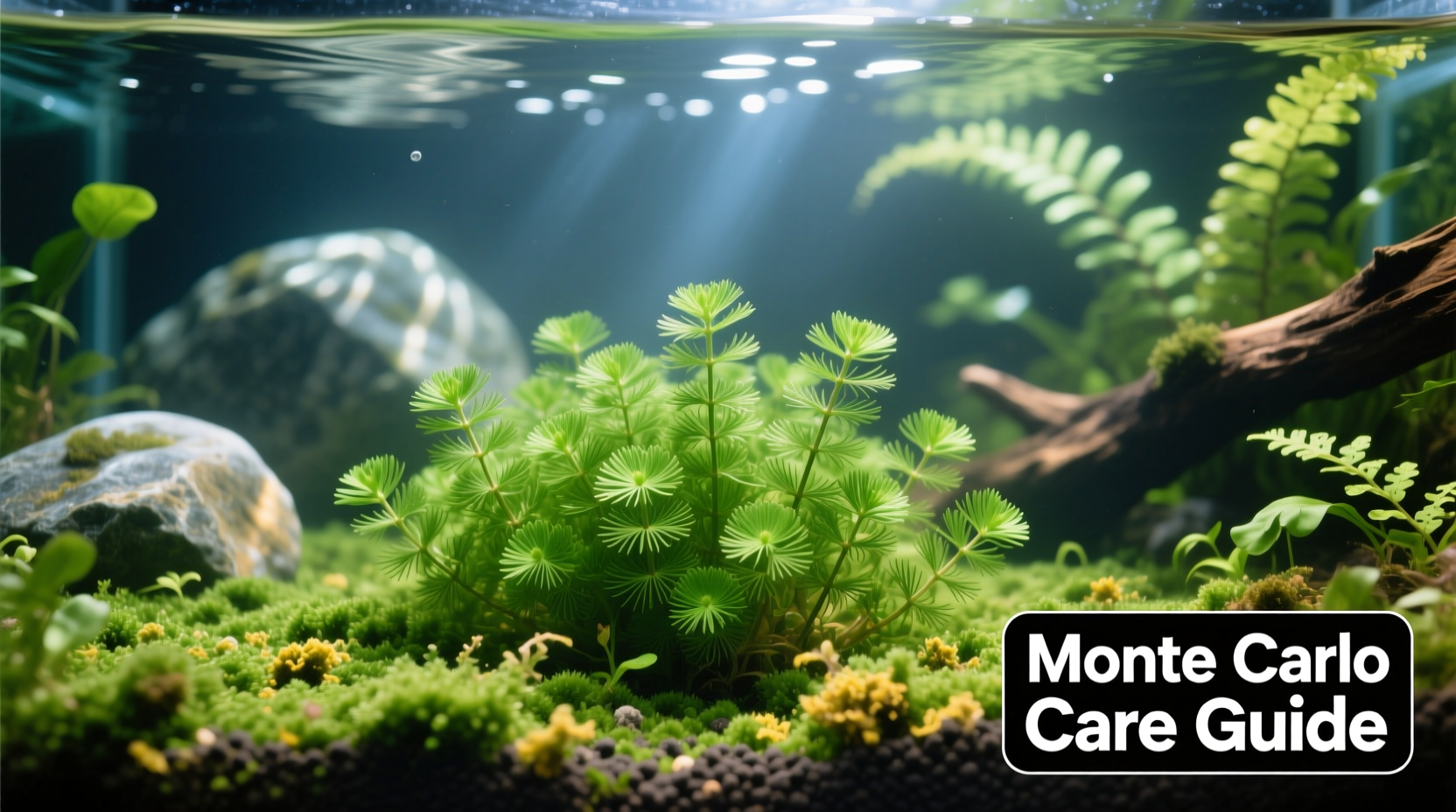
Micranthemum tweediei, commonly known as Monte Carlo, is a stem plant native to South America. Unlike traditional carpeting plants such as dwarf hairgrass, Monte Carlo spreads via runners, allowing it to colonize large areas quickly under ideal conditions. Its small, rounded leaves create a soft, textured appearance that mimics a miniature meadow.
One of the plant’s greatest strengths is its adaptability. While it thrives in high-light, CO₂-injected setups, it can survive in low-tech tanks with moderate lighting and no injected carbon dioxide—though growth will be significantly slower and less dense.
“Monte Carlo rewards attention to detail. Get the basics right—substrate, light, flow—and it will reward you with explosive growth.” — Dr. Lena Torres, Aquatic Botanist & Founder of AquaFlora Research
Step-by-Step Guide to Planting Monte Carlo
Success begins with correct planting technique. Many beginners make the mistake of simply dropping clumps onto the substrate, leading to poor root establishment and floating stems. Follow this method for optimal results:
- Prepare the Substrate: Use a nutrient-rich aquasoil or a fine-grained inert substrate like sand or aqua soil. Avoid coarse gravel, which hinders root development.
- Divide the Plant: Take the original bunch and separate it into individual sprigs of 3–5 nodes each. Use sharp scissors to minimize damage.
- Use Tweezers for Precision: Insert aquarium tweezers into the substrate and place each sprig about 1–1.5 inches apart. This spacing encourages lateral runner growth without overcrowding.
- Bury Only the Stem Base: Cover just the bottom portion of the stem, leaving the leafy crown exposed. Burying too deep can cause rot.
- Anchor Lightly: Gently press the substrate around the base to secure it until roots form—usually within 7–10 days.
Optimal Conditions for Lush Growth
To transform scattered sprigs into a continuous green carpet, Monte Carlo requires specific environmental parameters. Below is a breakdown of key factors:
| Factor | Ideal Range | Notes |
|---|---|---|
| Light Intensity | Medium to High (50–80 PAR) | LEDs with full spectrum (6500K) work best. |
| CO₂ Injection | 20–30 ppm | Not mandatory but dramatically improves growth speed and density. |
| Water Temperature | 72–78°F (22–26°C) | Avoid extremes; higher temps may increase melting risk. |
| pH Level | 6.0–7.5 | Slightly acidic to neutral is ideal. |
| Flow Rate | Moderate | Ensure circulation without strong currents dislodging young plants. |
| Fertilization | Comprehensive liquid fertilizer | Iron and potassium are critical for vibrant coloration. |
Consistency matters more than perfection. Fluctuations in lighting duration, nutrient dosing, or CO₂ levels can stress the plant and lead to \"melting\"—a common issue where lower leaves die off during acclimation.
Common Challenges and How to Overcome Them
Even experienced aquarists encounter setbacks when growing Monte Carlo. Here are the most frequent problems and their solutions:
- Plant Melting: Often occurs after planting due to environmental shift. Trim dead portions and maintain stable parameters. New growth should appear within 10–14 days.
- Algae on Leaves: Caused by excess nutrients and inconsistent lighting. Reduce light duration temporarily, increase plant nutrient uptake via fertilization, and introduce algae-eating crew like Amano shrimp.
- Poor Spreading: Usually due to insufficient light or lack of CO₂. Increase intensity or add liquid carbon supplements like glutaraldehyde (in low doses).
- Rooting Failure: Can result from improper planting depth or unsuitable substrate. Replant using finer grain material and avoid disturbing the area for at least a week.
Real Example: Transforming a 20-Gallon Planted Tank
Mark R., an intermediate aquascaper from Oregon, struggled for months to establish a carpet in his 20-gallon high-tech tank. He initially planted Monte Carlo directly into silica sand without root tabs and used only moderate lighting. After six weeks, growth was minimal, and patches began to decay.
After consulting with a local aquascaping group, he adjusted his approach: he added ADA Amazonia aquasoil over the existing sand, began injecting CO₂ at 25 ppm, upgraded to a 12-hour photoperiod with TMC 8000 LED, and started dosing a comprehensive liquid fertilizer daily.
Within three weeks, new runners emerged. By week eight, the entire foreground was covered with a dense, bright green carpet. His key takeaway? “I underestimated how much nutrition Monte Carlo pulls from the substrate. Once I fixed that, everything changed.”
Essential Care Checklist
Use this checklist weekly to ensure your Monte Carlo stays healthy and continues spreading:
- ✅ Check CO₂ levels (if injected) and bubble rate consistency
- ✅ Dose liquid fertilizer according to product guidelines
- ✅ Inspect for algae buildup on leaves and stems
- ✅ Trim overgrown sections to encourage lateral growth
- ✅ Verify filter output isn’t creating strong currents over the carpet
- ✅ Test water parameters (especially NO₃ and PO₄) monthly
- ✅ Replace aging light bulbs or LEDs if color temperature shifts
Frequently Asked Questions
Can Monte Carlo grow emersed?
Yes, Monte Carlo grows vigorously in emersed conditions, often producing small white flowers. This trait is useful for propagation in paludariums or dry-start methods, where the tank is initially kept above water for several weeks before flooding.
How fast does Monte Carlo spread?
Under optimal conditions—high light, CO₂, and nutrient-rich substrate—Monte Carlo can spread 1–2 inches per week. In low-tech setups, expect growth rates of about 0.25–0.5 inches per week.
Is Monte Carlo safe for shrimp and fry?
Absolutely. The dense mat provides excellent shelter for baby fish and shrimp. It also harbors microfauna, offering a natural food source. Just ensure you quarantine new plants to avoid introducing pests.
Final Thoughts: Cultivating Patience and Precision
Planting Monte Carlo successfully isn’t about complexity—it’s about consistency. The difference between a patchy, struggling carpet and a lush, vibrant lawn often comes down to attention to detail: proper spacing, nutrient availability, and steady environmental conditions. While the plant is forgiving enough for beginners, it truly shines when nurtured with intention.
Whether you're designing a Nature Aquarium-style layout or simply want to add depth and texture to your foreground, Monte Carlo offers unmatched visual payoff. Start with healthy plant stock, follow the planting steps carefully, and commit to routine maintenance. In time, you’ll watch your aquarium floor transform into a living tapestry of green.
💬 Have you grown Monte Carlo in your tank? Share your experience, challenges, or favorite tips in the comments below—your insight could help another aquarist achieve their dream aquascape!








