Choosing the right food bowl for your dog isn’t just about material or size—it’s about ergonomics. A poorly positioned bowl can lead to discomfort, poor digestion, and even long-term musculoskeletal issues. Just as humans benefit from desks at the correct height, dogs thrive when their feeding setup supports natural posture. The ideal bowl height aligns with your dog’s withers—the highest point of their shoulder blades—so they can eat without bending excessively or stretching upward. This simple adjustment promotes better spinal alignment, reduces strain on the neck and joints, and encourages slower, more mindful eating.
Despite growing awareness, many pet owners still place bowls directly on the floor, assuming it’s the most natural option. However, for medium, large, and giant breeds especially, this forces an unnatural hunching position that can contribute to bloat, arthritis, and fatigue over time. Even small dogs can benefit from slight elevation, particularly as they age. Getting the measurement right ensures your dog eats comfortably, digests efficiently, and maintains optimal physical health throughout their life.
Why Bowl Height Matters for Canine Health
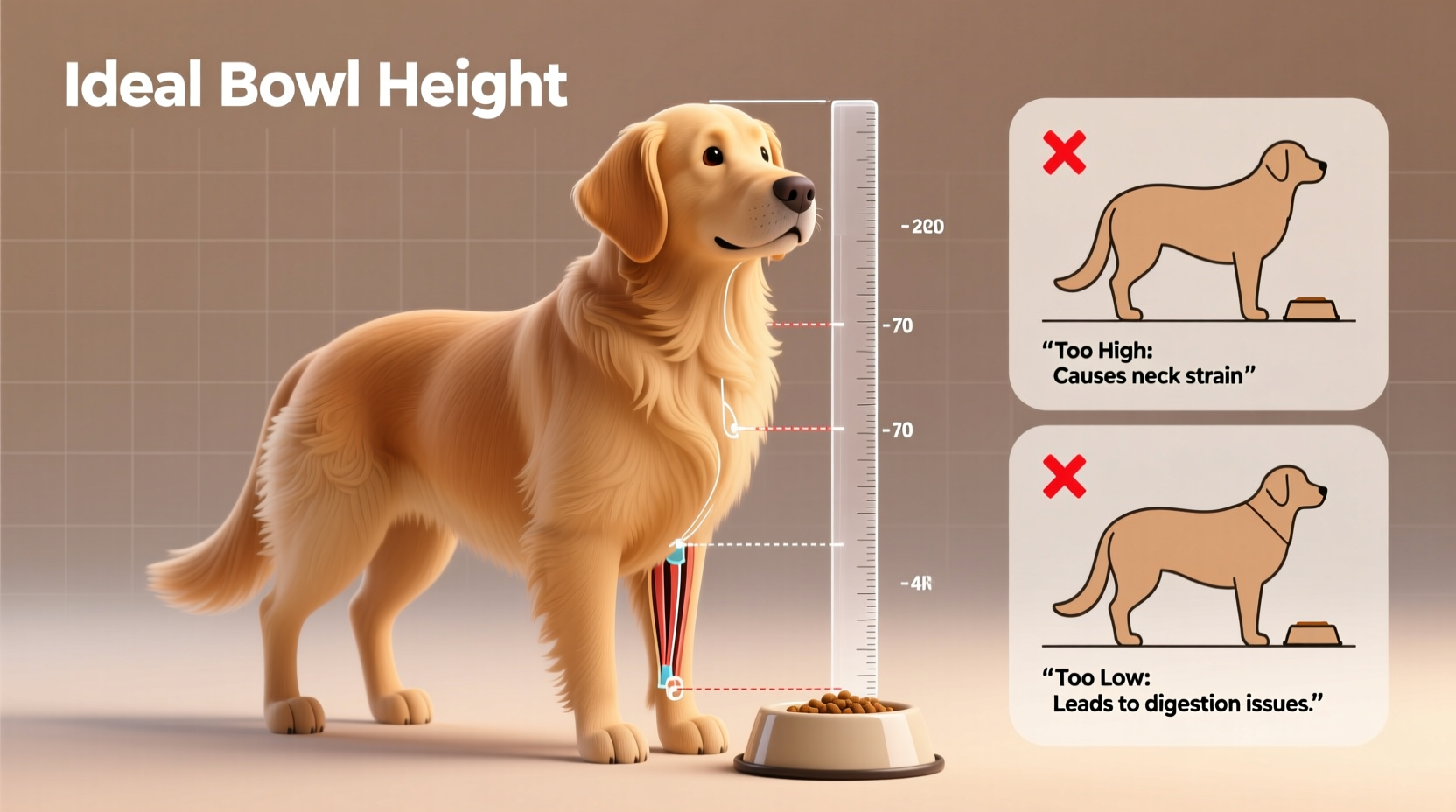
The way a dog eats affects more than just mealtime convenience. Poor posture during feeding can trigger a chain reaction of health concerns. When a dog must lower their head significantly to reach food, they compress their cervical spine and strain their shoulders and forelimbs. Over months or years, this repetitive stress may accelerate joint degeneration, especially in breeds predisposed to hip or elbow dysplasia.
Elevated feeders also play a role in digestive wellness. Dogs that eat with their heads down often gulp air along with their food, increasing the risk of gas buildup and, in deep-chested breeds, gastric dilatation-volvulus (GDV), commonly known as bloat—a life-threatening condition. While elevated bowls don’t prevent bloat outright, they reduce excessive air intake by allowing a more neutral head and esophageal position during swallowing.
“Proper feeding posture is a preventive measure we don’t talk about enough. For large and giant breeds, even a 4–6 inch elevation can make a meaningful difference in long-term joint and digestive health.” — Dr. Lena Reyes, DVM, Canine Rehabilitation Specialist
How to Measure Your Dog for the Perfect Bowl Height
Accurate measurement is key. Follow this step-by-step process to determine the ideal elevation for your dog’s food and water bowls:
- Wait for a relaxed stance: Have your dog stand naturally on a flat surface. Avoid forcing them to “pose”—you want their everyday posture.
- Locate the withers: Find the highest point of the shoulder blades. This is a consistent anatomical landmark unaffected by head movement.
- Measure from floor to withers: Use a flexible measuring tape or ruler. Hold it vertically from the ground up to the top of the withers. Record the measurement in inches.
- Adjust for comfort: Subtract 5–7% of the total height to allow for natural neck curve while eating. For example, if your dog measures 24 inches at the withers, subtract 1.2 to 1.7 inches, resulting in a bowl height of approximately 22.3 to 22.8 inches.
- Test and observe: Set up the bowl at the calculated height and watch your dog eat. Their elbows should remain slightly bent, and their back should stay level—not arched or sagging.
Breed-Specific Considerations and Real-World Example
Different breeds have distinct body proportions, so a one-size-fits-all approach doesn’t work. Great Danes and Irish Wolfhounds benefit greatly from elevated feeders due to their towering frames, while dachshunds and corgis may need only minimal lift—if any—to avoid unnecessary strain on their already elongated spines.
Consider Max, a 3-year-old Labrador Retriever adopted from a shelter. His new owner noticed he often ate quickly, then paced and seemed uncomfortable afterward. After consulting a vet, she learned Max was eating from a floor-level bowl, requiring him to bend deeply. Using the withers method, she measured Max at 26 inches tall and set his bowl at 24.5 inches. Within days, Max slowed his eating, stopped gulping air, and no longer showed signs of post-meal restlessness. His vet later noted improved posture during check-ups.
| Breed | Average Withers Height (in) | Recommended Bowl Height (in) |
|---|---|---|
| Chihuahua | 8–10 | 7–9 |
| Beagle | 14–16 | 13–15 |
| Golden Retriever | 23–24 | 21.5–22.5 |
| German Shepherd | 25–27 | 23.5–25.5 |
| Great Dane | 30–34 | 28–32 |
Common Mistakes and What to Avoid
Even well-intentioned owners make errors when selecting bowl height. Awareness of these pitfalls ensures better outcomes:
- Using human furniture standards: Just because a table looks “about right” doesn’t mean it’s ergonomically suitable for your dog.
- Over-elevating: Bowls placed too high force dogs to raise their heads unnaturally, straining the neck and disrupting swallowing mechanics.
- Ignoring growth: Puppies grow rapidly. Re-measure every 4–6 weeks until they reach adult size.
- One feeder for multiple dogs: Multi-dog households should avoid shared elevated stands unless dogs are nearly identical in size.
“Elevated feeders aren’t mandatory for every dog, but when used correctly, they’re a tool for proactive care—not convenience.” — Dr. Alan Pierce, Veterinary Orthopedic Consultant
Checklist: Setting Up the Ideal Feeding Station
Use this checklist to ensure your dog’s feeding setup is optimized:
- ✅ Measured your dog’s withers height accurately
- ✅ Calculated proper bowl height (withers minus 5–7%)
- ✅ Chose a stable, non-slip elevated stand
- ✅ Selected bowls that won’t slide (preferably with rubber grips)
- ✅ Observed your dog eating to confirm comfort
- ✅ Adjusted height as needed based on behavior
- ✅ Cleaned the stand and bowls regularly to prevent bacteria buildup
Frequently Asked Questions
Should puppies use elevated bowls?
Puppies can use slightly elevated bowls if they struggle to reach floor-level ones, but extreme elevation should be avoided. Rapid growth makes joint stress a concern, so keep heights modest and re-measure frequently. Consult your vet if your puppy shows hesitation or discomfort while eating.
Can an elevated bowl cause bloat?
Research is mixed, but major veterinary organizations agree that breed, eating speed, and genetics are greater risk factors than bowl height alone. However, if your dog is prone to GDV (e.g., deep-chested breeds like Boxers or Standard Poodles), discuss feeder use with your vet. Moderately elevated bowls—measured correctly—do not increase bloat risk when used appropriately.
What if my dog refuses to use the elevated bowl?
Transition gradually. Start by raising the bowl just 1–2 inches and increase slowly over several days. Place familiar-smelling food or treats on the new stand to encourage exploration. Some dogs take time to adapt to changes in feeding dynamics.
Final Thoughts: Small Change, Lasting Impact
Measuring your dog for the perfect food bowl height is a simple act with lasting benefits. It reflects a deeper commitment to their daily comfort and long-term wellness. Unlike expensive supplements or treatments, this adjustment costs little but supports better posture, digestion, and energy levels from meal one. Whether you have a towering Great Dane or a petite Shih Tzu, taking ten minutes to measure properly can enhance your dog’s quality of life for years to come.
🚀 Take action today: Grab a measuring tape, observe your dog’s stance, and set up a feeding station that honors their anatomy. Share your experience with other pet owners—small changes spread fast when they make a visible difference.