In the vast, blocky world of Minecraft, natural resources often serve dual purposes—survival tools and artistic materials. Among these, dead coral stands out as a visually striking yet underutilized block. While it may appear lifeless compared to its colorful living counterparts, dead coral offers unique advantages in both aesthetics and functionality. Whether you're crafting an eerie sunken ruin or a sun-bleached coastal villa, understanding how to locate, harvest, and creatively deploy dead coral can elevate your architectural projects from ordinary to extraordinary.
Where and How to Find Dead Coral
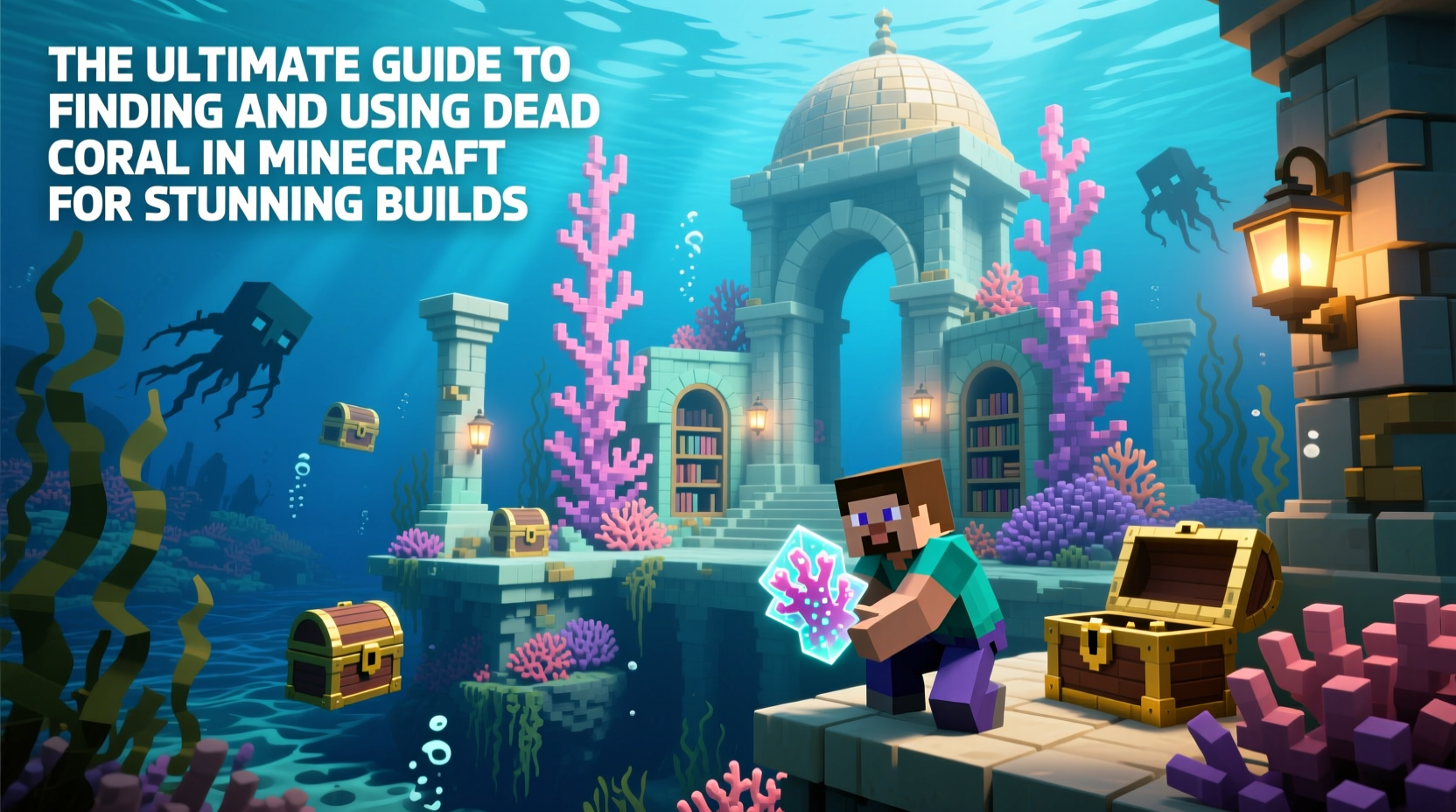
Dead coral is a naturally generated block found primarily in warm ocean biomes, especially around coral reefs. Unlike living coral blocks, which require water to remain active, dead coral can be collected and placed freely in any environment. It appears as a pale, chalky version of its vibrant relatives—dead brain coral, dead bubble coral, dead fire coral, dead horn coral, and dead tube coral—all sharing the same off-white hue.
To locate dead coral, explore shallow warm oceans where coral reefs dominate the seafloor. These areas often feature clusters of both living and dead coral blocks. Keep in mind that dead coral does not regenerate naturally, so once harvested, it won’t return unless spawned by specific game mechanics or commands.
Tip: Use a helmet enchanted with Respiration and a water bucket to extend your underwater exploration time and safely collect blocks.Spawning Conditions and Behavior
Dead coral blocks are not just remnants—they play a role in the ecosystem. When living coral is exposed to air or removed from adjacent water sources, it dies and turns into its dead variant within seconds. This mechanic allows players to intentionally create dead coral by mining living coral and leaving it in dry conditions.
Additionally, if a living coral block has no waterlogged block (i.e., a block with water inside) directly adjacent to it, it will die after a short delay. This behavior can be exploited to farm dead coral without depleting natural reef structures.
Harvesting and Storage Tips
To collect dead coral, you only need a pickaxe. Any type will do, but using a Silk Touch enchanted pickaxe ensures you retrieve the exact block. Without Silk Touch, mining dead coral yields nothing—making this enchantment essential for effective harvesting.
Once gathered, store your dead coral in chests near your build site. Since it doesn’t require water to stay intact, it’s far easier to manage than living coral, which despawns when dry. Consider organizing your inventory by coral type—even though all dead variants look identical, maintaining consistency in naming helps when planning complex builds.
“Dead coral is one of the most underrated building materials in Minecraft. Its neutral tone blends seamlessly with sandstone, terracotta, and concrete, making it perfect for coastal realism.” — Lin Zhao, Minecraft Architect & Builder Community Lead
Design Applications: From Ocean Graves to Desert Oases
Dead coral’s aesthetic versatility makes it ideal for a range of architectural styles. Its weathered appearance mimics bleached limestone or salt-encrusted stone, lending authenticity to builds inspired by arid climates, ancient ruins, or post-apocalyptic landscapes.
Underwater Ruins and Sunken Cities
Use dead coral to construct submerged temples or abandoned settlements. Pair it with prismarine, dark prismarine, and sea lanterns to create contrast between old and new structures. Adding kelp, seagrass, and drowned spawners enhances the sense of decay and mystery.
Coastal Villages and Lighthouses
In beachfront builds, combine dead coral with smooth sandstone and spruce wood for a rustic seaside village. Its matte texture contrasts beautifully with polished materials, adding depth to walls, rooftops, or decorative pathways.
Desert Temples and Arid Monuments
Though not native to deserts, dead coral fits naturally in dry environments due to its color. Use it as an accent material in desert pyramids or oasis walls to suggest ancient seabeds turned to dust over millennia. Layer it with orange and white concrete powder for a fossilized effect.
| Build Theme | Best Paired Materials | Visual Effect |
|---|---|---|
| Submerged Ruin | Prismarine, Sea Lanterns, Chains | Eerie, forgotten grandeur |
| Beach Cottage | Spruce Wood, Sandstone, Glass Panes | Rustic coastal charm |
| Ancient Monument | Chiseled Sandstone, Red Sand, Terracotta | Erosion and time-worn elegance |
| Fantasy Shrine | End Stone, Glowstone, Iron Bars | Mystical, otherworldly ambiance |
Step-by-Step: Creating a Coral-Framed Archway
A simple yet impactful way to showcase dead coral is by building a freestanding archway. Ideal for garden entrances or boundary markers, this project takes under 30 minutes and uses minimal resources.
- Gather 24 dead coral blocks and 8 stone slabs (for base support).
- Lay two vertical columns of six dead coral blocks each, spaced five blocks apart.
- Place three dead coral blocks horizontally across the top to form the arch’s crown.
- Fill in the sides with alternating dead coral and slab layers for stability.
- Add torches or lanterns on either side to highlight texture at night.
- Surround the base with sand, dead bushes, or cacti to enhance the arid theme.
Mini Case Study: The Bleached Spire Project
In 2023, builder Mara Kline undertook a challenge to design a self-sustaining desert outpost using only naturally found blocks. Her centerpiece—a 20-block-tall spire—was constructed entirely from dead coral scavenged from distant warm oceans. By transporting the blocks via boat along river routes, she preserved inventory space and avoided ender chests.
The spire served as both a landmark and a functional watchtower. Its pale surface reflected sunlight efficiently, reducing the need for internal lighting during the day. Over time, players reported that the structure became a navigation anchor for expeditions, proving that even simple materials can have lasting impact when used thoughtfully.
Common Mistakes to Avoid
- Mining without Silk Touch: You’ll lose the block entirely. Always carry a Silk Touch tool when harvesting coral.
- Using dead coral in wet environments unnecessarily: While it works underwater, living coral is more vibrant for aquatic themes.
- Ignoring scale: Dead coral’s subtle texture gets lost in large, flat walls. Use it as trim, accents, or patterned mosaics.
- Overharvesting reefs: Preserve natural beauty. Farm dead coral sustainably by killing living coral in controlled farms.
FAQ
Can dead coral be crafted?
No, dead coral cannot be crafted. It must be obtained by mining naturally generated blocks or converting living coral by removing its water source.
Does dead coral spread or grow like living coral?
No. Dead coral is inert and does not interact with water or other coral. Only living coral blocks can spread when placed adjacent to water and another living coral of the same type.
Can I turn dead coral back into living coral?
Only through direct placement. If you place a living coral block next to water, it can regenerate nearby dead coral blocks—but only if they are of the matching type. For example, a living brain coral block can revive adjacent dead brain coral if both are waterlogged.
Checklist: Mastering Dead Coral Usage
- ✅ Carry a Silk Touch pickaxe when exploring warm oceans
- ✅ Identify natural reef zones using maps or in-game exploration
- ✅ Convert living coral to dead coral by breaking water contact
- ✅ Store dead coral in labeled chests for easy access
- ✅ Combine with sandstone, terracotta, or concrete for coastal palettes
- ✅ Use in arches, pillars, and textured walls—not large monolithic builds
- ✅ Respect biome preservation; avoid overmining natural reefs
Final Thoughts: Elevate Your Builds with Subtle Sophistication
Dead coral may lack the immediate vibrancy of its living forms, but its true value lies in restraint and context. In a game filled with bright blocks and bold colors, subtlety becomes a powerful design tool. Dead coral offers a quiet elegance—perfect for evoking history, erosion, and the passage of time. Whether framing a seaside chapel or anchoring a desert ziggurat, this humble block deserves a place in every builder’s palette.
💬 What’s your favorite way to use dead coral in builds? Share your designs, tips, or screenshots with the community and inspire others to see beauty in the bleached and forgotten.








