In a planted aquarium, light, nutrients, and carbon dioxide (CO2) form the essential trio that fuels photosynthesis. While lighting and fertilization are often prioritized, CO2 remains the most impactful yet underutilized factor in achieving dense, vibrant plant growth. Without sufficient carbon, even the best lights and nutrient regimens fall short. Introducing CO2 properly transforms a stagnant tank into a lush, thriving underwater garden. This guide walks through everything you need to know—from understanding why CO2 matters to setting up a system safely and effectively.
Why CO2 Matters in Planted Aquariums
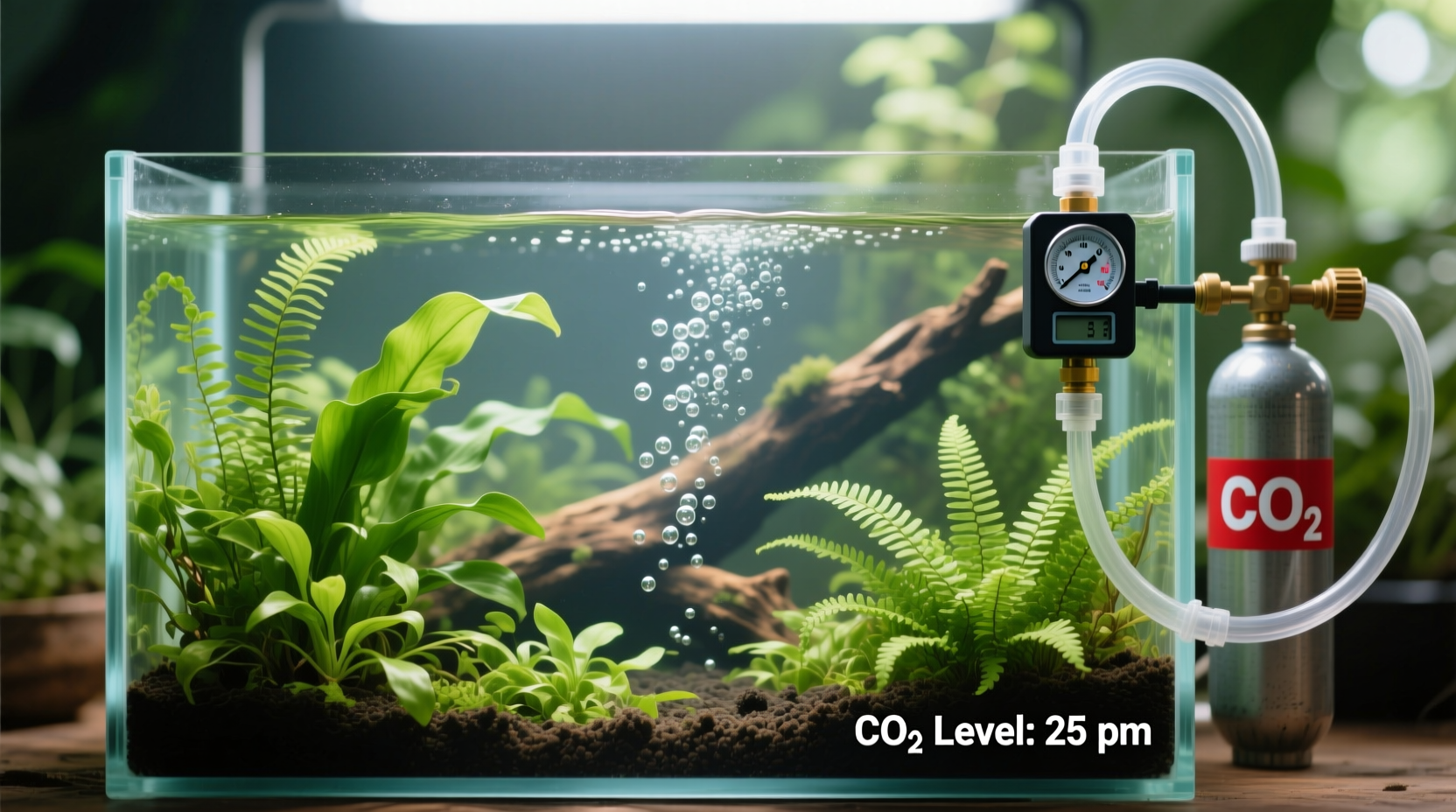
Aquatic plants absorb carbon dioxide from the water to synthesize glucose during photosynthesis. In nature, CO2 is continuously replenished through decomposition, respiration, and atmospheric exchange. However, in a closed aquarium environment, natural CO2 levels rarely exceed 3–5 ppm—far below the optimal range of 20–30 ppm needed for vigorous plant development.
When CO2 is limited, plants grow slowly, develop pale or translucent leaves, and may exhibit signs of deficiency even when other nutrients are abundant. On the flip side, consistent CO2 supplementation promotes faster growth, tighter stem internodes, deeper green coloration, and improved resistance to algae.
“Balanced CO2 isn’t just about aesthetics—it stabilizes pH, enhances nutrient uptake, and supports a balanced microbiome.” — Dr. Lena Torres, Aquatic Botanist
Types of CO2 Systems: Choosing the Right One
There are three primary methods of introducing CO2 into an aquarium: DIY yeast reactors, pressurized systems, and liquid carbon supplements. Each has its pros and cons depending on tank size, budget, and maintenance tolerance.
| System Type | Best For | Pros | Cons |
|---|---|---|---|
| DIY Yeast Reactor | Beginners, small tanks (under 20 gallons) | Inexpensive, easy setup | Inconsistent output, frequent refilling, not scalable |
| Pressurized CO2 System | Intermediate to advanced, tanks 20+ gallons | Precise control, long-term reliability, adjustable output | Higher initial cost, requires monitoring |
| Liquid Carbon (e.g., glutaraldehyde-based) | Low-tech setups, temporary use | No equipment needed, kills some algae types | Not true CO2 replacement, can stress sensitive species |
For serious planted tanks aiming for carpeting species like *Dwarf Hairgrass* or demanding plants such as *Red Ludwigia*, a pressurized CO2 system is the gold standard. It offers stability and precision unmatched by alternatives.
Tip: Never run CO2 24/7. Use a solenoid valve connected to a timer to shut off gas at night when plants respire instead of photosynthesizing.Step-by-Step: Setting Up a Pressurized CO2 System
Installing a pressurized CO2 system may seem daunting, but breaking it down into steps simplifies the process. Follow this sequence to ensure safety and efficiency.
- Choose a CO2 cylinder: Reusable aluminum tanks (commonly 2.5–5 lb) are ideal for home aquariums. Refillable at welding supply stores or local fish shops.
- Attach a dual-stage regulator: This controls high-pressure gas from the tank and delivers it steadily. Look for one with a bubble counter and fine adjustment needle valve.
- Connect tubing: Use CO2-resistant silicone or vinyl tubing from the regulator to the diffuser. Avoid standard air line tubing—it degrades quickly.
- Install a solenoid valve: Wire it to a timer so CO2 only runs during daylight hours (typically 2–3 hours before lights on until 1–2 hours before lights off).
- Place a diffuser or reactor: A glass diffuser creates fine bubbles for maximum dissolution. Inline reactors (used with canister filters) are more efficient in larger tanks.
- Test and adjust output: Aim for 1–3 bubbles per second depending on tank volume. Use a drop checker filled with 4 dKH reference solution to monitor CO2 levels visually (green = ideal, blue = low, yellow = high).
After installation, allow 7–10 days for plant response. Growth should visibly accelerate, leaf density increase, and new shoots emerge more frequently.
Common Mistakes and How to Avoid Them
Even experienced aquarists make errors when managing CO2. Recognizing these pitfalls early prevents harm to livestock and wasted effort.
- Overdosing CO2: Excess CO2 lowers pH rapidly and can suffocate fish. Symptoms include rapid gill movement, lethargy, or surface gasping. Always start low and increase gradually.
- Inconsistent timing: Turning CO2 on too late or off too early disrupts plant metabolism. Sync it precisely with your photoperiod.
- Neglecting drop checker maintenance: The reagent inside loses sensitivity over time. Replace every 2–3 months for accuracy.
- Ignoring water agitation at night: When CO2 is off, increase surface movement via filter flow or air stone to prevent CO2 buildup and oxygen depletion.
“In my 10-year journey with aquascaping, I’ve seen more tanks fail from unstable CO2 than any other single factor.” — Mark Feng, Aquascaping Judge & ADA Contributor
Real Example: Transforming a Struggling 40-Gallon Tank
Jamie had a 40-gallon planted tank with high-output LED lighting and comprehensive liquid fertilizers. Despite her efforts, *Hygrophila polysperma* stretched tall with large gaps between leaves, and *Monte Carlo* refused to carpet. After testing parameters, she found CO2 at just 4 ppm.
She installed a pressurized CO2 system with a 5 lb tank, dual-stage regulator, and inline reactor attached to her canister filter. She set the output to 2 bubbles per second and used a drop checker centered in the tank. Within two weeks, stem plants began producing compact nodes. By week four, Monte Carlo was spreading across the substrate. Six weeks in, the tank looked professionally maintained—dense, colorful, and algae-free.
The key? Consistency. Jamie kept CO2 running from 10 AM to 6 PM daily, matched her dosing schedule, and tested weekly. Her experience underscores that CO2 is not magic—it’s methodical support for biological processes already in motion.
Essential Checklist for Safe CO2 Implementation
Before starting or adjusting your CO2 system, verify the following:
- ✅ Cylinder is securely mounted and upright
- ✅ Regulator is rated for CO2 and includes a pressure gauge
- ✅ Needle valve allows fine-tuning of bubble rate
- ✅ Solenoid is wired to a reliable timer aligned with light cycle
- ✅ Diffuser or reactor is positioned for maximum contact time
- ✅ Drop checker is placed mid-tank, away from direct flow
- ✅ Fish show no signs of distress during peak CO2 hours
- ✅ Surface agitation increases at night when CO2 is off
Frequently Asked Questions
Can I use CO2 with shrimp and sensitive fish?
Yes, but cautiously. Species like cherry shrimp and otocinclus tolerate stable CO2 levels well as long as oxygen remains high. Avoid sudden spikes and ensure proper nighttime aeration. Monitor behavior closely during the first week.
How do I know if my CO2 is too high?
Fish gasping at the surface, clamped fins, or rapid breathing are red flags. Use a drop checker: bright yellow indicates over-saturation (above 30 ppm). Immediately increase aeration and turn off CO2 if symptoms appear.
Is liquid carbon a substitute for gaseous CO2?
No. Products like Seachem Excel deliver carbon compounds that can supplement growth and combat certain algae, but they do not replicate the biochemical benefits of dissolved CO2. They’re best suited for low-light, low-tech tanks where pressurized systems aren't practical.
Final Thoughts: Elevate Your Aquascape with Confidence
Adding CO2 to your aquarium isn’t a luxury—it’s a logical step toward unlocking the full potential of aquatic plants. With the right equipment, careful calibration, and ongoing observation, you create conditions where flora thrive, colors deepen, and ecosystems balance naturally. The difference between a surviving planted tank and a flourishing one often comes down to this single variable.
🚀 Ready to transform your tank? Start by auditing your current setup: Are your plants reaching their potential? If not, CO2 could be the missing piece. Take the next step today—your underwater garden will thank you.








