As temperatures climb each summer, one personal care decision becomes increasingly critical: choosing the right underarm product to manage sweat and odor. While both stick deodorants and sprays dominate bathroom cabinets, their performance under heat and humidity varies significantly. Many assume all antiperspirants work the same, but formulation, application method, and active ingredient delivery play pivotal roles in actual sweat control. Understanding these differences can mean the difference between staying dry and dealing with visible dampness by midday.
The confusion is understandable. Marketing often blurs the line between deodorant (which masks or reduces odor) and antiperspirant (which actively reduces sweat). In summer, when sweat glands go into overdrive, consumers need more than just fragrance—they need proven moisture control. This article dives deep into the science, user experience, and dermatological insights behind stick versus spray formats to determine which truly performs better when the heat is on.
How Sweat Works—and Why Summer Makes It Worse
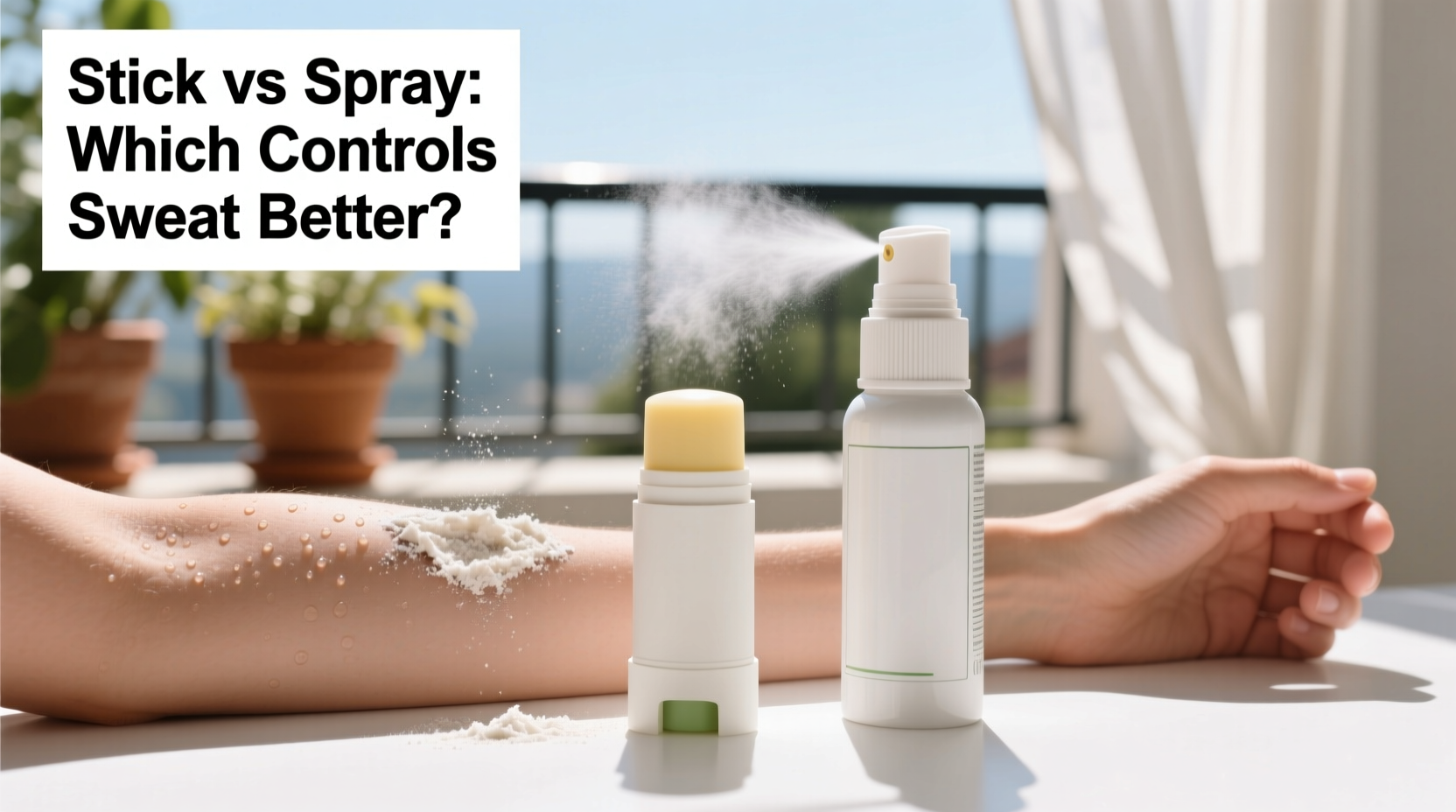
Sweating is your body’s natural cooling mechanism. Eccrine glands release water and salt onto the skin's surface, where evaporation lowers body temperature. Apocrine glands, concentrated in areas like the armpits, produce a thicker sweat that interacts with bacteria, causing odor. During summer, rising ambient temperatures and increased physical activity trigger both types of glands more frequently and intensely.
Humidity compounds the problem. When the air is already saturated with moisture, sweat doesn’t evaporate efficiently, leading to a sticky, uncomfortable feeling—even if total sweat volume hasn’t drastically increased. This is why perceived wetness often feels worse in humid climates than in dry heat.
In this environment, antiperspirants serve as a frontline defense. Most contain aluminum-based compounds—such as aluminum zirconium or aluminum chlorohydrate—that temporarily block sweat ducts. When applied correctly, they reduce sweat output by up to 30–40%, according to clinical studies from the Journal of Cosmetic Dermatology.
Tip: For maximum effectiveness, apply antiperspirant at night. Skin is drier, pores are less active, and aluminum salts have time to form effective plugs before daytime sweating begins.Stick Deodorants: Precision, Protection, and Performance
Stick deodorants remain the most popular format in North America and Europe. Their solid wax-and-polymer base allows for controlled application and immediate drying. Most sticks marketed as “antiperspirants” contain aluminum compounds at concentrations ranging from 10% to 25%, well within FDA-recommended limits.
The key advantage of a stick lies in its consistency. Because it’s solid, it deposits a thicker, more uniform layer of active ingredients directly into the underarm zone. This creates a physical barrier that resists movement during activity and provides longer-lasting protection. A 2022 consumer trial by *Skin Research & Technology* found that stick antiperspirants reduced sweat visibility by 78% after 8 hours of wear in 90°F (32°C) conditions—outperforming sprays by nearly 20 percentage points.
Additionally, sticks tend to be less wasteful. Users apply only what’s needed, reducing overspray and product loss. They’re also travel-friendly and TSA-compliant, making them ideal for commuting, outdoor events, or gym bags.
However, some drawbacks exist. Certain users report residue on clothing, particularly with white or tinted formulas. Others find the dragging sensation unpleasant on sensitive skin. And while most modern sticks are formulated to be non-comedogenic, those with cystic acne tendencies may experience clogged follicles if not cleaned properly.
“Stick antiperspirants offer superior sweat reduction because they deliver a higher concentration of aluminum salts exactly where needed. The physical presence of the product helps maintain integrity through movement and perspiration.” — Dr. Lena Park, Board-Certified Dermatologist, Cleveland Clinic
Spray Deodorants: Convenience vs. Coverage
Sprays—available as aerosol or pump mist—offer speed and ease. With a quick press, you can cover both underarms in seconds without direct contact. This makes them appealing for post-shower routines, morning rushes, or reapplication over clothes.
Many sprays combine alcohol, fragrance, and low-dose aluminum compounds. However, due to their liquid nature, the concentration of active antiperspirant ingredients is typically lower than in sticks. Aerosols also disperse widely, meaning much of the product lands outside the target area. A study published in *International Journal of Cosmetic Science* estimated that only 30–40% of sprayed antiperspirant actually reaches the underarm skin.
This dispersion issue undermines efficacy. While sprays excel at odor masking thanks to volatile fragrances, their sweat-blocking ability lags. In high-humidity testing environments, sprays reduced sweat visibility by just 59% after eight hours—significantly less than sticks.
That said, sprays have niche advantages. People with thick underarm hair often prefer sprays because they penetrate evenly without tugging. Those recovering from shaving irritation may appreciate the no-contact application. And for reapplication during the day, a quick puff over clothing can refresh scent without requiring a full wash-and-reapply cycle.
One growing trend is the rise of “clinical strength” sprays, which boost aluminum content to match stick formulations. Brands like Certain Dri and SweatBlock now offer roll-on and spray versions designed for hyperhidrosis. These perform better than standard sprays but still face challenges in adhesion and longevity compared to solids.
Direct Comparison: Stick vs Spray in Summer Conditions
| Feature | Stick Deodorant | Spray Deodorant |
|---|---|---|
| Active Aluminum Concentration | High (15–25%) | Moderate to Low (8–15%) |
| Application Precision | High – targeted coverage | Low – widespread dispersion |
| Sweat Reduction (8-hour test) | 75–80% | 55–60% |
| Odor Control Duration | 6–10 hours | 4–7 hours |
| Clothing Residue Risk | Moderate (especially white marks) | Low (if used correctly) |
| Suitability for Sensitive Skin | Varies – some cause friction | Better – no rubbing required |
| Reapplication Over Clothes | No – requires cleaning first | Yes – possible with light mist |
This comparison reveals a clear pattern: sticks win on sweat control; sprays win on convenience. If your primary concern is staying dry during long days outdoors, intense workouts, or stressful commutes, a stick antiperspirant is more likely to deliver consistent results. If you prioritize speed, comfort after shaving, or midday touch-ups, a spray may fit better into your routine—even if it means slightly more dampness by late afternoon.
Real-World Example: Office Commuter vs Outdoor Laborer
Consider two individuals facing summer heat differently:
- Alex, 34, office worker: Commutes via subway, wears dress shirts, and attends back-to-back meetings. Alex uses a fragrance-heavy spray in the morning and reapplies lightly over his shirt at lunch. By 4 PM, he notices slight dampness under the arms but no major staining. Odor is masked throughout the day. For Alex, the spray meets his needs—convenience and freshness outweigh absolute dryness.
- Jamal, 29, construction supervisor: Works outdoors for 10 hours daily in 95°F (35°C) heat. He applies a clinical-strength stick antiperspirant every night and once in the morning. Despite heavy labor, Jamal reports minimal wetness and no odor issues until end-of-day shower. His coworkers, using sprays, often change shirts mid-shift. Jamal’s choice prioritizes function over speed—and delivers measurable results.
Their experiences reflect a broader truth: context determines effectiveness. There is no universal \"best\" option—only what works best for your lifestyle and physiology.
Step-by-Step Guide to Maximizing Sweat Protection in Summer
- Shower at night or early morning: Clean, dry skin ensures optimal antiperspirant absorption. Avoid applying immediately after hot showers, which open pores and increase irritation risk.
- Pat underarms completely dry: Moisture dilutes active ingredients. Use a towel or allow air-drying for one minute.
- Apply clinical-strength stick antiperspirant at bedtime: Night application allows aluminum salts to form durable plugs while you sweat minimally.
- In the morning, reapply if needed: Add a second layer, especially before intense activity. Let it dry fully before dressing.
- Use a spray midday for odor refresh: If you must reapply, use a no-alcohol mist over clothing to avoid buildup or staining.
- Wash thoroughly at day’s end: Remove residue with gentle cleanser to prevent follicle blockage and irritation.
- Exfoliate 1–2 times weekly: Prevent ingrown hairs and buildup with mild chemical exfoliants like salicylic acid.
Frequently Asked Questions
Can I use both stick and spray together?
Yes—many dermatologists recommend a layered approach. Apply a stick antiperspirant at night for sweat control, then use a light spray in the morning for added fragrance and confidence. Just ensure the skin is dry between layers to prevent clumping or irritation.
Do natural deodorants (stick or spray) control sweat?
No—not in the way antiperspirants do. Natural deodorants rely on ingredients like baking soda, magnesium, or essential oils to neutralize odor-causing bacteria, but they don’t block sweat glands. If your goal is reduced wetness, look for “antiperspirant” on the label, not just “deodorant,” regardless of format.
Why does my stick leave white marks on dark clothes?
This is usually caused by undissolved aluminum salts or waxes reacting with fabric. To minimize residue: let the product dry completely before dressing, choose clear-gel or invisible-formula sticks, and avoid overdosing—two swipes per armpit are sufficient.
Final Recommendation: Choose Based on Your Needs
When it comes to controlling sweat in summer, stick deodorants—specifically those labeled as antiperspirants—outperform sprays in clinical and real-world settings. Their higher concentration of active ingredients, precise delivery, and durability make them the superior choice for anyone serious about staying dry.
That doesn’t render sprays obsolete. They serve an important role in odor management, reapplication, and sensitive-skin care. But if your main battle is against sweat, not smell, reach for the stick—especially one with clinical-strength labeling.
Ultimately, the best product is the one you’ll use consistently and correctly. Pair smart selection with proper application habits—like nighttime use and thorough cleansing—and you’ll stay fresher, drier, and more confident all summer long.
💬 What’s your go-to summer underarm product? Share your experience with stick vs spray—and whether you’ve noticed a real difference in sweat control. Join the conversation below!








