Cutting celery into uniform sticks is a foundational kitchen skill that enhances both presentation and functionality in cooking and snacking. Whether preparing crudité platters, soups, or stir-fries, properly cut celery ensures even texture, consistent flavor release, and professional results. Despite its simplicity, many home cooks overlook the nuances of selecting, prepping, and slicing celery efficiently—leading to uneven pieces, wasted produce, or premature wilting. This comprehensive guide breaks down every stage of the process, from choosing the freshest stalks to storing the finished sticks, ensuring precision, safety, and culinary effectiveness.
Definition & Overview
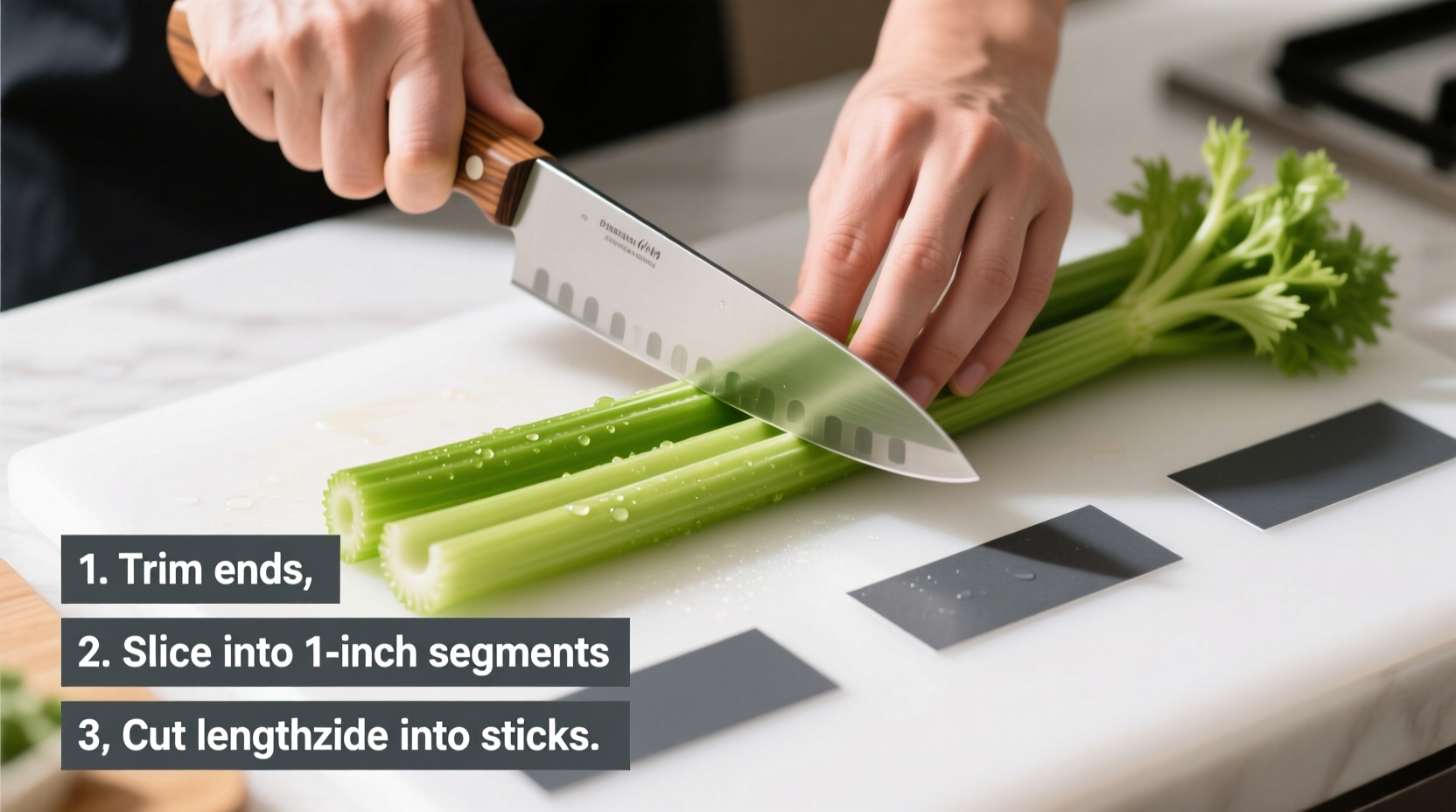
Celery (Apium graveolens) is a marshland plant species cultivated as a vegetable, prized for its crisp texture and mildly bitter, aromatic flavor. The edible portion most commonly used in Western cuisine is the petiole—the leaf stalk—often referred to as a \"rib\" or \"stick.\" These long, fibrous stalks grow in clusters called heads or bunches, typically containing 8 to 16 individual ribs. While all parts of the plant are technically edible (including leaves and seeds), the firm, pale green stalks are ideal for cutting into sticks due to their structural integrity and refreshing crunch.
The practice of cutting celery into sticks originated in early 20th-century American kitchens, coinciding with the rise of raw vegetable consumption and appetizer culture. Today, celery sticks are staples in snack trays, antipasto spreads, and lunch boxes—not only for their low-calorie profile but also for their ability to carry dips like peanut butter, hummus, or ranch dressing. Beyond snacking, uniformly cut sticks ensure even cooking when used in mirepoix, stuffings, or braised dishes.
Key Characteristics of Fresh Celery
To cut effective celery sticks, one must first understand the qualities of high-quality celery. A well-chosen bunch directly impacts ease of preparation and final result. Below are the essential characteristics to evaluate before beginning:
| Characteristic | Description |
|---|---|
| Color | Pale to medium green; avoid yellowing, browning, or white streaks which indicate age or stress. |
| Texture | Firm and rigid; stalks should snap crisply when bent, not bend limply. |
| Aroma | Fresh, slightly herbal with subtle anise-like notes; musty or sour smells suggest spoilage. |
| Moisture | No visible wilting, shriveling, or sliminess at cut ends or along ribs. |
| Leaves | Optional presence; fresh green leaves indicate recent harvest and can be used in stocks or garnishes. |
| Size & Shape | Straighter, thicker stalks are easier to cut into uniform sticks; curved or thin ribs may require trimming. |
Practical Usage: How to Cut Celery Sticks Step by Step
Cutting celery sticks requires minimal tools but benefits greatly from methodical technique. Follow these steps to produce clean, attractive, and functional celery sticks suitable for any application.
- Gather Supplies: You’ll need a sharp chef’s knife (8–10 inches), a stable cutting board, a bowl of cold water (optional), and a clean kitchen towel or paper towels. A vegetable peeler may be useful if removing outer strings.
- Inspect the Bunch: Remove any discolored or damaged outer stalks. Check for insects or soil trapped between ribs—common in non-organic celery.
- Separate the Stalks: Hold the base of the bunch firmly and gently pull individual stalks away from the center core. Start with outer ribs, working inward. Discard or compost the small inner core if it's too tender or fibrous to slice neatly.
- Trim the Ends:
- Cut off the root end (the V-shaped base) with a single downward motion, removing about ½ inch.
- Remove the leafy tops, reserving them for stock, soup garnish, or herb blends. Trim just above where the stalk begins to widen.
- Wash Thoroughly: Submerge each stalk in cool running water, scrubbing lightly with fingers or a soft brush to remove grit, especially in grooves. Soak for 1–2 minutes if heavily soiled. Pat dry immediately to prevent sogginess.
- Decide on Length: Standard celery stick length ranges from 4 to 6 inches, ideal for dipping. For salads or cooking, shorter 1–2 inch pieces may be preferred. Mark your desired length mentally or with light knife nicks.
- Position the Stalk: Lay the celery rib flat on the cutting board, cut-side down. Apply gentle pressure with your non-dominant hand, curling fingertips inward for safety.
- Cut Crosswise: Using a smooth, controlled motion, slice the stalk perpendicular to its length. Aim for consistent thickness—typically ¼ to ½ inch wide—for even texture and appearance.
- Optional: Remove Strings: On older or thicker stalks, fibrous strings can be tough to chew. To remove:
- Slide a vegetable peeler down the outer curve of the stalk from top to bottom.
- Alternatively, use a paring knife to lift one end of the string and pull it upward along the length.
- Final Inspection: Discard any misshapen or bruised pieces. Arrange uniform sticks on a tray or store appropriately.
Pro Tip: For restaurant-style consistency, use a ruler or template during initial cuts until muscle memory develops. Professional kitchens often standardize celery sticks at exactly 5 inches long and 3/8 inch thick for visual harmony on platters.
Variants & Types of Celery Preparation
While “celery sticks” refer specifically to cross-cut sections of the stalk, several variations exist depending on culinary context. Understanding these forms allows for greater versatility in meal preparation.
- Whole Sticks (Snacking Cut): 4–6 inch lengths, unpeeled, ideal for dipping. Most common in party trays and school lunches.
- Julienned Strips: Thin matchsticks (⅛ x ⅛ inch), achieved by halving the stalk lengthwise, then slicing finely. Used in slaws, Asian salads, or as garnish.
- Dice (Small, Medium, Large): Cubed celery used in mirepoix (with onion and carrot), stuffing, soups, and stews. Size depends on dish: small dice (¼ inch) for sauces, large dice (½ inch) for chunky salsas.
- Diagonal Slices: Cut at a 45-degree angle for increased surface area and elegant presentation in stir-fries or broths.
- Leafy Ribbons: Thin strips made from inner tender stalks with attached young leaves; delicate texture suited for gourmet salads.
- Pulp or Minced: Finely chopped or grated celery used in relishes, tartar sauce, or compound butters.
Each variant serves a distinct purpose. Snack sticks prioritize size and sturdiness, while diced celery integrates seamlessly into cooked dishes. Choosing the right form enhances both mouthfeel and flavor distribution.
Comparison with Similar Ingredients
Celery is often confused with other crunchy vegetables, particularly in raw preparations. However, key differences in texture, flavor, and function distinguish it clearly.
| Ingredient | Similarity | Key Differences |
|---|---|---|
| Bok Choy | Crunchy stalks with leafy greens | Milder, sweeter taste; thinner ribs cook faster; better suited for stir-frying than dipping. |
| Fennel Bulb | Similar crunch and slicing method | Distinct licorice/anise flavor; denser core; more aromatic and less neutral in blends. |
| Cucumber | Common dipper in crudité | Higher water content, softer texture; lacks savory depth; prone to sogginess. |
| Belgian Endive | Used in appetizer platters | Bitterer taste; cup-shaped leaves hold fillings; more delicate structure. |
| Cardoon | Close botanical relative | Larger, tougher stalks requiring extensive blanching; artichoke-like flavor; not eaten raw. |
Unlike cucumber or endive, celery offers a savory backbone rather than neutrality or bitterness. Its unique balance of saltiness, bitterness, and aroma makes it irreplaceable in flavor-building applications such as stocks and sautés.
Practical Tips & FAQs
How do I keep celery sticks from becoming limp?
Store freshly cut sticks in a sealed container filled with cold water. Refrigerate and change the water daily. This method maintains turgor pressure and crispness for up to 7 days. Alternatively, wrap in aluminum foil without washing to extend shelf life of whole stalks.
Can I cut celery ahead of time?
Yes, but with precautions. Pre-cut sticks oxidize slowly and may lose some brightness. Store submerged in water or wrapped tightly in damp cloth inside a glass container. Avoid plastic bags unless perforated, as trapped moisture accelerates decay.
Is organic celery necessary for cutting sticks?
Not strictly, but beneficial. Conventional celery consistently ranks high on the Environmental Working Group’s “Dirty Dozen” list due to pesticide residue. Washing thoroughly reduces risk, but peeling outer layers or choosing organic minimizes exposure—especially important for children’s snacks.
What can I substitute for celery sticks in recipes?
In raw applications, jicama, bell pepper strips, or carrot sticks offer similar crunch. In cooking, fennel or bok choy can mimic texture, though they alter flavor. For true flavor replacement, combine cucumber (for water content) with a pinch of dried celery seed.
Why does my celery taste bitter?
Bitterness increases with age, improper storage, or sun exposure during growth. Young, well-hydrated stalks are mildest. If bitterness persists, blanch briefly in boiling water for 30 seconds, then shock in ice water—this mellows flavor while preserving texture.
Are celery leaves usable?
Absolutely. They have a more concentrated, herbal flavor than the stalks and work excellently in soups, stocks, herb blends, or as a parsley substitute in tabbouleh. Finely chop and use sparingly to avoid overpowering.
How much celery is needed per serving?
For snacking, allow 3–4 average-sized sticks (about ½ cup) per person. In cooked dishes, 1 medium stalk yields approximately ¾ cup diced. One full bunch (12 ribs) equals roughly 4 cups chopped.
Storage Checklist:
- Unwashed whole bunch: Wrap in foil, refrigerate up to 2 weeks.
- Cut sticks: Submerge in water in airtight container, refrigerate 5–7 days.
- Freezing: Not recommended for raw texture, but blanched diced celery freezes well for soups (up to 6 months).
- Reviving limp celery: Soak in ice water for 30 minutes to restore crispness.
\"Uniformity in vegetable cuts isn't just aesthetic—it's functional. When celery sticks are consistent in size, they absorb flavors evenly, present cleanly on a plate, and provide predictable bite resistance. It’s one of the first techniques we teach in culinary school because it builds knife confidence.\" — Chef Elena Rodriguez, Culinary Instructor, Institute of Applied Gastronomy
Summary & Key Takeaways
Cutting celery sticks is more than a basic prep task—it’s a gateway to efficient, elegant, and safe kitchen practices. Selecting crisp, fresh stalks ensures optimal results, while proper washing and trimming eliminate contaminants and improve texture. The step-by-step method outlined here emphasizes precision, safety, and consistency, producing sticks ideal for snacking, entertaining, or integration into complex dishes.
Understanding the various forms of celery—from julienned strips to fine dice—allows adaptation across cuisines and techniques. Recognizing how celery differs from similar vegetables prevents substitution errors and supports balanced flavor development. Finally, smart storage methods extend usability and reduce food waste, making celery a practical choice for weekly meal prep.
Whether you're assembling a weekend snack tray or building the foundation for a rich beef bourguignon, mastering the art of cutting celery sticks elevates everyday cooking. With attention to detail and repetition, this simple act becomes second nature—one precise slice at a time.
Try this technique next time you prep for a gathering or weekday lunches. Once mastered, apply the same principles to carrots, cucumbers, and bell peppers for perfectly coordinated crudité sets.









