Introducing a leash harness to your kitten can open the door to safe outdoor exploration, mental stimulation, and stronger bonding. However, doing it incorrectly can lead to fear, resistance, or injury. The key is patience, positive reinforcement, and a gradual approach tailored to your kitten’s temperament. When done right, leash training becomes a rewarding experience that enhances their quality of life—and yours.
Why Harness Training Matters
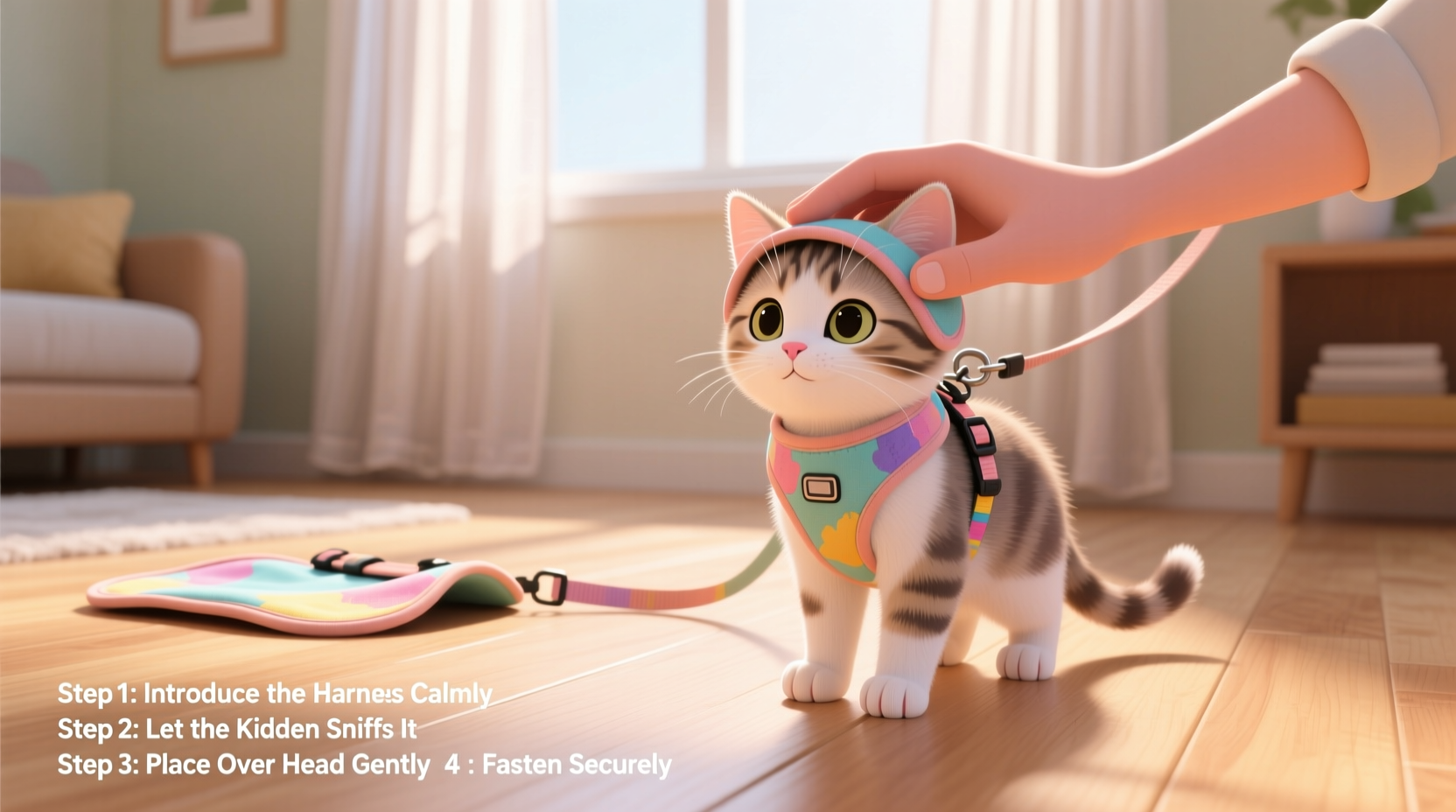
Cats are naturally curious, and many thrive on sensory enrichment beyond indoor walls. A properly fitted harness allows them to explore gardens, patios, or quiet sidewalks under supervision without the risks of running off or encountering wildlife. Unlike collars, which can be dangerous if a cat escapes or gets caught, harnesses distribute pressure safely across the body.
Veterinarians and feline behaviorists agree: controlled outdoor access via a harness supports mental health. Dr. Sarah Thompson, DVM, notes:
“Outdoor time—even brief, supervised sessions—can reduce stress-related behaviors like over-grooming or aggression in indoor cats. The trick is making it feel safe, not forced.” — Dr. Sarah Thompson, Feline Behavior Consultant
Choosing the Right Harness
Not all harnesses suit kittens. Many adult cat designs are too bulky or restrictive. Look for models specifically labeled for kittens or small cats, with adjustable straps at the neck, chest, and belly.
Key features to consider:
- Material: Breathable nylon or mesh for comfort and airflow.
- Fit: Snug but not tight—two fingers should fit beneath each strap.
- Escape-proof design: H-style or figure-eight styles prevent wriggling out.
- Leash attachment: Top-of-the-back ring (never side or chest).
Step-by-Step Introduction Timeline
Rushing the process is the most common mistake. Allow 7–14 days for full acclimation, depending on your kitten’s confidence level. Follow this timeline for best results:
- Day 1–2: Introduce the harness off-body. Place it near your kitten’s bed or feeding area. Let them sniff, paw, and investigate. Reward curiosity with treats or play.
- Day 3: Touch introduction. Gently drape the harness over their back for 10–15 seconds. Immediately offer praise and a treat. Repeat 2–3 times per day.
- Day 4: Fasten loosely. Secure the harness without tightening. Allow your kitten to wear it for one minute while distracted with toys or food. Watch for signs of distress—panicked meowing, freezing, or hiding.
- Day 5–6: Increase duration. Gradually extend wear time to 5–10 minutes. Walk nearby with a favorite toy to encourage movement.
- Day 7: Add the leash indoors. Attach a lightweight leash and let it drag behind (supervised). This teaches them to associate the leash with freedom, not restriction.
- Day 8–10: Guided indoor walks. Hold the leash loosely and follow your kitten as they roam. Never pull. Redirect gently with treats if they try to remove the harness.
- Day 11+: Outdoor debut. Choose a calm, enclosed space—like a fenced yard. Stay low to the ground and let them set the pace. Limit first outings to 5 minutes.
Progress isn’t linear. Some kittens adapt quickly; others need extra days at certain stages. That’s normal.
Common Mistakes and How to Avoid Them
Even well-meaning owners make errors that undermine training. Use this checklist to stay on track:
Checklist: Harness Training Do’s and Don’ts- ✅ Do use high-value treats (e.g., chicken baby food or freeze-dried tuna).
- ✅ Do end sessions on a positive note—even if brief.
- ✅ Do supervise constantly when the harness is on.
- ❌ Don’t force the harness if your kitten resists.
- ❌ Don’t allow unsupervised wear—even indoors.
- ❌ Don’t proceed outdoors until your kitten walks calmly on-leash inside.
| Stage | Goal | Red Flags |
|---|---|---|
| Initial Exposure | Kitten shows neutral or curious behavior toward harness | Hissing, fleeing, excessive grooming |
| Wearing the Harness | Comfortable movement, no attempts to escape | Lying flat, limping, vocalizing |
| Leash Indoors | Walking normally with loose leash | Dragging belly, resisting forward motion |
| First Outdoor Trip | Alert but relaxed, exploring voluntarily | Trembling, refusing to move, trying to hide |
A Real Example: Milo’s Journey
Milo, a 12-week-old tabby, was terrified of new objects. His owner, Jen, started by placing the harness near his food bowl for two days. She used a clicker and tiny bits of salmon to reward any interaction. On day three, she draped it over his back during playtime with a feather wand. He startled but returned to chasing the toy.
By day six, Milo wore the harness for seven minutes while eating wet food. Jen noticed he froze when she picked up the leash, so she spent two extra days letting it trail behind him during play. On day ten, he followed her across the living room on-leash with zero tension.
Their first outdoor session was in a quiet backyard at dawn. Birds chirped, but Milo stayed close, sniffing grass and pausing often. After four minutes, he sat and looked back at the door—his signal to return. Within three weeks, he was confidently walking a 15-minute loop around the garden.
Jen’s insight: “Letting him control the pace made all the difference. I thought we’d never get there, but now it’s our favorite daily ritual.”
Frequently Asked Questions
Can I use a dog harness for my kitten?
No. Dog harnesses are designed for forward-pulling motion and don’t account for a cat’s flexible spine and tendency to back out. Cat-specific harnesses wrap securely around the torso and minimize escape points.
My kitten keeps trying to bite the harness. What should I do?
This is common. Distract with a toy or treat during wear time. If biting persists, shorten sessions and go back a step in training. Never scold—redirect positively. Over time, the novelty wears off and the behavior fades.
At what age can I start harness training?
You can begin as early as 8–10 weeks, provided your kitten is healthy and has had initial vaccinations. Early socialization windows (up to 16 weeks) are ideal for building confidence with new experiences.
Final Tips for Long-Term Success
Once your kitten is comfortable on-leash, maintain consistency. Schedule short, frequent outings rather than rare long ones. Rotate routes to keep things interesting. Always carry treats to reinforce calm behavior around distractions like squirrels or passing dogs.
Remember: not every cat will love the outdoors. Some prefer watching from a screened porch. Respect your kitten’s limits. The goal isn’t to create an adventure cat—it’s to build trust and provide safe enrichment.
“The best harness-trained cats aren’t the bravest—they’re the ones whose owners listened closely and moved slowly.” — Lena Ruiz, Certified Feline Training Specialist
Take the Next Step Today
Start tonight: lay the harness on the floor and toss a treat near it. Small actions build big breakthroughs. With time and kindness, your kitten can learn to walk beside you, tail high, ready to discover the world—one gentle step at a time.
💬 Have a harness training success story or challenge? Share your experience in the comments and help fellow cat lovers build confidence with their kittens.








