
Moving your cat safely doesn’t have to mean lugging around a bulky, rigid carrier. Collapsible cat crates offer convenience, portability, and smart storage—but only if you know how to use them correctly. Many pet owners struggle with confusing mechanisms or fear damaging the crate during folding. This guide breaks down every step clearly, includes practical video-based insights, and delivers expert-backed strategies for efficient setup and compact storage.
Why Collapsible Cat Crates Are Worth Mastering
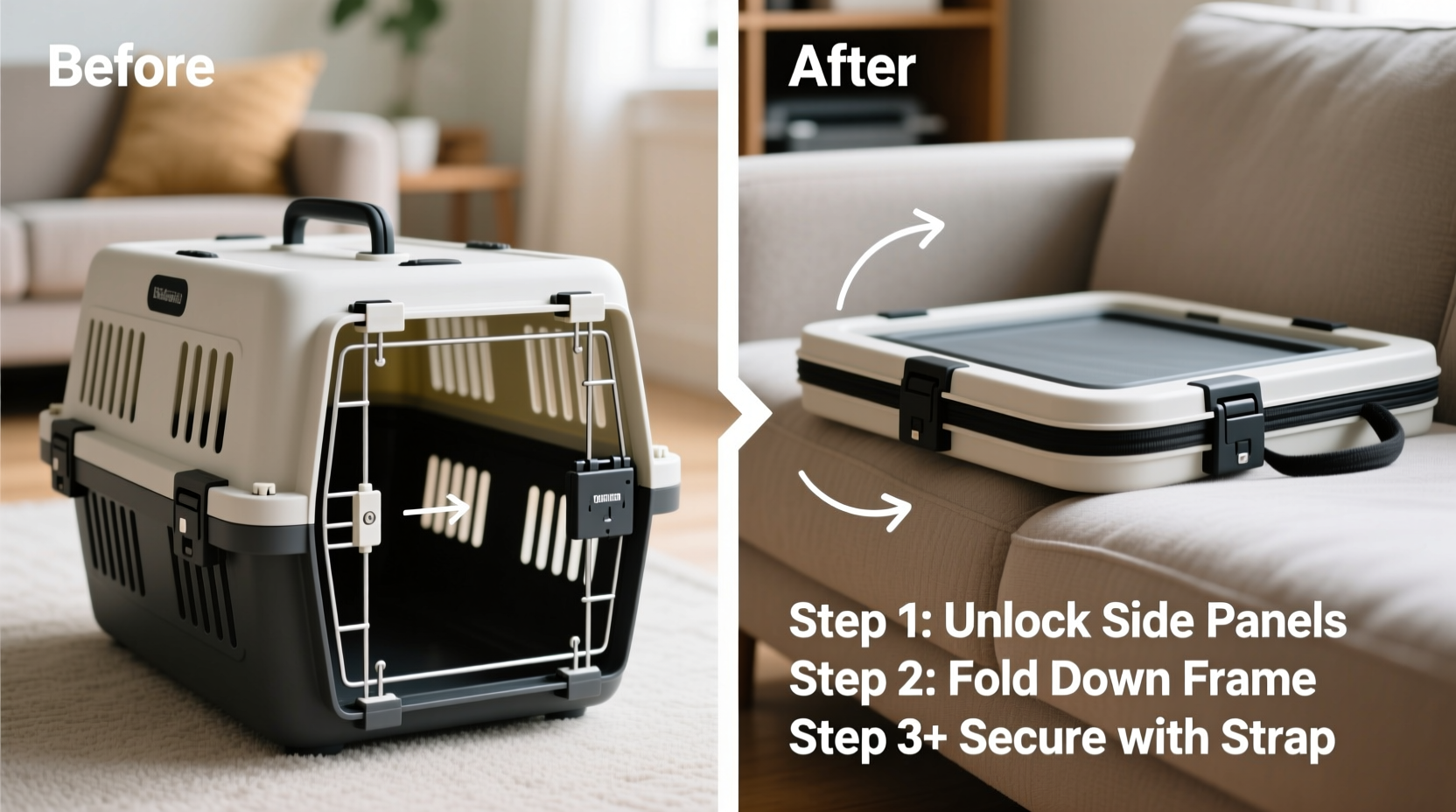
Cats are creatures of habit, and travel can be stressful. A well-designed collapsible crate reduces anxiety by being lightweight, ventilated, and easy to store when not in use. Unlike traditional hard-sided carriers, these models are often made from durable yet flexible materials such as reinforced mesh, steel frames, or foldable plastic composites. Their primary advantage lies in space efficiency—ideal for small apartments, frequent travelers, or multi-pet households.
The key to maximizing their benefits is understanding how to collapse and reassemble them quickly without compromising safety or structural integrity.
Step-by-Step: How to Collapse Your Cat Crate Safely
Not all collapsible crates work the same way, but most follow a similar mechanical logic. Below is a universal sequence applicable to 90% of popular models on the market—including brands like Petmate, AmazonBasics, and Sherpa.
- Remove all accessories – Take out bedding, bowls, toys, and any removable liners. This prevents strain on zippers and seams during folding.
- Open all access points – Unzip side doors, top panels, or front gates fully. This releases tension and allows the frame to move freely.
- Locate the locking mechanism – Most crates have snap buttons, push pins, or sliding clips at each corner. Press or slide each one into the “unlock” position. Do this on all four (or six) corners.
- Gently press down on the top frame – Apply even pressure across the top while holding the base steady. The sides should begin to fold inward naturally.
- Guide the sides inward – Use both hands to bring opposite sides together. If there’s resistance, double-check that all locks are disengaged.
- Secure with straps or bands – Once fully collapsed, fasten the included Velcro straps or elastic cords to keep the crate compact during storage.
Video Tips for Faster Setup and Breakdown
Visual learning dramatically improves retention, especially for mechanical tasks. When watching instructional videos online, focus on these three elements:
- Frame movement: Notice how the metal or plastic ribs shift during collapse. Understanding the hinge dynamics helps prevent forced folding.
- Hand positioning: Pay attention to where the demonstrator places their hands—this ensures balance and avoids pinching fingers.
- Timing cues: Some crates require a slight twist or pause mid-fold. Videos capture these micro-movements better than photos.
To find reliable videos, search using your crate’s model number plus “how to fold.” For example: “Petmate Sky Kennel 18” fold tutorial.” Avoid generic videos unless they match your exact design.
Storage Best Practices After Collapse
A collapsed crate isn’t useful if it gets damaged in storage. Follow these guidelines to maintain longevity and readiness.
| Do | Don't |
|---|---|
| Store in a dry, climate-controlled area like a closet or shelf | Leave it in damp basements or hot garages |
| Cover with a breathable cloth to prevent dust buildup | Wrap in plastic—traps moisture and promotes mildew |
| Keep it upright or flat, never under heavy objects | Stack books or boxes on top |
| Inspect every 3 months for worn hinges or frayed fabric | Forget about it for years without checking |
“Proper storage extends a collapsible crate’s lifespan by up to 50%. Even high-quality materials degrade under pressure or humidity.” — Dr. Laura Simmons, DVM & Small Animal Transport Specialist
Mini Case Study: Sarah’s Weekend Getaway Routine
Sarah, a pet owner from Portland, adopted Luna, a shy rescue cat who hates car rides. She purchased a Sherpa Travel Lite crate after reading reviews about its ease of folding. Initially, she struggled to collapse it after trips, often leaving it half-folded in her hallway.
After watching a two-minute YouTube walkthrough, she noticed the need to unlock the rear clips before pressing down. Now, she collapses the crate within 45 seconds and stores it inside a linen closet. On return trips, she unfolds it the night before, adds a familiar blanket, and places it near the door—reducing Luna’s stress significantly.
“It’s not just about saving space,” Sarah says. “It’s about making travel feel routine, not chaotic.”
Essential Checklist for Efficient Crate Management
Use this checklist after each trip to ensure your collapsible cat crate remains functional and ready for next use:
- ✅ Remove all waste, food remnants, and soiled linings
- ✅ Wipe down interior with pet-safe disinfectant
- ✅ Confirm all zippers operate smoothly
- ✅ Test locking mechanisms for responsiveness
- ✅ Fully collapse and secure with retention straps
- ✅ Store in designated, accessible location
- ✅ Label with contact info and cat’s name (if used for travel)
Frequently Asked Questions
Can I leave my cat crate partially folded?
No. Partial folding stresses joints and may warp the frame over time. Always fully collapse or fully assemble the crate—never leave it in an intermediate state.
How do I clean a collapsible crate before storing?
Vacuum loose hair first. Then wipe hard surfaces with a mix of water and mild soap. For fabric exteriors, spot-clean with enzyme cleaner. Never machine-wash unless specified by the manufacturer.
My crate won’t collapse evenly—what should I check?
Start by inspecting all corner locks. One stuck clip can block the entire mechanism. Also, ensure no fabric is caught between panels. If the issue persists, consult the user manual or contact customer support with a short video of the problem.
Final Thoughts: Make Cat Travel Simpler Through Smart Habits
Mastering the art of collapsing and storing your cat crate isn’t just about tidiness—it’s about preparedness. Every second saved during setup means less stress for both you and your cat. Whether you're heading to the vet, visiting family, or preparing for emergencies, having a streamlined system makes all the difference.
Taking five extra minutes after each use to clean, collapse, and store properly pays off in durability, hygiene, and peace of mind. Combine this routine with visual learning from trusted video sources, and you’ll turn a once-confusing task into second nature.
💬 Have a folding hack or favorite collapsible crate? Share your experience below and help fellow cat owners travel smarter!








