
Walking your dog should be a relaxing experience for both of you. A flexi retractable leash can offer freedom of movement while maintaining control—when used correctly. However, improper handling can lead to injury, tangling, or loss of control. This guide breaks down the process of safely opening, setting up, and using a flexi leash with confidence, ensuring safety for you, your dog, and others around you.
Understanding the Flexi Retractable Leash
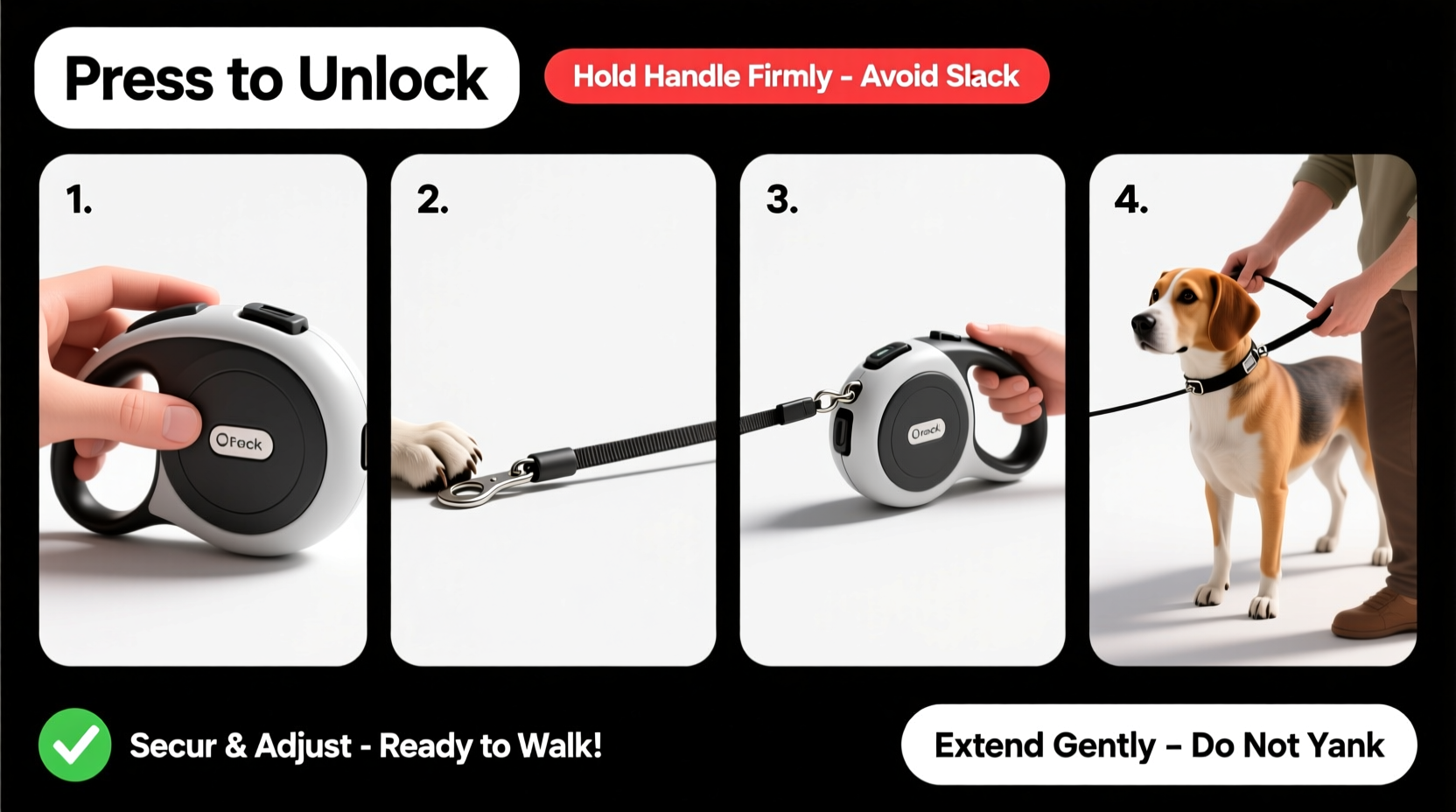
A flexi leash is a retractable dog leash that allows your dog to explore within a set range—typically 10 to 26 feet—while automatically reeling in or extending the cord as needed. The mechanism is housed in a plastic handle with a trigger button to lock and release the tape or cord. While convenient, these leashes require proper handling to prevent accidents.
The core components include:
- Handle: Ergonomic grip with a braking mechanism.
- Tape/Cord: Durable nylon or polymer line that extends and retracts.
- Lock Button: Controls whether the cord moves freely or stays fixed at a set length.
- Clasp: Attaches securely to your dog’s collar or harness.
Despite their popularity, misuse of flexi leashes contributes to tripping hazards, burns, and even severed cords under tension. Understanding how to deploy and manage one properly is essential.
Tip: Always attach the flexi leash to a harness rather than a collar to reduce strain on your dog’s neck.Step-by-Step Guide to Safely Open and Use a Flexi Leash
Follow this detailed sequence to ensure safe deployment and operation of your retractable leash.
- Inspect the Leash Before Use
Check for frayed cords, cracks in the housing, or a sticky lock mechanism. If the reel doesn’t smoothly extend or retract, do not use it until repaired or replaced. - Attach the Clasp Securely
Hook the clasp firmly onto your dog’s harness (preferably) or collar. Ensure the metal snap clicks audibly and cannot slip off. Never use a flexi leash with a slip or martingale collar unless designed for it. - Hold the Handle Correctly
Grip the handle with your dominant hand, fingers wrapped around the brake area. Your thumb should rest near the lock button. Keep your arm close to your body for better control. - Release the Cord Gradually
Press the lock button once to unlock the cord. Allow the dog to move forward slowly, letting the cord extend naturally. Do not jerk or throw the handle to release slack. - Set a Maximum Length (Optional)
For better control in crowded areas, manually pull out the desired length (e.g., 5 feet), then press the lock button to fix the cord. This prevents over-extension. - Maintain Tension Awareness
Keep slight tension on the line. Avoid letting the cord dangle on the ground where it can tangle around legs, poles, or other dogs. - Use the Lock Button Proactively
When approaching other dogs, cyclists, or narrow paths, press the lock button early to restrict movement and prevent lunging. - Retract the Cord Properly
At the end of the walk, press and hold the lock button while guiding the dog closer. Once within a few feet, release the button and let the motorized reel slowly retract the cord. Never yank the cord back by hand. - Store Safely
After retraction, check that the cord is fully wound and flush with the housing. Store in a dry place away from direct sunlight to prevent material degradation.
Common Mistakes and How to Avoid Them
Even experienced dog owners make errors with flexi leashes. Recognizing these pitfalls improves safety significantly.
| Mistake | Risk | Solution |
|---|---|---|
| Using on large or strong dogs | Loss of control, wrist injury | Use only on small to medium dogs; consider standard leashes for powerful breeds |
| Letting the cord touch the ground | Tangling, tripping, abrasion damage | Keep the line slightly elevated and taut |
| Attaching to a collar instead of a harness | Neck strain, tracheal damage | Always clip to a well-fitted front-clip or back-clip harness |
| Reeling in a running dog | Cord snapping, burns, dog injury | Lock the line first, call the dog back, then retract slowly |
| Using in crowded areas | Entanglement with people or objects | Switch to a fixed-length leash in parks or sidewalks with heavy foot traffic |
Expert Insight on Retractable Leash Safety
“Flexi leashes can be useful tools when used responsibly, but they’re often misapplied. The biggest danger comes from complacency—owners assume the dog has ‘freedom’ while losing critical control. I recommend training your dog to stay within a boundary before introducing a retractable leash.” — Dr. Laura Simmons, Certified Canine Behavior Consultant
Professional trainers emphasize that flexi leashes are not training tools. They work best with well-behaved dogs who respond reliably to voice commands. Using them on excitable or untrained dogs increases the risk of pulling, chasing, or entanglement.
Real-World Scenario: A Walk Gone Wrong
Jenna, a first-time dog owner, took her energetic Cocker Spaniel, Max, on a walk using a new flexi leash. Excited by a squirrel, Max bolted forward. Jenna instinctively held on, but the cord whipped around her wrist, causing second-degree friction burns. The sudden tension also startled Max, leading to panic and further pulling.
What went wrong? Jenna hadn’t locked the leash before entering a high-distraction area. She also didn’t have Max on a harness, so the force pulled directly on his neck. After visiting the vet and consulting a trainer, she switched to a 6-foot fixed leash for training and now uses the flexi only in quiet fields—with the length preset and the dog calm.
This scenario highlights why preparation and awareness matter. Even a simple tool requires thoughtful use.
Checklist: Safe Flexi Leash Usage
Before each walk, run through this checklist:
- ✅ Inspect the leash for wear, cracks, or cord damage
- ✅ Confirm the lock button functions smoothly
- ✅ Attach the clasp securely to a harness (not just a collar)
- ✅ Choose an appropriate environment (open, low-traffic areas)
- ✅ Pre-set the maximum extension if needed
- ✅ Keep your thumb near the lock button for quick response
- ✅ Avoid wrapping the cord around your hand or wrist
- ✅ Retract slowly at the end—never force it
Frequently Asked Questions
Can I use a flexi leash for dog training?
Generally, no. Flexi leashes encourage pulling because dogs learn they can gain more ground by moving ahead. For training loose-leash walking, use a standard 4–6 foot leash to reinforce proximity and attention.
Are flexi leashes banned anywhere?
Yes. Some cities, trails, and dog parks prohibit retractable leashes due to safety concerns. Always check local regulations. In places like New York City parks or hiking trails in Colorado, fixed leashes under 6 feet are required.
What size dog is suitable for a flexi leash?
Small to medium dogs (under 50 lbs) with good recall and low prey drive are best suited. Large or strong breeds like Huskies, Labs, or Boxers can overpower the mechanism, risking injury.
Final Thoughts and Action Steps
A flexi retractable leash isn’t inherently unsafe—it’s how it’s used that determines the outcome. By following proper setup procedures, respecting mechanical limits, and prioritizing your dog’s behavior and environment, you can enjoy the benefits of controlled freedom during walks.
Start by inspecting your current leash. If it shows signs of wear, replace it. Practice using the lock function in a quiet yard before heading to busier areas. Most importantly, never rely on the flexi leash for control—it’s a convenience tool, not a substitute for training.
💬 Have a tip or story about using a flexi leash? Share your experience below to help fellow dog owners stay safe and informed!








