Dogs thrive on engagement—both physical and mental. Without proper stimulation, even the most well-behaved pet can develop destructive habits like chewing furniture, excessive barking, or digging. Two of the most popular types of dog toys—squeaky toys and puzzle toys—serve very different purposes. While squeaky toys trigger instinctual prey drive, puzzle toys challenge cognitive function. But when it comes to keeping your dog occupied for longer periods, which type wins? The answer isn’t always straightforward and depends on your dog’s personality, energy level, and problem-solving ability.
Understanding Squeaky Toys: Instinct Over Intellect
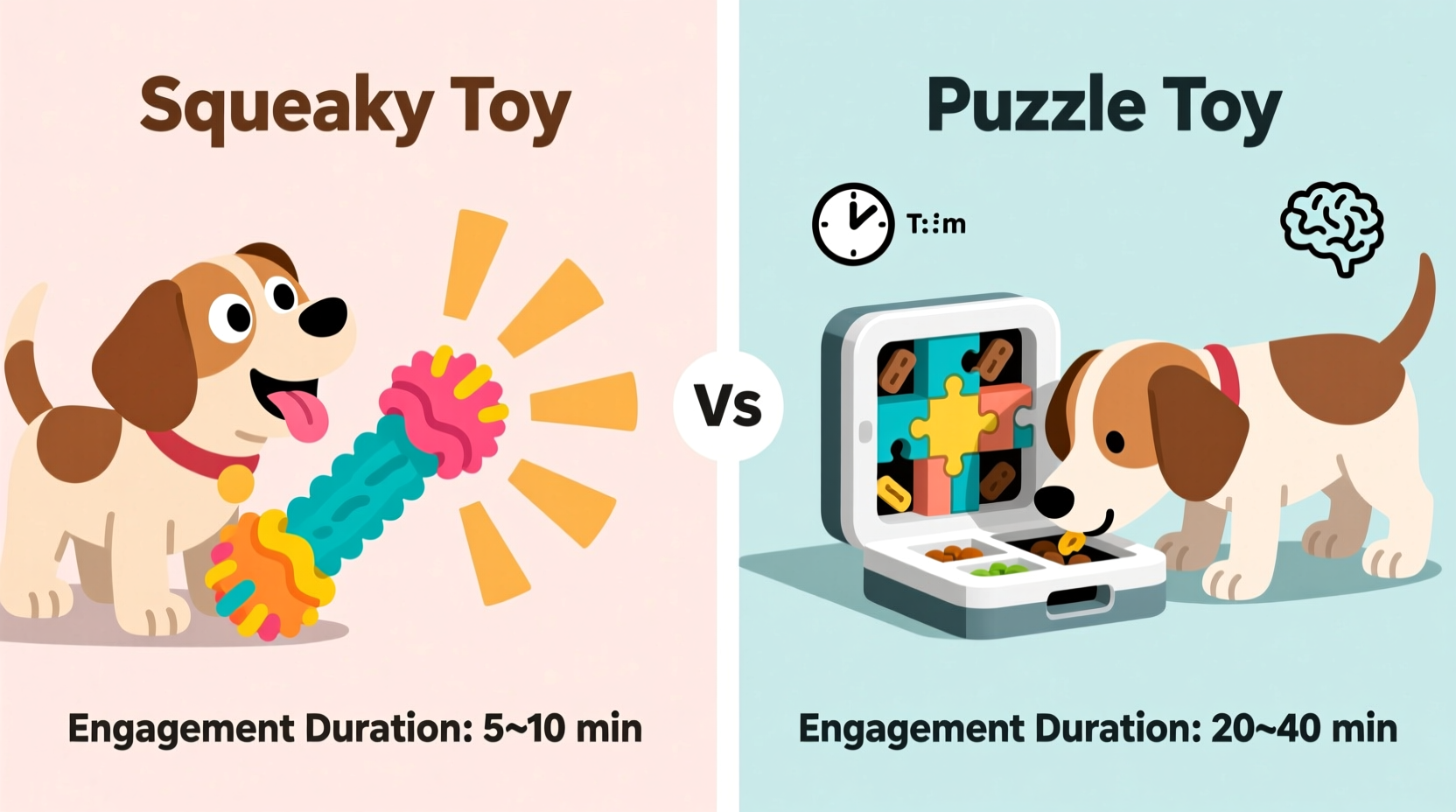
Squeaky toys are designed to mimic the sounds of small animals in distress. The high-pitched noise activates a dog’s natural hunting instincts, making them highly engaging—at least initially. Most dogs will pounce, shake, and chew these toys with great enthusiasm.
However, this excitement is often short-lived. Once the squeaker is destroyed—sometimes within minutes—the toy loses its appeal. Many dogs abandon the now-silent plush immediately, leaving owners with shredded stuffing and broken plastic.
These toys work best for dogs that enjoy physical play and need an outlet for excess energy. They’re particularly effective for breeds with strong prey drives, such as Terriers or sporting dogs. But because they offer little in the way of long-term mental challenge, their entertainment value tends to diminish quickly.
Tip: Rotate squeaky toys weekly to maintain novelty and prevent overuse injuries from aggressive chewing.The Rise of Puzzle Toys: Mental Stimulation That Lasts
Puzzle toys are engineered to engage a dog’s brain. These interactive devices require problem-solving skills to access hidden treats or kibble. From sliding compartments to rotating lids and multi-step mechanisms, puzzle toys vary in complexity to match different skill levels.
Unlike squeaky toys, which deliver instant auditory feedback, puzzle toys reward persistence. A dog may spend 15 to 30 minutes—or even longer—figuring out how to extract food. This extended engagement not only occupies time but also reduces anxiety and prevents boredom-related behaviors.
Studies have shown that dogs who regularly use puzzle toys exhibit lower stress markers and improved focus. According to Dr. Emily Levine, a veterinary behaviorist at the American College of Veterinary Behaviorists, “Mental exercise is just as tiring as physical exercise. A dog that spends time working for their food is more likely to be calm and content afterward.”
“Mental exercise is just as tiring as physical exercise. A dog that spends time working for their food is more likely to be calm and content afterward.” — Dr. Emily Levine, Veterinary Behaviorist
Comparing Engagement Duration: A Practical Breakdown
To understand which toy type keeps dogs busy longer, researchers at the Canine Cognition Center at Yale observed 40 dogs across various breeds during controlled play sessions. The results revealed a clear trend:
| Toys | Avg. Engagement Time | Main Trigger | Likelihood of Repeat Use |
|---|---|---|---|
| Squeaky Plush Toys | 3–7 minutes | Sound & texture | Low (after squeaker breaks) |
| Basic Treat Puzzles | 12–18 minutes | Food reward | High |
| Advanced Puzzle Boards | 20–40 minutes | Cognitive challenge | Very high |
| Combination Toys (squeak + treat) | 10–15 minutes | Mixed stimuli | Moderate |
The data shows that while squeaky toys generate immediate excitement, puzzle toys consistently provide longer-lasting engagement. Even basic puzzle designs kept dogs occupied nearly three times longer than squeaky alternatives.
Real-World Example: Max the Border Collie
Max, a 3-year-old Border Collie from Portland, was brought to a canine enrichment clinic due to destructive behavior when left alone. His owner reported that he would destroy multiple squeaky toys within an hour and still appear restless.
After introducing a series of progressive puzzle toys—including the Outward Hound Slider and Nina Ottosson’s Dog Tornado—Max’s solo downtime transformed. Initially frustrated, he learned through guided practice and soon spent up to 35 minutes focused on solving each puzzle. Within two weeks, his chewing episodes dropped by 80%, and his overall demeanor became calmer.
This case illustrates how high-energy, intelligent breeds benefit significantly more from cognitive challenges than from repetitive sensory toys.
Choosing the Right Toy: A Step-by-Step Guide
Selecting between squeaky and puzzle toys shouldn’t be arbitrary. Follow this decision-making process to match the toy to your dog’s needs:
- Assess your dog’s breed and energy level. Herding and working breeds (e.g., Australian Shepherds, Poodles) typically thrive on mental challenges. Companion breeds may prefer soft squeaky toys for comfort.
- Evaluate past toy interactions. Does your dog destroy toys quickly? That may signal a need for more durable options or increased mental stimulation.
- Start with intermediate puzzles. Choose beginner-level puzzle toys before advancing to complex models. Success builds confidence.
- Combine toy types strategically. Use squeaky toys during active play sessions and puzzle toys during downtime or when you need quiet focus.
- Monitor and rotate. Introduce new puzzles every few weeks and store others out of sight to renew interest.
Checklist: Optimizing Your Dog’s Toy Rotation
- ✅ Identify your dog’s primary play style (chaser, chewer, thinker)
- ✅ Limit squeaky toys to supervised sessions
- ✅ Invest in at least two levels of puzzle difficulty
- ✅ Clean puzzle toys weekly to prevent bacterial buildup
- ✅ Rotate toys every 5–7 days to maintain novelty
- ✅ Supervise initial puzzle use to encourage success
- ✅ Avoid overly complex puzzles that cause frustration
Frequently Asked Questions
Can puzzle toys replace walks or physical exercise?
No. While puzzle toys provide excellent mental stimulation, they don’t substitute for physical activity. Dogs still need daily walks, runs, or play sessions to maintain muscle health and cardiovascular fitness. Think of puzzle toys as a supplement, not a replacement.
Are squeaky toys bad for dogs?
Not inherently, but they can become problematic if unsupervised. Aggressive chewers may tear open seams and ingest stuffing or plastic pieces. Always monitor play and remove damaged toys immediately. For power chewers, consider reinforced squeaky toys made with durable materials.
How do I get my dog interested in puzzle toys?
Start simple. Use strongly scented treats like boiled chicken or liver paste. Demonstrate how the toy works by manually releasing a treat. You can also hand-feed the first few meals using the puzzle to build association. Patience and positive reinforcement are key.
Final Thoughts: Balance Is Key
While puzzle toys generally keep dogs engaged longer than squeaky ones, both have a place in a well-rounded enrichment plan. Squeaky toys satisfy primal instincts and provide quick bursts of fun. Puzzle toys promote patience, reduce anxiety, and offer sustained mental exercise.
The most fulfilled dogs experience variety. Rotate toy types based on context—use puzzle toys during breakfast or when you're working from home, and bring out squeaky toys during backyard play or training drills. Matching the toy to the moment ensures your dog stays physically healthy, mentally sharp, and emotionally balanced.
💬 What’s your dog’s favorite toy, and how long does it hold their attention? Share your experience and help other pet owners discover what works!








