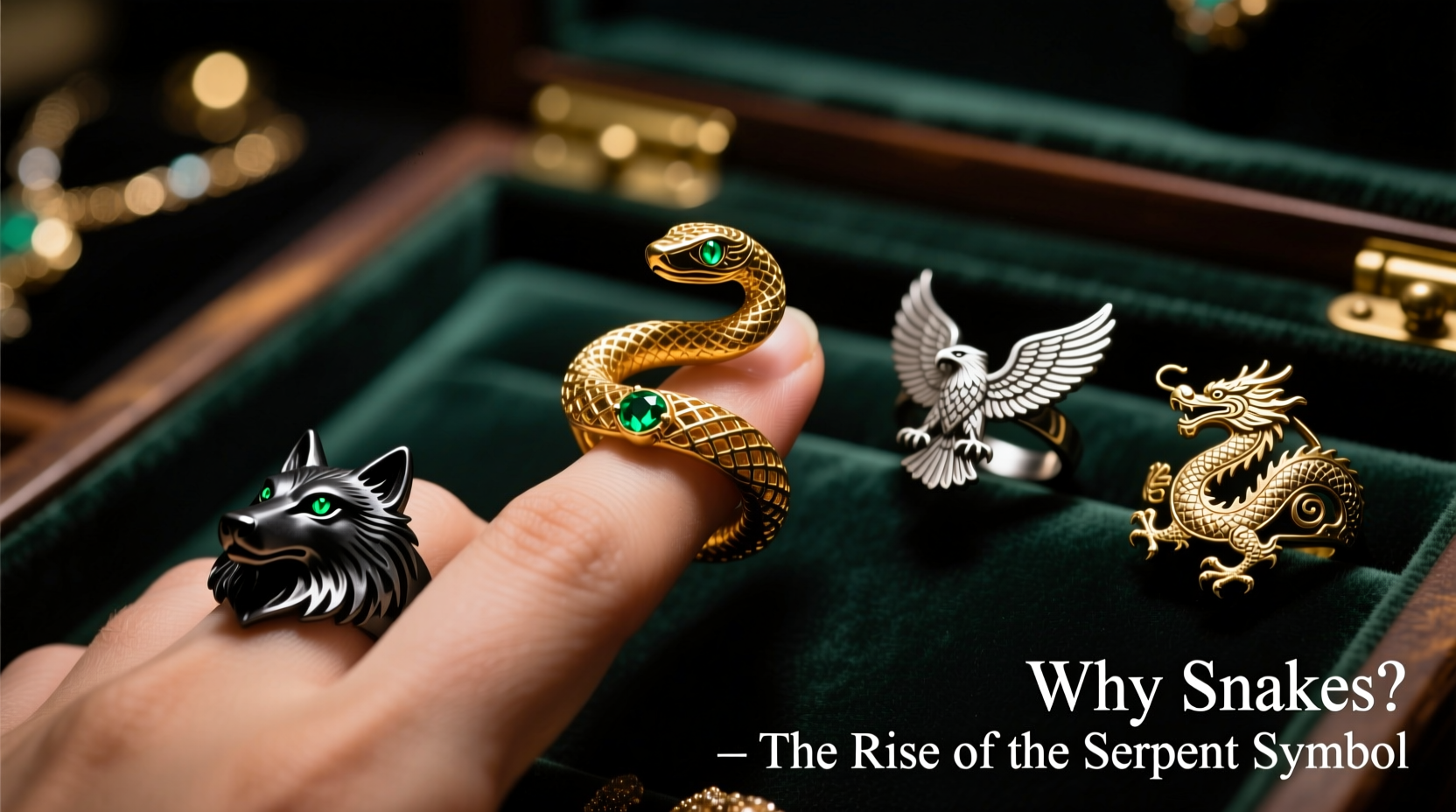
In recent years, a quiet but unmistakable shift has taken place in the world of fashion jewelry. Once relegated to niche subcultures or symbolic spirituality, the snake ring has slithered its way into mainstream style, appearing on runways, red carpets, and Instagram feeds alike. But what makes the serpent so captivating compared to other animal motifs like lions, owls, or wolves? And why now? The answer lies at the intersection of symbolism, design evolution, and cultural momentum.
The Symbolism Behind the Serpent
The snake has carried layered meanings across civilizations for millennia. In ancient Egypt, it represented protection and royal authority—think of the uraeus crown worn by pharaohs. In Greek mythology, the ouroboros—a snake eating its own tail—symbolized infinity and renewal. Meanwhile, Hindu traditions revere the serpent as a guardian of spiritual energy through the kundalini concept. Unlike many animal symbols that emphasize strength or wisdom in a straightforward way, the snake embodies duality: danger and healing, destruction and rebirth, temptation and enlightenment.
This complexity resonates deeply in today’s cultural climate. As people seek deeper personal meaning in their accessories, the snake offers more than aesthetic appeal—it invites introspection. “The serpent is not just a trend,” says Dr. Lila Monroe, cultural anthropologist and author of *Jewelry as Identity*.
“It reflects a growing desire to wear symbols that carry transformative power. People aren’t just accessorizing—they’re declaring an inner journey.”
Design Evolution: From Vintage to Vogue
Serpent jewelry isn’t new. Victorian-era lovers exchanged coiled snake rings set with gemstone eyes as tokens of eternal affection. Cartier popularized the motif in 1870 with its iconic Tubogas design, winding gold bands mimicking the reptile’s fluid form. What’s different today is accessibility and reinterpretation. Contemporary designers are blending minimalist lines with bold textures, making snake rings wearable for both day and night.
Compare this to other animal rings—lion heads often feel ornate or aggressive; owl rings lean toward whimsy or academia; dolphin motifs evoke nostalgia rather than modernity. The snake, by contrast, strikes a balance between elegance and edge. Its sinuous shape lends itself naturally to sculptural design, wrapping around fingers in ways that feel organic yet intentional.
Tip: When choosing a snake ring, consider how the curve interacts with your finger shape—tight spirals suit longer fingers, while open coils flatter shorter ones.Snake Ring vs Other Animal Rings: A Comparative Breakdown
| Motif | Symbolic Meaning | Style Flexibility | Cultural Relevance Today |
|---|---|---|---|
| Snake | Rebirth, transformation, mystery | High – works with minimalism to maximalism | Strong – tied to wellness, empowerment, and mysticism |
| Lion | Power, courage, leadership | Moderate – often formal or statement-focused | Moderate – popular in heritage brands and men’s jewelry |
| Owl | Wisdom, intuition, night vision | Low to Moderate – leans quirky or academic | Low – niche appeal, often associated with students or esoterica |
| Dolphin | Playfulness, freedom, harmony | Low – perceived as retro or youthful | Declining – less prominent in current luxury trends |
| Wolf | Loyalty, instinct, independence | Moderate – strong in streetwear and alternative styles | Rising – popular in gender-neutral and tribal designs |
The data shows a clear advantage for the snake in versatility and contemporary resonance. While other animals have dedicated followings, none match the serpent’s ability to cross stylistic boundaries—from bohemian to corporate chic—without losing its symbolic weight.
Why the Sudden Surge in Popularity?
The resurgence of snake rings aligns with broader societal currents. First, there’s a renewed interest in mysticism and self-discovery. Tarot readings, moon rituals, and crystal healing have moved from fringe practices to mainstream wellness tools. Wearing a snake becomes a subtle nod to these beliefs—an amulet of personal evolution.
Second, pop culture has amplified the motif. Celebrities like Dua Lipa, Bella Hadid, and Rihanna have been spotted wearing sleek serpent rings, often layered with other pieces for a curated look. High-profile collections from Gucci, Messika, and Jacquie Aiche have further cemented the snake as a symbol of feminine power and sensuality—not evil, but empowered.
A mini case study illustrates this shift: Sarah Kim, a 32-year-old graphic designer in Portland, purchased her first snake ring after a major life transition—leaving a corporate job to freelance. “I didn’t plan to buy jewelry,” she recalls. “But when I saw a thin gold serpent wrapped around a tourmaline stone, it felt like it was waiting for me. It’s not just pretty. It reminds me I shed old skins to grow.” Her experience mirrors a larger narrative: adornment as affirmation.
How to Style a Snake Ring (And When to Choose Alternatives)
Styling a snake ring depends on intention. For daily wear, opt for delicate bands in rose gold or recycled silver—subtle enough for the office but meaningful upon closer look. For bolder statements, pair a chunky serpent ring with geometric cuffs or stack multiple snake bands across fingers.
- Pair with neutral tones to let the ring stand out.
- Layer with other nature-inspired pieces—leaf cuffs, moon pendants—for thematic cohesion.
- Avoid overcrowding; one powerful symbol often speaks louder than several competing ones.
If the snake doesn’t resonate with you personally, consider alternatives:
- Wolf rings for those drawn to loyalty and wild independence.
- Lioness motifs for matriarchal strength and protective energy.
- Scarab beetles (an emerging niche) for regeneration and ancient wisdom.
Checklist: Choosing the Right Animal Ring for You
Before purchasing any animal ring, ask yourself:- Does this animal reflect my values or personal journey?
- Will I wear it regularly, or is it purely symbolic?
- Does the design complement my existing jewelry collection?
- Is the material ethically sourced and durable?
- Do I feel a genuine emotional connection to the piece?
Frequently Asked Questions
Are snake rings only for women?
No. While historically marketed toward women, modern snake rings are increasingly unisex. Brands like Chrome Hearts and Alighieri offer bold, gender-neutral designs embraced by all identities. The key is proportion and finish—matte black titanium or oxidized silver can give a more androgynous edge.
Is wearing a snake ring culturally insensitive?
Generally, no—but context matters. In cultures where the serpent holds sacred significance (e.g., Indigenous Australian Dreamtime stories or West African Vodun), appropriative use of specific iconography should be avoided. Opt for abstract or stylized interpretations rather than direct replicas of ceremonial symbols.
Can I wear a snake ring every day?
Yes, provided it’s made from durable materials like 14k gold, platinum, or stainless steel. Avoid prolonged exposure to chemicals (chlorine, perfume) and remove during heavy manual tasks to prevent bending or scratching.
Conclusion: More Than a Trend—A Statement of Self
The fascination with snake rings isn’t fleeting. It’s rooted in timeless symbolism and amplified by modern identity expression. Compared to other animal rings, the serpent stands apart in its ability to convey transformation, resilience, and quiet power. Whether you're drawn to its mythological depth or its sleek aesthetic, wearing a snake ring today is less about following fashion and more about claiming a narrative.
As jewelry becomes increasingly personal, the animals we choose to wear speak volumes. The snake doesn’t shout—it whispers, coils, and waits. And perhaps that’s exactly why it’s captured our collective imagination. If you’ve been hesitating to add one to your collection, consider this your sign. Choose a design that feels authentic, care for it well, and let it remind you that growth often begins with a single shed.
💬 Have a story behind your favorite animal ring? Share your thoughts or tag us on social media—we’d love to hear what your jewelry means to you.








