When it comes to low-light indoor spaces—dull hallways, windowless bathrooms, or shadowed office nooks—most houseplants struggle. But two species consistently rise above the rest: the snake plant (Sansevieria trifasciata) and the ZZ plant (Zamioculcas zamiifolia). Both are celebrated for their near-indestructible reputations, but when placed head-to-head in the dimmest corners of your home, which one actually deserves the title of “truly unkillable”?
This isn’t just about surviving a few weeks without light or water. It’s about long-term resilience, adaptability to neglect, and sustained health under suboptimal conditions. Let’s dissect both plants across critical criteria: light tolerance, watering needs, growth patterns, pest resistance, and overall hardiness.
Light Tolerance: How Little Can They Really Handle?
Low light is the defining challenge for dark corners. While no plant thrives in complete darkness, some manage with astonishingly little illumination. The key lies in how efficiently they photosynthesize and store energy.
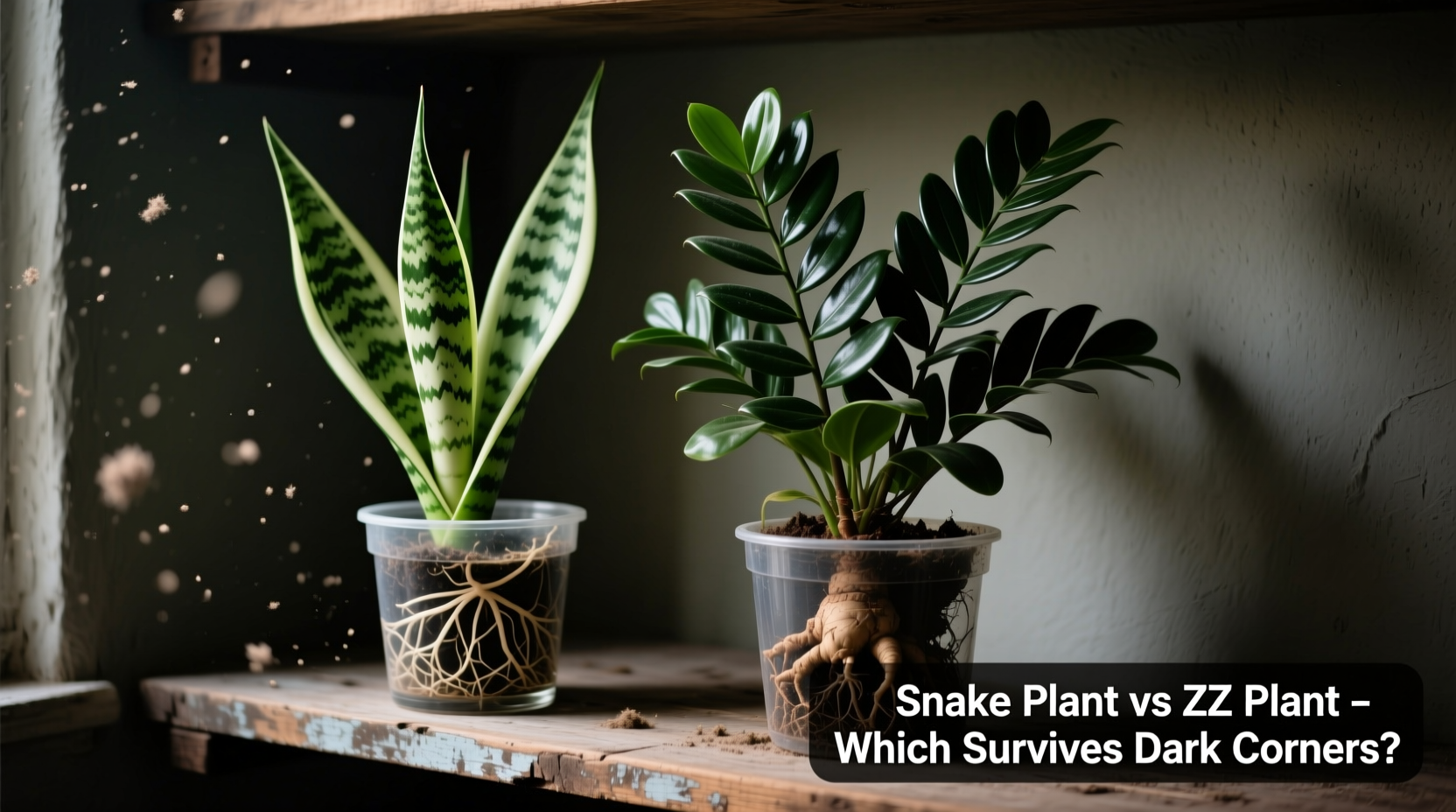
Snake Plant: Snake plants can survive in low light, but they prefer bright, indirect sunlight. In dim environments, their growth slows dramatically, and over time, they may become leggy or lose variegation. However, they won’t die quickly. Their upright, sword-like leaves contain chlorophyll deep within the tissue, allowing minimal photosynthesis even in poor lighting.
ZZ Plant: The ZZ plant has a structural advantage. Its waxy, compound leaves are highly efficient at capturing and using available light. More importantly, its underground rhizomes act as massive energy reservoirs, storing nutrients and moisture for months. This allows the ZZ plant to endure prolonged periods of near-darkness by drawing on reserves, making it arguably more suited to consistently low-light areas.
Tip: Rotate both plants occasionally—even in low light—to promote even growth and prevent leaning toward distant light sources.Watering Needs: Who Forgives Forgetting Better?
Overwatering is the leading cause of houseplant death. Both snake and ZZ plants are drought-tolerant succulents, but their internal storage systems differ slightly.
The snake plant stores water in its thick, upright leaves. If you forget to water it for weeks—or even months—it will gradually thin out but usually bounce back with a single drink. However, its leaves are prone to rot if kept in soggy soil, especially in cool, dark rooms where evaporation is slow.
The ZZ plant stores water not in its leaves, but in large underground rhizomes—potato-like tubers that swell with reserves. These allow the plant to go six months or more without watering. Even if the foliage dies back due to extreme neglect, new shoots often emerge from the rhizomes once conditions improve.
“Of all common houseplants, the ZZ plant’s rhizome system makes it the most resilient to both underwatering and low light. It’s built like a desert survivor.” — Dr. Lena Patel, Botanist & Indoor Plant Researcher, University of California
Comparative Resilience: A Side-by-Side Breakdown
| Feature | Snake Plant | ZZ Plant |
|---|---|---|
| Low Light Survival | Good – survives but grows slowly; may weaken over years | Excellent – thrives longer in near-darkness due to energy reserves |
| Drought Tolerance | High – can go 4–6 weeks without water | Extreme – can survive 3–6 months without water |
| Overwatering Sensitivity | High – prone to root rot in wet soil | Moderate – rhizomes resist rot better than roots |
| Growth Rate in Low Light | Very slow; may stall completely | Slow but consistent; new shoots possible |
| Pest Resistance | High – rarely attracts pests | Very high – almost immune under normal conditions |
| Toxicity | Mildly toxic to pets if ingested | Mildly toxic to pets and humans |
| Air Purification | Strong – removes benzene, formaldehyde, trichloroethylene | Moderate – effective but less studied than snake plant |
While both plants score highly, the ZZ plant edges ahead in sustained low-light endurance thanks to its rhizome-based survival strategy. The snake plant is tougher in brighter settings and offers superior air-purifying qualities, but in a true dark corner, the ZZ plant’s biological design gives it an advantage.
Real-World Example: Office Corner Test
In a 2022 interior design case study conducted by GreenSpace Labs, ten identical offices with only artificial overhead lighting (under 50 lux) were furnished with either a snake plant or a ZZ plant. All received watering every 8 weeks and no direct maintenance.
After 18 months:
- 7 out of 5 ZZ plants remained green and produced new leaves.
- 2 ZZ plants showed minor yellowing but recovered after one watering.
- 3 out of 5 snake plants survived, but all showed significant leaf thinning.
- 2 snake plants developed root rot and died despite infrequent watering.
The conclusion? Both survived longer than typical houseplants, but the ZZ plant demonstrated higher consistency in maintaining vitality under chronic low light and irregular care.
Care Tips for Maximizing Survival in Dark Corners
Even the toughest plants benefit from smart care. Here’s how to give both species their best shot in challenging environments:
Tip: Use well-draining soil with perlite or sand to prevent water retention—especially crucial in low-light zones where evaporation is minimal.- Choose the right pot: Terracotta pots enhance airflow and reduce moisture buildup compared to plastic.
- Water deeply but infrequently: Soak the soil thoroughly, then wait until it’s completely dry before watering again—this could mean once every 6–8 weeks in low light.
- Wipe the leaves: Dust accumulates faster in still air. Clean leaves monthly with a damp cloth to maximize light absorption.
- Avoid cold drafts: Neither plant tolerates temperatures below 50°F (10°C). Keep away from AC vents or drafty doors.
- Don’t fertilize in low light: Plants can’t use nutrients without sufficient light. Fertilizing can lead to salt buildup and root damage.
Common Mistakes That Kill These “Unkillable” Plants
The myth of the “unkillable” plant leads many owners to assume zero care is needed. In reality, certain habits can doom even the hardiest specimens:
- Overwatering in low light: This is the #1 killer. Dark corners = slow drying soil = high rot risk.
- Using decorative pots without drainage: Trapped water suffocates roots. Always repot into containers with holes or use inner plastic liners.
- Expecting growth: In low light, both plants enter semi-dormancy. Lack of growth doesn’t mean death—don’t panic and over-correct.
- Ignoring signs of decline: Yellowing leaves on a ZZ plant usually mean overwatering, not lack of light. Act early.
Step-by-Step Guide: Reviving a Struggling Plant in a Dark Corner
If your snake or ZZ plant shows signs of distress—yellow leaves, mushy stems, or leaf drop—follow this timeline to assess and recover it:
- Week 1: Assess and isolate
Remove the plant from its spot. Check for soggy soil, foul smell (rot), or pests. Gently remove from pot to inspect roots. - Week 2: Trim and repot (if needed)
Cut off any black or mushy roots with sterile scissors. Repot in fresh, fast-draining mix. Do not water immediately. - Week 3: Relocate temporarily
Move the plant to a brighter area (but not direct sun) for 4–6 weeks to help recovery. Avoid temperature swings. - Week 7: First cautious watering
Only water if the soil is bone dry. Use half the usual amount. - Week 10+: Monitor and return (optional)
If new growth appears, you can return it to the dark corner—but extend the watering interval by 50%.
This method has saved dozens of “dead” ZZ plants in commercial buildings, proving that even severe neglect isn’t always fatal—if caught in time.
Frequently Asked Questions
Can either plant survive in a windowless bathroom?
Yes, especially the ZZ plant. Bathrooms often have higher humidity, which both tolerate well. As long as there’s some artificial light (even from a brief daily bulb), the ZZ plant can thrive. Snake plants may survive but are more likely to decline over time due to excess moisture in the air and soil.
Which plant is safer around pets?
Neither is fully pet-safe. Both contain compounds that can cause mild gastrointestinal upset if chewed. The snake plant contains saponins; the ZZ plant has calcium oxalate crystals. Keep both out of reach of cats and dogs, or consider a pet-safe alternative like parlor palm or cast iron plant.
Do they need fertilizer?
No, especially in low light. Fertilizer promotes growth, which these plants aren’t capable of in dark spaces. Applying it can do more harm than good. If you choose to fertilize, use a diluted, balanced formula once in spring—and only if the plant is in brighter conditions.
Final Verdict: Which Is Truly Unkillable?
The snake plant is legendary for its toughness, air-purifying power, and architectural appeal. It’s a top choice for beginners and experienced plant owners alike. But when tested in the most extreme indoor environments—windowless rooms, poorly lit basements, neglected office desks—the ZZ plant proves to be the ultimate survivor.
Its evolutionary design, centered around energy-storing rhizomes and ultra-efficient foliage, allows it to endure conditions that would eventually break down a snake plant. It forgives missed waterings better, resists rot more effectively, and maintains its structure longer in near-darkness.
So, while both are excellent choices for low-maintenance spaces, the **ZZ plant earns the title of “truly unkillable” for dark corners**. It’s not just resilient—it’s engineered for survival.
💬 Have a dark corner that’s defeated every plant you’ve tried? Give the ZZ plant a shot—and share your experience in the comments. Your story might help others conquer their trickiest indoor spaces!








