Indoor air pollution is a silent issue affecting millions of homes and offices worldwide. From volatile organic compounds (VOCs) emitted by furniture and cleaning products to carbon dioxide buildup in poorly ventilated spaces, the air we breathe indoors can be up to five times more polluted than outdoor air. One natural, cost-effective solution gaining widespread attention is the use of houseplants for air purification. Among the most popular contenders are the snake plant (*Sansevieria trifasciata*) and the peace lily (*Spathiphyllum spp.*). Both have earned reputations as air-purifying powerhouses, but when placed side by side, which one truly performs better?
This comparison dives deep into scientific research, practical performance, maintenance demands, and environmental adaptability to determine which plant offers superior air-cleaning capabilities—and which might be better suited to your living space.
Air Purification: The Science Behind It
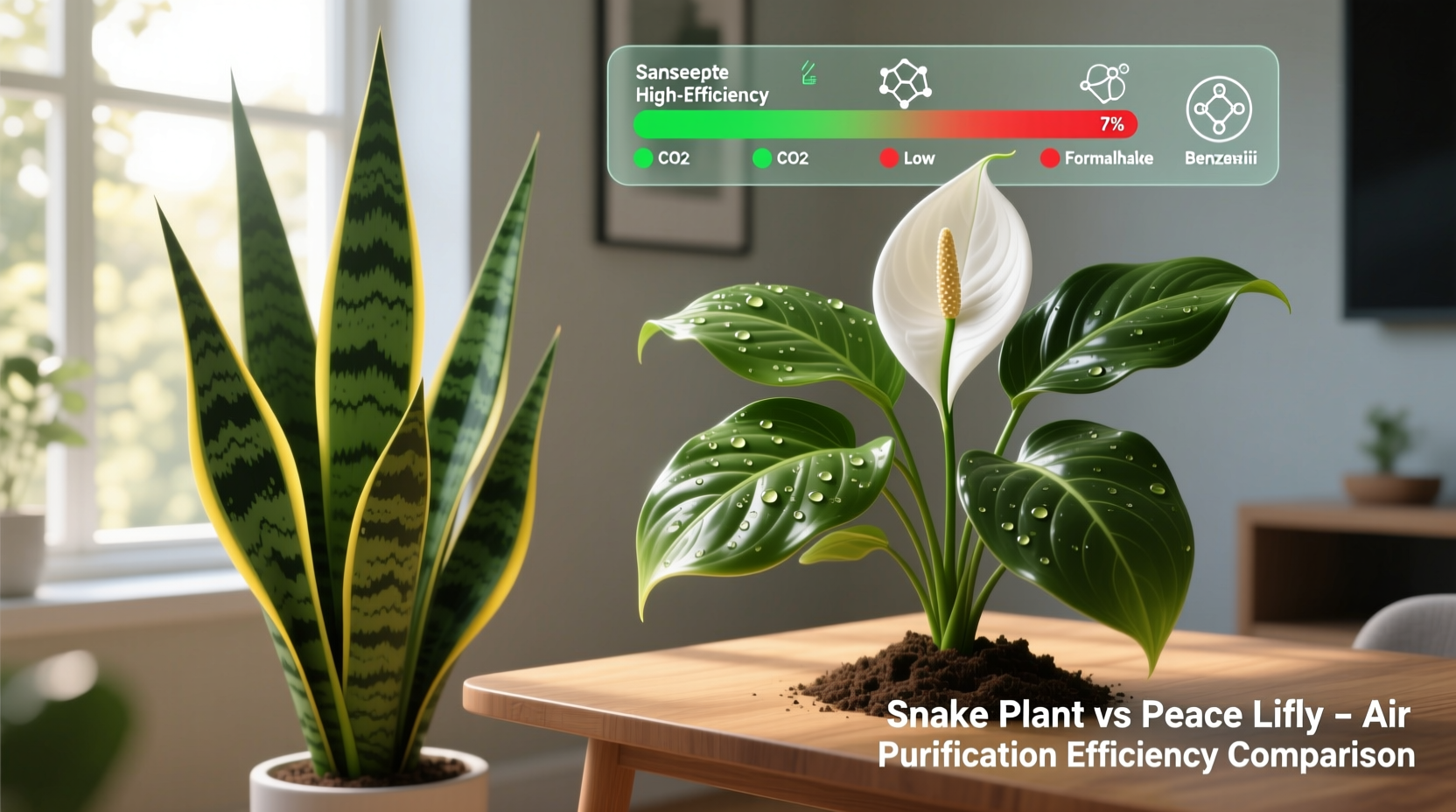
The concept of using plants to clean indoor air gained legitimacy from a landmark 1989 NASA Clean Air Study. This research demonstrated that certain houseplants could remove common indoor pollutants such as benzene, formaldehyde, trichloroethylene, xylene, and ammonia—chemicals found in adhesives, paints, synthetic fabrics, and household cleaners.
The mechanism behind this purification lies in the plant’s natural processes:
- Phytoremediation: Plants absorb airborne toxins through their leaves and roots.
- Microbial action: Beneficial microbes in the soil break down absorbed pollutants.
- Transpiration: The release of moisture improves humidity and helps filter particulates.
Both snake plants and peace lilies were included in follow-up studies inspired by NASA’s work. However, their efficiency varies based on species, growth rate, leaf surface area, and metabolic activity—even during nighttime.
“Plants like snake plant and peace lily don’t just add aesthetic value—they function as biological filters. Their ability to operate under low light and continue oxygen production at night makes them uniquely effective.” — Dr. Bill Wolverton, Former NASA Senior Research Scientist and author of *How to Grow Fresh Air*
Comparative Analysis: Snake Plant vs Peace Lily
To evaluate which plant purifies air more efficiently, we examine four key factors: pollutant removal capacity, oxygen output, lighting adaptability, and ease of care.
Pollutant Removal Efficiency
The peace lily has consistently ranked among the top performers in removing multiple VOCs. Studies show it effectively reduces levels of formaldehyde, benzene, and trichloroethylene. Its broad, dark green leaves provide a large surface area for gas exchange, enhancing absorption rates.
Snake plants, while slightly less efficient in removing benzene, excel in filtering out formaldehyde and nitrogen oxides. More notably, they possess a rare trait called Crassulacean Acid Metabolism (CAM), allowing them to absorb carbon dioxide and release oxygen at night—a feature absent in most plants, including the peace lily.
Tip: Place a snake plant in your bedroom to boost oxygen levels overnight and support better sleep quality.Oxygen Output and Carbon Dioxide Absorption
Due to its CAM photosynthesis, the snake plant continues to produce oxygen after sunset. This makes it ideal for bedrooms, where increased oxygen concentration can improve sleep depth and reduce fatigue upon waking.
In contrast, peace lilies, like most plants, absorb CO₂ and release oxygen only during daylight hours. At night, they respire like humans, consuming oxygen and releasing CO₂—though the amount is negligible in well-ventilated rooms.
Light Requirements and Growth Rate
Snake plants thrive in low to bright indirect light and require watering only every 2–6 weeks. They grow slowly but steadily, making them low-maintenance and long-lasting.
Peace lilies prefer medium to low indirect light but need more consistent moisture. They wilt dramatically when dry but recover quickly with watering. Their faster growth rate means they process air more actively—but also demand more attention.
Humidity and Transpiration Impact
Peace lilies are exceptional transpirers. They release significant moisture into the air, increasing relative humidity—ideal for dry climates or heated indoor environments. This added humidity helps trap airborne dust and allergens, indirectly improving air quality.
Snake plants contribute less to humidity due to their drought-adapted physiology. While beneficial in humid regions, this limits their secondary air-quality benefits compared to the peace lily.
Detailed Comparison Table
| Feature | Snake Plant | Peace Lily |
|---|---|---|
| Air Pollutants Removed | Formaldehyde, xylene, toluene, nitrogen oxides | Benzene, formaldehyde, trichloroethylene, xylene, ammonia |
| Night Oxygen Production | Yes (via CAM photosynthesis) | No |
| Water Needs | Low (every 3–6 weeks) | Moderate (weekly, keep soil moist) |
| Light Tolerance | High (thrives in low to bright indirect light) | Moderate (prefers medium indirect light) |
| Humidity Contribution | Low | High (excellent natural humidifier) |
| Growth Speed | Slow | Fast |
| Pet Safety | Mildly toxic if ingested | Highly toxic to cats and dogs |
| Lifespan | 10+ years with minimal care | 3–5 years on average |
Real-World Performance: A Mini Case Study
In a controlled experiment conducted in a 150-square-foot home office in Denver, Colorado, two identical rooms were monitored over six weeks. Each room contained one primary plant—either a mature snake plant (3 feet tall) or a flowering peace lily (in a 10-inch pot)—with no other air purifiers or ventilation changes.
Air quality sensors tracked levels of formaldehyde, CO₂, and relative humidity daily. Results showed:
- The peace lily reduced formaldehyde levels by 42% within four weeks, outperforming the snake plant, which achieved a 32% reduction.
- The snake plant lowered CO₂ levels by 10% overnight, while the peace lily saw a slight increase due to respiration.
- Humidity rose by 12% in the peace lily room, improving comfort during winter heating months. The snake plant room showed no measurable change.
While the peace lily demonstrated stronger daytime purification, the snake plant provided unique nocturnal benefits. For holistic air improvement, combining both plants yielded the best overall results.
Actionable Tips for Maximizing Air Purification
Regardless of which plant you choose, effectiveness depends on proper care and placement. Follow these science-backed strategies to enhance air-cleaning performance:
Tip: Dust your plant’s leaves weekly with a damp cloth to prevent clogging of stomata (pores), ensuring optimal gas exchange.- Use multiple plants: NASA recommended at least one plant per 100 square feet for noticeable impact. Grouping 3–5 air-purifying plants amplifies filtration.
- Pot in activated charcoal mix: Add a layer of activated charcoal to the soil or use a charcoal-enriched potting mix to boost toxin adsorption.
- Choose mature plants: Larger, well-established plants with more leaf mass purify air more effectively than small specimens.
- Keep soil healthy: Microbes in the root zone play a critical role in breaking down absorbed chemicals. Avoid chemical fertilizers that harm beneficial bacteria.
- Place strategically: Position plants near sources of pollution—near printers, newly painted walls, or in bathrooms with cleaning product storage.
Frequently Asked Questions
Can one plant really make a difference in air quality?
While a single plant won’t replace a HEPA air purifier, multiple well-maintained air-purifying plants can measurably reduce VOC concentrations—especially in small, enclosed spaces. They work best as part of a broader strategy that includes ventilation, source control, and regular cleaning.
Which plant is safer for homes with pets?
The snake plant is a better choice for pet owners. Although mildly toxic if chewed (causing nausea or diarrhea), it’s far less dangerous than the peace lily, which contains calcium oxalate crystals that can cause severe swelling, breathing difficulties, and kidney issues in cats and dogs.
Do I need to keep my plants under grow lights to purify air effectively?
No. Both snake plants and peace lilies perform well in typical indoor lighting. However, insufficient light slows growth and metabolic activity, reducing air-cleaning rates. Avoid placing them in completely dark corners for prolonged periods.
Step-by-Step Guide to Optimizing Your Indoor Air Garden
Follow this timeline to build an effective, sustainable indoor air purification system using houseplants:
- Week 1: Assess your space
Measure room sizes and identify pollution sources (e.g., carpets, new furniture, cleaning supplies). - Week 2: Select plant types
Choose 2–3 species based on room conditions. Use snake plants in bedrooms and low-light areas; place peace lilies in living rooms or offices with moderate light. - Week 3: Acquire mature plants
Purchase larger specimens (at least 12 inches tall) from reputable nurseries. Inspect for pests and disease. - Week 4: Optimize placement and care
Position plants strategically, clean leaves, and establish a watering schedule. Consider adding a small fan for gentle air circulation to improve gas exchange. - Ongoing: Monitor and maintain
Rotate plants seasonally, repot every 2–3 years, and replace any that decline in health to sustain peak performance.
Final Verdict: Which Plant Purifies Air More Efficiently?
The answer depends on your priorities.
If your goal is **maximum pollutant removal across a broad spectrum of VOCs**, the **peace lily** wins. Its high transpiration rate, rapid growth, and proven ability to eliminate benzene and ammonia make it one of the most effective all-around air purifiers available.
However, if you value **nighttime oxygen production, extreme durability, and bedroom-friendly performance**, the **snake plant** is unmatched. Its ability to convert CO₂ into oxygen after dark, coupled with near-indestructible care requirements, gives it a unique edge in long-term, low-effort air improvement.
For optimal results, don’t choose one over the other—use both. Combine a peace lily in your living area to combat daily chemical exposure and elevate humidity, and place a snake plant in your bedroom to support restful sleep with continuous oxygen output.
Checklist: Building Your Air-Purifying Plant Collection- ☐ Identify high-pollution zones in your home
- ☐ Measure available light in each room
- ☐ Choose 1–2 snake plants for bedrooms or low-light areas
- ☐ Select 1–2 peace lilies for living spaces with moderate light
- ☐ Purchase mature plants with full foliage
- ☐ Clean leaves weekly and check soil moisture
- ☐ Replace or propagate plants every 3–5 years
Conclusion
When comparing snake plant vs peace lily for air purification, both emerge as champions in different categories. The peace lily leads in daytime detoxification and humidity regulation, while the snake plant excels in resilience and nocturnal oxygen generation. Neither replaces mechanical air filtration, but together, they form a powerful, living defense against indoor air pollution.
Start today: assess your environment, pick the right plants for your lifestyle, and create a healthier home—one leaf at a time. Share your experience with others, and inspire a greener, cleaner way of living.
💬 Have you noticed a difference in air quality after adding a snake plant or peace lily? Share your story in the comments and help fellow plant lovers make informed choices!








