In an era where sustainability meets practicality, pet owners are rethinking everyday choices—including cat litter. Traditional clay-based litters contribute to environmental degradation through strip mining and non-biodegradability. Enter wood pellet litter: a renewable, biodegradable alternative that’s gaining traction among eco-conscious households. Beyond its green credentials, wood pellet litter offers superior odor control, reduced tracking, and often costs less over time. This guide walks through the science, benefits, and real-world application of using wood pellets as cat litter, empowering you to create a cleaner, healthier home with minimal environmental impact.
Why Wood Pellets Are a Sustainable Choice
Wood pellets used for cat litter are typically made from compressed sawdust and wood shavings—byproducts of lumber and furniture manufacturing. Instead of going to landfills or being burned inefficiently, this waste is repurposed into a functional, absorbent material. Unlike clay litter, which requires energy-intensive mining and contributes to deforestation when sourced unsustainably, wood pellets come from renewable forestry resources.
The production process involves drying and compressing wood fibers under high pressure, forming dense pellets that are highly absorbent. When urine hits the pellet, it rapidly breaks down into sawdust, trapping moisture and locking in odors naturally. The result is a litter that performs well while aligning with circular economy principles.
“Switching to wood pellet litter can reduce a household’s pet-related carbon footprint by up to 60% compared to clay alternatives.” — Dr. Lena Peterson, Environmental Scientist at Green Paws Institute
Step-by-Step Guide to Transitioning to Wood Pellet Litter
Making the switch doesn’t have to be disruptive. With a thoughtful approach, most cats adapt quickly—especially when guided through gradual changes. Follow this five-step process for a smooth transition.
- Evaluate your cat’s preferences: Observe your cat’s current litter habits. Do they dig deeply? Avoid scented products? Knowing their behavior helps anticipate resistance.
- Choose high-quality wood pellets: Opt for 100% natural, kiln-dried hardwood pellets without additives, dyes, or fragrances. Softwood (like pine) works but may retain slight scent; hardwoods like oak are more neutral.
- Start with a mixed blend: Fill the litter box with 75% current litter and 25% wood pellets. Maintain this ratio for 3–4 days to allow sensory acclimation.
- Gradually increase pellet concentration: Over the next week, shift to 50/50, then 75% wood pellets. Monitor usage and cleanliness daily.
- Complete the switch: Once your cat uses the full wood pellet box consistently for three days, discontinue the old litter entirely.
Performance Comparison: Wood Pellets vs. Traditional Litters
Understanding how wood pellets stack up against common alternatives helps justify the change. Below is a comparative analysis based on key performance metrics.
| Feature | Wood Pellet Litter | Clay Clumping Litter | Silica Gel Crystals |
|---|---|---|---|
| Absorbency | High (expands upon contact) | Moderate to High | Very High |
| Odor Control | Natural, moderate (enhanced with baking soda) | Good (often chemically enhanced) | Excellent |
| Tracking | Low (large particles) | High (fine dust) | Moderate |
| Eco-Impact | Low (biodegradable, renewable) | High (non-renewable, mined) | High (plastic-based production) |
| Cost per Month (avg.) | $8–$12 | $15–$25 | $20–$30 |
Real-World Example: The Thompson Family’s Switch
The Thompsons, a family of four in Portland, Oregon, had long struggled with litter box odors despite daily scooping. Their two cats used a premium clumping clay litter, but ammonia buildup persisted, especially in summer. Concerned about both air quality and rising costs, they researched greener options and settled on hardwood pellet litter.
They followed the gradual transition method over ten days. Initially, their older cat hesitated, circling the box without entering. They placed a thin layer of his old litter on top of the new mix, which helped him adjust. Within a week, both cats were using the pellets confidently. After one month, they noticed significantly less odor, no tracking on hardwood floors, and a 40% reduction in monthly expenses. “We didn’t expect it to work this well,” said Sarah Thompson. “It’s cleaner, quieter, and we’re not constantly refilling bags.”
Best Practices and Maintenance Tips
To maximize effectiveness and longevity, follow these maintenance guidelines:
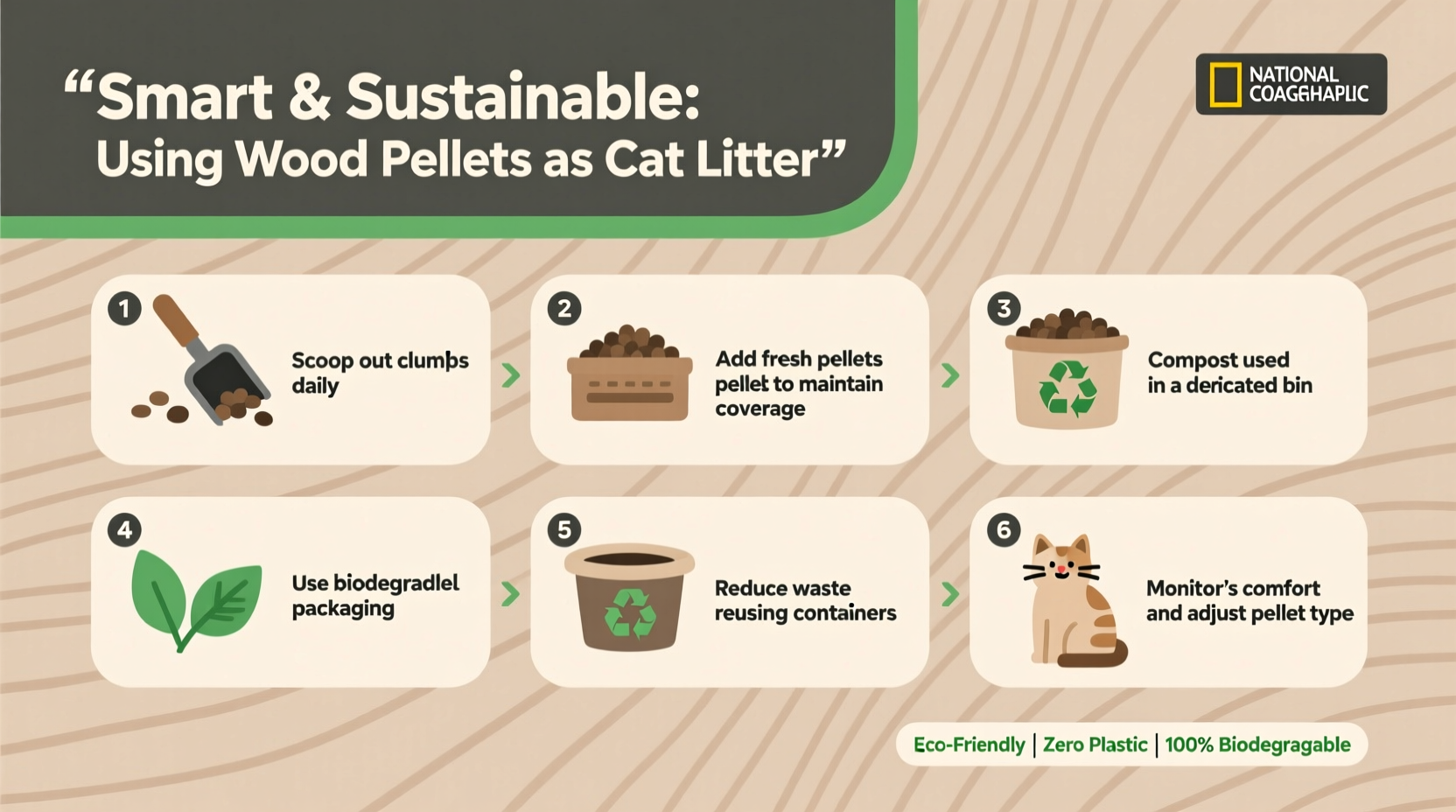
- Scoop solid waste daily using a slotted spoon or mesh scoop designed for larger particles.
- Stir the litter weekly to redistribute broken-down sawdust and expose fresh pellets.
- Replace the entire contents every 3–4 weeks, depending on cat count and usage.
- Line the litter box with a biodegradable bag or use a washable liner for easier cleanup.
- Store unused pellets in an airtight container to preserve dryness and absorbency.
Frequently Asked Questions
Can wood pellets cause respiratory issues in cats?
Pure, kiln-dried wood pellets produce minimal dust when fresh. However, some cats may be sensitive to natural wood aromas. If your cat sneezes frequently after switching, try a fragrance-free hardwood brand or consult your vet. Avoid pellets with added oils or artificial scents.
Do wood pellets work with automatic litter boxes?
Most automatic litter boxes are designed for fine-grained clumping litters and are incompatible with wood pellets. The mechanical rakes can jam on larger particles, and sensors may fail to detect waste breakdown. Stick to manual boxes when using pellets.
Is wood pellet litter safe for kittens?
Yes, but with caution. Kittens may ingest small pieces while exploring. Use larger-format pellets to reduce choking risk and supervise initial use. Ensure the litter box has low sides for easy access.
Conclusion: A Smarter, Cleaner Home Starts Today
Choosing wood pellet litter isn’t just an eco-friendly upgrade—it’s a practical decision that enhances home cleanliness, reduces long-term costs, and supports sustainable forestry. By understanding how wood pellets work, transitioning thoughtfully, and maintaining them properly, you create a healthier environment for your cat and family. Thousands of pet owners have already made the switch, reporting fewer odors, less mess, and peace of mind knowing their routine aligns with planetary health.
💬 Ready to make the change? Start with a small bag of natural wood pellets and track your savings and satisfaction over one month. Share your experience in the comments—your journey could inspire another household to go green.








