
Dogs have a natural tendency to gulp their food—especially when excited or competitive with other pets. While this behavior might seem harmless, rapid eating can lead to serious health issues such as bloating, indigestion, choking, and even life-threatening gastric dilatation-volvulus (GDV). The solution? Modifying how food is presented. Two common options are the traditional regular bowl and the increasingly popular slow feeder bowl. But which one truly supports healthier eating habits in dogs? This article compares both types, evaluates their impact on canine digestion and behavior, and provides practical guidance for pet owners seeking to make an informed choice.
Why Eating Speed Matters for Dogs
Eating too quickly isn’t just messy—it’s medically significant. When dogs inhale their meals, they swallow large amounts of air along with their kibble. This condition, known as aerophagia, contributes to gas buildup in the stomach. In extreme cases, it can trigger GDV, particularly in deep-chested breeds like Great Danes, German Shepherds, and Standard Poodles. GDV causes the stomach to twist, cutting off blood flow and requiring emergency surgery. Mortality rates remain high even with treatment.
Beyond acute risks, fast eating leads to poor digestion. Chewing is minimal or nonexistent, so food enters the digestive tract in large, poorly broken-down chunks. This reduces nutrient absorption and increases strain on the gastrointestinal system. Over time, chronic rapid consumption may contribute to obesity, since satiety signals take 10–20 minutes to reach the brain. A dog that finishes its meal in under two minutes likely eats past fullness.
“Slowing down mealtime isn’t about convenience—it’s a preventive health strategy. Just like humans, dogs benefit from mindful eating.” — Dr. Rachel Nguyen, DVM, Veterinary Behavior Specialist
How Regular Bowls Contribute to Fast Eating
The standard flat-bottomed dog bowl has been the default feeding tool for decades. Its design prioritizes simplicity and ease of cleaning but does nothing to regulate eating pace. For most dogs, especially food-motivated ones, a regular bowl acts like a buffet conveyor belt—food is immediately accessible, encouraging rapid consumption.
Behavioral studies show that dogs fed from regular bowls average less than 60 seconds per meal. Some finish in under 30 seconds. This speed leaves little room for the brain to register fullness, increasing the risk of overeating. Additionally, the lack of mental engagement during feeding can exacerbate boredom-related behaviors such as begging, scavenging, or destructive chewing later in the day.
Tip: If your dog empties their bowl in under a minute, consider switching to a feeding method that encourages slower consumption.How Slow Feeder Bowls Work and Their Benefits
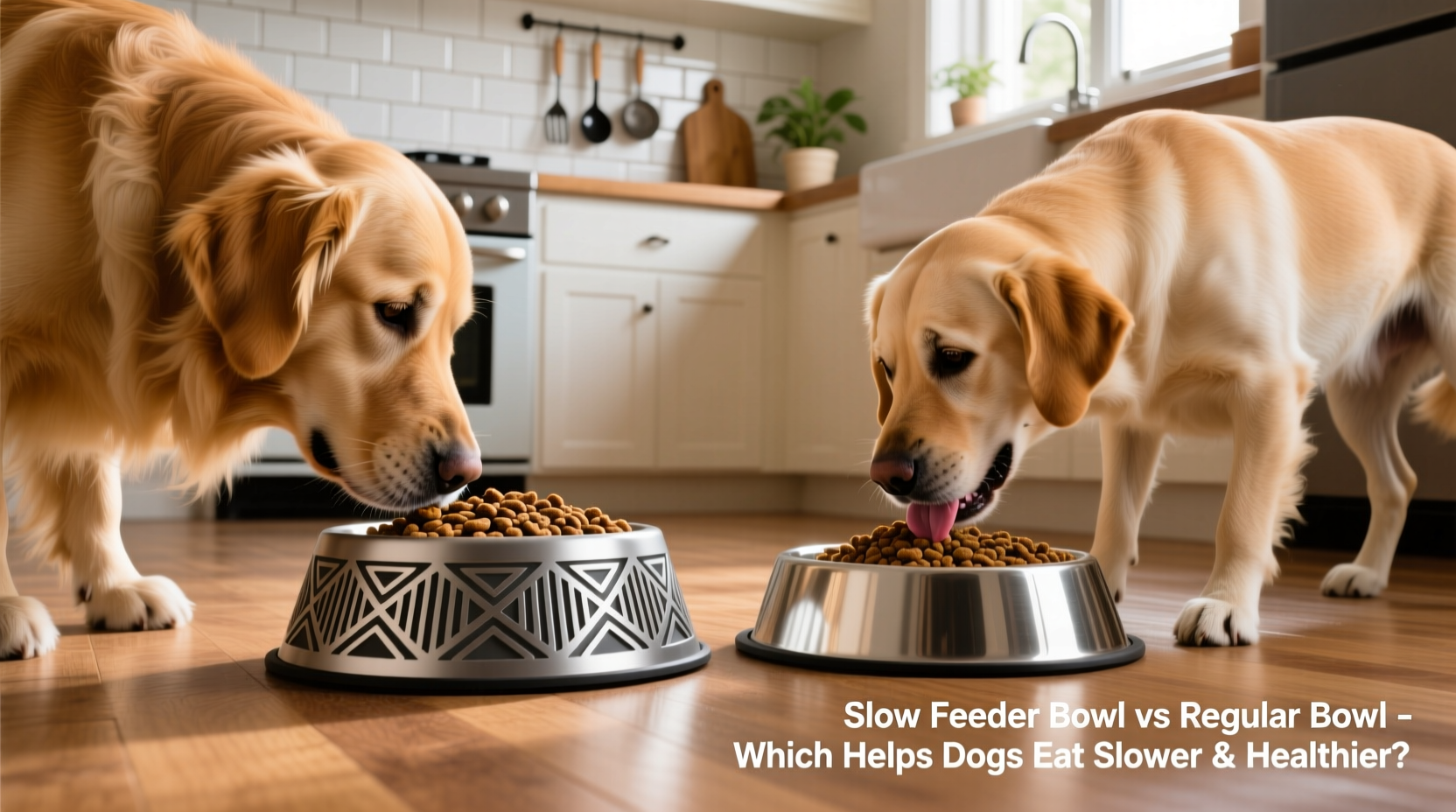
Slow feeder bowls are designed with internal ridges, mazes, compartments, or raised obstacles that physically block direct access to food. Dogs must nudge, paw, or nose kibble out piece by piece, significantly extending meal duration. Most models increase eating time to 5–15 minutes, depending on the dog’s size, temperament, and familiarity with the device.
These bowls serve multiple functions beyond pacing:
- Mental stimulation: Navigating the maze engages problem-solving skills, reducing boredom.
- Improved digestion: Slower intake allows saliva and enzymes to begin breaking down food earlier.
- Reduced bloating risk: Less air swallowed means lower chances of gastric discomfort.
- Portion control support: Extended meals help align food intake with satiety signals.
Available in materials like food-grade silicone, BPA-free plastic, and stainless steel, slow feeders cater to various needs—from travel-friendly collapsible versions to heavy-duty anti-tip designs for strong pullers.
Types of Slow Feeder Designs
Not all slow feeders are created equal. Design variations affect difficulty level and suitability:
- Maze-style: Features winding channels that require lateral movement to extract food. Best for medium to large dogs.
- Petals or cones: Central protrusions divide the bowl into sections. Ideal for small breeds or beginners.
- Interactive puzzle feeders: Require flipping, rolling, or sliding parts. Offer maximum engagement but may frustrate timid dogs.
- Dual-layer bowls: Have a removable inner tray with cutouts over a base layer. Food drops through gradually as the dog eats.
Direct Comparison: Slow Feeder Bowl vs Regular Bowl
| Feature | Regular Bowl | Slow Feeder Bowl |
|---|---|---|
| Eating Duration | 30 seconds – 1 minute | 5–15 minutes |
| Air Intake During Meal | High (aerophagia common) | Low to moderate |
| Digestive Efficiency | Reduced due to minimal chewing | Improved with paced ingestion |
| Mental Engagement | None | Moderate to high |
| Risk of GDV | Higher, especially in predisposed breeds | Lower, due to reduced gorging |
| Cleaning Difficulty | Easy (smooth surfaces) | Varies—some crevices trap food |
| Cost | $5–$15 | $12–$30 |
| Suitability for All Dogs | Universal | May frustrate seniors or visually impaired dogs |
Real-World Example: Max the Labrador’s Transformation
Max, a 3-year-old male Labrador Retriever, had a history of vomiting shortly after meals and frequent burping. His owner, Sarah, initially assumed he had a sensitive stomach and switched him to a “sensitive formula” kibble—but symptoms persisted. After a vet visit ruled out allergies and parasites, the veterinarian asked about Max’s eating habits. Sarah admitted he finished his food in about 20 seconds.
She was advised to try a slow feeder bowl. Within three days of using a maze-style model, Max’s post-meal vomiting stopped. By week two, Sarah noticed he seemed more satisfied after meals and no longer begged for scraps. Over the next month, his energy levels stabilized, and his coat improved—likely due to better nutrient absorption. What started as a simple equipment change led to measurable improvements in Max’s overall well-being.
Tip: Introduce slow feeders gradually. Start by placing half the meal in the slow feeder and half in a regular bowl to ease the transition.Step-by-Step Guide to Transitioning to a Slow Feeder Bowl
Switching suddenly can confuse or frustrate dogs, especially those unfamiliar with interactive feeding tools. Follow this timeline for a smooth adjustment:
- Day 1–2: Demonstrate the mechanism. Place treats in the outer edges of the slow feeder where they’re easy to access. Let your dog explore without pressure.
- Day 3–4: Mix feeding methods. Serve half the meal in the slow feeder and half in the regular bowl. This prevents anxiety while building familiarity.
- Day 5–7: Increase challenge gradually. Put more food inside the maze or center compartment. Monitor for signs of frustration (e.g., pawing aggressively, walking away).
- Day 8 onward: Full transition. Use only the slow feeder. If resistance continues, try a simpler model with fewer barriers.
If your dog refuses to use the bowl after a week, don’t force it. Consider alternative pacing strategies such as scattering food on a clean floor (for non-allergic dogs) or using a muffin tin with one piece per cup.
Common Mistakes to Avoid
Even with the right tool, improper use can undermine benefits. Watch out for these pitfalls:
- Choosing the wrong difficulty level: An overly complex bowl discourages use; too simple defeats the purpose.
- Using damaged or cracked feeders: Cracks harbor bacteria and may release microplastics.
- Placing the bowl on slippery surfaces: Dogs may push or flip it trying to dislodge food.
- Ignoring individual needs: Senior dogs or those with arthritis may struggle with intricate designs.
Frequently Asked Questions
Can slow feeder bowls cause stress in dogs?
Some dogs may initially show confusion or mild frustration, especially if introduced abruptly. However, most adapt within a few days. Choose beginner-friendly models and supervise early meals. If your dog consistently avoids the bowl or shows signs of anxiety (whining, trembling), revert to a simpler option or consult a trainer.
Are slow feeders suitable for all dog sizes and breeds?
Yes, but selection matters. Small breeds benefit from compact, low-profile designs with shallow grooves. Large or powerful dogs need sturdy, weighted bases to prevent tipping. Brachycephalic breeds (like Bulldogs or Pugs) may find certain maze patterns difficult due to their shortened snouts—opt for wide-open puzzles instead.
Do I still need to measure portions when using a slow feeder?
Absolutely. A slow feeder doesn’t reduce calorie intake—it only regulates speed. Always measure your dog’s daily portion according to weight, age, and activity level. Overfeeding, even slowly, leads to weight gain.
Final Recommendations and Action Plan
For the vast majority of dogs, especially those prone to gulping, a slow feeder bowl is a superior choice compared to a regular bowl. It promotes healthier digestion, reduces life-threatening risks, and adds cognitive enrichment to daily routines. That said, success depends on proper selection and gradual introduction.
Here’s a quick checklist to ensure effective implementation:
Checklist: Choosing and Using a Slow Feeder Bowl- ✔ Assess your dog’s eating speed and physical traits (size, breed, age).
- ✔ Select a slow feeder appropriate for skill level and snout shape.
- ✔ Begin with partial meals in the feeder to encourage exploration.
- ✔ Clean thoroughly after each use—pay attention to crevices.
- ✔ Monitor behavior and adjust design if needed.
- ✔ Maintain consistent portion control regardless of feeding method.
“The best dog bowl isn’t always the prettiest or cheapest—it’s the one that supports long-term health. Slowing down eating is one of the simplest, most impactful changes a pet owner can make.” — Dr. Alan Torres, Canine Nutritionist
Conclusion
When comparing a slow feeder bowl versus a regular bowl, the evidence clearly favors the former for promoting slower, healthier eating in dogs. While regular bowls are convenient and widely available, they do nothing to address the physiological and behavioral downsides of rapid consumption. Slow feeders, though requiring a short adaptation period, deliver tangible benefits ranging from improved digestion to reduced bloat risk and enhanced mental stimulation.
This isn’t about replacing tradition with trend—it’s about applying modern understanding of canine physiology to everyday care. Whether your dog is a puppy just learning mealtime manners or a seasoned adult with established gulping habits, now is the time to evaluate how they eat, not just what they eat.
🚀 Ready to improve your dog’s mealtime health? Try a slow feeder bowl this week and observe the difference. Share your experience in the comments—your story could inspire another pet parent to make a life-changing switch.








