Dogs that eat too quickly are at risk of choking, indigestion, bloating, and even life-threatening conditions like gastric dilatation-volvulus (GDV), commonly known as bloat. To combat this, pet owners often turn to tools designed to slow down their dog’s eating habits. Two of the most popular options are slow feeder bowls and elevated feeding stands. While both aim to improve a dog’s mealtime experience, they work in fundamentally different ways and offer distinct advantages and drawbacks. Understanding how each functions—and which is more effective for promoting slower, healthier eating—is essential for responsible pet care.
How Fast Eating Harms Dogs
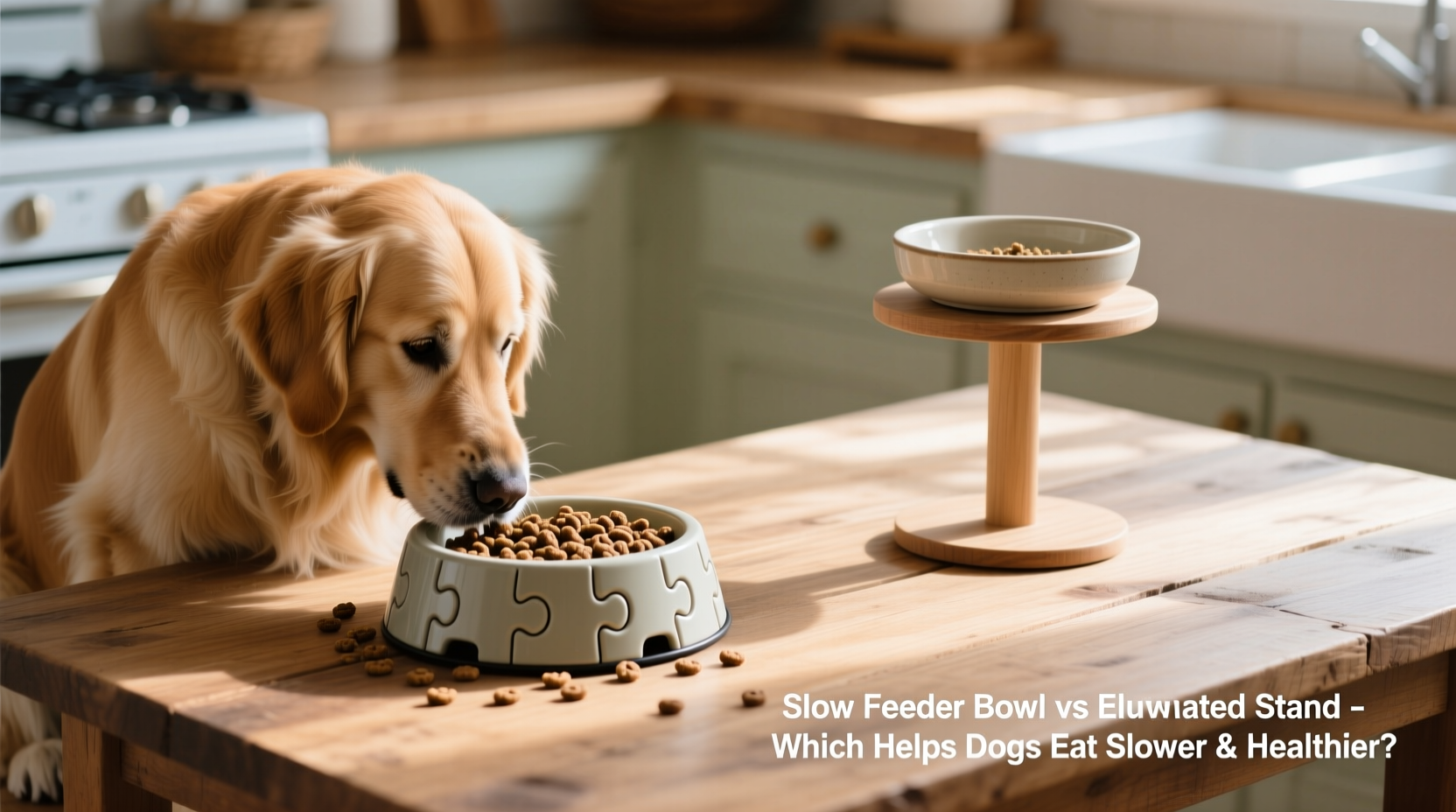
Rapid consumption of food isn’t just messy—it poses real health threats. When a dog gulps down meals, it swallows large amounts of air along with food, leading to gas buildup, discomfort, and increased risk of bloat. Bloat occurs when the stomach fills with gas and twists on itself, cutting off blood flow. It is a medical emergency, particularly common in deep-chested breeds like Great Danes, German Shepherds, and Standard Poodles.
Beyond acute dangers, fast eating contributes to poor digestion. Food not properly chewed passes through the digestive tract inefficiently, reducing nutrient absorption and potentially causing gastrointestinal upset such as vomiting or diarrhea. Additionally, rapid eating can lead to overeating, as the brain doesn't receive satiety signals in time, contributing to obesity—a growing concern in pets.
“Dogs that eat too fast miss out on the natural digestive process that begins with chewing. Slowing them down supports both physical and mental well-being.” — Dr. Laura Bennett, DVM, Canine Nutrition Specialist
What Is a Slow Feeder Bowl?
A slow feeder bowl is designed with internal ridges, mazes, or raised obstacles that force a dog to work around barriers to access food. These physical interruptions prevent the dog from taking large mouthfuls and encourage smaller, more deliberate bites. The design transforms eating into a puzzle-like activity, extending mealtime from seconds to several minutes.
Slow feeders come in various materials—stainless steel, ceramic, and food-grade plastic—and range from simple concentric rings to complex labyrinth patterns. Some models are dishwasher-safe; others require hand washing. They’re typically used at ground level, maintaining the natural head-down posture dogs use while foraging or eating in the wild.
Tip: Introduce a slow feeder gradually. Place kibble around the outer edges first, then slowly move food toward the center to help your dog adapt without frustration.Benefits of Slow Feeder Bowls
- Encourages natural foraging behavior: Mimics the way dogs would search for food in the wild, stimulating mental engagement.
- Reduces air intake: Less gulping means less swallowed air, lowering the risk of gas and bloat.
- Improves digestion: Slower eating allows saliva and enzymes to mix with food earlier in the digestive process.
- Portion control support: Extends meal duration, giving the brain time to register fullness.
- Versatile and portable: Easy to use indoors or outdoors, and suitable for travel.
Potential Drawbacks
- Some dogs may become frustrated, especially if introduced too abruptly.
- Deep designs can be difficult to clean thoroughly.
- Not ideal for dogs with large muzzles or brachycephalic breeds (e.g., Bulldogs) who may struggle to reach food.
What Is an Elevated Feeding Stand?
An elevated feeding stand raises the food and water bowls off the ground, positioning them at chest or shoulder height depending on the dog’s size. Originally developed to assist large or giant breeds with orthopedic issues, these stands reduce neck strain by eliminating the need to bend down. Advocates claim they also promote slower eating by altering the mechanics of swallowing.
Elevated stands are typically made of metal, wood, or plastic frames with detachable stainless steel or ceramic bowls. Heights vary, with adjustable models offering customization based on breed and age. They’re especially popular among owners of Great Danes, Mastiffs, and Irish Wolfhounds.
Benefits of Elevated Stands
- Reduces neck and joint strain: Particularly beneficial for older dogs or those with arthritis, hip dysplasia, or spinal conditions.
- May improve posture during eating: Promotes a more upright stance, potentially aiding esophageal function.
- Easier monitoring: Owners can observe eating behavior more clearly when the dog is standing naturally.
- Keeps floors cleaner: Minimizes spilled water and scattered kibble around ground-level bowls.
Critical Concerns and Risks
Despite their popularity, elevated stands have been linked to an increased risk of bloat. A landmark study published in the *Journal of the American Veterinary Medical Association* found that using raised feeders was associated with a higher incidence of GDV in large and giant breeds.
The theory is that elevation changes the angle of swallowing, potentially allowing more air to enter the stomach. Additionally, dogs may feel less inhibited when eating from a height, leading to faster consumption rather than slower.
“We once believed elevated feeders were universally beneficial for large dogs. But evidence now suggests they may do more harm than good when it comes to bloat prevention.” — Dr. Alan Torres, Veterinary Surgeon and GDV ResearcherTip: If your dog has mobility issues, use the lowest possible setting on an adjustable stand—or consider a slight incline instead of full elevation.
Slow Feeder Bowl vs Elevated Stand: A Direct Comparison
| Feature | Slow Feeder Bowl | Elevated Stand |
|---|---|---|
| Primary Purpose | Slow down eating through physical obstruction | Reduce neck strain; elevate bowls for comfort |
| Effect on Eating Speed | Significantly slows consumption | May increase speed or have no effect |
| Bloat Risk | Reduces risk by minimizing air intake | Potentially increases risk, especially in large breeds |
| Digestive Support | Promotes better chewing and enzyme activation | Limited impact on digestion |
| Suitability for Large Breeds | Yes, with appropriately sized designs | Commonly used, but caution advised due to bloat risk |
| Mental Stimulation | High—engages problem-solving skills | None |
| Orthopedic Benefit | None | Yes—reduces strain on neck and spine |
| Cleanliness & Maintenance | Varies—some complex designs hard to clean | Generally easy to clean, especially with removable bowls |
When to Choose Which Option
The decision between a slow feeder bowl and an elevated stand should be guided by your dog’s individual needs—not trends or convenience.
Choose a Slow Feeder Bowl If:
- Your dog eats extremely fast.
- You want to reduce the risk of bloat.
- Your dog is mentally under-stimulated and could benefit from food puzzles.
- You have a medium or small breed without joint issues.
Consider an Elevated Stand Only If:
- Your dog has diagnosed neck, back, or joint pain that makes bending painful.
- A veterinarian recommends elevation for medical reasons (e.g., megaesophagus).
- You use it temporarily during recovery from surgery or injury.
Even in these cases, pairing an elevated stand with a slow feeder insert or using a shallow elevated platform with a built-in maze design may offer a safer compromise.
Mini Case Study: Max, the Rapid-Eating Labrador
Max, a 3-year-old male Labrador Retriever, had a habit of finishing his meals in under 30 seconds. His owner, Sarah, noticed he frequently burped, regurgitated, and seemed restless after eating. After a vet visit, she learned Max was at risk for bloat due to his size and eating speed.
She first tried an elevated stand, thinking it would help him eat more comfortably. Instead, Max ate even faster, likely due to reduced effort. Concerned, Sarah switched to a slow feeder bowl with a flower-petal maze design. Initially, Max pawed at the bowl in frustration. Sarah adapted by placing treats in the outer grooves and praising him as he figured it out.
Within a week, Max’s mealtime extended to 10–12 minutes. His post-meal discomfort decreased, and Sarah reported he seemed calmer and more satisfied. Bloodwork six months later showed improved liver enzymes and better nutrient absorption.
This case illustrates that while elevation may seem logical, it doesn’t always align with physiological needs. Behavior modification through slow feeding proved far more effective for Max’s long-term health.
Step-by-Step Guide to Transitioning to a Slow Feeder
- Choose the right design: Start with a low-difficulty model featuring wide channels. Avoid deep mazes for first-time users.
- Introduce gradually: Place a few kibbles in the outer sections. Let your dog explore without pressure.
- Use high-value rewards: Add small pieces of chicken or cheese in the crevices to encourage interaction.
- Monitor reactions: Watch for signs of frustration or disinterest. Adjust difficulty accordingly.
- Phase out the old bowl: Use the slow feeder exclusively after 5–7 successful meals.
- Adjust portion placement: For picky eaters, place favorite foods deeper inside to motivate engagement.
- Maintain hygiene: Clean the bowl daily to prevent bacterial buildup in crevices.
Expert Checklist: Choosing the Right Feeding Solution
- ✅ Assess your dog’s eating speed and behavior.
- ✅ Consult your veterinarian, especially if your dog is large, deep-chested, or has health issues.
- ✅ Rule out medical causes of fast eating (e.g., malabsorption, parasites).
- ✅ Prioritize safety: avoid elevated feeders for breeds prone to bloat unless medically necessary.
- ✅ Test one solution at a time to evaluate effectiveness.
- ✅ Combine tools if needed—e.g., a slow feeder placed on a slightly raised platform for senior dogs.
- ✅ Monitor changes in digestion, energy, and weight over time.
Frequently Asked Questions
Can I use both a slow feeder and an elevated stand together?
Yes, but with caution. Placing a slow feeder bowl on a slightly elevated stand can combine benefits—reducing neck strain while still slowing consumption. However, ensure the total height isn’t excessive. The top of the bowl should not exceed the midpoint of your dog’s chest.
Are elevated feeders ever recommended for preventing bloat?
No. Current veterinary research indicates that elevated feeders do not prevent bloat and may increase the risk, particularly in susceptible breeds. The American College of Veterinary Surgeons advises against routine use of raised bowls for bloat prevention.
My dog refuses to use a slow feeder. What should I do?
Start with a simpler design and hand-feed a few pieces from the bowl to build positive association. You can also mix in wet food or broth to make the texture more enticing. Patience and consistency are key—avoid reverting to a flat bowl, as this reinforces fast-eating behavior.
Final Recommendation: Prioritize Function Over Form
When it comes to helping dogs eat slower and healthier, the slow feeder bowl emerges as the superior choice for most dogs. Its ability to actively slow consumption, reduce air ingestion, and engage cognitive function makes it a proactive tool for long-term wellness. Elevated stands, while beneficial for specific orthopedic cases, carry documented risks and do little to address the core issue of rapid eating.
The best feeding strategy is one tailored to your dog’s physiology, behavior, and health history. Always consult your veterinarian before making significant changes, especially for large or at-risk breeds. Investing in a quality slow feeder isn’t just about neatness—it’s a small change with the potential to extend your dog’s life.
💬 Have experience with slow feeders or elevated stands? Share your story or tips in the comments below—your insight could help another pet owner make a safer, smarter choice today.








