Canine teeth, also known as cuspids or \"eye teeth,\" are naturally pointed and play a crucial role in tearing food and guiding jaw alignment during biting. While their sharpness is functional, excessively sharp or misaligned canines can lead to discomfort, soft tissue injuries, and cosmetic concerns. Many individuals report accidentally biting the inside of their cheeks or experiencing self-consciousness about the prominence of their canines. Understanding the underlying causes and available interventions allows for informed decisions about dental health and aesthetics.
Anatomy and Function of Canine Teeth
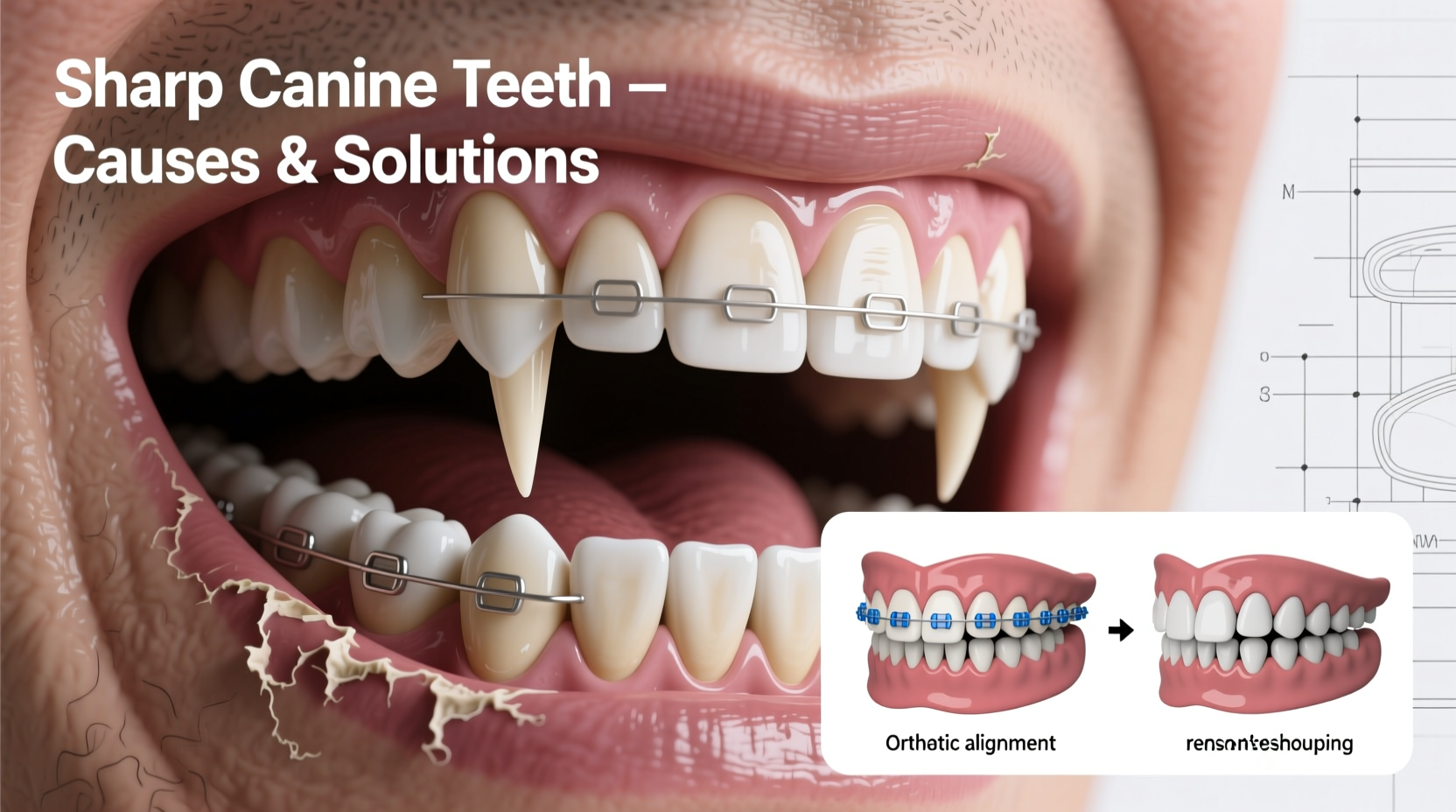
Positioned between the incisors and premolars, upper and lower canines are typically the longest teeth in the mouth due to their deep roots. Their primary functions include:
- Tearing food during mastication
- Maintaining facial structure and support
- Guiding proper occlusion (bite) when the jaws close
In a healthy bite, the upper canines fit slightly over the lower ones without causing trauma to surrounding tissues. However, variations in tooth shape, size, or positioning can disrupt this balance, leading to functional and aesthetic challenges.
Tip: If you frequently bite your cheek near the canine area, consider whether tooth sharpness or misalignment might be contributing.Common Causes of Excessively Sharp Canine Teeth
Several factors contribute to unusually sharp or prominent canines. These range from natural development to acquired conditions:
- Genetic Predisposition: Tooth morphology is largely hereditary. Some people naturally develop longer, more pointed canines.
- Dental Malocclusion: Misalignment such as overjet, crossbite, or crowding can cause one or both canines to protrude abnormally.
- Retained Primary Canines: Delayed loss of baby canines may affect the eruption path of permanent ones, resulting in improper positioning.
- Abnormal Eruption Patterns: Canines that erupt outside the dental arch (e.g., palatally displaced) often appear sharper due to lack of wear.
- Lack of Attrition: Modern diets are softer than those of previous generations, reducing natural wear that would otherwise blunt sharp edges over time.
In rare cases, supernumerary (extra) teeth or developmental anomalies like dens evaginatus can exaggerate cuspal height, increasing sharpness.
Potential Concerns Associated with Sharp Canines
While not always problematic, overly sharp canines may lead to several issues:
| Concern | Description | Risk Level |
|---|---|---|
| Soft Tissue Trauma | Frequent cheek or lip biting, leading to ulcers or chronic irritation | High |
| Speech Interference | Whistling or lisping caused by air escaping around pointed teeth | Moderate |
| Cosmetic Discomfort | Self-consciousness about “fang-like” appearance affecting smile confidence | Variable |
| Occlusal Imbalance | Uneven pressure distribution during chewing, potentially straining jaw joints | Moderate to High |
| Tooth Fracture Risk | Overly long or thin cusps may chip under excessive force | Low to Moderate |
“Patients with sharp, protruding canines often present with recurrent soft tissue injuries. Early intervention can prevent long-term complications.” — Dr. Lena Torres, Prosthodontist and Occlusion Specialist
Evidence-Based Solutions and Treatment Options
Addressing sharp canines requires a tailored approach based on severity, function, and patient goals. Below are common treatment pathways:
1. Enamel Contouring (Odontoplasty)
A minimally invasive procedure where a dentist carefully reshapes the enamel of the canine tip using a fine drill or sanding disc. This reduces sharpness while preserving tooth integrity. It’s ideal for mild cases and offers immediate results.
2. Orthodontic Alignment
Braces or clear aligners (e.g., Invisalign) can reposition malaligned canines into proper occlusion. This not only reduces sharpness but also improves overall bite function. Treatment duration varies from 6 months to 2 years depending on complexity.
3. Restorative Bonding
If contouring removes too much structure or alters appearance undesirably, composite resin bonding can rebuild adjacent teeth or modify the canine’s contour for better harmony.
4. Veneers or Crowns
For severe shape irregularities or damaged canines, porcelain veneers or crowns offer durable, aesthetic correction. These are more invasive and costly but provide long-term stability.
5. Surgical Exposure and Alignment
In cases of impacted canines—particularly common in the upper jaw—oral surgery may be required to expose the tooth, followed by orthodontic traction to guide it into place.
Tip: Always consult a dentist before attempting any DIY filing—improper technique can damage enamel and increase sensitivity or decay risk.Step-by-Step Guide to Addressing Sharp Canines
- Schedule a Dental Evaluation: Begin with a comprehensive exam, including X-rays, to assess tooth position and root health.
- Discuss Aesthetic and Functional Goals: Communicate concerns about appearance, speech, or discomfort.
- Receive a Customized Treatment Plan: Your dentist or orthodontist will recommend one or more options based on your case.
- Proceed with Conservative Measures First: Start with enamel reshaping if appropriate; escalate to orthodontics or restorations as needed.
- Maintain Follow-Up Care: Regular checkups ensure lasting results and early detection of new issues.
Mini Case Study: Resolving Chronic Cheek Biting
Sarah, a 28-year-old teacher, had struggled for years with recurring sores on the inside of her right cheek. She initially attributed them to stress-related biting but noticed they always occurred near her upper right canine. Upon visiting her dentist, clinical examination revealed that the canine was significantly longer and sharper than its counterpart on the left. The tooth lacked normal wear and protruded slightly due to mild crowding.
The dentist performed minor enamel contouring in a single 20-minute visit. Sarah reported immediate relief and no further cheek injuries after six months of follow-up. Her confidence in smiling also improved, demonstrating how a small adjustment can yield significant functional and emotional benefits.
Checklist: What to Do If You Have Sharp Canine Teeth
- ✅ Monitor for frequent cheek or lip bites
- ✅ Assess whether your canines feel unusually pointy or prominent
- ✅ Schedule a dental consultation with intraoral imaging
- ✅ Ask about enamel reshaping as a conservative first step
- ✅ Consider orthodontic evaluation if misalignment is present
- ✅ Avoid at-home filing tools or abrasive methods
- ✅ Maintain regular cleanings to monitor oral tissue health
Frequently Asked Questions
Can I file down my sharp canine teeth at home?
No. Using nail files, sandpaper, or other tools at home risks removing too much enamel, exposing sensitive dentin, and increasing the likelihood of decay or nerve damage. Only licensed professionals should perform tooth contouring.
Will reshaping my canines affect my bite?
When done correctly, minimal enamel reduction does not impact occlusion. Dentists use articulating paper to test contact points after reshaping, ensuring even distribution of bite forces.
Are sharp canines more prone to cavities?
Not inherently. However, if they contribute to poor alignment or make cleaning difficult, plaque accumulation may increase in adjacent areas. Proper brushing and flossing remain essential.
Conclusion: Take Control of Your Dental Comfort and Confidence
Sharp canine teeth are more than a cosmetic concern—they can interfere with daily comfort, speech, and oral health. Whether the issue stems from genetics, alignment, or lack of wear, effective solutions exist. From simple enamel contouring to comprehensive orthodontic treatment, modern dentistry offers safe, predictable outcomes. Ignoring persistent cheek biting or aesthetic dissatisfaction only prolongs discomfort. By seeking professional guidance early, you protect both your oral function and self-esteem.
💬 Have you experienced issues with sharp canines? Share your story or questions below—your experience could help others find relief.