Ballet flats have long been a staple in modern wardrobes—versatile, comfortable, and effortlessly elegant. But when it comes to making a fashion statement, embellishments like sequins and rhinestones elevate the look from subtle to showstopping. Both options promise glamour, but they deliver it in distinctly different ways. Choosing between sequins and rhinestones isn't just about personal taste—it's about understanding how each material interacts with light, movement, durability, and occasion. For anyone deciding which pair to wear for an evening out, a wedding, or a standout office look, the answer lies in the details.
The Science of Sparkle: How Light Interacts with Embellishments
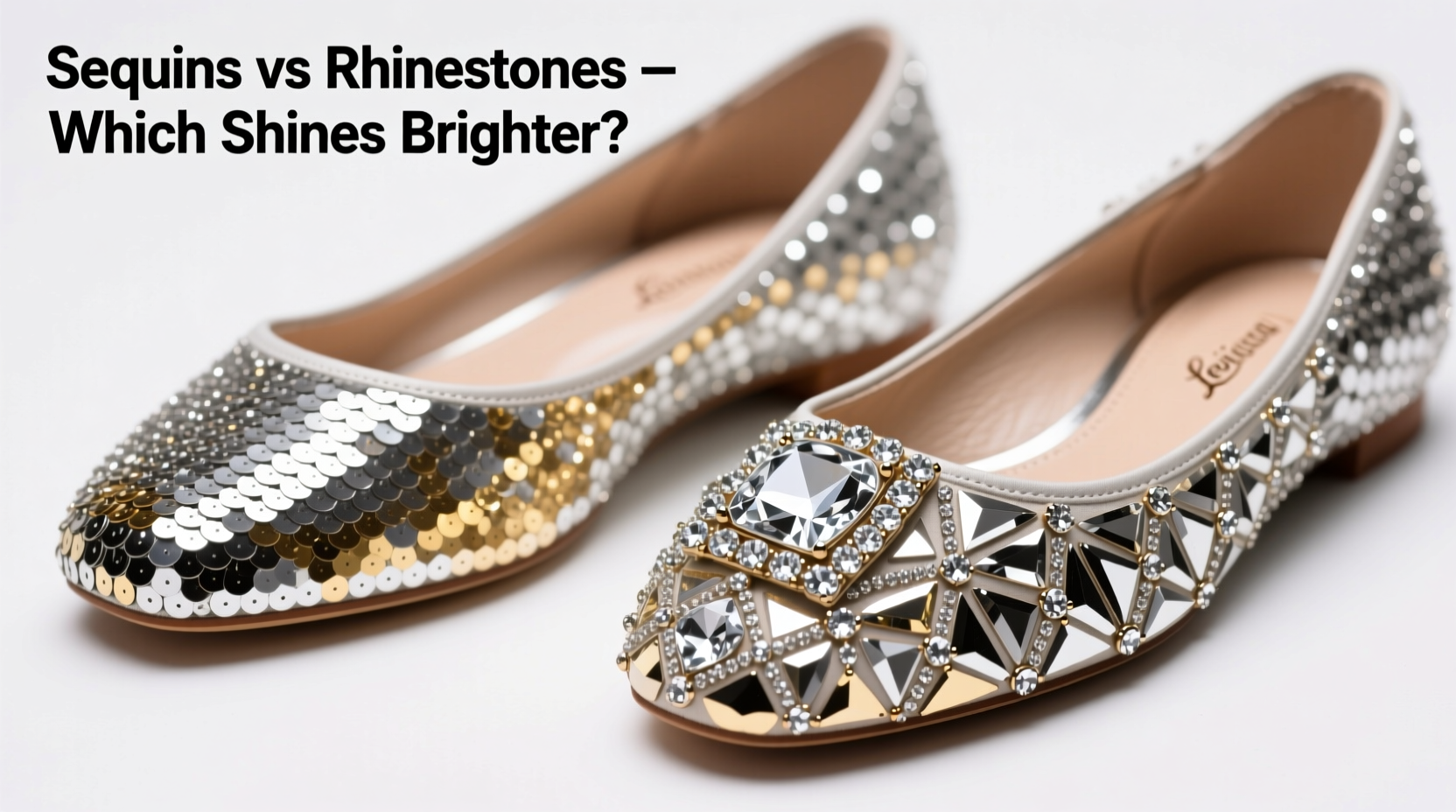
Visual appeal begins with how materials reflect and refract light. Rhinestones, typically made from crystal glass or acrylic, are faceted to mimic gemstones. Their multi-faceted surfaces catch ambient light from multiple angles, creating sharp glints and flashes. This effect is especially noticeable under artificial lighting—think chandeliers at a cocktail party or stage lights during a performance.
Sequins, by contrast, are flat, circular discs usually made from plastic or metal-coated polyester. They reflect light uniformly across their surface, producing a smooth, shimmering glow rather than sharp sparkles. When worn in motion—such as walking—their reflective side can flip, creating a dynamic “flicker” effect that draws attention with every step.
“Rhinestones act like tiny mirrors—they’re directional and intense. Sequins offer continuous radiance, almost like liquid light.” — Lena Moretti, Footwear Designer & Textile Consultant
This fundamental difference shapes how each embellishment performs in real-world settings. Rhinestones command attention in stillness; sequins captivate through movement.
Visual Impact Comparison: A Side-by-Side Analysis
| Feature | Rhinestones | Sequins |
|---|---|---|
| Light Reflection | Directional, sharp sparkle | Diffuse, shimmering glow |
| Movement Effect | Limited change in reflection | Dramatic flicker with motion |
| Coverage Density | Often spaced for precision | Frequently overlapping for full coverage |
| Daytime Visibility | Moderate (can wash out) | High (consistent sheen) |
| Nighttime Presence | Very high (intense glints) | Strong (broad luminosity) |
| Texture Feel | Bumpy, raised surface | Smooth but slightly rigid |
Durability and Wearability: Which Holds Up Better?
Beauty means little if it doesn’t last. Rhinestones are often individually glued or prong-set into the shoe’s surface. While this allows for intricate patterns, it also creates weak points—especially when exposed to friction or moisture. Over time, individual stones may loosen or fall off, particularly along high-flex zones like the ball of the foot.
Sequins, meanwhile, are typically stitched or heat-bonded in rows. Because they’re sewn onto a fabric backing before being applied to the shoe, they tend to stay intact longer—even with regular wear. However, excessive bending can cause the backing to crack or the sequins to peel at the edges.
- Rhinestones are best for occasional wear—events where maximum impact matters more than longevity.
- Sequins suit semi-regular use, especially if the design avoids high-stress areas.
- Avoid machine washing either type; spot clean only with a damp cloth.
- Store embellished flats flat and away from pressure to prevent crushing.
Real Example: The Wedding Guest Dilemma
Sophie attended three weddings in one summer and wanted a pair of eye-catching flats she could reuse. She first wore rhinestone-studded black flats to an evening garden reception. Under string lights, they were dazzling—guests complimented them all night. But by the third event, two stones had fallen off, and the toe box looked sparse.
She switched to silver sequined flats for the final wedding. Though less flashy up close, they shimmered beautifully in sunlight during outdoor photos. After six months, they still looked pristine. Her takeaway: rhinestones won for instant drama, but sequins delivered lasting elegance.
Style Context Matters: Matching Embellishment to Occasion
Not all sparkle is appropriate everywhere. The setting determines which embellishment stands out most effectively.
Rhinestones excel in formal, dimly lit environments—galas, theater nights, holiday parties. Their pinpoint brilliance cuts through shadows and complements metallic gowns or tailored suits. Designers like Christian Louboutin and Jimmy Choo often use rhinestones sparingly to accent heels or straps, letting sophistication speak louder than volume.
Sequins dominate in daytime events, festivals, or creative workplaces. A full-coverage sequin flat adds whimsy without overwhelming casual outfits. Brands such as Repetto and Sam Edelman have released sequin ballet flats designed for both comfort and visibility in natural light.
“Overloading a small shoe with too many rhinestones can look costume-y. Sequins, when used well, feel festive yet wearable.” — Diego Navarro, Fashion Stylist & Runway Coordinator
Checklist: Choosing the Right Embellishment for Your Needs
- ✅ Determine the primary use: occasional glamor (rhinestones) or versatile sparkle (sequins)?
- ✅ Consider the lighting: low-light settings favor rhinestones; daylight favors sequins.
- ✅ Evaluate comfort: rhinestones may create pressure points; sequins distribute weight more evenly.
- ✅ Assess durability needs: frequent wear demands stronger adhesion—favor stitched sequins.
- ✅ Match your outfit: solid colors highlight rhinestones; textured or neutral ensembles let sequins shine.
FAQ: Common Questions About Embellished Ballet Flats
Can I repair fallen rhinestones or loose sequins at home?
Yes. Use jewelry-grade adhesive (like E6000) for rhinestones. For sequins, reattach with fabric glue or hand-stitch if the thread is exposed. Always let the glue cure fully before wearing.
Do sequined or rhinestoned flats hurt more than plain ones?
They can. Rhinestones add rigidity and uneven texture, potentially causing pressure on sensitive feet. Sequins are generally smoother but may reduce sole flexibility. Look for cushioned insoles or wear thin liner socks for comfort.
Are there eco-friendly versions of these embellishments?
Growing options exist. Some brands now use recycled PET sequins or lead-free crystal rhinestones. Check labels for sustainability claims from manufacturers like Swarovski (now offering “Created Crystals” with lower environmental impact).
Final Verdict: Which Is Truly More Eye-Catching?
The answer depends on what kind of attention you want. Rhinestones win in moments of stillness and spotlight—when someone turns their head because a single flash caught their eye across a room. They’re the exclamation point in a stylish sentence.
Sequins, however, dominate in motion and daylight. They create a sustained visual presence, turning each step into a ripple of light. On a crowded sidewalk or sunlit patio, sequins are more likely to draw repeated glances.
If forced to choose one for maximum eye-catching power across diverse settings, sequins hold a slight edge. Their ability to perform well in both day and night, combined with better durability and broader coverage, makes them more consistently noticeable. But for sheer dramatic punch in formal settings, nothing beats the precision glitter of a well-placed rhinestone.
💬 Which do you prefer—sequins or rhinestones? Share your go-to embellished flats and the occasions you wear them. Your experience could help others find their perfect sparkle match!








