
It’s a scene familiar to many: your robot vacuum zips across the floor, gently taps a wall, pivots, and continues its journey—sometimes in circles. Watching it navigate corners and furniture, you might wonder: Is this thing actually cleaning, or is it just playing bumper cars with my baseboards? As robot vacuums become standard in modern homes, skepticism lingers about their real-world effectiveness compared to traditional stick vacuums. The truth lies somewhere between convenience and compromise.
This isn’t just about noise levels or battery life—it’s about whether these compact machines deliver meaningful cleaning results. To answer that, we need to examine how each type of vacuum works, where they excel, and where they fall short. Spoiler: robot vacuums do clean, but not always the way you’d expect—and certainly not in every situation.
How Robot Vacuums Actually Clean (Beyond the Bumping)
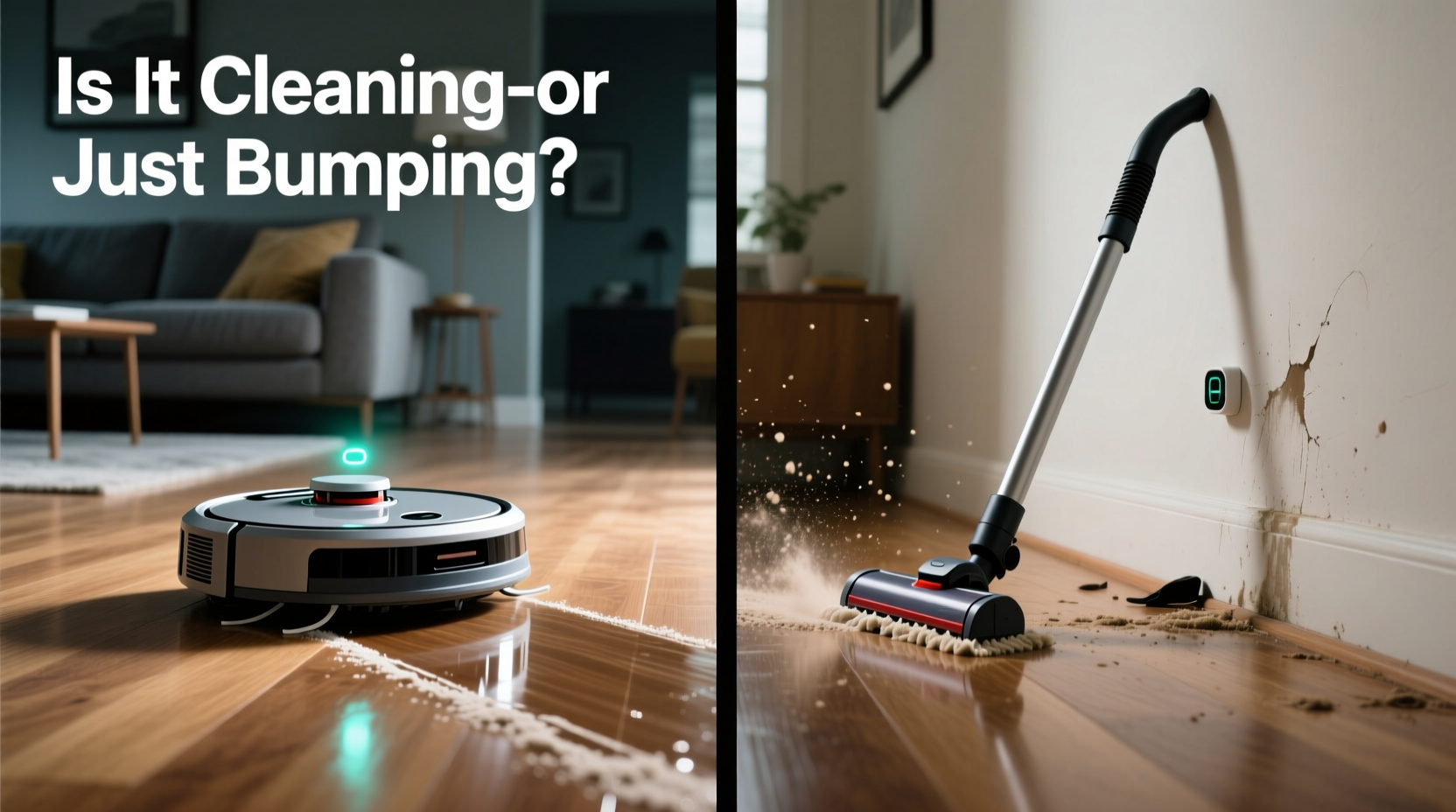
The erratic movement of a robot vacuum isn’t random chaos; it’s algorithm-driven navigation. Most high-end models use either laser-based LiDAR or camera-assisted visual navigation (VSLAM) to map your home. Once mapped, they follow systematic cleaning patterns—usually back-and-forth lanes or spiral zones around dirtier areas. The “bumping” often seen in cheaper models is typically from older infrared or random-bounce navigation systems, which lack spatial awareness.
Modern robots don’t rely on contact to detect obstacles. Instead, they use proximity sensors to slow down before impact, minimizing damage and improving efficiency. When you see a gentle nudge, it’s usually just confirmation of an edge—not blind collision.
Cleaning mechanisms vary by model but generally include:
- A spinning side brush to pull debris from edges into the main path
- A central rolling brush (or dual brushes) that agitates carpet fibers
- A powerful suction motor paired with a HEPA filter in higher-end units
Despite their small size, many robot vacuums generate suction measured in hundreds of pascals—comparable to mid-tier cordless stick vacuums. However, runtime, bin capacity, and maintenance frequency limit their deep-cleaning potential.
Tip: For optimal robot vacuum performance, declutter floors and close off rooms with thresholds or virtual boundaries.Stick Vacuums: Power, Precision, and Manual Control
Stick vacuums offer what robots can’t: direct human control. With adjustable power settings, swivel heads, and attachments for crevices, upholstery, and ceilings, stick vacuums provide targeted cleaning. Their larger motors generate stronger suction—often exceeding 150 AW (air watts)—and their longer runtime allows for whole-home cleaning in one session.
Unlike robots, stick vacuums don’t need to return to a dock or worry about tangled cords (in cordless models). They’re ideal for immediate messes—a spilled cereal box, pet accidents, or tracked-in mud. You point, press, and clean. No scheduling, no maps, no waiting.
However, this power comes at a cost: effort. Stick vacuums require physical engagement. For people with mobility issues, busy schedules, or large homes, daily use becomes impractical. That’s where automation gives robot vacuums their edge.
Performance Comparison: Robot vs Stick Vacuum
| Feature | Robot Vacuum | Stick Vacuum |
|---|---|---|
| Cleaning Frequency | Daily (automated) | As needed (manual) |
| Suction Power | 1,500–4,000 Pa (varies widely) | 100–200+ AW (typically stronger) |
| Floor Type Coverage | Hard floors, low-pile carpets | All types, including deep pile |
| Runtime | 60–120 minutes (with auto-recharge) | 20–60 minutes (per charge) |
| Maintenance Effort | Empty bin every 1–3 days | Empty after each use |
| Pet Hair Handling | Good on hard floors; tangles common | Excellent with motorized tools |
| Price Range | $200–$1,200+ | $150–$700+ |
The table shows a trade-off: robots win on consistency and convenience; stick vacuums dominate in raw power and versatility. Neither replaces the other entirely—they complement each other.
Real-World Example: A Week in a Pet-Friendly Home
Consider Sarah, a graphic designer living in a two-bedroom apartment with two cats and a shedding golden retriever. She works from home and values cleanliness but lacks time for daily sweeping. She bought a mid-range robot vacuum ($400) with self-emptying dock and scheduled it to run Monday through Friday at noon.
After two weeks, she noticed visible improvement in dust accumulation along baseboards and kitchen tiles. Her hardwood floors stayed visibly cleaner throughout the week. However, when her dog tracked muddy water inside after rain, the robot struggled. It passed over the spot twice but only smeared the moisture. Sarah had to intervene with her cordless stick vacuum to fully extract the mess.
On the flip side, she found herself using the stick vacuum far less for routine upkeep. What used to be a nightly chore became a weekly deep clean. The robot handled 70% of surface debris—dust, hair, crumbs—freeing her to focus on spills and high-traffic zones.
This scenario reflects a growing trend: robot vacuums aren’t meant to replace manual cleaning but to reduce its frequency. They excel at maintenance, not crisis response.
“Robot vacuums are like personal janitors—they keep things tidy between major cleanings. But expecting them to handle everything is like asking a security guard to perform surgery.” — Dr. Linda Cho, Home Robotics Researcher at MIT Media Lab
When Robots Fall Short: Limitations You Should Know
No robot vacuum cleans perfectly out of the box. Several factors influence real-world performance:
- Furniture clutter: Low-clearance sofas, power strips, and rugs with tassels can trap or confuse robots.
- Carpet pile depth: Thick or shaggy carpets restrict airflow and reduce suction efficiency.
- Daily maintenance: Full dustbins, clogged brushes, or dirty sensors render even premium models ineffective.
- Edge coverage: While side brushes help, robots still miss tight corners more than manual vacuums.
Additionally, some budget models use “random bounce” algorithms instead of mapping. These units rely on repeated passes over time rather than systematic cleaning, leading to uneven coverage and the illusion of inefficiency.
Even advanced robots struggle with large debris. Whole cereal pieces, paper clips, or wet tissues can jam wheels or block intake ports. Unlike humans, robots lack judgment—they’ll try to vacuum anything in their path.
Tip: Run a quick sweep before letting your robot loose to remove large objects and prevent jams.Step-by-Step: Optimizing Your Robot Vacuum Routine
- Map your home: Let the robot complete 2–3 full mapping runs during quiet hours with all doors open.
- Set up no-go zones: Use app-defined barriers to block sensitive areas like pet bowls or laundry piles.
- Schedule smartly: Run cycles when you're away or during low-activity times to avoid interruptions.
- Maintain weekly: Clean brushes, empty the bin, wipe sensors, and check wheels for hair wrap.
- Supplement monthly: Do a deep clean with a stick vacuum to address missed spots and carpets.
This routine ensures consistent baseline cleanliness while acknowledging the robot’s limits.
Expert Insights: What Engineers Say About Cleaning Efficacy
According to iRobot’s 2023 engineering report, modern robot vacuums capture up to 98% of fine dust particles on hard surfaces when maintained properly. However, efficacy drops to 60–70% on medium-pile carpets due to reduced brush agitation and airflow resistance.
“We design robots to optimize for frequency, not force,” says Maria Tran, senior product engineer at a leading robotics firm. “A robot that cleans lightly every day removes more cumulative debris than a powerful vacuum used once a week.”
This philosophy—called “maintenance cleaning”—is key to understanding robot value. They prevent buildup, not eliminate entrenched grime. Think of them as daily toothbrushing versus annual dental cleaning.
Checklist: Is Your Robot Vacuum Actually Working?
- ✅ Does it complete full room coverage without getting stuck?
- ✅ Is the dustbin collecting visible debris after each run?
- ✅ Are brushes free of hair and tangled fibers?
- ✅ Are sensor lenses clean and unobstructed?
- ✅ Have you updated firmware for navigation improvements?
- ✅ Are you running it frequently enough (at least 3x/week)?
If most answers are yes, your robot is likely doing its job—even if it looks clumsy.
Frequently Asked Questions
Can a robot vacuum replace my stick vacuum completely?
For most households, no. Robot vacuums maintain cleanliness but lack the power and flexibility for deep cleaning, spills, or heavy pet messes. They work best alongside a stick vacuum for touch-ups and emergencies.
Why does my robot vacuum keep missing spots?
This usually stems from poor mapping, cluttered environments, or outdated software. Try resetting the map, decluttering the space, and ensuring the unit has adequate light for visual navigation. Some models struggle in dark rooms or spaces with reflective floors.
Do expensive robot vacuums clean significantly better?
Yes, but with diminishing returns. Premium models offer better suction, smarter navigation, self-emptying docks, and mopping functions. However, even top-tier robots can’t match the spot-treatment capability of a $300 stick vacuum.
Conclusion: Coexistence Over Competition
The question isn’t whether robot vacuums are “actually cleaning”—they are. The real issue is defining what kind of cleaning matters to you. If your priority is daily upkeep with zero effort, a robot vacuum delivers undeniable value. It may bump into walls, spin in place, or occasionally get trapped under a chair, but behind those quirks lies consistent, automated maintenance that keeps dust, hair, and crumbs under control.
Stick vacuums remain essential for power, precision, and problem-solving. Together, they form a balanced cleaning ecosystem: the robot handles the mundane, the stick tackles the messes.
Rather than viewing them as rivals, think of robot and stick vacuums as partners in household hygiene. One brings discipline, the other strength. Used wisely, they reduce cleaning stress and improve indoor air quality—one pass at a time.
🚀 Ready to optimize your cleaning routine? Assess your needs, test both options, and build a system that works for your lifestyle. Share your robot vacuum wins (and fails) in the comments below—your experience could help others decide.








