
For pet owners, shedding season transforms floors into battlegrounds of fur tumbleweeds. Daily vacuuming becomes non-negotiable. As robotic vacuums grow more advanced, many are asking: can these autonomous cleaners truly handle the onslaught of pet hair—or should you still rely on a traditional stick vacuum? The answer isn’t straightforward. It depends on your home’s layout, flooring type, pet size, and expectations for cleaning performance.
This article dives deep into the capabilities of robot and stick vacuums when facing heavy pet shedding. We’ll compare suction power, maintenance needs, smart features, and real-world effectiveness—so you can make an informed decision without falling for marketing hype.
Suction Power and Cleaning Performance
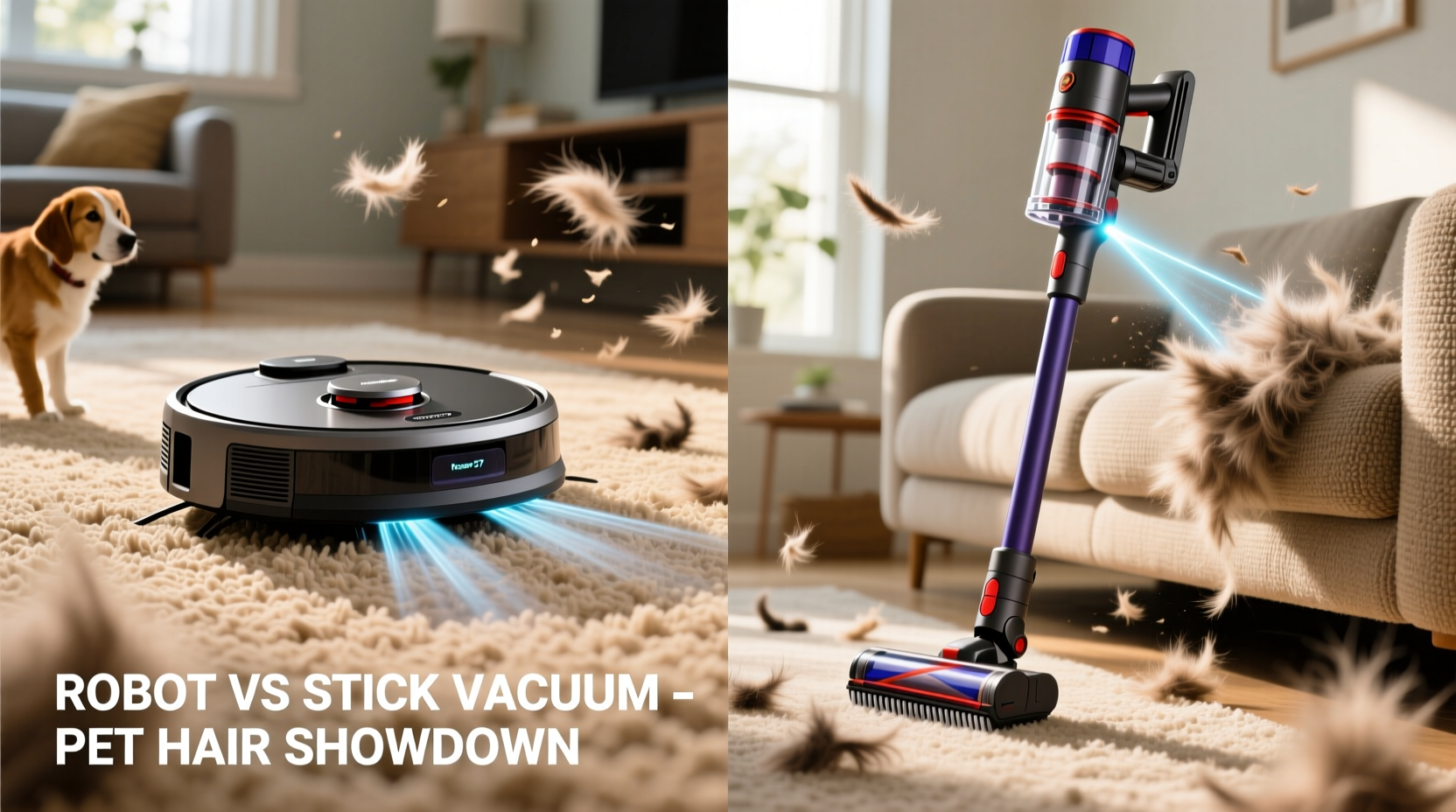
The core difference between robot and stick vacuums lies in their engineering priorities. Stick vacuums are built for maximum suction and immediate spot cleaning. Most high-end models deliver 150+ air watts (AW), allowing them to lift deeply embedded pet hair from carpets and pull debris from tight corners in one pass.
Robot vacuums, by contrast, prioritize compact design and battery efficiency over raw power. Even premium models typically max out around 2,500–4,000 Pa (approximately 100–150 AW), but their small brushrolls and limited dwell time mean they often require multiple passes to match what a stick vacuum achieves instantly.
During peak shedding—especially with long-haired dogs or cats—this gap becomes noticeable. A robot may struggle with thick clumps under furniture or along baseboards, while a cordless stick vacuum clears them in seconds.
“While modern robot vacuums have improved significantly, they still lack the concentrated cleaning force needed for deep-pile rugs or matted pet hair.” — Dr. Lena Patel, Home Appliance Research InstituteTip: If you own a robot vacuum, schedule extra cleaning sessions during shedding season to compensate for lower per-pass efficiency.
Flooring Type and Pet Hair Behavior
Pet hair doesn’t behave the same across all surfaces. On hardwood and tile, it tends to clump and scatter, making it easier for robots to collect with side brushes and central suction. But on medium-to-high pile carpets, hair embeds quickly and resists removal without strong agitation.
Stick vacuums excel here due to motorized brush heads that agitate fibers aggressively. Many also offer height adjustments and edge-cleaning modes, ensuring no strand is left behind. Robot vacuums often use smaller rollers with less torque, meaning they skip over stubborn tangles unless specifically designed for pet owners.
Some newer robot models, like the Roborock S8 Pro Ultra and Ecovacs Deebot X2 Omni, now include dual rubber rollers and anti-tangle technology. These reduce hair wrap and improve pickup on low-to-medium carpets—but they still fall short on thick rugs where stick vacuums dominate.
How Flooring Affects Vacuum Choice
| Floor Type | Robot Vacuum Effectiveness | Stick Vacuum Effectiveness |
|---|---|---|
| Hardwood / Tile | High – excellent at surface pickup | High – quick and thorough |
| Low-Pile Carpet | Moderate to High – depends on model | Very High – superior agitation |
| Medium/High-Pile Carpet | Moderate – struggles with embedded hair | Excellent – deep-cleaning capability |
| Area Rugs (shaggy) | Poor – risk of getting stuck or clogged | Very Good – with proper attachments |
Convenience vs. Control: The Trade-Off
Where robot vacuums shine is convenience. You can set daily cleanings, control them remotely via app, and even integrate them into smart home routines. For busy pet owners, having the vacuum run every morning while you're at work reduces visible fur accumulation significantly.
Stick vacuums demand active involvement. You must pick them up, charge them, and manually clean each area. However, this hands-on approach gives you full control over coverage, pressure, and focus—critical when dealing with accident spots or post-shedding cleanup.
Many pet owners find success in combining both tools: using a robot for daily maintenance and a stick vacuum weekly for deep cleaning. This hybrid strategy leverages automation without sacrificing performance.
Real Example: Life in a Two-Dog Household
Sarah Thompson, a dog trainer in Colorado, owns two Siberian Huskies. During spring shedding, her living room accumulates layers of undercoat within hours. She initially relied solely on a mid-tier robot vacuum but found it ineffective beyond hard floors.
“It would run every day, but I’d still see clumps behind the sofa,” she said. “I switched to running the robot daily and doing a full stick vacuum sweep every Sunday. Now my floors stay fur-free.”
Her current setup includes a Roomba j7+ for daily runs and a Dyson V15 Detect for weekly deep cleans. The combination reduced her manual cleaning time by 60% while maintaining cleanliness standards.
Maintenance Challenges with Pet Hair
Pet hair doesn’t just challenge suction—it tests durability. Both robot and stick vacuums suffer from hair缠绕 (tangling) around brushrolls, filters, and intake ports. However, the frequency and severity differ.
Robot vacuums run more often, increasing exposure to hair buildup. Without regular maintenance, their performance degrades quickly. Users must clean brushes and bins after every 2–3 cycles during shedding season. Some self-emptying models help by reducing bin contact, but brush maintenance remains essential.
Stick vacuums, used less frequently, accumulate debris slower. Yet when they do get clogged, the impact is greater due to higher airflow dependence. Filters require monthly washing, and brushrolls need inspection every few uses during heavy shedding.
- Robots: High maintenance frequency, low effort per session
- Sticks: Lower frequency, higher effort when servicing
- Both benefit from washable filters and tangle-resistant brush designs
Smart Features That Help With Pet Hair
Modern robot vacuums come equipped with AI-powered navigation, carpet boost modes, and automatic dirt detection. These features enhance their ability to tackle pet messes intelligently.
For example, some models increase suction automatically when transitioning from hardwood to carpet. Others use camera or LiDAR mapping to avoid pet bowls or known trouble zones. Premium units even detect when a room has been particularly messy and reroute to clean it again.
Stick vacuums are catching up with smart sensors too. The Dyson Detect series uses laser illumination to reveal invisible dust and hair on floors, helping users target overlooked areas. While not automated, this visual feedback improves cleaning accuracy.
Still, automation alone can't replace physical power. A robot might detect a hairy patch, but if its brushroll lacks strength, it won’t remove it effectively.
Checklist: Choosing the Right Vacuum for Pet Hair
- Evaluate your flooring mix: More carpet = stronger need for stick vacuum support.
- Check suction specs: Look for >3,000 Pa (robot) or >150 AW (stick).
- Inspect brushroll design: Rubber or tangle-free rollers resist pet hair wrapping.
- Consider self-emptying: Reduces exposure to allergens and extends cleaning intervals.
- Test edge-cleaning ability: Robots should have side brushes; sticks need LED-lit nozzles.
- Review filter maintenance: HEPA filters are ideal for allergy sufferers.
- Budget for both devices? A robot-stick combo often delivers best results.
Step-by-Step: Optimizing Your Shedding Season Routine
Maximize cleaning efficiency during peak shedding with this structured approach:
- Week 1: Baseline Assessment
Walk through your home and mark high-shedding zones (e.g., pet beds, favorite lounging spots). - Day 1–7: Deploy Robot Daily
Program your robot to run once or twice daily, focusing on main living areas. - Day 7: Deep Clean with Stick Vacuum
Manually clean carpets, under furniture, and baseboards. Empty all bins and clean filters. - Day 14: Inspect Brushrolls
Remove and clear any trapped hair from both vacuums. - Ongoing: Rotate Tasks Weekly
Continue daily robot runs + biweekly deep cleans. Adjust frequency based on fur volume. - End of Season: Full Maintenance
Replace filters if worn, lubricate moving parts, and store properly.
This rhythm ensures consistent cleanliness without burnout. Automation handles routine upkeep, while targeted effort addresses problem areas.
FAQ: Common Questions About Vacuums and Pet Hair
Can a robot vacuum completely replace a stick vacuum for pet owners?
For most households, no. While robots manage daily light cleaning well, they lack the power and precision for deep carpet cleaning or emergency spills. A stick vacuum remains necessary for thorough weekly maintenance, especially during shedding season.
Which robot vacuums are best for pet hair?
Top performers include the iRobot Roomba j9+, Roborock S8 Pro Ultra, and Ecovacs Deebot T20 Omni. Key features to look for: high suction (≥4000 Pa), rubber extractors instead of bristle brushes, self-emptying bins, and advanced navigation to avoid obstacles.
Do stick vacuums damage hardwood floors?
Not if used correctly. Most modern stick vacuums have soft roller heads designed for hard surfaces. Avoid using motorized brushes on delicate finishes, and ensure wheels are clean to prevent scratching.
Final Verdict: Is a Robot Vacuum Powerful Enough?
The truth is nuanced. Yes, today’s best robot vacuums are powerful enough to manage *light to moderate* pet hair on hard floors and low-pile carpets. They’re excellent for daily upkeep, reducing visible fur, and minimizing allergens between deeper cleanings.
But during intense shedding—when hair mats into corners, buries itself in rugs, or piles up after grooming—robots alone aren’t sufficient. Their limited suction duration, smaller dustbins, and mechanical constraints prevent them from matching the brute-force efficacy of a cordless stick vacuum.
Think of your robot vacuum as a diligent janitor who tidies up nightly. The stick vacuum is the specialist called in for deep restoration. Together, they form a powerful defense against pet hair overload.
“You don’t have to choose one or the other. The smartest solution is using robots for consistency and sticks for completeness.” — Mark Tran, Consumer Electronics Analyst at HomeTech Review
Conclusion
If you're wondering whether a robot vacuum can handle shedding season solo, the answer is likely no—if you want truly clean floors. But dismissing robots entirely would mean missing out on valuable automation that eases daily life.
The optimal path forward is integration: let your robot maintain baseline cleanliness every day, then deploy your stick vacuum weekly to conquer what the robot misses. This balanced approach saves time, protects your floors, and keeps your home comfortable for both humans and pets.
🚀 Ready to upgrade your pet hair strategy? Assess your current vacuum setup, try a hybrid routine for two weeks, and see how much cleaner—and calmer—your home feels.








