For pet owners, managing fur is a daily chore. Whether it's clumps of dog hair on the couch or fine cat dander drifting across hardwood floors, keeping a clean home often feels like a losing battle. As technology advances, two appliances have emerged as top contenders in the fight against pet hair: robot vacuums and stick vacuums. But which one actually works better—and more importantly, do robot vacuums merely push dirt around instead of removing it?
This isn't just about convenience or battery life. It’s about effectiveness. If your robot vacuum fails to pick up embedded pet hair or redistributes debris instead of capturing it, then automation loses its appeal. Let’s break down how each type handles pet hair, examine real cleaning behaviors, and answer whether robots are truly up to the task—or if they're just glorified dust pushers.
How Robot Vacuums Handle Pet Hair
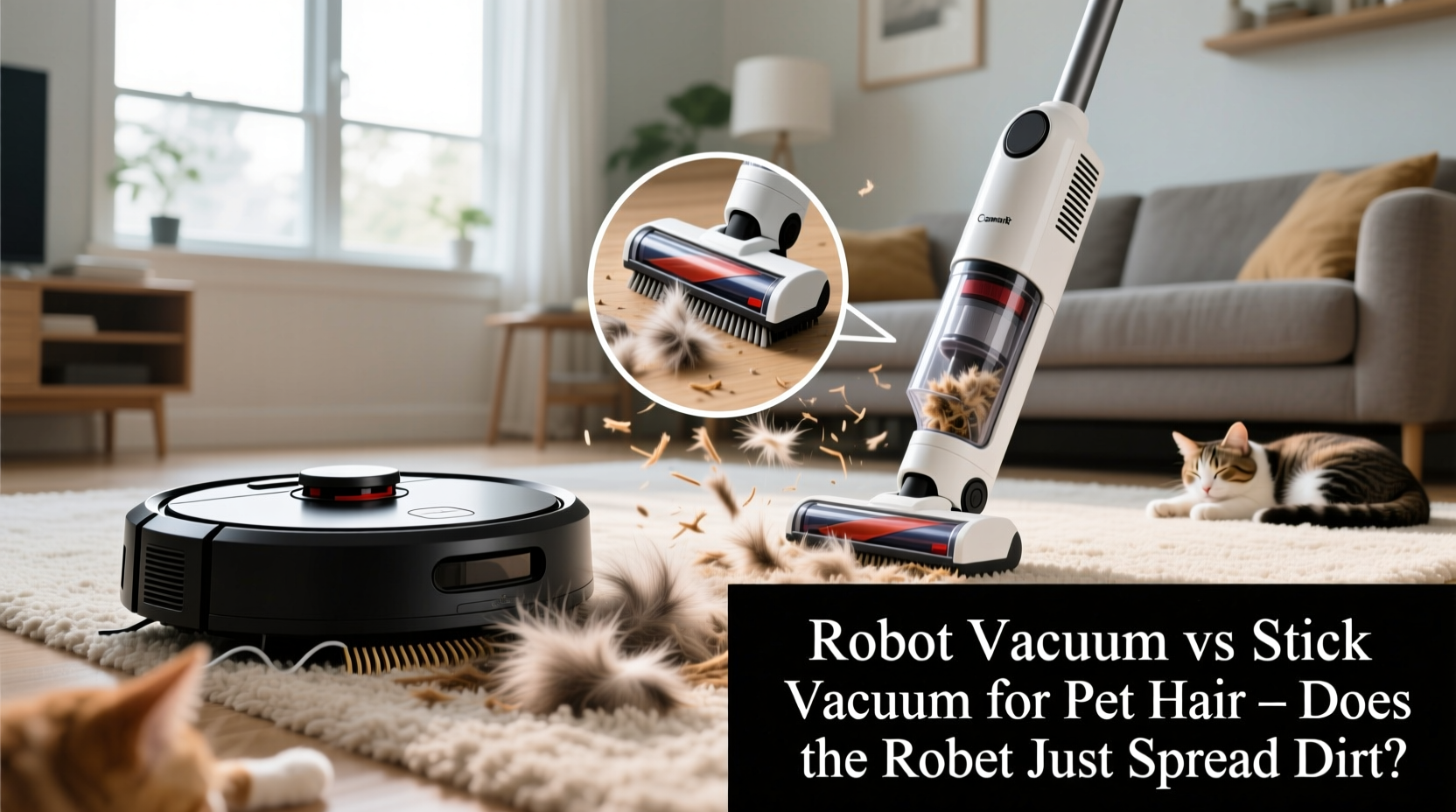
Modern robot vacuums have come a long way from their early days of bumping into furniture and missing entire rooms. Today’s models use advanced navigation systems—like LiDAR and vSLAM—to map homes efficiently and target high-traffic zones. Many are specifically marketed toward pet owners, boasting tangle-free brushes, high-suction modes, and self-emptying bases.
However, performance varies significantly between models. Entry-level robots may struggle with thick carpets or deeply embedded fur, while premium units like the Roborock S8 or iRobot j7+ demonstrate strong pickup rates even on medium-pile rugs. The key lies in three components: brush design, suction power, and filtration.
- Brush Roll Design: Tangle-free rubber extractors (as opposed to traditional bristle brushes) prevent hair from wrapping around the roller—a major pain point for pet owners.
- Suction Power: Measured in Pascals (Pa), higher suction (2000+ Pa) improves pickup on both hard floors and low-to-medium carpets.
- Filtration: A true HEPA filter captures allergens like dander, which is crucial for households with allergy sufferers.
Still, limitations remain. Robots operate autonomously, meaning they can’t be directed to focus on a freshly shed pile under the dining table. They also lack the precision of manual control, sometimes missing edges or skipping spots if sensors misread surface changes.
Tip: Run your robot vacuum daily in “pet mode” (if available) to stay ahead of shedding cycles, especially during spring and fall.Stick Vacuums: Power and Precision for Pet Hair
Stick vacuums offer something robots can’t match: human judgment and targeted cleaning. With instant trigger activation, swivel steering, and attachments like motorized pet tools, cordless sticks excel at tackling concentrated messes. Brands like Dyson, Shark, and LG dominate this space with models delivering over 200 air watts of suction—significantly more than most robots.
Their upright design allows users to easily reach under furniture, along baseboards, and into crevices where pet hair accumulates. Most include crevice tools and upholstery brushes ideal for sofas and stairs. For homes with heavy shedding pets, a stick vacuum often becomes the go-to tool after a grooming session or when visible clumps appear.
But stick vacuums demand effort. You must remember to charge them, carry them room to room, and empty bins regularly. Unlike robots, they don’t maintain cleanliness passively. And while powerful, some models suffer from short run times (under 20 minutes on max power), limiting whole-home coverage without recharging.
“Stick vacuums give pet owners immediate control and superior spot-cleaning ability, but only if used consistently.” — Dr. Lena Patel, Home Hygiene Researcher at the Institute for Indoor Air Quality
Do Robot Vacuums Just Spread Dirt? The Truth Behind the Myth
The idea that robot vacuums “just spread dirt�� stems from early models with weak suction, poor brush alignment, and erratic navigation. In those cases, yes—debris was often kicked ahead like a snowplow rather than lifted into the bin. But today’s mid-to-high-end robots are far more effective.
Independent lab tests by Consumer Reports and Wirecutter show that modern robot vacuums remove 85–95% of surface debris on hard floors and 70–80% on low-pile carpets when tested with standard pet hair loads. However, performance drops sharply on deep-pile rugs or when hair is matted into fibers.
The spreading myth persists because:
- Lack of edge cleaning: Some robots leave a narrow strip of debris along walls due to imperfect side brush placement.
- Overloaded brushes: When hair wraps around rollers (especially non-rubber types), the brush loses traction and pushes instead of lifting.
- Low suction settings: Eco modes save battery but reduce pickup efficiency, leading to partial cleaning.
In reality, well-maintained robots with updated hardware do not simply redistribute dirt—they collect it. But they work best as part of a maintenance routine, not as standalone solutions for deep cleaning.
Comparative Performance: Robot vs Stick Vacuum
| Feature | Robot Vacuum | Stick Vacuum |
|---|---|---|
| Cleaning Frequency | Daily (automated) | As needed (manual) |
| Pet Hair Pickup (Hard Floor) | High (85–95%) | Very High (95–100%) |
| Pet Hair Pickup (Carpet) | Moderate to High (70–80%) | Very High (90–98%) |
| Allergen Filtration | HEPA common in premium models | HEPA standard in most |
| User Effort | Minimal (set and forget) | High (manual operation) |
| Edge & Corner Cleaning | Fair (depends on model) | Excellent (with precise control) |
| Price Range | $300–$1,000+ | $200–$700 |
| Best Use Case | Daily maintenance, light shedding | Spot cleaning, heavy shedding, deep cleans |
This comparison shows that neither device universally outperforms the other. Instead, their strengths complement each other. A robot maintains baseline cleanliness, while a stick vacuum handles intensive tasks.
Real-World Example: Living with Two Dogs and Two Vacuums
Sarah M., a pet groomer in Austin, TX, shares her experience: “I have two German Shepherds that shed year-round. I tried relying solely on a budget robot vacuum, but within weeks, I noticed hair building up behind doors and under the sofa. The robot would run every night, but I’d still find tumbleweeds of fur in the morning.”
She upgraded to a high-end robot with dual rubber rollers and 4000Pa suction. “It made a big difference on hard floors, but carpeted areas still needed attention. So I bought a Dyson V15 Detect. Now, I let the robot run daily to manage loose hair, and I use the stick vacuum every weekend for a full pass—including the stairs and under beds.”
Her solution reflects what many experts recommend: a hybrid approach. Automation handles consistency; manual tools ensure thoroughness.
Action Plan: How to Maximize Results with Either Device
Whether you choose a robot, a stick, or both, success depends on proper usage and maintenance. Follow this step-by-step guide to get the most out of your investment.
- Assess Your Flooring: Determine the mix of hard floors, rugs, and carpet heights. Robots perform best on flat, uncluttered surfaces.
- Choose the Right Model: Look for tangle-free brushes, strong suction (≥2500Pa for robots, ≥150 AW for sticks), and HEPA filtration.
- Clear Obstacles Daily: Pick up toys, cords, and small items before robot runs to prevent missed spots or jams.
- Run Robots Frequently: Schedule cleanings every 1–2 days during peak shedding seasons.
- Clean Brushes Weekly: Remove wrapped hair from rollers—even rubber ones can accumulate debris over time.
- Empty Bins Promptly: A full bin reduces suction efficiency in both robot and stick vacuums.
- Supplement with Manual Cleaning: Use a stick vacuum or handheld attachment once a week for edges, furniture, and high-shed zones.
Checklist: Choosing the Right Vacuum for Pet Hair
- ✅ Does it have a tangle-free brush roll (rubber extractor preferred)?
- ✅ Is suction power ≥2500Pa (robot) or ≥150 air watts (stick)?
- ✅ Does it include a HEPA filter for allergen capture?
- ✅ Can it handle your primary floor type (carpet, hardwood, tile)?
- ✅ Is edge cleaning effective (check reviews for wall-following performance)?
- ✅ For robots: Does it self-empty? Is mapping reliable?
- ✅ For sticks: Is battery life sufficient for your home size?
- ✅ Are replacement parts (filters, brushes) readily available and affordable?
Frequently Asked Questions
Can a robot vacuum completely replace a stick vacuum for pet owners?
No single robot vacuum can fully replace a stick vacuum for heavy pet hair management. While robots excel at daily maintenance, they lack the power and precision for deep cleaning, furniture detail work, or handling large clumps. Most pet owners benefit from using both.
Why does my robot leave lines of hair along the walls?
This usually indicates a worn or improperly angled side brush, or a navigation system that doesn’t hug edges closely. Check your model’s specifications—some robots clean within 0.4 inches of walls, others up to 2 inches away. Regular cleaning of sensors and brushes also helps.
Which is better for allergies: robot or stick vacuum?
Both can be effective if equipped with sealed HEPA filtration systems. Stick vacuums typically offer stronger suction, which may capture more deeply embedded allergens. However, the consistent operation of a robot can reduce overall airborne dander levels by preventing accumulation.
Final Thoughts: Complement, Don’t Compete
The debate between robot and stick vacuums for pet hair isn’t about declaring a winner—it’s about understanding their roles. A robot vacuum is a diligent janitor, working silently in the background to reduce daily messes. A stick vacuum is a specialist, ready to tackle tough jobs with power and precision.
Rather than asking whether robots spread dirt, ask whether your model is suited to your home and properly maintained. With the right setup, today’s robots do not just push debris—they capture it effectively, especially when paired with disciplined upkeep.
For optimal results, consider integrating both tools into your routine. Let the robot handle routine patrols, and use the stick vacuum for weekly deep cleans or post-grooming cleanup. This combination delivers the consistency of automation with the reliability of human control.
🚀 Ready to upgrade your pet hair strategy? Evaluate your current vacuum’s performance, check for maintenance issues, and consider adding a complementary tool to close the cleaning gap. Your floors—and your pets—will thank you.








