Modern homes are increasingly equipped with smart appliances designed to simplify daily chores. Among them, robot vacuums and stick vacuums have become go-to solutions for quick floor maintenance. Yet despite their convenience, many homeowners still find themselves reaching for a broom or dustpan after these devices pass through. This raises a critical question: even with advanced cleaning technology, do you still need to sweep manually?
The answer isn’t a simple yes or no. It depends on your flooring type, household activity level, pet presence, and the specific capabilities of your vacuuming tools. To help you make an informed decision, we’ll compare robot vacuums and stick vacuums in depth, examine their limitations, and determine when—and why—manual sweeping remains necessary.
How Robot Vacuums Work: Strengths and Limitations
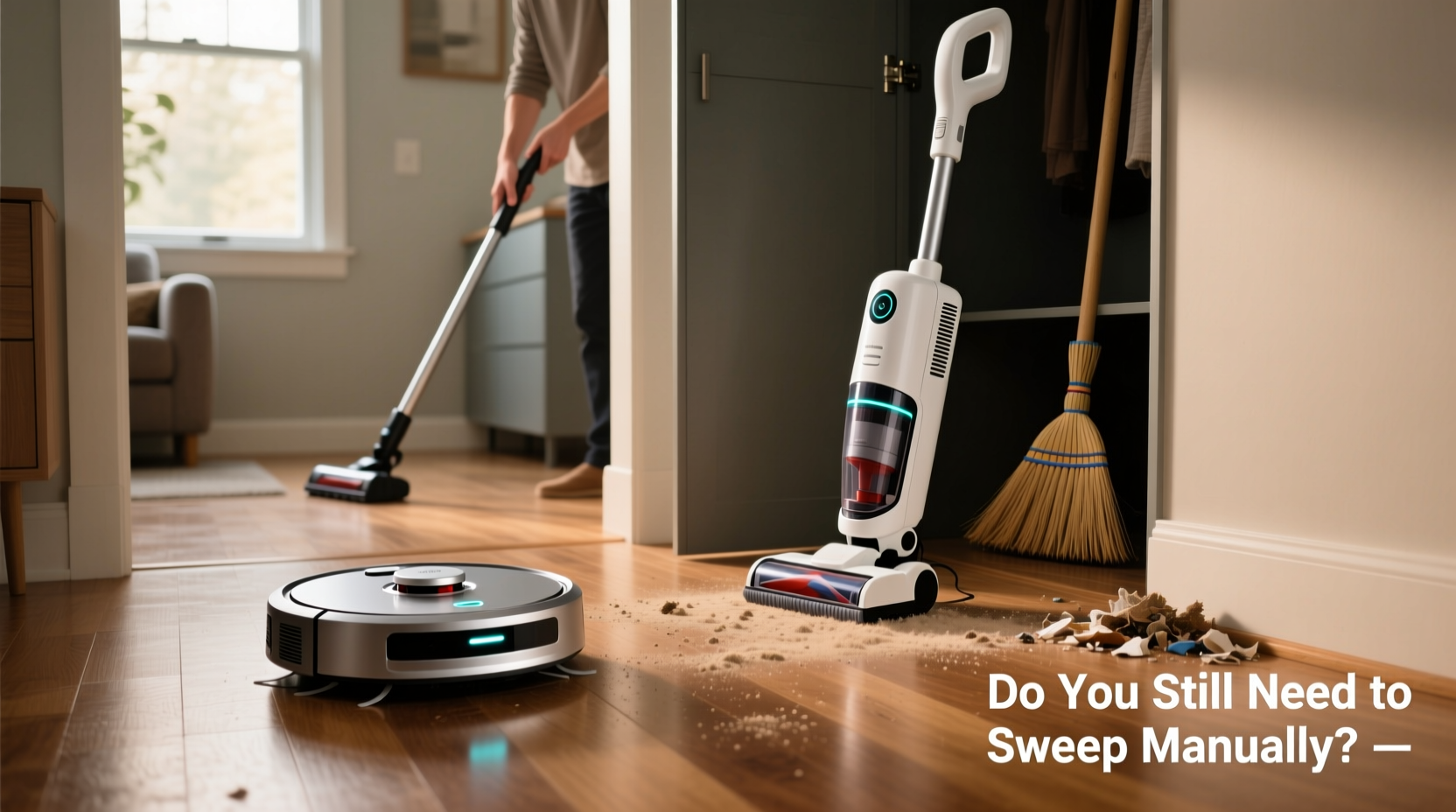
Robot vacuums operate autonomously, using sensors and mapping technology to navigate rooms, avoid obstacles, and return to their charging docks. Most models today offer scheduling, app control, and compatibility with voice assistants like Alexa or Google Assistant. They’re ideal for maintaining cleanliness between deeper cleanings.
However, their compact size and low-profile design come with trade-offs. The small brushes and limited suction power mean they struggle with larger debris, pet hair tangles, and deep-seated dirt in carpets. While excellent for daily upkeep, they often miss edges, corners, and tight spaces behind furniture.
Tip: Run your robot vacuum daily on hard floors to prevent dust buildup, but don’t rely on it alone for thorough cleaning.Another limitation is their inability to detect certain messes. A spilled cereal box or clumps of wet food may go unnoticed unless manually cleaned first. Some high-end models now include mopping functions, but water capacity and scrubbing power remain minimal compared to traditional methods.
Stick Vacuums: Power and Precision in Your Hands
Stick vacuums bridge the gap between portability and performance. With stronger motors than most robot vacuums, they deliver higher suction power, making them effective on both hard floors and low-pile carpets. Many cordless models now rival upright vacuums in efficiency while offering greater maneuverability.
Unlike robots, stick vacuums allow direct user control. You can target specific spots, adjust suction settings, and immediately respond to visible messes. Their lightweight design makes them perfect for quick cleanups in kitchens, hallways, or under dining tables—areas where crumbs accumulate rapidly.
Yet stick vacuums also have drawbacks. Battery life typically limits runtime to 20–60 minutes, depending on power mode. Frequent use requires regular recharging and filter maintenance. Additionally, because they require human operation, they lack the “set-and-forget” advantage of robotic units.
“While stick vacuums offer superior spot-cleaning ability, their effectiveness hinges on consistent user engagement.” — Dr. Linda Cho, Home Appliance Researcher at CleanTech Labs
Comparative Analysis: Robot vs Stick Vacuum
| Feature | Robot Vacuum | Stick Vacuum |
|---|---|---|
| Suction Power | Moderate (1500–3000 Pa) | High (5000–15,000 Pa) |
| Floor Type Suitability | Best on hard floors; limited on thick carpets | Effective on both hard floors and carpets |
| User Effort Required | Minimal (scheduled runs) | Moderate (manual operation) |
| Cleaning Coverage | Good overall, poor in corners/edges | Excellent, especially with attachments |
| Maintenance Frequency | Weekly (empty bin, clean brushes) | After each use (empty, wipe filters) |
| Price Range (USD) | $200–$1,000+ | $150–$700 |
| Lifespan (Average) | 3–5 years | 4–7 years |
This comparison shows that while robot vacuums excel in automation and consistency, stick vacuums lead in cleaning intensity and adaptability. Neither fully replaces manual sweeping in all scenarios.
When Manual Sweeping Still Matters
No matter how advanced your vacuum, there are situations where sweeping by hand is not just helpful—it’s essential.
- Immediate spill response: Crumbs, flour, or broken glass require instant attention before they scatter or get ground into flooring.
- Edge and corner cleaning: Both robot and stick vacuums often miss baseboards, door thresholds, and narrow gaps.
- Wet or sticky messes: Vacuums should never handle liquids unless specifically designed for it. A broom and dustpan are safer for initial dry cleanup before mopping.
- Pet accidents: Solid waste or litter tracked across floors needs immediate removal to prevent odor and bacteria spread.
- Pre-vacuum preparation: Large debris can clog vacuum brushes or bins. A quick sweep removes hazards first.
In multi-pet households or homes with young children, the frequency of unexpected messes increases significantly. Even with daily robot runs, unanticipated events demand human intervention. A 2022 consumer survey by HomeClean Weekly found that 78% of robot vacuum owners still swept manually at least three times per week.
Real-Life Scenario: The Johnson Family’s Cleaning Routine
The Johnsons live in a two-story suburban home with hardwood floors, two dogs, and twin toddlers. They invested in a premium robot vacuum with self-emptying capabilities and a mid-range cordless stick vacuum for deeper cleans.
Their robot runs every morning at 9 AM, covering main living areas. However, within hours, breakfast crumbs, dog hair, and toy debris appear. By noon, the kitchen floor already shows visible tracks. The mother, Sarah, uses the stick vacuum each evening after dinner, focusing on the dining and play areas. On weekends, she sweeps under furniture and along baseboards—places the robot consistently misses.
Despite owning both devices, the family still spends about 15 minutes daily on manual sweeping. “The robot helps,” Sarah says, “but I wouldn’t trust it to keep our house truly clean. It’s more about staying ahead of the mess than eliminating it.”
This case illustrates a common reality: automation reduces effort but doesn’t eliminate the need for hands-on cleaning.
Optimizing Your Cleaning Strategy: A Step-by-Step Guide
To minimize manual labor without sacrificing cleanliness, follow this practical sequence:
- Assess your space: Identify high-traffic zones, pet areas, and flooring types. Prioritize these in your cleaning plan.
- Deploy the robot vacuum daily: Schedule it during daytime hours when the house is empty to maximize coverage.
- Conduct pre-sweep checks: Before running any vacuum, quickly walk through key areas and remove large debris like socks, cords, or food scraps.
- Use the stick vacuum weekly: Perform a full-pass cleaning on all floors, including stairs and under furniture.
- Sweep manually as needed: Address spills immediately and perform edge cleaning weekly.
- Maintain all devices: Empty bins, clean brushes, and check filters weekly to ensure peak performance.
- Evaluate monthly: Note which areas remain dirty or frequently missed, then adjust device placement or cleaning routes accordingly.
This layered approach leverages automation while acknowledging its limits. The result is a cleaner home with less physical strain over time.
Essential Checklist: Do You Still Need to Sweep Manually?
Answer these questions to determine your reliance on manual sweeping:
- ✅ Do you have pets that shed or track litter?
- ✅ Are there children who eat snacks on the floor?
- ✅ Is your home larger than 1,500 sq ft?
- ✅ Do you have area rugs or textured flooring?
- ✅ Does your robot vacuum miss corners or get stuck frequently?
- ✅ Have you experienced clogs or reduced suction lately?
If you answered “yes” to three or more, manual sweeping likely remains a necessary part of your routine—even with modern vacuums.
Frequently Asked Questions
Can a robot vacuum completely replace sweeping?
No. While robot vacuums reduce the frequency of manual sweeping, they cannot fully replicate the precision and force of a broom. They also fail to handle large debris, sticky substances, or edge cleaning effectively. Think of them as maintenance tools, not replacements.
Is a stick vacuum better than sweeping with a broom?
In terms of dust capture and allergen removal, yes. Brooms often push fine particles into the air or into crevices, whereas stick vacuums suction them directly into a sealed bin. However, for quick dry pickup of large items (like cereal), a broom is faster and more convenient.
How often should I sweep if I own both types of vacuums?
Most households benefit from 2–4 manual sweeping sessions per week, focused on problem areas. Daily robot runs and bi-weekly stick vacuum use can reduce this, but complete elimination of sweeping is unrealistic for active homes.
Conclusion: Embrace the Hybrid Approach
The evolution of home cleaning technology has made life easier, but not effortless. Robot vacuums bring automation and consistency. Stick vacuums deliver power and control. Yet neither eliminates the fundamental need for human oversight and targeted cleaning.
Manual sweeping isn’t obsolete—it’s evolved. Instead of being a daily chore, it becomes a strategic complement to your tech-powered system. By understanding the strengths and weaknesses of each tool, you can create a balanced cleaning routine that saves time, improves hygiene, and keeps your floors genuinely clean.
💬 What’s your cleaning setup? Share your experience with robot vacuums, stick vacuums, or manual sweeping—your insights could help others find the right balance!








