
For pet owners, managing fur on carpets is a daily battle. Whether it’s tumbleweeds of dog hair under the coffee table or cat fur embedded deep in high-pile rugs, choosing the right cleaning tool matters. Two popular options dominate the modern home: robot vacuums and cordless stick vacuums. Both promise convenience and efficiency, but when it comes to tackling pet hair on carpeted surfaces, their performance diverges significantly. Understanding the strengths and limitations of each can help you make an informed decision based on your lifestyle, flooring type, and pet habits.
Suction Power and Carpet Penetration
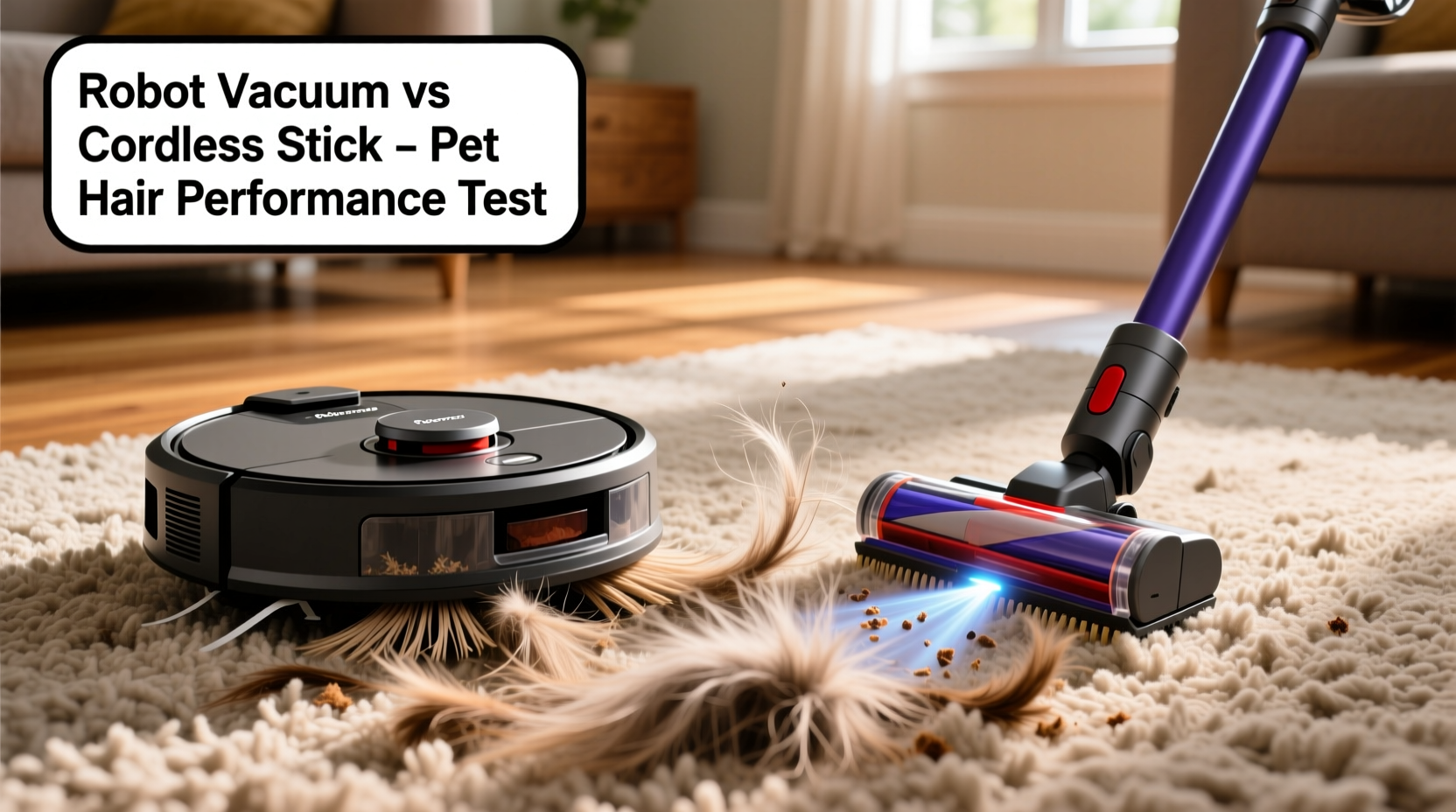
One of the most critical factors in removing pet hair from carpet is suction strength. Hair doesn’t just sit on the surface—it often tangles deep within carpet fibers, especially in medium to high-pile rugs. Cordless stick vacuums generally outperform robot vacuums in raw suction power. High-end models now offer over 200 AW (air watts) of suction, allowing them to lift deeply embedded debris and hair with a single pass.
In contrast, robot vacuums are constrained by battery life, noise limits, and compact design. Most top-tier robot models deliver between 2,000 and 4,000 Pa of suction—impressive for their size, but still less effective than a powerful stick vacuum on dense carpeting. While some premium robots like the Roborock S8 or Ecovacs Deebot X2 Omni advertise “carpet boost” modes that increase suction when detected on rugs, they still require multiple passes to achieve comparable results.
Tip: If you have thick, plush carpeting and heavy shedding pets, prioritize a cordless stick vacuum with at least 150 AW of suction for optimal hair removal.Brush Roll Design and Tangle Resistance
The brush roll is where the real work happens when dealing with pet hair. Cordless stick vacuums typically feature advanced anti-tangle brush rolls made from rubber or a hybrid bristle-rubber design. These materials resist hair wrap better than traditional bristle-only rollers. For example, Dyson’s tangle-free turbine tools and Shark’s Zero-M technology use counter-rotating brushes or specialized geometries to prevent hair from coiling around the axle.
Robot vacuums, however, have historically struggled with hair缠绕 (hair wrapping). Many early models used bristle-based rollers that quickly became clogged with pet fur, requiring frequent manual cleaning. Modern designs have improved dramatically—brands like iRobot (with its AeroForce extractors) and Eufy (with tangle-free rubber strips) now offer rollers engineered specifically for pet owners. Still, even these systems aren’t immune to occasional jams, particularly with long-haired dogs or cats.
Another consideration is brush roll width. Stick vacuums usually have wider cleaning paths (up to 12 inches), covering more ground per sweep. Robot vacuums, limited by their circular shape, typically have narrower front-facing brushes (8–10 inches), meaning they must overlap passes to ensure full coverage—increasing the chance of missed spots.
“While robot vacuums have made strides in brush design, nothing beats a well-engineered stick vacuum roller for consistent, tangle-free performance on pet-heavy carpets.” — Marcus Lin, Home Appliance Engineer at CleanTech Labs
Maneuverability and Coverage on Carpeted Floors
Carpets often occupy large areas of homes, including bedrooms, living rooms, and hallways. How thoroughly a vacuum covers these spaces directly impacts its effectiveness against pet hair.
Cordless stick vacuums excel in targeted cleaning. You control the movement, ensuring every corner, edge, and traffic zone gets attention. This level of precision is crucial after shedding spikes or accidents. However, this comes at the cost of effort—you’re doing the work.
Robot vacuums automate coverage. With smart mapping (via LiDAR or camera navigation), they can systematically clean entire carpeted rooms without supervision. Models like the Roomba j7+ or Roborock Qrevo create detailed floorplans and remember multi-level homes, returning to dock when low on battery and resuming where they left off. This consistency helps manage daily shedding, reducing the buildup that turns into stubborn mats.
But automation has trade-offs. Robots may miss tight corners behind furniture, struggle under low-clearance sofas, or avoid areas if sensors detect obstacles. On thick carpet, some lower-end models lose traction or reduce suction to conserve power, compromising cleaning depth.
| Feature | Cordless Stick Vacuum | Robot Vacuum |
|---|---|---|
| Suction Power | High (150–250+ AW) | Moderate to High (2,000–6,000 Pa) |
| Brush Roll Tangle Resistance | Excellent (rubber/hybrid designs) | Good (modern tangle-free rollers) |
| Coverage Control | Manual, precise | Automatic, systematic |
| Daily Maintenance | User-initiated | Self-emptying bins available |
| Best For | Deep cleans, heavy shedding | Daily upkeep, light-to-moderate fur |
Maintenance and Long-Term Convenience
Pet hair isn’t just hard to pick up—it’s hard on the machine. Regular maintenance is non-negotiable for both types of vacuums, but the nature of upkeep differs.
With cordless stick vacuums, users must empty the dustbin after each use, check filters monthly, and inspect the brush roll weekly for缠绕. Some models require disassembly to remove trapped hair—a time-consuming process. However, because cleaning is intentional and infrequent (e.g., 1–3 times per week), maintenance fits into a routine.
Robot vacuums offer hands-off operation but demand vigilance behind the scenes. Even self-emptying models need periodic cleaning of the main bin, filter, and sensors. The brush roll still requires monthly inspection, especially in homes with long-haired pets. A neglected robot can begin to emit odors, scatter debris, or fail to detect carpets properly.
Here’s a realistic scenario: Sarah owns two golden retrievers and has wall-to-wall Berber carpeting. She uses a Roborock S8 Pro Ultra robot vacuum with a self-emptying dock. It runs daily and keeps surface fur under control. But once a week, she notices clumps near the stairs. She switches to her Dyson V15 Detect stick vacuum for a deep clean, using the laser slim fluff tool to reveal hidden hair. In this hybrid approach, the robot manages daily upkeep, while the stick vacuum handles intensive tasks.
Step-by-Step Weekly Routine for Pet Hair Management on Carpet
- Day 1–6: Run robot vacuum on auto-schedule during daytime hours when pets are active.
- Day 7 (Weekly Reset): Perform stick vacuum deep clean focusing on high-traffic zones (entryways, pet beds, furniture edges).
- After Each Deep Clean: Empty both vacuums’ bins, wipe sensors, and inspect brush rolls.
- Monthly: Wash filters, check seals, and descale water tanks (if using wet-dry models).
- Seasonally: Rotate carpet direction if possible, treat with anti-static spray to reduce future hair adhesion.
Real-World Performance: A Mini Case Study
Consider the Johnson household: two adults, one toddler, and a long-haired Maine Coon cat named Luna. Their living room features a 9x12 wool-blend area rug over hardwood, prone to collecting fine, sticky cat hair. They tested two devices over six weeks:
- Weeks 1–3: Used only a Shark Vertex cordless stick vacuum (200 AW, self-cleaning brush roll).
- Weeks 4–6: Switched to an iRobot Roomba j9+ with anti-hair wrap tech and automatic dirt disposal.
Results showed that the stick vacuum removed visibly more hair in a single 10-minute session. The robot performed well on flat, open areas but missed hair along baseboards and under the entertainment center. After three weeks, a thin layer of fur reappeared in corners despite daily runs. The family concluded that while the robot reduced their workload, it didn’t eliminate the need for supplemental stick vacuuming. They ultimately adopted a dual-system strategy: robot for daily runs, stick vacuum every Sunday.
Tip: Use a damp microfiber cloth to wipe baseboards and furniture edges after vacuuming—they trap escaped pet hair.Frequently Asked Questions
Can robot vacuums handle long pet hair on carpet?
Yes, but with caveats. High-end models with tangle-free brush rolls (e.g., Roomba j9+, Eufy U4 Pro) perform well on long hair, especially if cleaned weekly. However, very long or matted fur may still cause jams. Regular maintenance is essential.
Do cordless vacuums last longer than robot vacuums on pet hair duty?
Not necessarily in lifespan, but in immediate effectiveness. Cordless sticks deliver stronger, more reliable cleaning per use. Robot vacuums compensate with frequency, running daily to prevent buildup. For durability, both can last 3–5 years with proper care.
Is a hybrid system worth it—using both robot and stick vacuums?
For many pet owners, yes. The robot maintains baseline cleanliness, reducing allergens and visible fur. The stick vacuum provides deep cleaning for tough spots, seasonal resets, or pre-guest preparation. Together, they offer comprehensive care with balanced effort.
Final Recommendation: Match the Tool to Your Needs
If your priority is minimal effort and consistent upkeep, a high-end robot vacuum with strong carpet mode, tangle-resistant rollers, and self-emptying capability is a solid choice. It won’t eliminate all pet hair, but it will significantly reduce daily maintenance.
If you deal with heavy shedding, thick carpets, or want guaranteed thoroughness, a powerful cordless stick vacuum remains the superior option. Its superior suction, larger debris capacity, and targeted control make it ideal for deep cleaning.
The best solution for many households lies in combining both. Let the robot vacuum handle routine maintenance, preserving carpet freshness between deeper cleanings. Then deploy the cordless stick vacuum weekly or as needed for complete pet hair removal. This layered approach maximizes convenience without sacrificing performance.
“The future of pet-friendly cleaning isn’t choosing between robot and stick—it’s integrating both into a seamless routine.” — Dr. Lena Patel, Smart Home Integration Researcher, MIT Media Lab
Take Action Today
Don’t wait for another fur tumbleweed to roll across your living room. Evaluate your current cleaning routine: Are you constantly spot-cleaning? Does your vacuum struggle on carpet edges? Start by testing one device type—if you don’t own either, borrow or rent a model for a week. Track how much pet hair it removes, how often it needs maintenance, and how it fits into your schedule. Small adjustments can lead to big improvements in air quality, home appearance, and peace of mind.
💬 What’s your go-to method for managing pet hair on carpet? Share your experience—your insight could help another pet owner find the perfect solution!








