For pet owners, managing fur is a daily battle. Whether it's tumbleweeds of dog hair rolling across hardwood floors or clumps stuck in carpet fibers, pet hair demands consistent attention. As technology advances, two appliances have risen to prominence: robot vacuums and cordless stick vacuums. Both promise convenience, but when it comes to actual performance on pet hair, they deliver very different experiences. Understanding their strengths, limitations, and real-world usability is essential for making an informed decision that aligns with your home’s needs.
How Pet Hair Challenges Modern Cleaning Tools
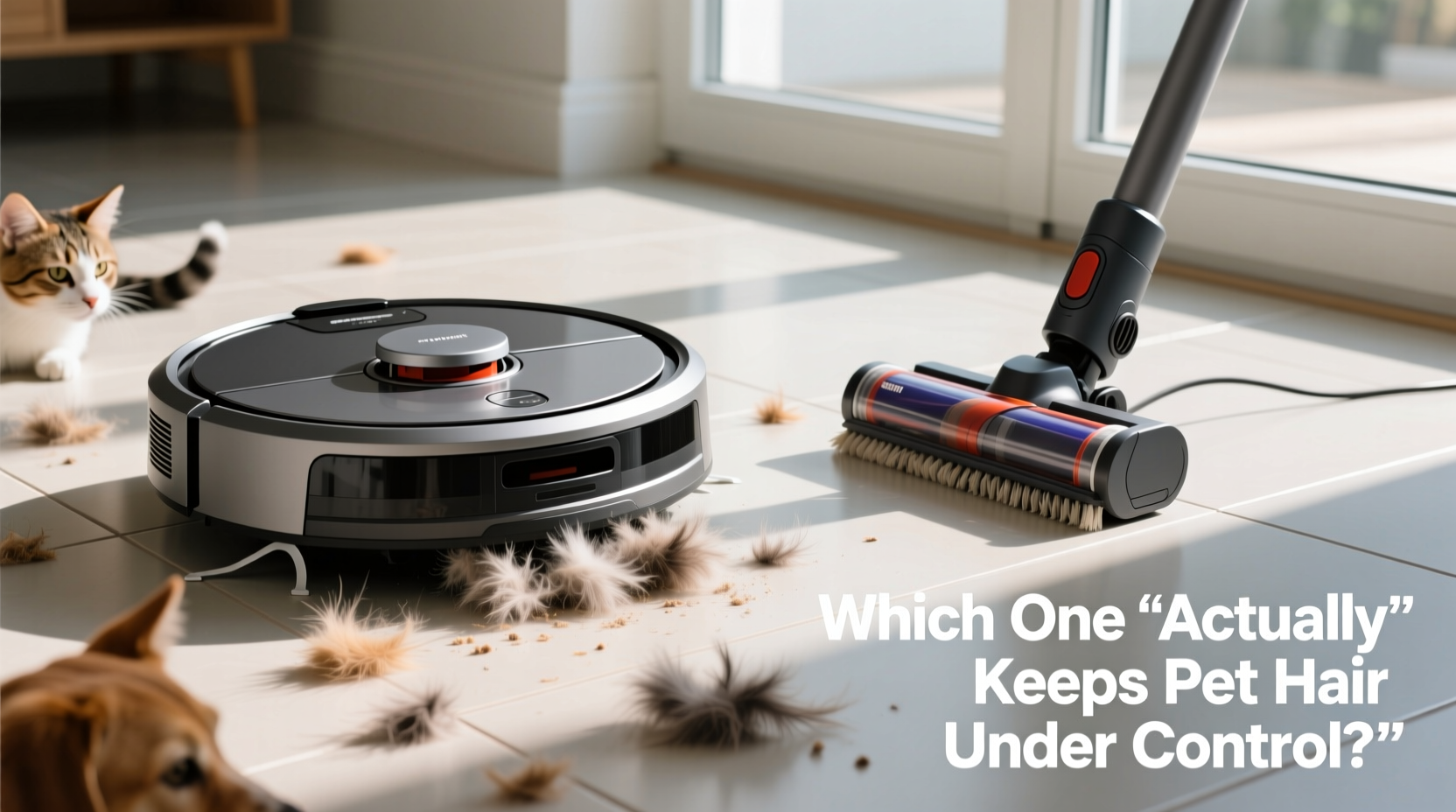
Pet hair isn’t just unsightly—it’s persistent. Unlike dust or crumbs, animal fur tends to cling to surfaces due to static electricity and its fibrous texture. It embeds deeply into carpets, wraps around brush rolls, and clogs filters. Long-haired breeds like Golden Retrievers or Persian cats can shed hundreds of grams weekly, turning floors into fur traps. This creates unique demands for cleaning tools: strong suction, tangle-resistant brushes, large dustbins, and easy maintenance.
Moreover, pet dander and allergens often accompany loose hair, making effective removal not just about cleanliness but also health. A vacuum that merely redistributes hair without capturing it fails the core test for pet owners. That’s why choosing between automation and manual power requires more than marketing claims—it demands practical evaluation.
Tip: Pre-vacuum brushing of pets reduces shedding by up to 80%, significantly lowering the load on any vacuum system.Robot Vacuums: The Hands-Off Approach
Robot vacuums are designed for convenience. With features like scheduling, app control, and self-emptying bases, they appeal to busy households. For pet owners, the idea of having a machine autonomously clean up after shedding cycles is enticing. However, effectiveness varies widely based on model quality and home layout.
High-end models like the iRobot Roomba j7+, Roborock S8 Pro Ultra, or Ecovacs Deebot X2 Omni boast advanced tangle-free brush designs and powerful suction (up to 6000 Pa). These units use AI navigation to avoid obstacles like pet toys and detect high-traffic zones. Some even offer mopping functions, though this is less relevant for dry fur cleanup.
Still, robot vacuums face inherent limitations. Their low profile restricts bin capacity, requiring frequent emptying in heavy-shed homes. Many struggle with thick carpets where pet hair burrows deep. Edge cleaning is often inconsistent, leaving fur along baseboards. And while scheduling helps, multiple passes may be needed to achieve what a single manual sweep accomplishes.
“Robots excel at maintenance cleaning, not deep extraction. For homes with multiple pets, they’re best used as supplements, not primary cleaners.” — Dr. Lena Patel, Home Robotics Researcher at MIT Media Lab
Cordless Stick Vacuums: Power and Precision
Cordless stick vacuums prioritize performance over automation. Brands like Dyson, Shark, Tineco, and LG offer models with suction power exceeding 150+ air watts—far above most robots. Their motorized brush heads are engineered specifically for pet hair, featuring anti-tangle technology and rubberized fins that pull hair away from bristles.
These vacuums allow direct control over cleaning intensity. You can linger on problem areas, tilt into corners, and switch attachments instantly—using crevice tools for furniture or upholstery nozzles for couches. Most include washable filters and transparent bins, making it easy to monitor hair accumulation and maintain hygiene.
Battery life has improved dramatically; premium models now offer 40–60 minutes of runtime, sufficient for whole-home cleaning. Lightweight designs reduce fatigue during extended sessions. However, they require user effort and aren’t ideal for daily touch-ups unless you're committed to routine use.
The trade-off is clear: maximum cleaning efficacy versus time investment. If your priority is removing every trace of pet hair in one go, cordless sticks consistently outperform robots.
Head-to-Head Comparison: Key Performance Factors
| Feature | Robot Vacuum | Cordless Stick Vacuum |
|---|---|---|
| Suction Power | Moderate to high (1500–6000 Pa) | Very high (120–200 AW / 15,000+ Pa) |
| Brush Roll Design | Tangle-free options available; mid-range models prone to wrapping | Most feature anti-tangle rubber fins; superior for long pet hair |
| Daily Maintenance | Minimal (if self-emptying); otherwise weekly bin emptying | Bin emptying & filter cleaning after each use recommended |
| Floor Type Effectiveness | Good on hard floors; variable on carpets | Excellent on all surfaces with proper head switching |
| User Effort | Nearly none once scheduled | Active participation required |
| Price Range (USD) | $300–$1,500+ | $200–$800 |
| Best For | Daily upkeep, small-to-medium homes, tech-focused users | Deep cleaning, multi-pet homes, allergy sufferers |
Real-World Example: Managing Two Dogs in a Carpeted Home
Sarah Thompson, a dog trainer in Denver, lives with two Siberian Huskies in a 1,800-square-foot home with mixed flooring—area rugs, wall-to-wall carpet, and tile entries. She initially bought a mid-tier robot vacuum hoping to minimize daily chores. While it handled entryway dust well, she noticed persistent fur buildup in living room carpets and behind furniture.
After three months, she added a Dyson V15 Detect. Within one weekend, she extracted nearly half a pound of compacted hair from her main carpet. The laser-dust detection feature revealed invisible trails missed by the robot. Now, she uses the robot twice weekly for maintenance and the stick vacuum every Friday for deep cleaning. “The robot keeps things tidy,” she says, “but the stick vacuum is what actually gets my floors *clean*.”
This hybrid approach reflects a growing trend among serious pet owners: leveraging both technologies strategically rather than relying on one.
Tip: Use the robot vacuum to manage light daily shedding, and reserve the cordless stick for weekly deep cleans and spot treatments after grooming sessions.Action Plan: How to Maximize Pet Hair Control
Instead of viewing robot vacuums and cordless sticks as competitors, treat them as complementary tools. Follow this step-by-step strategy to keep pet hair under control year-round:
- Assess Your Shedding Level: Track how much hair accumulates daily. High-shedding breeds warrant more aggressive intervention.
- Choose a Primary Tool Based on Lifestyle: If you travel frequently or dislike cleaning, start with a high-end robot. If cleanliness is non-negotiable, invest in a top-tier cordless stick.
- Add the Secondary Device Later: Once your primary system is in place, introduce the other for coverage gaps.
- Establish a Grooming Routine: Brush pets outdoors 2–3 times per week to reduce indoor shedding.
- Optimize Vacuum Settings: Use max suction mode on carpets and eco mode on hard floors to balance battery and efficiency.
- Maintain Equipment Weekly: Clean brush rolls, empty bins, and rinse filters to prevent clogs and maintain suction.
- Spot-Clean Immediately: Address visible clumps before they embed using handheld modes or crevice tools.
Checklist: What to Look for When Buying
- ✔️ Anti-tangle brush roll (rubber fins preferred over bristle-only)
- ✔️ HEPA filtration for allergen capture
- ✔️ Bin capacity of at least 0.6L (larger for multi-pet homes)
- ✔️ Suction power > 100 AW (stick) or > 3000 Pa (robot)
- ✔️ Washable, accessible filters
- ✔️ App connectivity with scheduling (robot) or LED display (stick)
- ✔️ Swivel steering or articulating head for furniture navigation
- ✔️ Attachments: upholstery tool, crevice nozzle, mini motorized brush
Frequently Asked Questions
Can robot vacuums handle long pet hair without getting clogged?
Higher-end models with tangle-free brush rolls (e.g., iRobot’s Rubber Extractors or Roborock’s dual rubber bars) perform well, but regular maintenance is still required. Mid-range robots with traditional bristle brushes will likely need weekly detangling. No robot is completely maintenance-free in high-shed environments.
Are cordless vacuums worth it if I already own a robot?
Yes, especially if you have carpets, allergies, or heavy shedders. Cordless vacuums provide deeper cleaning and immediate response to messes. They fill the gap between robotic maintenance and true deep cleaning, offering flexibility robots can't match.
Which type is better for allergies?
Cordless stick vacuums generally have superior sealed systems and larger HEPA filters, capturing more dander and fine particles. While some robots offer HEPA filtration, their smaller filters saturate faster. For allergy sufferers, a cordless vacuum used weekly provides greater relief.
Final Recommendation: Match the Tool to Your Priorities
The answer to “robot vacuum vs cordless stick” isn’t universal—it depends on your definition of “under control.” If your goal is minimal daily effort and acceptable cleanliness, a smart robot with self-emptying capabilities can suffice. But if you demand truly clean floors, reduced allergens, and mastery over stubborn pet hair, a cordless stick vacuum remains unmatched in performance.
The most effective solution for many pet owners is integration: automate routine upkeep with a robot vacuum while retaining the power and precision of a cordless stick for thorough weekly cleans. This dual-layer strategy balances convenience and results, ensuring pet hair never dominates your home environment.
🚀 Ready to take back your floors? Start by auditing your current shedding levels, then choose one device to upgrade first. Share your pet cleaning journey in the comments—your experience could help another pet owner find clarity.








