For pet owners, managing fur on carpets is a daily battle. Whether it's tumbleweeds of dog hair in high-traffic areas or embedded cat fur deep in the pile, choosing the right vacuum can make all the difference. Two popular options dominate modern homes: robot vacuums and cordless stick vacuums. While both promise convenience and efficiency, their ability to tackle pet hair—especially on carpeted surfaces—varies significantly. Understanding how each performs under real conditions helps you invest wisely in a tool that truly works.
Suction Power and Brush Roll Design: The Core of Pet Hair Removal
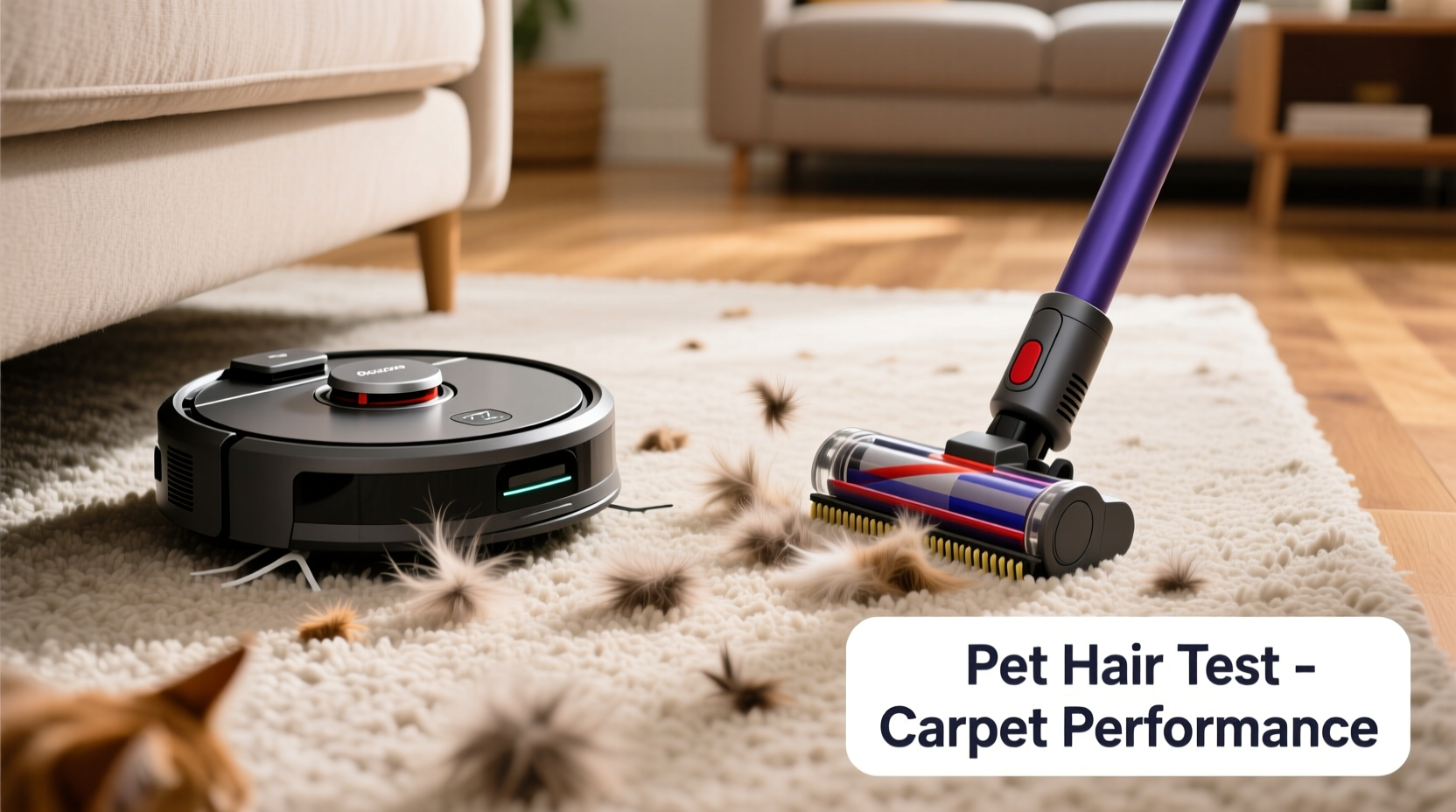
The effectiveness of any vacuum on pet hair comes down to two critical components: suction strength and brush roll engineering. On carpet, pet hair doesn’t just sit on the surface—it embeds into fibers, requiring strong agitation and consistent airflow to lift and extract.
Cordless stick vacuums typically offer higher suction power, measured in air watts (AW), often ranging from 150 to over 200 AW in premium models. This allows them to pull deeply embedded hair from medium-pile and plush carpets. Their motorized brush rolls are designed with stiff bristles or rubber fins that agitate carpet fibers effectively, dislodging trapped hair before suction carries it into the bin.
Robot vacuums, while improving, generally operate at lower suction levels—usually between 1,500 and 3,000 Pa (equivalent to roughly 100–140 AW). Some high-end models now reach 6,000 Pa, but even then, their compact size limits airflow volume. Additionally, many robot vacuums use dual side brushes and a central roller, but their smaller brush rolls cover less surface area per pass and may require multiple passes to achieve similar results.
Tip: Look for vacuums with tangle-free brush rolls—especially rubberized or anti-hair wrap designs—to reduce maintenance when cleaning up after shedding pets.Real-World Performance on Different Carpet Types
Pet hair behaves differently depending on carpet density and pile height. A vacuum that excels on low-pile rugs might struggle on shaggy berber. Here’s how each type performs across common carpet types:
| Carpet Type | Cordless Stick Vacuum | Robot Vacuum |
|---|---|---|
| Low-Pile (e.g., Berber) | Excellent pickup with single pass; powerful suction lifts surface and shallow hair. | Good performance; most models handle this well due to minimal fiber resistance. |
| Medium-Pile (e.g., Saxony) | Highly effective; brush roll penetrates fibers, removing deeply trapped hair. | Mixed results; mid-tier robots struggle, while premium models perform adequately with repeated runs. |
| High-Pile/Shaggy | Best-in-class; strong motors prevent bogging down; some models adjust automatically. | Poor to fair; many robots get stuck or fail to agitate deep layers; requires manual intervention. |
| Area Rugs (Over Hardwood) | Excellent edge cleaning; easily transitions between surfaces. | Generally good, though edges may be missed without precise navigation. |
In homes with mixed flooring and thick carpets, cordless stick vacuums consistently outperform robot models when it comes to immediate, thorough cleaning. Robot vacuums rely on frequency rather than depth, making them better suited for light maintenance than deep cleans.
Maintenance and Hair Management: What Owners Actually Experience
Pet hair isn’t just hard to remove—it’s hard to manage post-cleanup. Tangled brush rolls, clogged filters, and full dustbins are common frustrations. How each vacuum handles these issues affects long-term usability.
Cordless stick vacuums often feature removable brush rolls and large debris bins (0.5–1 liter), allowing for quick emptying and cleaning. However, frequent use in pet-heavy homes means weekly brush roll maintenance to remove wrapped hair. High-end models like Dyson or Shark include self-cleaning brush rolls or easy-release mechanisms to reduce effort.
Robot vacuums automate collection but shift the burden to periodic deep cleaning. While they return to their dock and empty into a base station (in models with auto-empty features), their small bins fill quickly on hairy carpets. Without an auto-empty system, users must empty them after every run. More critically, the compact brush rolls are prone to tangling, especially with long pet hair, requiring bi-weekly cleaning to maintain performance.
“Pet owners need more than automation—they need extraction. Many robot vacuums move hair around rather than remove it, especially on dense carpet.” — Dr. Linda Tran, Home Appliance Researcher at CleanTech Labs
Step-by-Step: Optimizing Each Vacuum for Pet Hair on Carpet
Maximizing performance requires proper usage. Follow these steps based on your device type:
For Cordless Stick Vacuums:
- Switch to carpet mode if your model has surface-specific settings to increase suction and brush roll speed.
- Use slow, overlapping strokes to ensure full coverage and allow the brush roll time to agitate fibers.
- Focus on high-shed zones like pet beds, entryways, and furniture edges.
- Empty the bin immediately after use to prevent odor and maintain suction.
- Clean the filter monthly (or as recommended) to avoid airflow blockage.
For Robot Vacuums:
- Set a daily cleaning schedule to prevent hair buildup between runs.
- Define no-go zones or virtual walls to keep the robot away from cords or delicate furniture.
- Run in “max” or “turbo” mode on carpeted areas for improved pickup.
- Check wheels and brushes weekly for hair wrap and debris.
- Replace filters every 2–3 months in pet households to maintain airflow.
Mini Case Study: Life with Two Dogs and Three Carpeted Rooms
Sarah M., a dog trainer in Portland, owns two huskies that shed year-round. Her home includes three carpeted bedrooms and a living room with a medium-pile rug. Initially, she invested in a mid-range robot vacuum hoping for hands-free cleaning. While the robot kept surfaces “presentable,” she noticed persistent clumps of hair along baseboards and near her dogs’ sleeping areas. After three months, she switched to a cordless stick vacuum with a tangle-free brush roll.
Within one weekend, she performed a deep clean and removed nearly half a pound of accumulated hair from the carpets. She now uses the stick vacuum twice a week for targeted cleaning and keeps the robot running on hardwood floors. “The robot is great for crumbs and dust,” she says, “but only the stick vacuum gets the real mess out of the carpet.”
Her experience reflects a growing trend: robot vacuums excel at maintenance, but cordless sticks remain superior for deep cleaning pet hair on carpet.
Which One Should You Choose? A Practical Checklist
Your decision should align with your lifestyle, home layout, and pet routine. Use this checklist to guide your choice:
- ✅ Do you have thick or high-pile carpets? → Cordless stick vacuum
- ✅ Is shedding severe (e.g., double-coated breeds)? → Cordless stick vacuum
- ✅ Do you prefer hands-off cleaning and have mostly hard floors? → Robot vacuum
- ✅ Are you willing to do weekly maintenance on brush rolls? → Either, but stick may require more care
- ✅ Do you want daily upkeep with minimal effort? → Robot vacuum (especially with auto-empty)
- ✅ Do you need powerful edge cleaning and spot treatment? → Cordless stick vacuum
- ✅ Is budget flexible for both devices? → Consider using both: robot for daily, stick for weekly deep cleans
Many modern households opt for a hybrid approach—using a robot vacuum for daily maintenance on hard floors and light carpet traffic, while reserving a cordless stick vacuum for weekly deep cleaning on carpeted areas where pet hair accumulates.
Frequently Asked Questions
Can robot vacuums handle long pet hair on carpet?
Some high-end models can, but most struggle due to limited suction and brush roll design. Long hair wraps around rollers quickly, reducing effectiveness. Models with rubber brush rolls (like those from iRobot or Roborock) resist tangles better but still lack the deep-cleaning power of stick vacuums.
Do cordless vacuums work well on low-pile rugs?
Yes, and often better than robots. They offer stronger suction, larger bins, and better edge cleaning. Most cordless vacuums transition seamlessly between carpets and hard floors, making them versatile for multi-surface homes.
Is it worth buying a robot vacuum if I already have a cordless stick vacuum?
It depends on your priorities. If you value convenience and daily upkeep, a robot adds value by reducing visible debris between deep cleans. With scheduling and smart mapping, it maintains cleanliness with zero effort. But it doesn’t replace the need for manual vacuuming in pet-heavy homes with carpets.
Final Verdict: For Pet Hair on Carpet, Power Wins Over Automation
When it comes to removing pet hair from carpets, the cordless stick vacuum is the clear winner in terms of raw performance. Its superior suction, larger brush rolls, and direct user control allow for deeper cleaning and better results on medium to high-pile carpets. It’s the go-to tool for immediate, visible improvements in heavily shed areas.
Robot vacuums bring undeniable convenience and work well as supplementary tools. They’re ideal for maintaining cleanliness on hard floors and low-pile rugs, especially when programmed to run daily. However, they fall short when tasked with extracting deeply embedded pet hair from carpet fibers. Without frequent runs and high-end specs, they often redistribute rather than remove hair.
The most effective strategy for pet owners isn’t choosing one over the other—it’s combining both. Use a robot vacuum to manage daily surface debris and reduce the overall load, then deploy a cordless stick vacuum weekly for deep carpet cleaning. This dual-system approach balances convenience with thoroughness, ensuring your carpets stay fresh, allergen-free, and truly clean.
💬 Have a pet-friendly cleaning routine that works for you? Share your tips below and help fellow pet owners find smarter ways to manage fur and keep their homes spotless.








