Pet owners know the struggle: no matter how much you love your furry companions, their shedding can turn floors into a battleground of loose hair, dander, and tracked-in debris. Keeping your home clean means choosing the right tool—specifically, one that handles pet hair efficiently without constant effort. Two popular options dominate the market: robot vacuums and cordless stick vacuums. But when it comes to tackling pet hair, which truly performs better?
The answer isn’t always straightforward. Each type has strengths and limitations shaped by design, suction power, maintenance needs, and how they interact with different floor types. To help you make an informed decision, we’ll break down performance factors, real-world usability, and long-term value—so you can choose the vacuum that best suits your pet-filled household.
Suction Power and Hair Pickup Efficiency
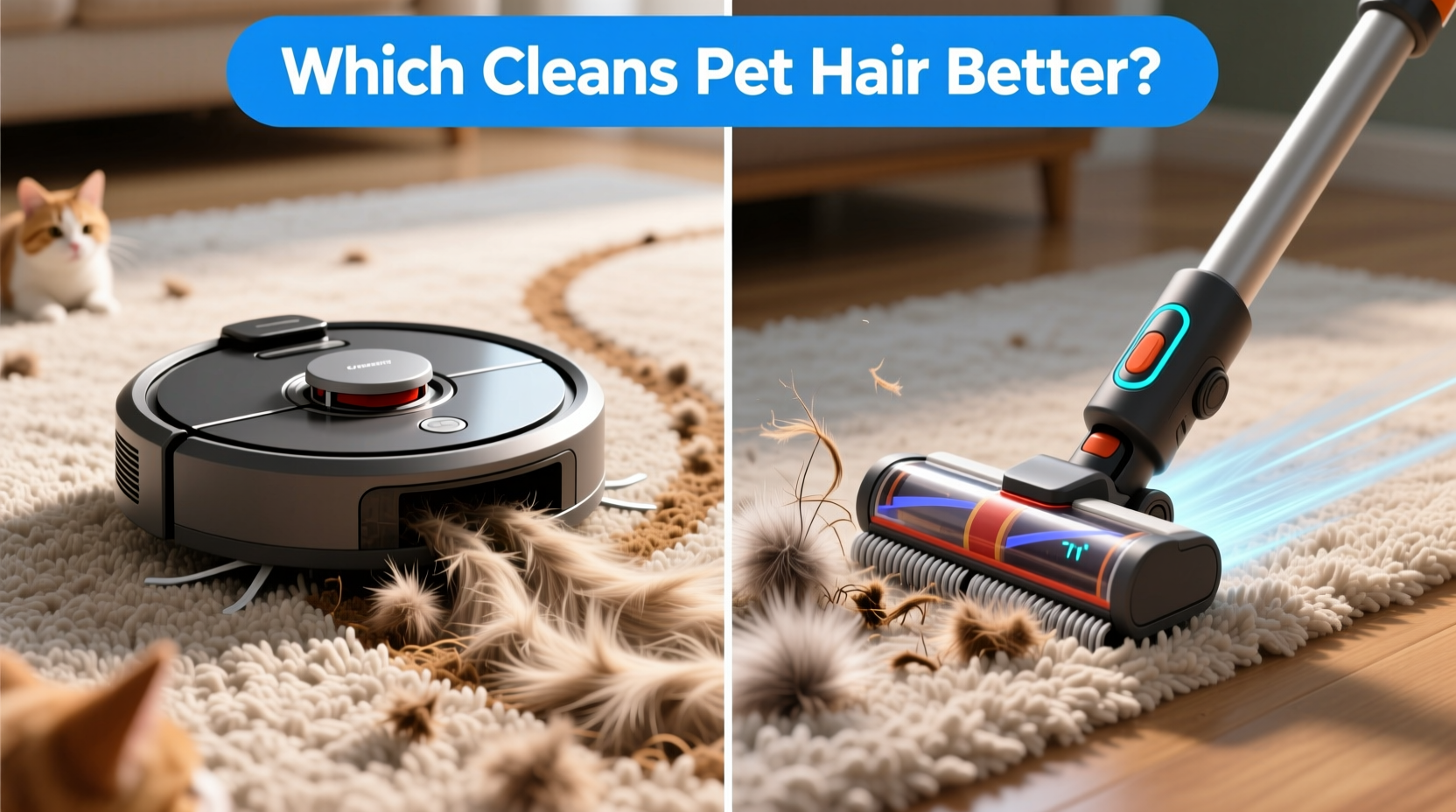
Suction strength is the most critical factor in removing embedded pet hair from carpets, rugs, and hard floors. While both robot and cordless stick vacuums have improved dramatically over the years, there’s still a significant gap in raw power.
Cordless stick vacuums typically offer higher suction capacity, measured in air watts (AW) or pascals (Pa). High-end models like the Dyson V15 Detect or Shark Vertex Pro deliver 200+ AW, enabling them to extract deeply embedded pet hair from medium-pile carpets and upholstery. Their motorized brush rolls are engineered to resist tangling and often include self-cleaning features or anti-hair wrap technology.
Robot vacuums, on the other hand, operate within tighter engineering constraints. Most top-tier models—such as the Roborock S8 or Ecovacs Deebot X2 Omni—max out around 6,000 Pa of suction. While this sounds impressive, it’s distributed across a smaller cleaning path and limited battery runtime. As a result, they may require multiple passes to lift stubborn pet hair, especially on textured rugs.
Tip: Look for vacuums with tangle-free brush rolls and high torque settings specifically designed for pet hair.Cleaning Coverage and Frequency
One of the biggest advantages of robot vacuums lies in consistency. They can be scheduled to clean daily—even when you're not home—helping manage continuous shedding before it accumulates. This automated frequency reduces the amount of time pet hair spends settling into fibers, making overall maintenance easier.
In contrast, cordless stick vacuums rely entirely on user initiative. Even the most dedicated pet owner might only deep-clean once or twice a week. While these vacuums excel during each use, gaps between cleanings allow hair to embed deeper into flooring, increasing the effort required for removal.
For homes with heavy shedders—like Huskies, Golden Retrievers, or long-haired cats—a robot vacuum running every morning can significantly reduce visible hair buildup. However, it won't replace spot-cleaning accidents or reach under furniture without manual intervention.
Hybrid strategies are increasingly common: using a robot vacuum for daily maintenance and a cordless stick model for weekly deep cleans. This combination leverages automation while ensuring thoroughness.
“Consistent surface cleaning prevents pet hair from becoming a hygiene issue. Daily robot runs cut allergen levels by up to 60% compared to weekly manual cleaning.” — Dr. Lena Torres, Indoor Air Quality Researcher, CleanAir Institute
Maintenance and Pet Hair Management
A vacuum’s ability to handle pet hair isn’t just about pickup—it’s also about what happens after. Pet hair tends to wrap around brush rolls, clog filters, and jam dustbins, leading to reduced performance and frequent maintenance.
Cordless stick vacuums generally require more hands-on upkeep. After each use, users should check the brush roll for缠绕 (tangling), empty the bin, and rinse washable filters. Some premium models feature quick-release mechanisms and tangle-free designs, but routine care remains essential.
Robot vacuums vary widely. Entry-level models often suffer from daily hair wrapping issues, requiring nightly maintenance. However, newer high-end robots come with self-emptying bases, self-cleaning brush rolls, and tangle-resistant bristle designs. For example, iRobot’s Clean Base Automatic Dirt Disposal system allows the Roomba j7+ to run for weeks without manual bin emptying—ideal for busy pet owners.
Still, even advanced robots need periodic attention. Sensors can get blocked by fine fur, wheels may trap hair strands, and side brushes require occasional trimming. If convenience is a priority, consider models with full self-maintenance ecosystems.
Performance Across Floor Types
Pet hair behaves differently depending on the surface. Hardwood floors show every strand, while carpets hide initial shedding until it mats down. A good vacuum must transition seamlessly between materials.
| Feature | Cordless Stick Vacuum | Robot Vacuum |
|---|---|---|
| Suction on Carpet | Excellent – high-powered motors extract deep-set hair | Good to Very Good – varies by model; may miss edges |
| Hard Floor Performance | Excellent – wide nozzle captures scattered hair quickly | Fair to Good – narrow path may leave streaks |
| Edge Cleaning | Very Good – swivel heads and crevice tools reach corners | Variable – depends on side brush efficiency |
| Under-Furniture Reach | Limited by wand length | Superior – low-profile design accesses tight spaces |
| Stair Cleaning | Yes – portable and maneuverable | No – cannot navigate stairs safely |
Cordless stick vacuums shine in targeted cleaning tasks—like stairs, furniture, and vehicles—where portability matters. Robot vacuums, meanwhile, maintain consistent coverage on main-level floors but cannot climb or adapt to vertical surfaces.
Tip: Pair a robot vacuum with a cordless handheld for stairs and upholstery to cover all zones effectively.Real-World Example: The Smith Family’s Multi-Pet Home
The Smiths live in a three-bedroom townhouse with two dogs (a Labrador and a Poodle mix) and a long-haired cat. During winter, shedding peaks, leaving clumps of fur in corners and along baseboards. Initially, they relied solely on a mid-range cordless stick vacuum, cleaning thoroughly twice a week. Despite strong suction, they found hair reaccumulating rapidly.
After six months, they invested in a Roborock Q5+, scheduling it to run every morning at 9 AM. Within two weeks, visible hair on hardwood floors dropped by 70%. The robot handled daily tracking from paws and light shedding, allowing the stick vacuum to focus on weekly carpet deep-cleans and furniture.
They did encounter early issues: the robot’s brush roll tangled weekly, and it missed spots behind furniture. Upgrading to the Roborock S8 with a tangle-free rubber brush and AI obstacle avoidance solved most problems. Now, their hybrid system keeps the house consistently clean with minimal effort.
This case illustrates a growing trend: robot vacuums aren’t replacing cordless sticks—they’re complementing them.
Choosing Based on Your Lifestyle
Your ideal vacuum depends less on specs and more on your daily routine, pet behavior, and home layout.
If you're away from home most days, a robot vacuum ensures floors are cleaned regularly, even if you’re not there to do it. Models with app control, voice integration (via Alexa or Google Assistant), and smart mapping let you trigger cleanups remotely—useful after pets have been playing indoors.
If you prefer hands-on control and need versatility—for example, cleaning car interiors, drapes, or stairs—a cordless stick vacuum offers unmatched flexibility. Many double as handheld units, making them ideal for quick pickups after grooming sessions.
- Choose a robot vacuum if: You want daily maintenance, have mostly open-floor layouts, and prioritize convenience.
- Choose a cordless stick vacuum if: You need powerful suction, clean multiple levels, or frequently tackle messes beyond floors.
- Consider both if: You have heavy shedders, large living areas, and want maximum cleanliness with minimal labor.
Step-by-Step: How to Evaluate Your Needs
- Assess pet shedding level: Light (short-haired cat), moderate (indoor dog), or heavy (double-coated breed).
- Map your floor types: Note percentages of carpet, hardwood, tile, and rugs.
- Determine cleaning frequency: Are you likely to vacuum weekly, or do you need automated daily runs?
- Evaluate storage and charging: Do you have space for a docking station? Is outlet access available?
- Budget for maintenance: Factor in replacement filters, brushes, and potential professional servicing.
- Test compatibility: Check for tangle resistance, HEPA filtration (for allergy sufferers), and app features.
Common Pitfalls to Avoid
Even experienced buyers make mistakes when selecting pet-focused vacuums. Here are key errors to avoid:
- Ignoring brush roll design: Nylon bristles tangle easily with pet hair. Opt for rubber or hybrid rollers.
- Overlooking filter maintenance: Clogged HEPA filters reduce suction and worsen air quality.
- Buying based on brand alone: Not all Dyson or iRobot models are optimized for pets—check specific variants.
- Skipping room mapping: Poor navigation leads to missed spots, reducing effectiveness despite strong suction.
- Expecting zero maintenance: No robot fully maintains itself. Regular checks are still required.
FAQ: Robot vs Cordless Stick for Pet Hair
Can a robot vacuum completely replace a cordless stick vacuum for pet owners?
For most households, no. While robot vacuums handle daily upkeep well, they lack the power and precision for deep cleaning carpets, furniture, or stairs. A cordless stick remains necessary for comprehensive care.
Which vacuum type is better for allergies caused by pet dander?
Both can help, but only if equipped with sealed systems and true HEPA filtration. Cordless sticks often have larger filters and stronger airflow, capturing more airborne particles during use. Robots provide continuous filtration but may recirculate dust if filters aren’t cleaned regularly.
Do robot vacuums work on dark-colored carpets where pet hair blends in?
Yes, but effectiveness depends on sensor quality. Higher-end models use LiDAR or camera-based navigation to detect debris regardless of color contrast. Budget robots may struggle to identify low-contrast dirt.
Final Recommendation: Match Tool to Task
When it comes to cleaning pet hair, neither robot vacuums nor cordless stick vacuums universally outperform the other. Instead, they serve different roles in a complete cleaning strategy.
Cordless stick vacuums win in raw power, versatility, and deep-cleaning capability. They’re indispensable for immediate messes, seasonal deep cleans, and multi-surface homes. If you own only one vacuum, this is likely the better single choice.
Robot vacuums excel in consistency and automation. They reduce the burden of daily upkeep, keeping floors visibly cleaner between deep cleans. For those with time constraints or mobility challenges, they offer transformative convenience.
The optimal solution for many pet owners is not “either/or” but “both/and.” Use a robot vacuum for daily maintenance and deploy a cordless stick for weekly refreshes and spot treatments. Together, they create a sustainable cleaning rhythm that keeps pet hair under control without overwhelming your schedule.
💬 Ready to upgrade your pet hair cleanup routine? Start by testing one type in your home, then build a system that fits your lifestyle. Share your experience or ask questions in the comments below—we’d love to hear how you keep your space fur-free!








