
As holiday pet parades grow in popularity across towns and cities, pet owners are increasingly investing in festive accessories to make their furry friends stand out. Among the most common choices are reindeer antlers—available in both illuminated LED versions and traditional static designs. But when it comes to capturing attention, ensuring safety, and keeping pets comfortable, which option truly takes the crown in a pet parade setting?
The debate isn’t just about aesthetics. It’s about functionality, animal welfare, visibility, and even community engagement. While glowing antlers may dazzle under evening lights, static headbands offer simplicity and reliability. This article breaks down the strengths and weaknesses of each, backed by real-world observations, expert insights, and practical considerations every pet owner should weigh before stepping into the spotlight.
Visibility and Crowd Appeal: The First Impression Factor
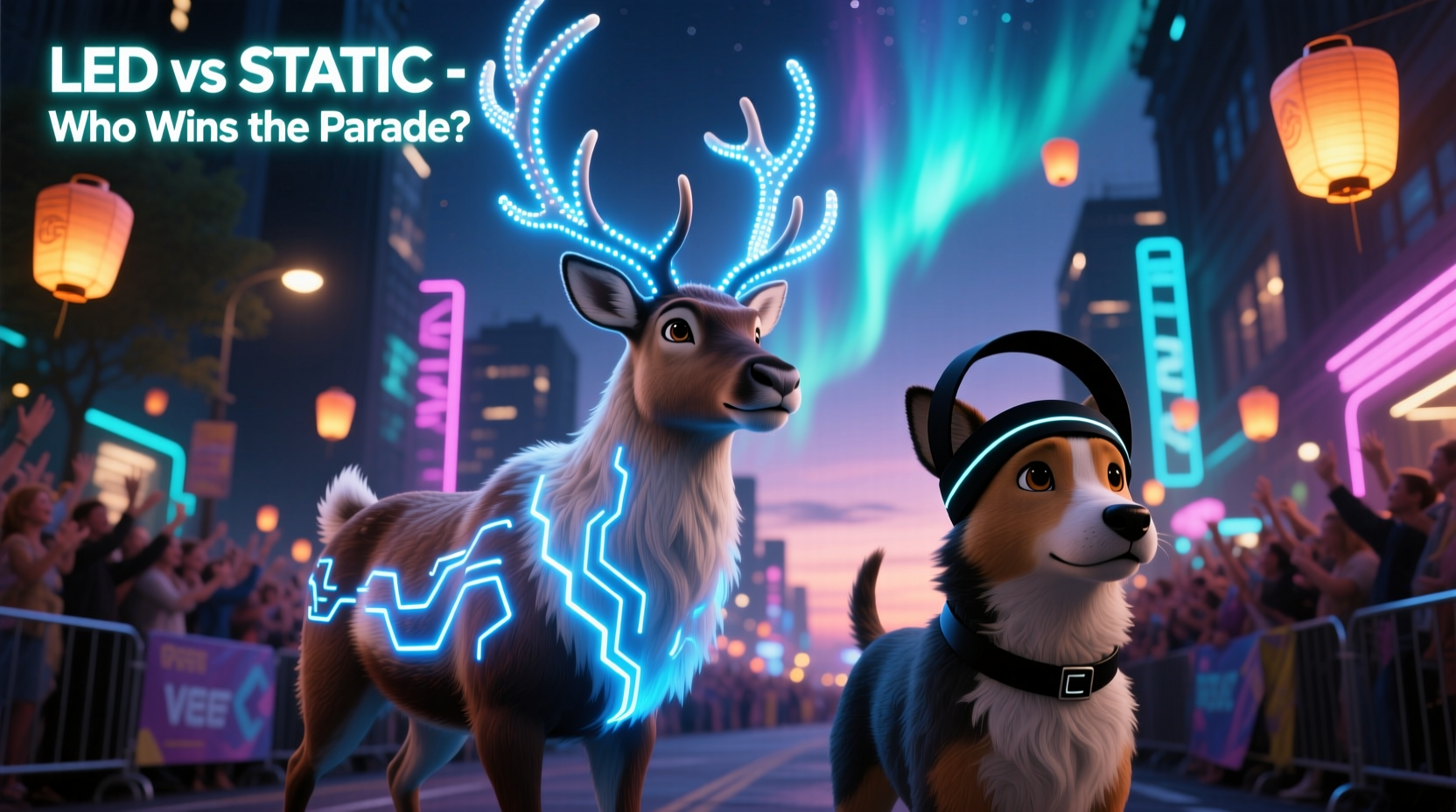
In any parade, first impressions matter. Judges and spectators often have only seconds to register each entry, making visibility a critical factor. LED-lit reindeer antlers shine—literally—in low-light conditions. Whether the event starts at dusk or moves into the evening, battery-powered LEDs embedded in flexible wire frames create a radiant halo effect around your pet’s head.
These lights come in various colors—classic warm white, festive red and green, or even color-changing modes. Some models include twinkling effects or steady glows, allowing customization based on theme or mood. In crowded, visually busy environments, such dynamic lighting can draw immediate attention.
“Lighted accessories give pets an edge in visibility, especially in winter parades that begin after sunset. A well-lit dog is not just festive—it’s safer and more memorable.” — Dr. Lena Torres, Veterinary Behaviorist & Pet Event Consultant
Static headbands, by contrast, rely entirely on design, color, and placement for impact. Crafted from felt, foam, or fabric, they often feature glued-on glitter, faux fur, or sequins. While charming during daylight hours, they tend to fade into the background once ambient light diminishes. Their visual appeal depends heavily on proximity; viewers need to be close to appreciate fine details.
Tip: If using static headbands in evening parades, pair them with reflective collars or light-up leashes to maintain visibility.Safety and Practicality: Comfort Meets Responsibility
No accessory should compromise a pet’s well-being—even for a photo op. When evaluating LED antlers versus static headbands, safety extends beyond physical fit to include sensory experience, heat emission, and behavioral response.
LED antlers typically run cool, thanks to energy-efficient bulbs. However, the power source—usually a small battery pack attached behind the ears or along the harness—can shift during movement. If poorly secured, it may rub against sensitive skin or startle skittish animals. Additionally, blinking lights can trigger anxiety in noise-sensitive or visually reactive pets, particularly those with past trauma or neurological conditions.
Static headbands eliminate electronic risks. They’re generally lighter and lack moving parts or wires. Most attach via soft elastic loops that go behind the ears, minimizing pressure points. For breeds with delicate skulls (like Chihuahuas or Cavalier King Charles Spaniels), this low-weight profile is a significant advantage.
Still, not all static designs are created equal. Glues used to affix decorations may flake off, posing an ingestion hazard if chewed. Poorly stitched seams can unravel mid-parade, creating distractions or tripping hazards if tangled in leashes.
Do’s and Don’ts: Safety Checklist for Parade Accessories
- Do test-fit accessories at home days before the event.
- Do monitor your pet’s behavior during trial runs.
- Do choose lightweight materials regardless of type.
- Don’t use adhesives near your pet’s face or ears.
- Don’t leave pets unattended while wearing any accessory.
- Don’t prioritize looks over mobility or breathing.
Performance in Real Conditions: A Mini Case Study
Last December, the Winter Paws Festival in Burlington, Vermont hosted its annual Holiday Pet Parade, drawing over 120 entries. Among them were two Golden Retrievers of similar size and temperament: Max, wearing premium LED-reindeer antlers with remote-controlled color settings, and Daisy, adorned with a handcrafted static headband made of red velvet and gold tinsel.
The parade began at 4:30 PM, just after sunset, with temperatures near freezing and light snowfall. Spectators lined both sides of Main Street, many holding phones aloft to capture footage.
Max was immediately noticeable. His bright white LEDs cut through the dim streetlights and falling snow, earning cheers and multiple video tags on social media. However, halfway through the half-mile route, the battery pack shifted under his collar, causing him to tilt his head repeatedly. His handler paused briefly to reposition it, losing momentum in the procession.
Daisy, meanwhile, walked steadily without distraction. Her headband stayed securely in place, and she appeared relaxed throughout. While less visible from a distance, she received compliments from judges for her “classic charm” and “well-behaved presentation.” She placed third in the “Best in Showmanship” category, while Max won “Most Festive Lighting��� but didn’t rank overall.
This case illustrates a key takeaway: visibility gains from LED antlers can be offset by mechanical issues and handling interruptions. Static headbands may lack flash, but they often deliver consistency—especially in longer or unpredictable events.
Comparative Breakdown: Features at a Glance
| Feature | LED Reindeer Antlers | Static Headbands |
|---|---|---|
| Visibility (Day) | Moderate – lights off | High – if colorful/design-rich |
| Visibility (Night) | Very High – emits light | Low – relies on external light |
| Weight | Medium to heavy (batteries + wiring) | Light – mostly fabric/foam |
| Durability | Moderate – wires can bend, batteries fail | High – if well-constructed |
| Pet Comfort | Variable – depends on fit and sensitivity | Generally high |
| Setup Time | 5–10 minutes (test batteries, secure pack) | Under 1 minute |
| Cost Range | $15–$40 | $8–$25 |
| Reusability | Seasonal – batteries degrade | Multi-year – if stored properly |
Step-by-Step Guide: Choosing the Right Accessory for Your Pet
Selecting between LED antlers and static headbands shouldn’t be arbitrary. Follow this decision-making process to ensure the best outcome for your pet and your parade goals:
- Evaluate the parade timing. Is it daytime, twilight, or full night? Night events favor LEDs; daylight favors static designs.
- Assess your pet’s temperament. Does your dog startle at sounds or flashing lights? Avoid LEDs if they show photic sensitivity. <3> Measure head size and ear placement. Ensure the headband or antler base fits snugly without pressing on ears or eyes.
- Test wearability at home. Let your pet wear the accessory indoors for 15–30 minutes. Watch for pawing, head shaking, or avoidance behaviors.
- Check local regulations. Some pet events prohibit electronic devices or bright flashing lights near animals.
- Consider backup options. Bring a secondary, non-electronic accessory in case batteries die or malfunctions occur.
- Plan for weather. Snow, rain, or wind can damage LED circuits or dislodge lightweight static pieces.
Frequently Asked Questions
Can LED antlers harm my pet’s eyes?
No direct evidence suggests LED reindeer antlers cause eye damage in pets when used as directed. Most models emit low-lumen, diffused light positioned above or beside the head—not directly in front of the eyes. However, prolonged exposure to blinking or strobing patterns may cause discomfort in sensitive animals. Opt for steady-glow settings if available.
Are static headbands safe for long-haired breeds?
Yes, but extra care is needed. Long fur can trap moisture under fabric headbands, increasing the risk of skin irritation. Choose breathable materials like cotton or mesh-backed designs. Remove the accessory after 30–45 minutes of continuous wear during events to allow airflow.
How do I clean and store these accessories?
For static headbands, spot-clean with mild soap and a damp cloth. Air dry flat. Store in a sealed container with silica gel packets to prevent mold. For LED antlers, never submerge in water. Wipe gently with a dry or slightly damp cloth. Remove batteries before storage to prevent corrosion. Keep in a temperature-stable environment.
Conclusion: Which Wins the Pet Parade?
The answer depends on what you value most: spectacle or stability.
If your goal is maximum visibility during evening parades, viral social media moments, or themed lighting contests, **LED reindeer antlers** are the clear winner. Their luminous presence cuts through darkness and captures attention instantly. They embody the magic of the season and align perfectly with modern, tech-enhanced celebrations.
However, if you prioritize your pet’s comfort, consistent performance, ease of use, and long-term value, **static headbands** emerge as the smarter, more responsible choice. They’re reliable, lightweight, and free from technical failures. For novice participants, anxious pets, or multi-stop holiday events, they reduce stress for both handler and animal.
In truth, the ideal solution might be hybrid: own both. Use LED antlers for night showcases and photo ops, and keep a trusted static headband as a backup or for daytime appearances. Versatility, after all, is the hallmark of a seasoned pet parade participant.
💬 Which side are you on? Have you seen LED antlers steal the spotlight—or watched a simple static headband win hearts? Share your parade stories, tips, or photos in the comments below. Let’s build a smarter, kinder tradition for festive pets everywhere.








